Harper Lewis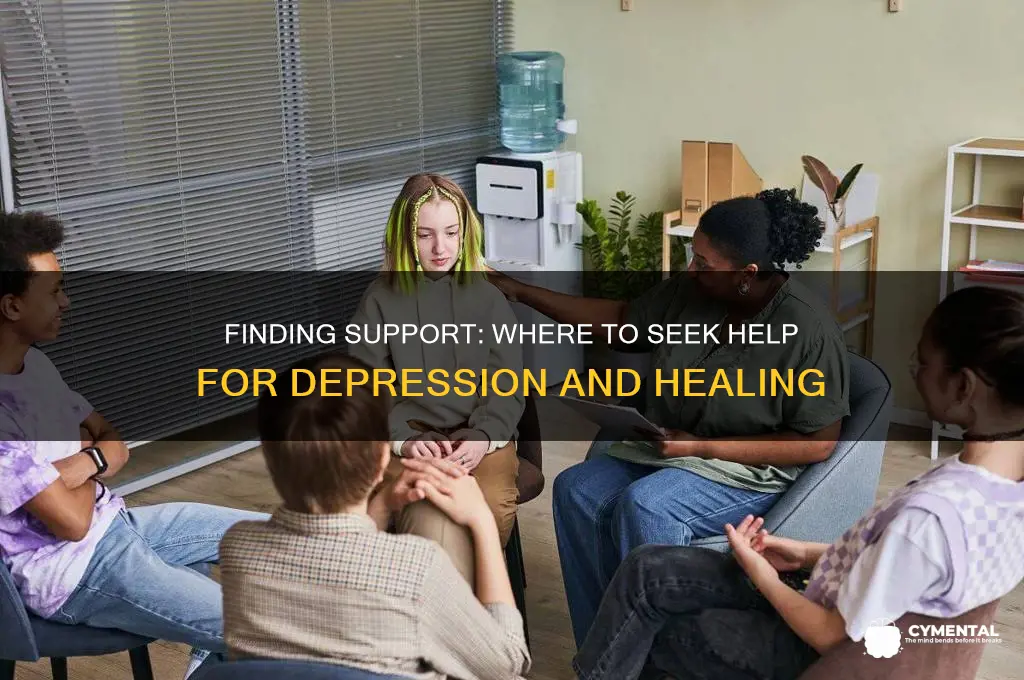
Depression is a serious mental health condition that affects millions of people worldwide, but fortunately, there are numerous resources available for those seeking support. From professional therapy and counseling services to helplines, support groups, and online communities, individuals struggling with depression have a variety of options to find the help they need. Mental health organizations, such as the National Alliance on Mental Illness (NAMI) and the World Health Organization (WHO), offer valuable information and guidance, while healthcare providers can recommend treatment plans tailored to individual needs. Additionally, many workplaces and educational institutions now provide mental health resources, ensuring that help is accessible in various settings. Recognizing the importance of reaching out is the first step, and knowing where to find assistance can make a significant difference in the journey toward recovery.
| Characteristics | Values |
|---|---|
| Professional Help | Psychiatrists, Psychologists, Therapists, Counselors, Primary Care Doctors |
| Therapy Types | Cognitive Behavioral Therapy (CBT), Interpersonal Therapy (IPT), Psychodynamic Therapy, Group Therapy |
| Medication | Antidepressants (SSRIs, SNRIs, etc.), Prescribed by Psychiatrists or Doctors |
| Support Groups | Local or Online Support Groups, Peer Support Programs |
| Hotlines & Crisis Services | National Suicide Prevention Lifeline (988 in the U.S.), Crisis Text Line, Local Crisis Centers |
| Online Resources | Mental Health Apps (e.g., Calm, Headspace), Online Therapy Platforms (e.g., BetterHelp, Talkspace) |
| Community Resources | Local Mental Health Clinics, Non-Profit Organizations (e.g., NAMI, Mental Health America) |
| Self-Help Strategies | Exercise, Mindfulness, Journaling, Healthy Diet, Sleep Hygiene |
| Workplace Resources | Employee Assistance Programs (EAPs), Mental Health Days, Workplace Counseling |
| Educational Resources | Books, Podcasts, Online Courses, Workshops on Mental Health |
| Cultural & Religious Support | Faith-Based Counseling, Culturally Sensitive Therapists, Community Leaders |
| Insurance Coverage | Check with Insurance Provider for Mental Health Coverage, Affordable Care Act (ACA) Options |
| Emergency Services | Emergency Rooms, 911 (for immediate danger), Local Emergency Services |
| Prevention Programs | School-Based Programs, Workplace Wellness Initiatives, Public Health Campaigns |
| Research & Clinical Trials | Participation in Clinical Trials for New Treatments, Research Studies |
Explore related products


What You'll Learn
- Therapy Options: Explore psychologists, psychiatrists, counselors, and online therapy platforms for professional mental health support
- Support Groups: Join local or online communities to connect with others facing similar challenges
- Hotlines & Helplines: Access 24/7 crisis hotlines for immediate emotional support and guidance
- Self-Help Resources: Utilize books, apps, and mindfulness tools to manage symptoms independently
- Medical Professionals: Consult primary care doctors or specialists for diagnosis and treatment plans

Therapy Options: Explore psychologists, psychiatrists, counselors, and online therapy platforms for professional mental health support
Depression often requires professional intervention, and therapy stands as a cornerstone of treatment. The landscape of mental health support is diverse, offering various specialists and modalities to cater to individual needs. Understanding the roles of psychologists, psychiatrists, counselors, and the rise of online therapy platforms can empower you to make informed decisions about your care.
Psychologists and Psychiatrists: Unraveling the Expertise
Psychologists and psychiatrists are often at the forefront of depression treatment, but their approaches differ significantly. Psychologists primarily focus on talk therapy, employing evidence-based techniques like cognitive-behavioral therapy (CBT) or interpersonal psychotherapy (IPT). These professionals delve into your thoughts, emotions, and behaviors, helping you identify and change negative patterns. For instance, a psychologist might guide you through CBT exercises to challenge negative self-talk and replace it with more realistic and positive thoughts. This process typically involves weekly sessions, with the duration of treatment varying based on individual progress.
On the other hand, psychiatrists are medical doctors specializing in mental health. They can provide therapy, but their unique ability to prescribe medication sets them apart. Psychiatrists often assess patients for any underlying medical conditions contributing to depression and may recommend a combination of medication and therapy. For severe depression, they might prescribe selective serotonin reuptake inhibitors (SSRIs) or serotonin-norepinephrine reuptake inhibitors (SNRIs), adjusting dosages over time to ensure effectiveness and minimize side effects.
Counselors: A Supportive Alliance
Counselors, including licensed professional counselors (LPCs) and licensed clinical social workers (LCSWs), offer a more accessible and often more affordable therapy option. These professionals provide a safe space for individuals to explore their emotions, thoughts, and experiences. Counseling sessions typically focus on developing coping strategies, improving communication skills, and fostering personal growth. For depression, counselors might use techniques like mindfulness-based cognitive therapy (MBCT) to help clients become more aware of their thoughts and feelings without judgment, reducing the risk of depressive relapses.
Online Therapy: Convenience and Accessibility
The digital age has revolutionized therapy access with online platforms offering convenient and discreet support. These platforms connect individuals with licensed therapists through video sessions, messaging, or phone calls. Online therapy is particularly beneficial for those in remote areas, with busy schedules, or who prefer the comfort of home. Research suggests that online CBT can be as effective as traditional face-to-face therapy for depression, with the added advantage of flexibility. However, it's crucial to ensure the platform's therapists are licensed and accredited, and to consider the potential limitations of non-verbal communication in a virtual setting.
Choosing the Right Path
Selecting the most suitable therapy option depends on various factors, including the severity of depression, personal preferences, and financial considerations. For mild to moderate depression, counseling or online therapy might be a great starting point, offering support and practical tools. More severe or complex cases may benefit from the combined expertise of a psychologist and psychiatrist, ensuring comprehensive care. It's essential to remember that seeking help is a sign of strength, and with the right professional support, managing and overcoming depression is achievable.
Overcoming Mental Blocks: Strategies to Support Athletes' Performance and Resilience
You may want to see also
Explore related products


Support Groups: Join local or online communities to connect with others facing similar challenges
Depression often thrives in isolation, making connection a powerful antidote. Support groups shatter the silence, offering a safe space to share experiences, gain insights, and realize you're not alone. Imagine a room (or virtual chat) filled with individuals who truly understand the weight of your struggles, not because they're therapists, but because they've carried it themselves. This shared vulnerability fosters empathy, reduces stigma, and provides a unique form of validation that professional settings can't always replicate.
Finding the right group is crucial. Local options, often advertised through community centers, churches, or mental health organizations, provide face-to-face interaction, allowing for deeper connections and potential friendships. Online platforms, like 7 Cups or Depression Understood, offer anonymity and accessibility, ideal for those with limited mobility or preferring written communication. Consider your comfort level, schedule, and preferred communication style when choosing. Remember, it's okay to try several groups before finding the right fit.
Participation is key. Actively sharing your experiences, even if it feels daunting at first, strengthens the group dynamic and allows others to learn from your perspective. Listen attentively, offer support when you can, and respect the confidentiality of the group. Remember, these are not therapy sessions; they're peer-led spaces for mutual support and understanding. While professional guidance is invaluable, the collective wisdom and shared resilience within a support group can be a powerful complement to your healing journey.
Think of support groups as a lifeline, not a last resort. They provide a sense of belonging, practical coping strategies, and hope. By connecting with others who understand the depths of depression, you gain a powerful tool to navigate its challenges and emerge stronger, together. Remember, reaching out is a sign of strength, and within these communities, you'll find a network of individuals ready to walk alongside you.
Sports and Mental Health: Boosting Well-Being Through Physical Activity
You may want to see also
Explore related products


Hotlines & Helplines: Access 24/7 crisis hotlines for immediate emotional support and guidance
In moments of overwhelming despair, the immediacy of support can be a lifeline. Crisis hotlines and helplines offer 24/7 access to trained professionals who provide emotional support, guidance, and resources for individuals grappling with depression. These services are confidential, free, and available to anyone, regardless of age, location, or severity of their struggle. Whether you’re experiencing suicidal thoughts, intense anxiety, or simply need someone to talk to, these lines are designed to meet you where you are.
Consider this: the National Suicide Prevention Lifeline (988 in the U.S.) is a prime example of a resource that connects callers to a network of local crisis centers. Trained counselors listen without judgment, assess risk, and provide coping strategies. For those uncomfortable with phone calls, many hotlines now offer text-based support, such as the Crisis Text Line (text HOME to 741741). These alternatives ensure accessibility for individuals who may prefer written communication or find themselves in situations where speaking aloud is unsafe.
While hotlines are not a substitute for long-term therapy or medication, they serve as a critical bridge during acute episodes. For instance, if you’re experiencing a panic attack at 3 a.m., a helpline can guide you through grounding techniques or breathing exercises to stabilize your emotions. Similarly, if you’re unsure whether your feelings warrant professional intervention, counselors can help you assess your situation and recommend next steps, such as contacting a mental health provider or visiting an emergency room.
One common misconception is that hotlines are only for emergencies. In reality, they’re available for anyone feeling overwhelmed, isolated, or unsure of how to cope. For example, the SAMHSA National Helpline (1-800-662-HELP) offers support for mental health and substance use issues, providing referrals to local treatment facilities and community-based organizations. This broader scope ensures that individuals receive tailored assistance, whether they’re in crisis or seeking proactive help.
Practical tip: Save these numbers in your phone or write them down in a place you can easily access. If you’re supporting someone else, offer to call or text a helpline with them—sometimes, having a companion can reduce the anxiety of reaching out. Remember, using a hotline is a sign of strength, not weakness. It’s a proactive step toward reclaiming your emotional well-being and finding a path forward, one conversation at a time.
Empowering Self-Care: Practical Strategies to Help Yourself Thrive Daily
You may want to see also
Explore related products


Self-Help Resources: Utilize books, apps, and mindfulness tools to manage symptoms independently
Self-help resources offer a proactive approach to managing depression, empowering individuals to take control of their mental health. Books, apps, and mindfulness tools provide accessible, often low-cost strategies that can complement professional treatment or serve as a starting point for those seeking immediate support. For instance, *The Mindful Way Through Depression* by Mark Williams and John Teasdale combines cognitive therapy with mindfulness practices, offering actionable techniques to break negative thought cycles. Similarly, apps like Headspace and Calm provide guided meditations tailored to reduce stress and improve mood, with studies showing regular use can decrease symptoms of depression by up to 20%. These resources are particularly valuable for those who prefer privacy or need flexible, on-demand support.
While books and apps are widely available, their effectiveness depends on consistent use and personal engagement. For example, journaling prompts in *The Depression Cure* by Stephen Ilardi encourage readers to track mood patterns and identify triggers, but only if practiced daily. Mindfulness tools, such as breathing exercises or body scans, require dedication to yield results. A 2021 study found that individuals who practiced mindfulness for 10–15 minutes daily reported significant improvements in depressive symptoms within six weeks. However, these tools are not one-size-fits-all; some may find guided meditations distracting, while others may prefer structured workbook exercises. Experimenting with different formats can help identify what resonates best.
Apps like Moodpath and Sanvello stand out for their interactive features, offering mood tracking, cognitive-behavioral therapy (CBT) exercises, and community support. Moodpath, for instance, provides a two-week depression screening that assesses symptoms and generates a report for healthcare providers. Sanvello’s "Check-In" feature allows users to log emotions and receive personalized coping strategies. These apps often include gamified elements, such as progress tracking or rewards, which can motivate users to stay engaged. However, reliance on digital tools alone may not address deep-rooted issues, making them most effective when paired with therapy or professional guidance.
Mindfulness tools, rooted in ancient practices, have gained modern traction for their simplicity and accessibility. Techniques like the "5-4-3-2-1" grounding exercise—naming five things you see, four you can touch, three you hear, two you smell, and one you taste—can interrupt anxiety spirals and refocus the mind. Progressive muscle relaxation, another evidence-based practice, involves tensing and releasing muscle groups to reduce physical tension linked to depression. These methods require no equipment and can be practiced anywhere, making them ideal for managing acute symptoms. For maximum benefit, incorporate them into a daily routine, such as during morning coffee or before bed.
In conclusion, self-help resources provide a versatile toolkit for managing depression independently. Books offer in-depth knowledge and structured exercises, apps deliver convenience and interactivity, and mindfulness tools provide immediate relief for overwhelming moments. While not a substitute for professional care, these resources can bridge gaps in treatment, foster self-awareness, and build resilience. Start small—choose one resource, commit to it for a few weeks, and assess its impact. Over time, combining these tools can create a personalized strategy to navigate depression with greater confidence and clarity.
Assessing Mental Illness Impairment: Essential Tools for Clinicians
You may want to see also
Explore related products



Medical Professionals: Consult primary care doctors or specialists for diagnosis and treatment plans
Primary care doctors often serve as the first point of contact for individuals seeking help with depression. These physicians are trained to recognize the symptoms of mental health disorders and can provide initial assessments, ruling out physical conditions that might mimic depression, such as thyroid disorders or vitamin deficiencies. During an appointment, expect a thorough discussion of your symptoms, medical history, and lifestyle factors. Based on this evaluation, your doctor may prescribe antidepressants, starting with a low dosage (e.g., 20 mg of fluoxetine daily) and adjusting as needed. They can also refer you to a specialist if your case requires more targeted care.
Specialists, such as psychiatrists or psychologists, offer advanced expertise in diagnosing and treating depression. Psychiatrists, as medical doctors, can prescribe medication and often use evidence-based therapies like cognitive-behavioral therapy (CBT) in conjunction with pharmacotherapy. Psychologists, while unable to prescribe medication, specialize in therapeutic interventions, providing tools to manage symptoms and address underlying issues. For example, a psychiatrist might prescribe 50 mg of sertraline daily while a psychologist conducts weekly CBT sessions to help reframe negative thought patterns. This dual approach is particularly effective for moderate to severe depression.
Consulting medical professionals ensures a personalized treatment plan tailored to your needs. For adolescents (ages 12–17), selective serotonin reuptake inhibitors (SSRIs) like fluoxetine are often the first-line treatment, while older adults (ages 65+) may require lower dosages due to metabolic changes. Pregnant or breastfeeding individuals might be advised to prioritize therapy over medication, unless the benefits of medication outweigh the risks. Always disclose any supplements or medications you’re taking to avoid interactions, such as St. John’s wort reducing the efficacy of SSRIs.
While medical professionals provide essential care, it’s crucial to maintain open communication. If a prescribed medication causes side effects (e.g., insomnia from escitalopram), inform your doctor promptly. They may switch you to a different class of medication, such as bupropion, which has a lower risk of sexual side effects. Additionally, ask about lifestyle adjustments, like incorporating 30 minutes of daily exercise or maintaining a consistent sleep schedule, which can enhance treatment outcomes. Collaboration with your healthcare provider ensures a holistic approach to managing depression.
Supporting Loved Ones: Strategies to Assist Those Denying Mental Health Struggles
You may want to see also
Frequently asked questions
Reliable resources include mental health professionals (therapists, psychiatrists), local mental health clinics, national helplines (e.g., National Alliance on Mental Illness - NAMI), and online platforms like BetterHelp or Talkspace.
You can find a therapist through referrals from your primary care doctor, insurance provider directories, online therapist finders (e.g., Psychology Today), or community mental health centers.
Yes, options include local support groups, community health centers, nonprofit organizations (e.g., NAMI), crisis hotlines, and free online resources like 7 Cups or Mental Health America.
Absolutely. Online therapy platforms (e.g., BetterHelp, Talkspace), virtual support groups, and telehealth services offered by mental health professionals provide accessible options for remote support.