Madison Cole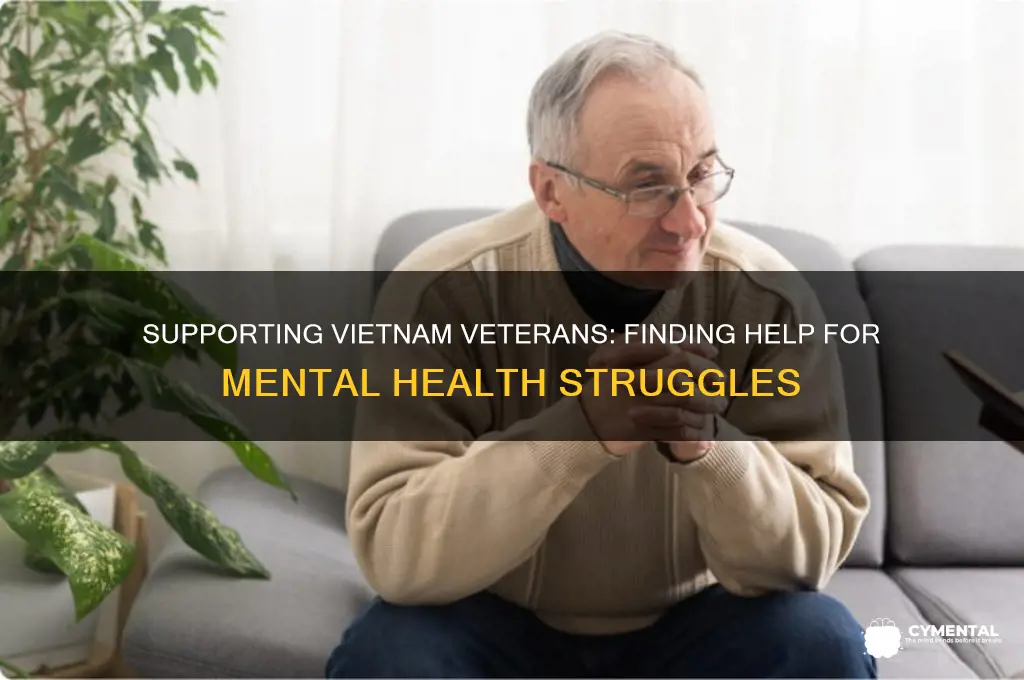
Mentally disturbed Vietnam veterans often face unique challenges stemming from their wartime experiences, including PTSD, depression, anxiety, and social isolation. Addressing their needs requires a multifaceted support system that includes mental health professionals specializing in trauma, veterans’ organizations like the VA (Veterans Affairs) and Vet Centers, peer support groups where veterans can connect with others who share similar experiences, and compassionate family members or friends who can provide emotional encouragement. Additionally, community resources, such as local therapists, faith-based organizations, and non-profits dedicated to veteran welfare, play a crucial role in offering holistic care. By combining professional treatment, peer support, and community involvement, these individuals can find the understanding and assistance needed to navigate their mental health struggles and improve their quality of life.
| Characteristics | Values |
|---|---|
| Mental Health Professionals | Psychiatrists, psychologists, licensed therapists, and counselors. |
| Veterans Affairs (VA) Resources | VA hospitals, Vet Centers, and VA mental health clinics. |
| Specialized Programs | PTSD treatment programs, substance abuse counseling, and trauma therapy. |
| Peer Support Groups | Vietnam Veterans of America (VVA), Veterans of Foreign Wars (VFW), and local veteran support groups. |
| Community Organizations | Nonprofits like Wounded Warrior Project, Give an Hour, and local veteran charities. |
| Crisis Hotlines | Veterans Crisis Line (988, then press 1), National Suicide Prevention Lifeline. |
| Family and Caregiver Support | Family counseling, caregiver training, and respite care services. |
| Alternative Therapies | Art therapy, equine therapy, mindfulness, and yoga programs. |
| Legal and Financial Assistance | VA benefits assistance, disability claims support, and legal aid for veterans. |
| Educational and Vocational Support | VA vocational rehabilitation, educational benefits, and job training programs. |
| Spiritual and Faith-Based Support | Chaplains, faith-based counseling, and spiritual support groups. |
| Telehealth Services | Virtual therapy sessions, online counseling, and remote mental health care. |
| Research and Clinical Trials | Participation in VA-sponsored research studies for PTSD and other mental health conditions. |
| Cultural Sensitivity | Providers trained in understanding the unique experiences of Vietnam veterans. |
| Long-Term Care Facilities | VA nursing homes and long-term care facilities for veterans with severe mental health needs. |
Explore related products


What You'll Learn

Veterans Affairs (VA) Mental Health Services
Vietnam veterans grappling with mental health issues face unique challenges rooted in their wartime experiences. The U.S. Department of Veterans Affairs (VA) recognizes this, offering a comprehensive suite of mental health services tailored to their needs. These services are designed not just to treat conditions like PTSD, depression, and anxiety, but to address the complex interplay of trauma, aging, and social isolation that many veterans experience decades after their service.
One of the VA’s most critical offerings is evidence-based psychotherapy, including Cognitive Processing Therapy (CPT) and Prolonged Exposure (PE) therapy. These therapies, typically delivered in 12 to 15 sessions, have proven effective in reducing PTSD symptoms. For veterans hesitant to engage in traditional talk therapy, the VA also provides telehealth options, ensuring accessibility regardless of geographic location. Additionally, group therapy programs, such as those focused on combat veterans, foster camaraderie and shared understanding, which can be therapeutic in itself.
Pharmacological interventions are another cornerstone of VA mental health care. Medications like selective serotonin reuptake inhibitors (SSRIs), specifically sertraline (Zoloft) and paroxetine (Paxil), are FDA-approved for PTSD and commonly prescribed. Dosages vary—typically starting at 25 mg daily for sertraline and titrated up to 200 mg as needed. Veterans must work closely with their providers to monitor side effects and efficacy, as medication response can differ significantly among individuals.
Beyond clinical treatments, the VA emphasizes holistic and preventive care. Programs like mindfulness-based stress reduction (MBSR) and yoga therapy are increasingly integrated into treatment plans, offering veterans non-pharmacological tools to manage symptoms. For those struggling with substance abuse, the VA’s Substance Use Disorder (SUD) programs provide specialized care, including medication-assisted treatment (MAT) with drugs like buprenorphine for opioid addiction.
A critical yet often overlooked aspect of VA mental health services is family support. The VA offers counseling and education for families, helping them understand the impact of mental health conditions and fostering a supportive home environment. This is particularly vital for Vietnam veterans, many of whom returned home to a society that struggled to comprehend their experiences.
In conclusion, the VA’s mental health services for Vietnam veterans are multifaceted, addressing not just the symptoms but the underlying causes and contextual factors of their distress. By combining evidence-based therapies, medication management, holistic approaches, and family support, the VA strives to provide comprehensive care that honors the sacrifices of these veterans and improves their quality of life.
Empowering Minds: How Organizations Foster Mental Health and Well-being
You may want to see also
Explore related products


Veteran Support Groups and Peer Counseling
Veterans, particularly those who served in Vietnam, often carry invisible wounds that traditional therapy alone may not fully address. This is where veteran support groups and peer counseling step in, offering a unique form of healing rooted in shared experience. Unlike clinical settings, these groups provide a safe space where veterans can connect with others who understand the complexities of their struggles—whether it’s PTSD, survivor’s guilt, or reintegration challenges. The power of saying, “You’re not alone,” cannot be overstated, as it fosters trust and encourages openness in ways that formal therapy sometimes cannot.
Consider the structure of these programs. Many veteran support groups, such as those facilitated by the Veterans of Foreign Wars (VFW) or Vietnam Veterans of America (VVA), meet weekly or bi-weekly in community centers, churches, or VA facilities. Sessions often begin with a check-in, followed by group discussions or activities designed to promote camaraderie and emotional release. Peer counselors, themselves veterans trained in active listening and crisis intervention, lead these sessions. Their role is not to diagnose or prescribe but to guide conversations, validate experiences, and offer practical advice grounded in their own journeys. For instance, a peer counselor might share how they managed flashbacks or rebuilt relationships, providing tangible strategies that resonate with fellow veterans.
One of the most compelling aspects of peer counseling is its ability to bridge the gap between professional treatment and everyday life. While therapists and psychiatrists are essential, they may lack the firsthand understanding of military culture and combat-related trauma. Peer counselors, however, speak the same language—literally and metaphorically. They can decode military jargon, recognize unit-specific stressors, and address the stigma that often prevents veterans from seeking help. For example, a Vietnam veteran struggling with anger issues might feel more comfortable confiding in a peer who’s “been there” than in a civilian therapist, no matter how well-intentioned.
Practical tips for engaging with these programs include starting small—attending a single meeting to gauge the group’s dynamics before committing. Veterans should also explore specialized groups tailored to their needs, such as those focused on substance abuse, grief, or family support. For those hesitant to join in-person sessions, virtual options have become increasingly available, particularly through organizations like the Wounded Warrior Project. Additionally, veterans can seek out peer counselors through their local VA hospital or by contacting national hotlines like the Veterans Crisis Line (988, then press 1).
In conclusion, veteran support groups and peer counseling are not just supplementary resources—they are lifelines. By leveraging the power of shared experience, these programs offer a level of understanding and support that traditional therapy often cannot match. For Vietnam veterans grappling with mental health challenges, finding a group or peer counselor could be the first step toward reclaiming a sense of purpose and peace. After all, healing begins when veterans realize they don’t have to face their battles alone.
Free Clinics and Mental Health: Accessible Support or Limited Services?
You may want to see also
Explore related products





Trauma-Focused Therapies for PTSD
Vietnam veterans grappling with PTSD often find relief through trauma-focused therapies, evidence-based approaches designed to directly address the root causes of their distress. These therapies, unlike traditional talk therapy, actively engage with traumatic memories rather than avoiding them, fostering reprocessing and integration. Among the most effective are Cognitive Processing Therapy (CPT), Prolonged Exposure (PE), and Eye Movement Desensitization and Reprocessing (EMDR), each with distinct mechanisms but a shared goal: alleviating symptoms by restructuring the emotional and cognitive impact of trauma.
CPT, for instance, operates on the principle that trauma distorts thinking patterns, leading to negative beliefs about oneself, others, and the world. Over 12 sessions, veterans work with therapists to challenge these beliefs through writing assignments, such as detailing the traumatic event and its aftermath. A 2017 study in *JAMA Psychiatry* found that 67% of veterans who completed CPT experienced significant symptom reduction, compared to 33% in the control group. Practical tips for engagement include maintaining a journal to track thoughts and emotions between sessions, ensuring consistency in challenging maladaptive beliefs.
Prolonged Exposure (PE) takes a bolder approach, systematically exposing veterans to trauma-related memories and situations they’ve been avoiding. This typically involves 8–15 sessions, during which veterans recount their traumatic experiences in vivid detail while simultaneously confronting avoided places or activities. A meta-analysis in *Clinical Psychology Review* (2018) highlighted PE’s efficacy, with 60–80% of participants showing clinically significant improvement. Caution is advised, however, as this method can temporarily increase distress; therapists often prescribe grounding techniques, such as deep breathing or progressive muscle relaxation, to manage acute anxiety during exposure exercises.
EMDR stands apart by incorporating bilateral stimulation—such as side-to-side eye movements or tactile tapping—while veterans recall traumatic memories. This dual attention task is thought to facilitate memory reprocessing, reducing the emotional charge of the event. A randomized controlled trial in *The Journal of Clinical Psychiatry* (2019) found that 77% of veterans who completed EMDR no longer met PTSD criteria after 12 sessions. Practical implementation includes ensuring a quiet, distraction-free environment and starting with less distressing memories before tackling more intense ones.
While these therapies are powerful, their success hinges on tailored application. Veterans with comorbid conditions like substance abuse or severe depression may require adjunctive treatments, such as medication or mindfulness-based interventions. Additionally, age and physical health can influence therapy choice; older veterans, for example, may benefit from shorter, less intense sessions. Ultimately, trauma-focused therapies offer a structured pathway to healing, but their effectiveness relies on the veteran’s willingness to engage and the therapist’s expertise in navigating the complexities of PTSD.
Headspace: A Powerful Tool for Enhancing Mental Health and Well-being
You may want to see also
Explore related products


Family and Community Support Networks
Veterans struggling with mental health issues often find solace in the familiar embrace of family and community. These support networks, when nurtured and engaged effectively, can become powerful allies in the journey toward healing. For Vietnam veterans, whose experiences may have left deep emotional scars, the role of loved ones and local communities cannot be overstated.
The Power of Family Bonds:
Imagine a veteran, let's call him John, who returns home from Vietnam, carrying the weight of trauma. His family, aware of his struggles, becomes his first line of defense. They can provide a safe space for John to share his experiences, offering a listening ear without judgment. Family members can encourage professional help-seeking, accompany him to therapy sessions, and ensure he adheres to treatment plans. For instance, a spouse can gently remind John to take his prescribed medication, a simple yet crucial act of support. This involves understanding the veteran's triggers and learning de-escalation techniques to manage potential episodes of PTSD or anxiety. Family therapy sessions can be immensely beneficial, fostering open communication and collective healing.
Building Community Bridges:
Beyond the family unit, local communities play a pivotal role in veteran support. Community centers, veteran associations, and support groups offer a sense of belonging and understanding. These networks provide a platform for veterans to connect, share stories, and realize they are not alone. For instance, a weekly veterans' coffee morning can become a sanctuary, fostering camaraderie and mutual support. Community-led initiatives can also advocate for veteran-friendly policies, ensuring local services are tailored to their unique needs. This might include organizing awareness campaigns to educate the public about veteran mental health, thereby reducing stigma and encouraging empathy.
Practical Steps for Community Engagement:
- Identify Local Resources: Start by locating veteran-specific support groups, community centers, or charities in your area. Websites like the National Alliance on Mental Illness (NAMI) offer state-by-state resources, making it easier to find nearby assistance.
- Organize Social Events: Plan regular gatherings, such as sports tournaments, book clubs, or community meals, specifically for veterans and their families. These events foster social connections and provide a sense of purpose.
- Train Community Leaders: Educate local leaders, teachers, and employers about veteran mental health. This ensures a wider network of understanding and support, making it easier for veterans to seek help without fear of discrimination.
- Utilize Peer Support: Encourage veterans to become peer mentors, offering guidance and support to fellow veterans. This not only aids in their own recovery but also creates a sustainable support system within the community.
In the context of veteran mental health, family and community support networks are not just beneficial; they are essential. These networks provide a sense of belonging, understanding, and practical assistance, all of which are vital for long-term recovery. By strengthening these bonds, we can create a safety net that catches those who have served our country, ensuring they never feel alone in their battles. This approach, combining the intimacy of family with the reach of community, offers a holistic and sustainable solution to veteran mental health care.
Music's Mind-Body Harmony: How Playing Instruments Boosts Brain Health
You may want to see also
Explore related products


Nonprofit Organizations for Veterans' Well-being
Vietnam veterans grappling with mental health challenges often find solace and support through specialized nonprofit organizations. These groups, driven by a mission to heal and empower, offer tailored programs addressing the unique traumas of war. For instance, the Vietnam Veterans of America (VVA) provides peer support, mental health resources, and advocacy, recognizing that shared experiences foster understanding and recovery. Unlike generic mental health services, these nonprofits focus on combat-related PTSD, survivor’s guilt, and moral injury, ensuring veterans receive care that resonates with their lived realities.
One standout initiative is the Veterans Crisis Line, a 24/7 service offering confidential support via phone, text, or chat. This resource is particularly vital for veterans in acute distress, providing immediate access to trained professionals who understand military culture. For long-term healing, organizations like Give an Hour connect veterans with volunteer mental health providers, offering free counseling sessions to address chronic issues. These programs underscore the importance of accessibility and continuity in care, bridging gaps left by overburdened VA systems.
Beyond therapy, nonprofits like Team Rubicon take a proactive approach by engaging veterans in disaster relief missions. This model leverages their skills and sense of purpose, combating isolation and fostering camaraderie. Similarly, Operation Mend focuses on comprehensive care, including PTSD treatment, couples counseling, and mindfulness training, tailored to veterans and their families. Such holistic programs acknowledge that mental well-being is intertwined with physical health, social connections, and meaningful engagement.
However, navigating these resources can be daunting. Veterans and their families should start by identifying organizations aligned with specific needs—whether crisis intervention, long-term therapy, or community reintegration. Websites like PsychArmor offer free education on veteran mental health, equipping caregivers and veterans with tools to advocate effectively. Additionally, local chapters of national nonprofits often provide grassroots support, ensuring personalized attention in familiar settings.
In conclusion, nonprofit organizations serve as lifelines for Vietnam veterans battling mental health issues, offering specialized, compassionate care that traditional systems often lack. By combining professional expertise with peer-driven models, these groups create pathways to healing that honor the sacrifices of those who served. For veterans and their loved ones, reaching out to these organizations is not just a step toward recovery—it’s a reaffirmation of hope and resilience.
Supporting Reluctant Loved Ones: Strategies for Mental Health Treatment Refusal
You may want to see also
Frequently asked questions
Licensed mental health professionals, such as psychiatrists, psychologists, or counselors specializing in trauma and PTSD, can provide professional help. Veterans can also seek assistance through the VA (Veterans Affairs) for specialized care.
Yes, there are numerous support groups, including those offered by the VA, Veterans of Foreign Wars (VFW), and organizations like Vietnam Veterans of America (VVA), which provide peer support and community for veterans.
Family members can play a crucial role by offering emotional support, encouraging professional treatment, and educating themselves about PTSD and other mental health challenges. However, professional help is often necessary for effective treatment.
The VA offers a range of services, including mental health counseling, PTSD treatment programs, medication management, and peer support. Veterans can access these services by contacting their local VA medical center or Vet Center.