Madison Cole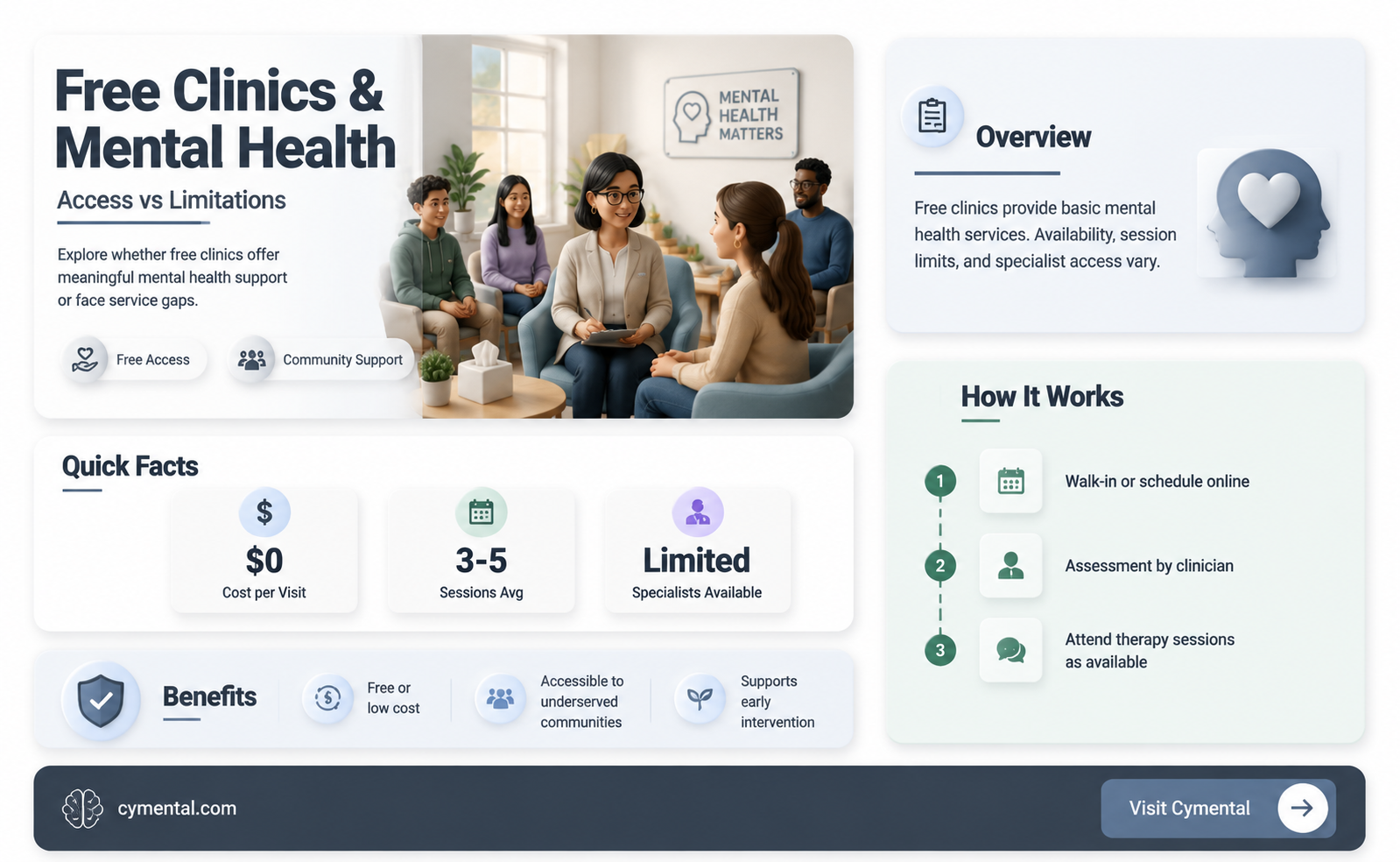
Free clinics play a crucial role in providing accessible healthcare services to underserved communities, but their offerings often vary widely, particularly when it comes to mental health support. While many free clinics focus primarily on physical health needs, such as primary care, vaccinations, and chronic disease management, an increasing number are recognizing the importance of addressing mental health as part of holistic care. Some free clinics now offer counseling, therapy, and referrals to mental health specialists, though these services may be limited by funding, staffing, and resources. Additionally, partnerships with local mental health organizations or telehealth platforms have expanded access in some cases. However, the availability of mental health services at free clinics remains inconsistent, highlighting the need for greater investment and awareness to ensure equitable care for all individuals, regardless of their financial situation.
Explore related products


What You'll Learn

Availability of mental health services at free clinics
Free clinics, often seen as a lifeline for those without insurance or with limited financial resources, are increasingly recognizing the critical need for mental health services. While traditionally focused on physical health, many free clinics now integrate mental health care into their offerings, addressing a growing demand for accessible and affordable support. This shift reflects a broader understanding of health as holistic, encompassing both physical and mental well-being. However, the availability of these services varies widely, influenced by factors such as funding, location, and community needs.
One notable trend is the collaboration between free clinics and local mental health organizations to provide counseling, therapy, and psychiatric consultations. For instance, some clinics partner with universities to offer services staffed by supervised graduate students in psychology or social work programs. These partnerships not only expand access but also provide valuable training opportunities for future mental health professionals. Additionally, telehealth has emerged as a game-changer, enabling free clinics to connect patients with remote therapists, particularly in rural or underserved areas where mental health providers are scarce.
Despite these advancements, challenges persist. Funding remains a significant barrier, as mental health services require specialized staff and resources that free clinics often struggle to sustain. Moreover, stigma surrounding mental health can deter individuals from seeking help, even when services are available. To address this, some clinics incorporate mental health screenings into routine physical exams, normalizing the conversation and identifying issues early. For example, a free clinic in Chicago reports that 30% of patients who received a mental health screening during a primary care visit went on to access counseling services.
Practical tips for individuals seeking mental health support at free clinics include calling ahead to confirm availability, as services may be offered on specific days or by appointment only. Some clinics also provide group therapy sessions, which can be a cost-effective way to receive support while connecting with others facing similar challenges. For those with severe mental health conditions, free clinics may offer medication management, though options may be limited compared to private practices. It’s also worth exploring clinics that participate in sliding-scale fee programs, which adjust costs based on income.
In conclusion, while the availability of mental health services at free clinics is growing, it remains uneven and dependent on local resources and initiatives. Patients can maximize access by researching clinics in their area, leveraging telehealth options, and advocating for expanded services. As awareness of mental health needs continues to rise, free clinics play a vital role in bridging the gap between those in need and the care they deserve.
Mental Health Support: A Key to Stable Housing Solutions
You may want to see also
Explore related products


$7.76 $18.99


Types of mental health support offered (therapy, counseling, etc.)
Free clinics, often serving as a lifeline for underserved communities, provide a range of mental health services tailored to meet diverse needs. Among these, therapy stands out as a cornerstone. Cognitive Behavioral Therapy (CBT), for instance, is widely offered due to its structured, goal-oriented approach, typically delivered in 12 to 20 sessions. This evidence-based method helps individuals reframe negative thought patterns and is particularly effective for anxiety and depression. Many free clinics also offer group therapy, which fosters a sense of community and shared understanding, often at no cost. These sessions usually last 60 to 90 minutes and can be especially beneficial for those dealing with grief, addiction, or chronic stress.
Beyond therapy, counseling is another critical service provided by free clinics. Unlike therapy, which often delves into long-term psychological issues, counseling tends to focus on immediate, practical solutions. For example, a counselor might help a client develop a budget to alleviate financial stress or provide strategies for managing workplace conflicts. Sessions are typically shorter, ranging from 30 to 60 minutes, and may be offered on a walk-in basis to address urgent needs. Some clinics also specialize in crisis counseling, providing immediate support for individuals experiencing acute mental health episodes, such as panic attacks or suicidal ideation.
For those seeking alternative approaches, free clinics increasingly incorporate holistic and integrative therapies into their mental health offerings. Mindfulness-based stress reduction (MBSR), for instance, teaches techniques like meditation and deep breathing to manage anxiety. Programs often consist of eight weekly sessions, each lasting about two hours. Similarly, art therapy and yoga are gaining traction as complementary tools, particularly for children and adolescents, who may find traditional talk therapy less engaging. These modalities are often provided in group settings to maximize accessibility.
A notable trend is the integration of telehealth services, which has expanded the reach of free clinics significantly. Virtual therapy and counseling sessions eliminate barriers like transportation and geographic isolation, making mental health support more accessible. Platforms often offer flexible scheduling, with sessions available outside traditional business hours to accommodate working individuals. However, it’s important to note that telehealth may not be suitable for everyone, particularly those with severe mental health conditions requiring in-person care.
Finally, support groups play a vital role in the mental health services offered by free clinics. These groups, often led by trained facilitators or peers, provide a safe space for individuals to share experiences and coping strategies. Examples include groups for veterans, survivors of domestic violence, or individuals with specific diagnoses like bipolar disorder. Meetings typically occur weekly and last about 90 minutes. While not a substitute for professional therapy, support groups offer ongoing encouragement and a sense of belonging, which are essential for long-term mental wellness.
In summary, free clinics offer a multifaceted array of mental health services, from traditional therapy and counseling to innovative holistic approaches and telehealth solutions. Each modality is designed to address specific needs, ensuring that individuals can access the support that best fits their circumstances. By leveraging these resources, underserved communities can take meaningful steps toward improved mental health and overall well-being.
Gaming's Surprising Benefits: Boosting Mental Health and Well-Being
You may want to see also
Explore related products






Eligibility criteria for accessing free mental health care
Free mental health care through clinics often hinges on specific eligibility criteria, which can vary widely depending on location, funding sources, and the clinic’s mission. A common requirement is income level, as many free clinics prioritize individuals and families living below the federal poverty line. For example, in the U.S., clinics funded by the Health Resources and Services Administration (HRSA) typically require patients to demonstrate financial need through pay stubs, tax returns, or public assistance documentation. However, some clinics may use a sliding fee scale, adjusting costs based on income rather than offering entirely free services. Understanding these income thresholds is crucial for determining eligibility.
Beyond income, residency status frequently plays a decisive role. Many free clinics serve only individuals residing within a specific geographic area, such as a county or city, to ensure resources are directed to the local community. For instance, a clinic in Los Angeles might require proof of residency, like a utility bill or driver’s license, to qualify for services. Undocumented immigrants may face additional barriers, though some clinics explicitly serve this population, often relying on private or nonprofit funding to avoid federal restrictions. Always verify residency requirements before applying.
Age and demographic-specific programs further refine eligibility. Some clinics focus on children and adolescents, offering services like counseling or behavioral therapy for minors under 18. Others target veterans, seniors, or survivors of domestic violence, tailoring their criteria to meet the unique needs of these groups. For example, a clinic specializing in youth mental health might require parental consent for minors, while a veteran-focused program may ask for proof of military service. Identifying clinics aligned with your demographic can streamline access.
Documentation and referral processes are another layer of eligibility. Some clinics require a referral from a primary care physician, school counselor, or social worker to ensure patients genuinely need specialized mental health care. Others mandate participation in an initial screening or assessment to determine the severity of the condition and appropriateness for their services. For instance, a clinic might prioritize individuals with moderate to severe depression or anxiety over those seeking general wellness support. Preparing necessary documents and understanding referral pathways can expedite the process.
Finally, waitlists and availability often dictate access, even for eligible individuals. Free clinics frequently operate with limited resources, leading to long wait times for appointments. Some prioritize urgent cases, such as individuals with suicidal ideation or severe trauma, while others serve patients on a first-come, first-served basis. Proactive steps, like regularly checking clinic websites for openings or signing up for waitlists at multiple locations, can increase the chances of timely care. Patience and persistence are key in navigating these systems.
Exploring Alcohol's Role in Mental Health: Benefits or Risks?
You may want to see also
Explore related products




Limitations of mental health services at free clinics
Free clinics, while invaluable for providing healthcare to underserved populations, face significant limitations in offering comprehensive mental health services. One of the most pressing challenges is the scarcity of specialized providers. Unlike primary care, mental health treatment often requires psychiatrists, psychologists, or licensed therapists, whose expertise is in high demand and short supply. Free clinics, operating on limited budgets, struggle to attract and retain these professionals, leaving them reliant on volunteers or part-time staff. This shortage translates to longer wait times for patients, with some clinics reporting delays of several months for initial consultations. For individuals in crisis, such delays can exacerbate conditions, underscoring the urgent need for systemic solutions.
Another critical limitation lies in the scope of services offered. Free clinics often prioritize short-term interventions, such as medication management or brief counseling sessions, due to resource constraints. While these services are essential, they fall short for patients requiring long-term therapy, intensive treatment programs, or specialized care for conditions like severe depression, bipolar disorder, or schizophrenia. Without access to comprehensive care, patients may experience incomplete recovery or relapse, perpetuating cycles of instability. For instance, a patient prescribed antidepressants at a free clinic may lack follow-up care to monitor side effects or adjust dosages, diminishing the medication’s effectiveness.
Funding instability further compounds these challenges. Free clinics rely heavily on grants, donations, and government funding, which are often unpredictable and insufficient. Mental health services, in particular, are costly to sustain due to the need for ongoing therapy sessions, medication subsidies, and administrative support. When funding dries up, clinics are forced to cut back on mental health programs, leaving patients without consistent care. This financial precarity also limits clinics’ ability to invest in infrastructure, such as telehealth platforms, which could expand access to remote mental health services.
Finally, the stigma surrounding mental health remains a barrier, even within free clinic settings. Many patients hesitate to seek help due to fear of judgment or lack of awareness about available services. Free clinics, already stretched thin, often lack the resources for outreach and education campaigns to address this stigma. Additionally, cultural and language barriers can further alienate marginalized communities, who may already face systemic barriers to care. For example, a Spanish-speaking patient may struggle to find a bilingual therapist at a free clinic, hindering effective communication and trust.
In conclusion, while free clinics play a vital role in bridging healthcare gaps, their mental health services are constrained by provider shortages, limited treatment scope, funding instability, and persistent stigma. Addressing these limitations requires targeted investments in workforce development, sustainable funding models, and culturally sensitive outreach efforts. Without such interventions, the mental health needs of underserved populations will remain unmet, perpetuating disparities in care and outcomes.
Microdosing Acid: A Potential Ally in Mental Health Treatment?
You may want to see also
Explore related products


How to find free clinics offering mental health assistance
Free clinics often provide mental health services, but locating them requires a strategic approach. Start by searching online directories specifically designed for low-cost or free healthcare resources. Websites like the Health Resources and Services Administration (HRSA) offer a "Find a Health Center" tool that filters by services, including mental health. Non-profit organizations such as the National Association of Free & Charitable Clinics (NAFC) also maintain directories of member clinics, many of which include mental health assistance. These platforms are updated regularly, ensuring you access current information.
Once you’ve identified potential clinics, verify their services by contacting them directly. Many free clinics operate on limited resources, so their mental health offerings may vary—from counseling sessions to medication management. Ask about eligibility criteria, as some clinics prioritize uninsured individuals, low-income families, or specific age groups (e.g., adolescents or seniors). Additionally, inquire about wait times, as demand for free mental health services can be high. Persistence is key; if one clinic is unavailable, another nearby might have openings.
Community health fairs and local government websites are underutilized but valuable resources. These events often feature booths from free clinics promoting their services, including mental health programs. Local health departments may also publish lists of free or sliding-scale mental health providers in the area. Libraries, churches, and schools sometimes have bulletin boards or staff who can direct you to nearby resources. Leveraging these community touchpoints can uncover hidden options not easily found online.
Finally, consider national helplines and telehealth platforms that partner with free clinics. The Substance Abuse and Mental Health Services Administration (SAMHSA) National Helpline (1-800-662-HELP) provides referrals to local treatment centers, including free clinics. Telehealth services like Open Path Collective offer low-cost therapy sessions, often in collaboration with community clinics. While not always free, these platforms can bridge gaps when local options are scarce. Combining these strategies maximizes your chances of finding accessible mental health assistance without financial burden.
Mental Health History: Boosting Temporary Insanity Claims in Court?
You may want to see also
Frequently asked questions
Yes, many free clinics provide mental health services, including counseling, therapy, and referrals to specialists, though availability varies by location and funding.
Free clinics often offer basic mental health services like screenings, short-term counseling, medication management, and referrals to community resources for long-term care.
Eligibility criteria differ by clinic but often include income level, lack of insurance, or residency status. Contact the clinic directly to confirm if you qualify.