Madison Cole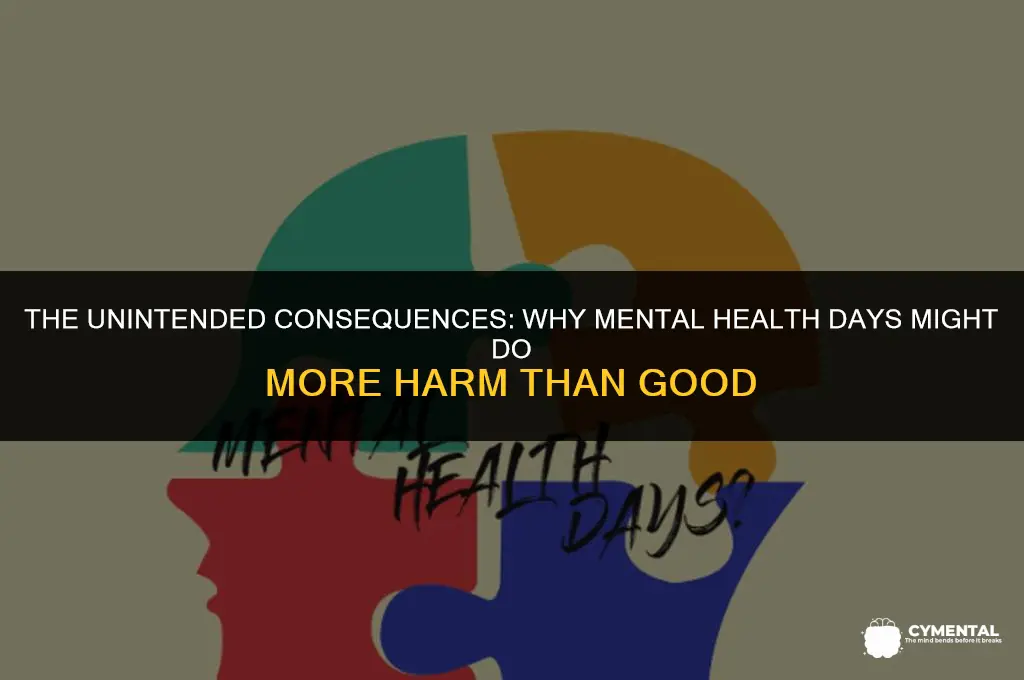
Mental health days have become a topic of debate in recent years, with some arguing that they are a necessary step towards prioritizing employee well-being, while others believe they may have unintended negative consequences. In this discussion, it's important to consider the potential drawbacks of implementing mental health days in the workplace. One concern is that they may be seen as a quick fix or a token gesture, rather than a meaningful commitment to addressing the root causes of mental health issues. Additionally, there is a risk that mental health days could be stigmatized, leading to employees feeling pressured to take them or facing negative repercussions if they do. Furthermore, the effectiveness of mental health days may vary depending on individual circumstances and the specific needs of employees, making it challenging to implement a one-size-fits-all approach. As we explore this topic further, it's crucial to weigh the potential benefits against the possible drawbacks and consider alternative strategies for promoting mental health and well-being in the workplace.
What You'll Learn
- Stigma: Mental health days may inadvertently reinforce the stigma surrounding mental illness, implying it's a rare or exceptional issue
- Over-reliance: Relying on designated days might lead individuals to neglect their mental well-being on other days, fostering a mindset of I'll deal with it later
- Commercialization: The concept could be exploited for commercial gain, with companies offering mental health day packages or promotions, trivializing the issue
- One-size-fits-all: A single day off may not address the diverse needs of individuals with varying mental health conditions, potentially causing more harm than good
- Workplace culture: In some workplaces, taking a mental health day might be viewed as a sign of weakness or lack of dedication, potentially damaging one's professional reputation

Stigma: Mental health days may inadvertently reinforce the stigma surrounding mental illness, implying it's a rare or exceptional issue
The concept of mental health days, while seemingly beneficial, can inadvertently perpetuate the stigma associated with mental illness. By designating specific days for mental health awareness, there is a risk of implying that mental health issues are rare or exceptional occurrences, rather than common and ongoing challenges that many individuals face. This can lead to a reinforcement of the notion that mental illness is something to be singled out and addressed only on certain occasions, rather than being integrated into everyday conversations and support systems.
Furthermore, the focus on mental health days may create a sense of tokenism, where organizations and individuals feel that they have fulfilled their obligation to address mental health issues by participating in these designated days. This can result in a lack of sustained effort and commitment to promoting mental health awareness and support throughout the year. Additionally, the emphasis on mental health days may lead to the marginalization of individuals who experience mental health issues outside of these designated times, potentially exacerbating feelings of isolation and stigma.
To mitigate these risks, it is essential to approach mental health awareness and support in a more holistic and sustained manner. This could involve integrating mental health education into school curricula, providing ongoing training and resources for mental health professionals, and fostering open and supportive conversations about mental health in various settings, such as workplaces, communities, and families. By doing so, we can work towards reducing the stigma surrounding mental illness and promoting a culture of understanding, empathy, and support for all individuals affected by mental health issues.
Navigating Mental Health and Short-Term Disability: What You Need to Know
You may want to see also
Over-reliance: Relying on designated days might lead individuals to neglect their mental well-being on other days, fostering a mindset of I'll deal with it later
Designating specific days for mental health can inadvertently create a false sense of security, leading individuals to postpone addressing their mental well-being until these designated times. This over-reliance on mental health days can foster a mindset of "I'll deal with it later," which may exacerbate existing mental health issues or prevent proactive measures from being taken.
For instance, an employee might experience high levels of stress and anxiety throughout the workweek but convince themselves that they can manage these feelings until the company's designated mental health day. This delay in addressing their mental health concerns could result in a worsening of symptoms, decreased productivity, and a negative impact on overall well-being.
Furthermore, the concept of mental health days might lead individuals to compartmentalize their mental health, viewing it as something that can be isolated and addressed only on specific occasions. This approach overlooks the importance of integrating mental health practices into daily life, such as regular exercise, mindfulness, and social support.
To mitigate the potential negative effects of over-reliance on mental health days, it is essential to promote a culture that encourages ongoing mental health awareness and support. This can be achieved by providing resources and training to help individuals recognize and address mental health concerns, fostering open communication about mental health issues, and creating a supportive environment that values overall well-being.
In conclusion, while mental health days can serve as a valuable tool for raising awareness and providing support, it is crucial to avoid over-reliance on these designated times. Instead, individuals and organizations should strive to create a culture that prioritizes mental health every day, recognizing that proactive measures and ongoing support are essential for maintaining overall well-being.
Understanding LMHC: A Guide to Licensed Mental Health Counselors
You may want to see also
Commercialization: The concept could be exploited for commercial gain, with companies offering mental health day packages or promotions, trivializing the issue
The commercialization of mental health days poses a significant risk to the genuine intent behind such initiatives. Companies may seize the opportunity to offer mental health day packages or promotions, potentially trivializing the serious issue of mental health. This exploitation could lead to a commodification of mental well-being, where the focus shifts from providing meaningful support to generating profit.
One potential consequence is the creation of a market-driven approach to mental health, where individuals may feel pressured to purchase services or products to address their mental health needs. This could result in a two-tiered system, where those who can afford it have access to better mental health resources, while others are left behind. Furthermore, the commercialization of mental health days may lead to a lack of accountability and oversight, as companies may prioritize profit over the quality of care provided.
To mitigate these risks, it is essential to establish clear guidelines and regulations for companies offering mental health day packages or promotions. This could include requirements for transparency in pricing, qualifications for service providers, and measures to ensure that the services offered are evidence-based and effective. Additionally, efforts should be made to promote mental health literacy and awareness, so that individuals can make informed decisions about their mental health care.
Ultimately, the commercialization of mental health days has the potential to undermine the very purpose of such initiatives. By prioritizing profit over people, companies may contribute to the stigmatization and trivialization of mental health issues, rather than fostering a culture of support and understanding. It is crucial to approach mental health days with a critical eye, recognizing both the potential benefits and the risks associated with commercialization.
Unveiling the Salary Range for Mental Health Therapists: A Comprehensive Guide
You may want to see also
One-size-fits-all: A single day off may not address the diverse needs of individuals with varying mental health conditions, potentially causing more harm than good
The concept of a one-size-fits-all approach to mental health days is inherently flawed due to the vast diversity of mental health conditions and individual needs. While the intention behind such a policy may be to provide a universal solution, it risks oversimplifying the complex nature of mental health. For instance, individuals with chronic conditions such as bipolar disorder or schizophrenia may require more than a single day off to manage their symptoms effectively. Conversely, those with milder conditions might find a day off unnecessary or even counterproductive, potentially leading to increased anxiety or stress about falling behind at work.
Moreover, the assumption that a single day off can address the myriad challenges faced by individuals with varying mental health conditions is overly simplistic. Mental health is not a monolithic issue; it encompasses a wide range of disorders, each with its own unique set of symptoms and treatment requirements. A one-size-fits-all approach fails to account for these differences, potentially exacerbating existing inequalities in mental health care. For example, individuals from marginalized communities may face additional barriers in accessing mental health services, making a single day off an inadequate solution to their needs.
Furthermore, the implementation of a one-size-fits-all mental health day policy could lead to unintended consequences. Employers may view it as a quick fix, absolving them of the responsibility to provide more comprehensive mental health support. This could result in a lack of investment in long-term mental health initiatives, such as counseling services or stress management programs, which are more likely to have a lasting impact on employee well-being. Additionally, the policy may inadvertently stigmatize mental health issues, as employees may feel pressured to take a day off even if they do not need it, for fear of being perceived as weak or incapable.
In conclusion, while the idea of mental health days is well-intentioned, a one-size-fits-all approach is unlikely to be effective in addressing the diverse needs of individuals with varying mental health conditions. Instead, it risks causing more harm than good by oversimplifying the issue, exacerbating inequalities, and potentially leading to unintended consequences. A more nuanced and individualized approach is necessary to ensure that mental health support is tailored to the specific needs of each person, rather than relying on a blanket solution that may not be suitable for everyone.
Prioritizing Your Well-being: A Guide to Taking a Mental Health Day
You may want to see also
Workplace culture: In some workplaces, taking a mental health day might be viewed as a sign of weakness or lack of dedication, potentially damaging one's professional reputation
In certain workplace cultures, the concept of taking a mental health day can be met with skepticism or outright disapproval. This perspective often stems from a misguided belief that mental health issues are a sign of personal weakness or a lack of dedication to one's job. Such an environment can be detrimental to employees' well-being, as it discourages them from seeking the help they need and may lead to a decline in productivity and job satisfaction.
The stigma surrounding mental health days can have serious consequences for an individual's professional reputation. Colleagues and supervisors may view an employee who takes a mental health day as less reliable or less committed to their work, which can impact their opportunities for advancement and their overall career trajectory. This perception is particularly problematic in high-pressure industries where long hours and constant availability are often seen as the norm.
Moreover, the reluctance to acknowledge the importance of mental health can create a toxic work environment where employees feel forced to hide their struggles. This can lead to increased stress, anxiety, and burnout, ultimately resulting in a decrease in overall workplace morale and efficiency. It is essential for organizations to recognize the value of mental health days and to foster a culture that supports employees' well-being without fear of judgment or repercussions.
To address this issue, companies can implement policies that promote mental health awareness and provide resources for employees who need support. This may include offering mental health days as part of a comprehensive benefits package, providing access to counseling services, and creating a safe and supportive work environment where employees feel comfortable discussing their mental health concerns. By taking these steps, organizations can help to reduce the stigma associated with mental health days and create a more positive and productive workplace culture.
Nurturing Minds: The Profound Impact of Family on Mental Health
You may want to see also
Frequently asked questions
Critics argue that mental health days can be seen as a bandaid solution to deeper issues, potentially trivializing the complexities of mental health challenges. They may also express concerns about the economic impact of such days, suggesting that they could lead to decreased productivity and increased costs for businesses.
Some potential downsides include the possibility of employees taking advantage of the system, leading to decreased productivity and morale among colleagues. There's also the challenge of ensuring that mental health days are used appropriately and not as a means to avoid work responsibilities. Additionally, small businesses may struggle to accommodate such policies due to limited staff and resources.
Mental health days could inadvertently contribute to the stigmatization of mental health issues by singling out these conditions for special treatment. Some argue that this could reinforce the idea that mental health problems are something to be ashamed of or hidden, rather than addressed openly and with the same seriousness as physical health concerns.
Yes, some argue that implementing comprehensive mental health programs, providing access to counseling services, and fostering a supportive work environment through policies and training could be more effective in addressing mental health concerns. These approaches aim to create a culture of openness and support, rather than relying on occasional days off as a solution.