Caleb Wright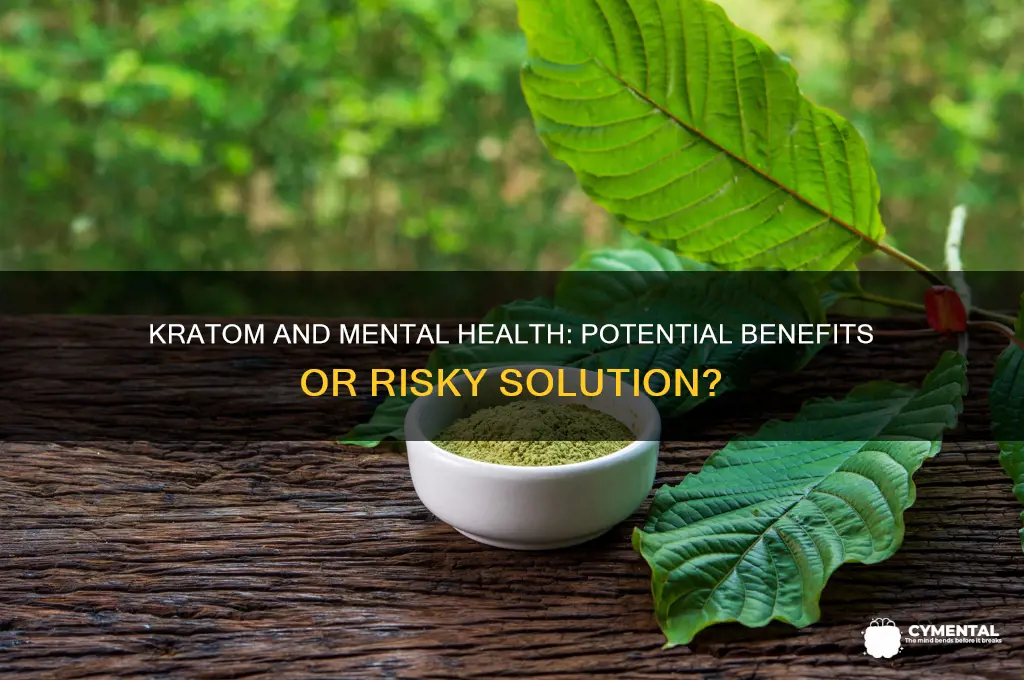
Kratom, derived from the leaves of a tree native to Southeast Asia, has gained attention for its potential effects on mental health, with some users reporting benefits such as reduced anxiety, improved mood, and relief from symptoms of depression. However, its efficacy and safety remain highly debated within the medical community, as scientific research on kratom is limited and largely inconclusive. While anecdotal evidence suggests it may help alleviate certain mental health issues, there are also concerns about its addictive properties, potential side effects, and lack of regulation. As such, individuals considering kratom for mental health purposes should approach it with caution, consult healthcare professionals, and explore evidence-based treatments as a priority.
Explore related products


What You'll Learn

Kratom's effects on anxiety and stress relief
Kratom, derived from the leaves of a Southeast Asian tree, has gained attention for its potential to alleviate anxiety and stress. Users often report a sense of calm and relaxation after consumption, attributing these effects to the active compounds mitragynine and 7-hydroxymitragynine. These alkaloids interact with the brain’s receptors, potentially modulating mood and reducing symptoms of anxiety. However, the lack of standardized dosing and varying individual responses make it crucial to approach kratom with caution.
For those considering kratom as a stress-relief tool, starting with a low dose (1-2 grams) is advisable to gauge tolerance. Higher doses (5-8 grams) may produce sedative effects, which could be beneficial for acute stress but risk over-sedation or dependency. It’s essential to note that kratom’s effects can vary based on strain type—for instance, red vein strains are often associated with relaxation, while green or white strains may be more energizing. Consistency in dosage and strain selection can help manage expectations and outcomes.
While anecdotal evidence supports kratom’s anxiolytic properties, scientific research remains limited. Studies suggest that mitragynine may act on opioid receptors, providing pain relief and mood enhancement, but this mechanism also raises concerns about addiction and withdrawal. Individuals with pre-existing mental health conditions or those taking medications should consult a healthcare professional before using kratom, as interactions could exacerbate symptoms or interfere with treatment.
Practical tips for using kratom for anxiety and stress include maintaining a journal to track dosage, effects, and side effects. Combining kratom with lifestyle changes such as regular exercise, mindfulness practices, and adequate sleep can enhance its benefits. However, reliance on kratom alone without addressing underlying stressors may lead to dependency. Moderation and informed use are key to maximizing potential benefits while minimizing risks.
Crafting for Calm: How Creative Hobbies Boost Mental Well-Being
You may want to see also
Explore related products


Potential benefits for depression symptoms
Kratom's potential to alleviate depression symptoms hinges on its interaction with the brain's opioid receptors, particularly through mitragynine, its primary alkaloid. This compound acts as a partial opioid agonist, meaning it binds to these receptors but with less intensity than full agonists like morphine. This mechanism suggests a milder, potentially less addictive approach to mood modulation. Users often report enhanced mood, increased energy, and reduced anxiety, which are critical factors in managing depressive episodes. However, the scientific community remains divided, with limited clinical trials to definitively prove these effects.
Consider the anecdotal evidence: many users claim kratom provides a sense of well-being and motivation, particularly at low to moderate doses (1-5 grams). These doses are often referred to as "stimulating" and may help counteract the lethargy and apathy associated with depression. For instance, a 30-year-old user with treatment-resistant depression reported improved focus and a more positive outlook after incorporating kratom into their routine. However, individual responses vary, and what works for one person may not work for another. It’s crucial to start with the lowest effective dose and monitor effects closely.
Contrast this with higher doses (5-8 grams), which tend to produce sedative effects. While these doses might temporarily relieve anxiety, they can also lead to drowsiness and cognitive fog, potentially exacerbating depressive symptoms. This duality underscores the importance of precision in dosing. For those exploring kratom, keeping a journal to track dosage, timing, and effects can be invaluable in identifying the optimal regimen.
A persuasive argument for kratom’s potential lies in its accessibility and affordability compared to traditional antidepressants. For individuals in regions with limited access to mental health resources, kratom may offer a temporary solution. However, this does not replace professional treatment. Kratom should be viewed as a complementary tool, not a standalone cure. Consulting a healthcare provider is essential, especially for those already on medication, as kratom can interact with other substances.
In conclusion, while kratom shows promise for alleviating depression symptoms, its use requires careful consideration. Start with low doses, monitor effects, and integrate it into a broader mental health strategy. Anecdotal success stories are encouraging, but they are no substitute for rigorous scientific research. As with any supplement, balance hope with caution, and prioritize safety above all.
Supporting Survivors: Compassionate Ways to Help Heal Mental Abuse Wounds
You may want to see also
Explore related products



Risks of kratom dependency and mental health
Kratom, derived from the leaves of a tree native to Southeast Asia, has gained attention for its potential to alleviate symptoms of mental health issues such as anxiety and depression. However, its use is not without risks, particularly when it comes to dependency and its impact on mental health. While some users report short-term benefits, the long-term consequences of kratom use can exacerbate the very conditions it aims to treat. Understanding these risks is crucial for anyone considering kratom as a mental health aid.
One of the primary concerns with kratom is its potential for dependency. Regular use, even at moderate doses (2-5 grams per day), can lead to physical and psychological reliance. Withdrawal symptoms, which may include irritability, insomnia, and severe depression, often emerge when usage is reduced or stopped. For individuals already struggling with mental health issues, these withdrawal effects can be particularly devastating, creating a cycle of dependency that worsens their condition. Unlike prescription medications, kratom is not regulated, making it difficult to monitor dosage and purity, further increasing the risk of misuse.
The relationship between kratom dependency and mental health is complex. While kratom interacts with opioid receptors in the brain, producing stimulant-like effects at low doses and sedative effects at higher doses (5-15 grams), prolonged use can disrupt the brain’s natural chemistry. This disruption may lead to heightened anxiety, mood swings, and even psychotic symptoms in some users. Studies suggest that individuals with pre-existing mental health conditions are more susceptible to these adverse effects, as kratom can interfere with neurotransmitter balance, exacerbating symptoms rather than alleviating them.
Practical precautions are essential for anyone considering kratom. Limiting use to occasional, low-dose consumption (1-2 grams) and avoiding daily intake can reduce the risk of dependency. However, for those with mental health concerns, consulting a healthcare professional is paramount. Alternative, evidence-based treatments such as therapy, medication, and lifestyle changes are often safer and more effective. If kratom is used, monitoring for signs of dependency—such as increased tolerance or cravings—is critical. Immediate cessation and professional support should be sought if these signs appear.
In conclusion, while kratom may offer temporary relief for mental health symptoms, its risks of dependency and adverse psychological effects cannot be overlooked. The lack of regulation and potential for misuse make it a precarious choice for long-term mental health management. Prioritizing proven, regulated treatments and maintaining awareness of kratom’s risks are key to safeguarding mental well-being.
Affordable Mental Health Resources in Texas: A Guide for the Uninsured
You may want to see also
Explore related products


Kratom's impact on mood stabilization
Kratom's potential to stabilize mood hinges on its active compounds, mitragynine and 7-hydroxymitragynine, which interact with opioid receptors in the brain. These interactions can produce stimulant-like effects at low doses (1-5 grams) and sedative effects at higher doses (5-15 grams). Users often report improved mood, reduced anxiety, and increased sociability at moderate doses, suggesting a biphasic response where dosage precision is critical. However, the lack of standardized dosing guidelines and variability in product quality complicates its use as a reliable mood stabilizer.
Consider the case of individuals with mild to moderate depression or anxiety. Anecdotal evidence suggests that kratom can provide temporary relief by enhancing mood and energy levels. For instance, a 3-gram dose of green vein kratom is often recommended for its balanced effects, combining mild stimulation with relaxation. However, this approach is not without risks. Prolonged use or high doses can lead to dependence, tolerance, and withdrawal symptoms, which may exacerbate mood instability in the long term.
From a comparative perspective, kratom’s mood-stabilizing effects differ from traditional pharmaceuticals like SSRIs or mood stabilizers. Unlike these medications, which require weeks to take effect and involve consistent dosing, kratom’s effects are immediate but short-lived. This makes it a tempting quick fix but a poor substitute for long-term mental health management. Additionally, kratom’s legal status varies by region, and its safety profile remains under-researched, raising concerns about its suitability for widespread use.
For those considering kratom as a mood stabilizer, practical tips include starting with the lowest effective dose (1-2 grams) and monitoring effects closely. Rotate strains (e.g., red, green, white vein) to avoid tolerance and limit use to 2-3 times per week. Avoid combining kratom with other substances, especially alcohol or opioids, due to the risk of adverse interactions. Finally, consult a healthcare professional before use, particularly if you have pre-existing mental health conditions or are taking medications.
In conclusion, while kratom may offer temporary mood stabilization for some, its benefits are outweighed by risks when used without caution. Its potential as a mental health aid remains unproven, and reliance on it could delay access to evidence-based treatments. For sustainable mood management, prioritize therapies like CBT, medication, and lifestyle changes, treating kratom as a last resort rather than a first-line solution.
Alarming Gap: Teens Missing Mental Health Support and Why It Matters
You may want to see also
Explore related products



Comparing kratom to traditional mental health treatments
Kratom, derived from the leaves of a Southeast Asian tree, has gained attention as a potential alternative to traditional mental health treatments. Unlike prescription medications, kratom is not regulated by the FDA, leaving users to navigate its use largely through anecdotal evidence and personal experimentation. This lack of oversight contrasts sharply with the structured, evidence-based approach of conventional therapies like antidepressants or cognitive-behavioral therapy (CBT), which are backed by decades of research and clinical trials.
Consider the case of anxiety management. Traditional treatments often involve SSRIs (e.g., sertraline or fluoxetine), typically prescribed at doses of 25–200 mg daily, depending on the patient’s needs. These medications require 4–6 weeks to take effect and are monitored by healthcare providers to manage side effects like nausea or insomnia. Kratom, on the other hand, is often self-administered in doses of 2–5 grams, with users reporting immediate effects. However, its efficacy for anxiety is inconsistent, and long-term use can lead to dependence or withdrawal symptoms, risks not typically associated with regulated medications.
From a practical standpoint, kratom’s accessibility is a double-edged sword. It can be purchased online or in stores without a prescription, making it appealing for those seeking quick relief or avoiding the stigma of mental health treatment. However, this ease of access bypasses critical steps like diagnosis and personalized treatment planning, which are cornerstones of traditional care. For instance, CBT involves tailored sessions with a therapist to address specific thought patterns, a structured approach that kratom cannot replicate.
A persuasive argument for kratom might highlight its natural origin and perceived lack of severe side effects compared to pharmaceuticals. Yet, this overlooks the fact that "natural" does not equate to "safe." Traditional treatments undergo rigorous testing to balance efficacy and risk, whereas kratom’s safety profile remains unclear due to limited research. For example, kratom has been linked to liver damage and interactions with other medications, complications that are systematically managed in conventional treatment settings.
In conclusion, while kratom may offer temporary relief for some, it lacks the reliability, safety, and comprehensive support of traditional mental health treatments. Users considering kratom should weigh its immediate accessibility against the long-term benefits of evidence-based therapies. Consulting a healthcare professional remains essential to ensure a treatment plan that is both effective and safe.
Blue Light Therapy: Enhancing Mental Well-Being Through Calming Illumination
You may want to see also
Frequently asked questions
While some users report that kratom helps alleviate symptoms of anxiety and depression, there is limited scientific research to support its effectiveness or safety for mental health conditions. Kratom is not approved by the FDA for any medical use, and its long-term effects are not well understood.
Kratom is not considered a safe alternative to prescription medications for mental health issues. It can have unpredictable effects, including potential risks of dependence, withdrawal, and adverse reactions. Always consult a healthcare professional before using kratom, especially if you are already taking medications.
Yes, kratom can potentially worsen existing mental health problems. Some users experience increased anxiety, irritability, or mood swings when using kratom. Additionally, its stimulant-like effects may exacerbate conditions like bipolar disorder or schizophrenia. It’s important to approach kratom use with caution and seek professional guidance.