Harper Lewis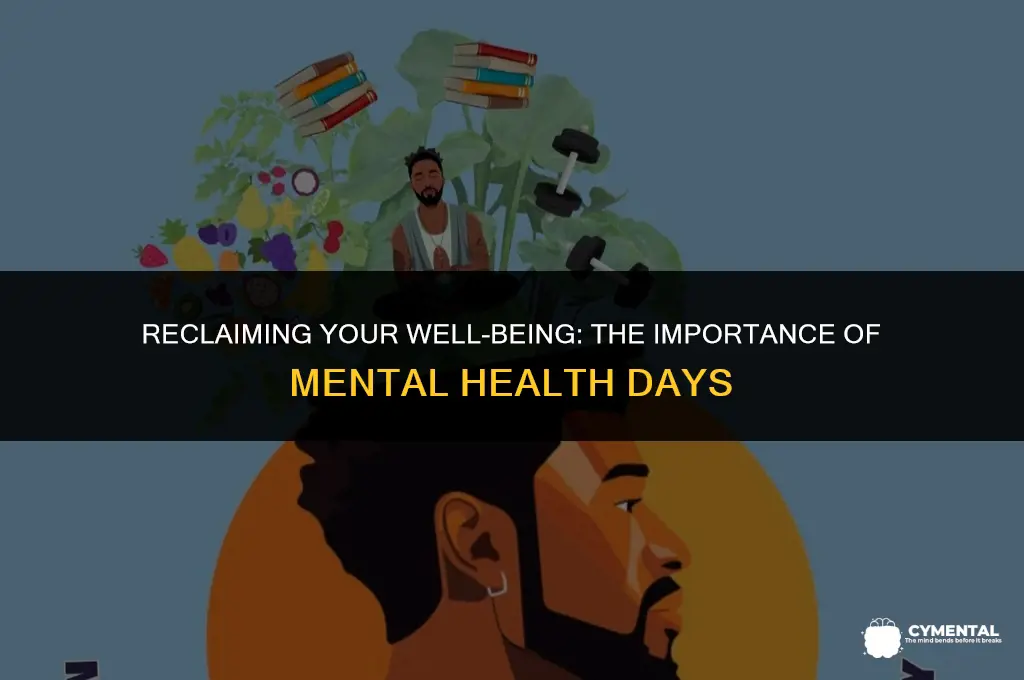
Mental health days have become an increasingly recognized and accepted aspect of maintaining overall well-being. As awareness about mental health issues grows, more individuals are acknowledging the importance of taking time off to focus on their psychological health. This has led to a rise in the number of people asking themselves, Am I entitled to a mental health day? The concept of a mental health day is rooted in the understanding that just like physical health, mental health requires attention and care. It's a proactive approach to managing stress, anxiety, and other mental health challenges before they escalate into more severe conditions. In many workplaces and educational institutions, mental health days are now officially recognized and encouraged as a means to promote a healthier work-life balance and reduce burnout.
Explore related products



What You'll Learn
- Legal Entitlement: Understand your rights under labor laws regarding mental health days
- Company Policies: Review your employer's policies on mental health and time off
- Health Documentation: Learn what documentation may be required to justify a mental health day
- Communication Strategies: Tips on how to communicate your need for a mental health day to your employer
- Self-Care Planning: Ideas for activities and practices to make the most of your mental health day

Legal Entitlement: Understand your rights under labor laws regarding mental health days
Under labor laws, employees may be entitled to mental health days as part of their legal rights. This entitlement can vary based on jurisdiction, but generally, it falls under the broader category of sick leave or personal time off. To understand your specific rights, it's crucial to consult the labor laws of your country or state, as well as any applicable employment contracts or company policies.
In some regions, mental health days are explicitly recognized and protected under law. For example, in the United States, the Family and Medical Leave Act (FMLA) allows eligible employees to take up to 12 weeks of unpaid leave for certain family and medical reasons, which can include mental health conditions. Similarly, in the European Union, the Working Time Directive provides for a minimum of four weeks of paid annual leave, which can be used for mental health purposes.
To determine your entitlement, you should first review your employment contract or company's employee handbook. These documents often outline the specifics of leave policies, including the number of days allowed, the conditions under which leave can be taken, and the procedures for requesting time off. If your contract or company policies do not explicitly mention mental health days, you may still be able to take time off under general sick leave provisions, provided you can demonstrate a legitimate medical need.
It's also important to be aware of any documentation requirements. In many cases, employers may require a doctor's note or other medical certification to approve a mental health day. Keeping accurate records of your mental health treatment and any related absences can help protect your rights and ensure compliance with company policies.
Finally, if you're unsure about your rights or how to proceed, consider reaching out to a labor law attorney or a human resources professional for guidance. They can provide personalized advice based on your specific situation and help you navigate the complexities of labor laws and company policies.
Understanding the Nuances: Mental Health vs. Behavioral Health
You may want to see also
Explore related products




Company Policies: Review your employer's policies on mental health and time off
To determine if you are entitled to a mental health day, it is crucial to review your employer's policies on mental health and time off. This involves examining the company's handbook, intranet, or any other resources where such policies are typically documented. Look for specific mentions of mental health days, sick leave, personal days, or any other relevant terms that might apply to your situation.
Once you have located the relevant policies, carefully read through them to understand the criteria for taking a mental health day. Some companies may require a doctor's note, while others might have a more flexible approach. Pay attention to any stipulations regarding notice periods, limits on the number of days you can take, or conditions under which these days can be granted.
If the policies are not clear or do not explicitly mention mental health days, it may be necessary to reach out to your human resources department for clarification. Prepare your questions in advance and be ready to discuss your specific situation and needs. Keep in mind that HR representatives are there to help and can often provide guidance on how to navigate company policies.
In addition to reviewing written policies, it can be helpful to speak with colleagues or supervisors who have experience with taking mental health days. They may be able to offer insights into how the policies are applied in practice and provide tips on how to approach the situation.
Remember that taking a mental health day is not a sign of weakness, but rather a proactive step in managing your well-being. By understanding and following your employer's policies, you can ensure that you are taking the necessary steps to prioritize your mental health while also maintaining a professional and responsible approach to your work.
Exploring the Nuances: Emotional Health vs. Mental Health
You may want to see also
Explore related products


Health Documentation: Learn what documentation may be required to justify a mental health day
To justify a mental health day, you may need to provide specific documentation to your employer or educational institution. This typically includes a doctor's note or a letter from a mental health professional. The documentation should state that you are unable to work or attend classes due to mental health reasons. It may also need to include information about any treatment or support you are receiving.
In some cases, you may be required to provide additional documentation, such as a detailed explanation of your mental health condition or a plan for how you will manage your mental health going forward. This can help your employer or educational institution understand your situation and provide the necessary support.
It's important to note that the specific documentation requirements may vary depending on your employer's policies or the laws in your country or state. Some employers may have their own forms or procedures for requesting a mental health day, so it's best to check with your employer or HR department for more information.
When obtaining documentation for a mental health day, it's important to be honest and open with your healthcare provider about your symptoms and how they are affecting your ability to work or attend classes. This will help ensure that you receive the appropriate support and accommodations.
Remember, taking care of your mental health is important, and seeking support when you need it is a sign of strength, not weakness. By providing the necessary documentation, you can help ensure that you receive the time off you need to focus on your mental health and well-being.
Exploring Paths to Mental Health Counseling Without a Degree
You may want to see also
Explore related products





Communication Strategies: Tips on how to communicate your need for a mental health day to your employer
To effectively communicate your need for a mental health day to your employer, it's essential to approach the conversation with clarity and professionalism. Begin by scheduling a private meeting with your supervisor or HR representative, ensuring you have their undivided attention. During the meeting, clearly articulate your request, emphasizing the importance of mental health and how taking a day off will benefit your overall well-being and productivity.
Provide specific examples of how your mental health has been impacting your work performance, such as decreased focus, increased stress levels, or difficulty managing tasks. This will help your employer understand the tangible effects of your mental health struggles and the necessity of taking time off. Additionally, offer potential solutions for managing your workload during your absence, such as delegating tasks to colleagues or setting up automatic responses for emails.
Be prepared to discuss any company policies or procedures related to mental health days, and familiarize yourself with your rights under these policies. If your employer is hesitant to approve your request, calmly reiterate the importance of mental health and the long-term benefits of supporting employees' well-being. Remember to maintain a respectful and professional tone throughout the conversation, and be open to negotiating or compromising if necessary.
After the meeting, follow up with an email summarizing the discussion and reiterating your request for a mental health day. This will provide a written record of your conversation and help ensure that your employer takes your request seriously. If your request is approved, be sure to express gratitude and confirm the details of your time off, including any necessary paperwork or documentation.
In conclusion, communicating your need for a mental health day to your employer requires a thoughtful and strategic approach. By clearly articulating your request, providing specific examples, and being prepared to discuss company policies, you can effectively advocate for your mental health and well-being in the workplace.
Boost Your Mood: The Mental Health Benefits of Physical Activity
You may want to see also
Explore related products


Self-Care Planning: Ideas for activities and practices to make the most of your mental health day
Taking a mental health day is not just about taking a break; it's about engaging in activities that actively promote your well-being. One effective way to make the most of your mental health day is through self-care planning. This involves setting aside time to focus on activities and practices that help you relax, recharge, and improve your mental health.
Start by identifying activities that you find most relaxing and enjoyable. This could include reading a book, taking a long bath, practicing yoga, or spending time in nature. Once you have a list of activities, plan out your day in a way that allows you to engage in these activities without feeling rushed or overwhelmed. It's important to prioritize your self-care activities and make them a non-negotiable part of your day.
In addition to planning relaxing activities, it's also important to incorporate practices that promote mental health. This could include meditation, journaling, or engaging in creative activities like painting or drawing. These practices can help you process your emotions, reduce stress, and improve your overall mental well-being.
When planning your mental health day, it's also important to consider your physical health. Eating nutritious meals, staying hydrated, and getting enough sleep are all essential components of maintaining good mental health. Make sure to plan your day in a way that allows you to take care of your physical needs as well as your mental and emotional needs.
Finally, remember that self-care planning is not a one-time event; it's an ongoing process. Take time to reflect on what activities and practices are most effective for you and adjust your self-care plan accordingly. By making self-care a priority and actively planning for your mental health day, you can take steps towards improving your overall well-being and living a healthier, happier life.
Navigating the Process: Obtaining a Mental Health Warrant in Texas
You may want to see also
Frequently asked questions
A mental health day is a day taken off from work or other responsibilities to focus on one's mental well-being. It's a proactive step to manage stress, anxiety, or other mental health challenges.
Entitlement to a mental health day depends on your employment contract, company policies, or local labor laws. Some workplaces offer mental health days as part of their benefits package, while others may require a doctor's note or have specific procedures to follow.
You might need a mental health day if you're experiencing high levels of stress, anxiety, depression, or other mental health symptoms that are impacting your daily life and work performance. It's important to listen to your body and mind and take action when needed.
On a mental health day, it's essential to prioritize self-care and relaxation. This could include activities like meditation, exercise, spending time in nature, talking to a therapist, or simply taking time to rest and recharge.
Taking a mental health day should not negatively impact your job or career if you follow the proper procedures and communicate with your employer. In fact, taking care of your mental health can improve your overall well-being and productivity in the long run.