Ava Ramirez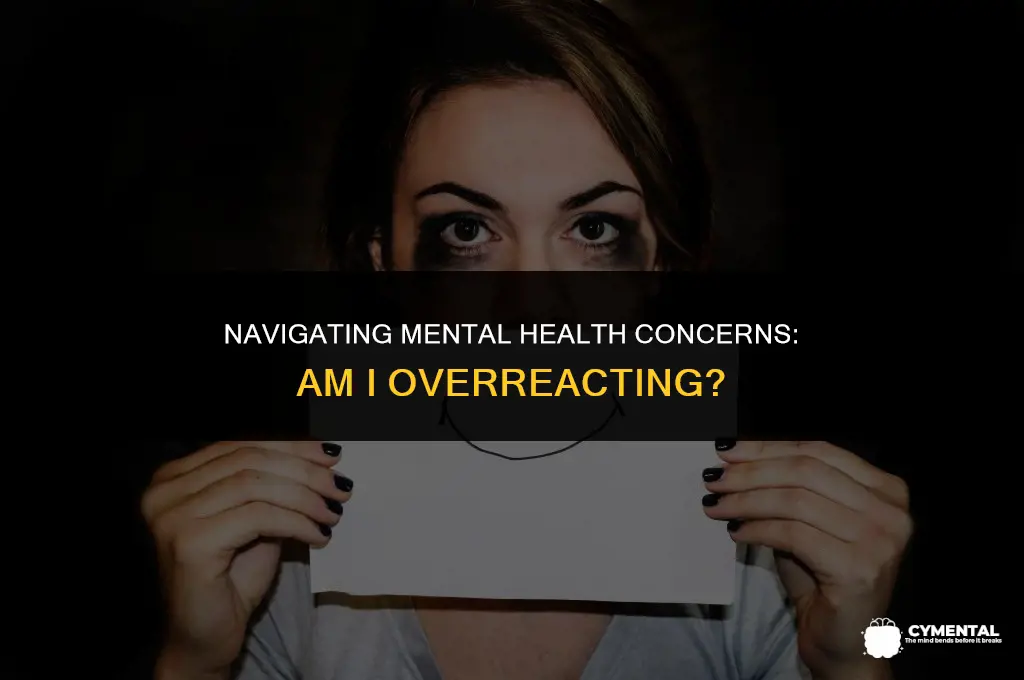
It's common to wonder if you're overreacting or being too dramatic about your mental health struggles. This question often arises when individuals are trying to gauge the severity of their symptoms or seeking validation for their experiences. It's important to recognize that mental health is a deeply personal and complex issue, and what may seem dramatic to one person could be a genuine cry for help from another. The key is to approach such concerns with empathy and understanding, acknowledging that everyone's experiences are unique and valid. By fostering open conversations and seeking professional guidance when needed, individuals can better navigate their mental health journeys and find the support they deserve.
Explore related products


What You'll Learn
- Overreacting vs. Valid Concerns: Differentiating between dramatic reactions and genuine mental health issues
- Seeking Attention: Exploring whether expressing mental health concerns is a cry for attention
- Minimizing Symptoms: Discussing the tendency to downplay the severity of one's mental health struggles
- Comparing to Others: Examining the impact of comparing personal mental health issues to those of others
- Self-Diagnosis: Considering the implications of self-diagnosing mental health conditions without professional input

Overreacting vs. Valid Concerns: Differentiating between dramatic reactions and genuine mental health issues
It's crucial to recognize the fine line between overreacting and having valid concerns when it comes to mental health. Overreaction can manifest as an exaggerated response to a situation, often driven by heightened emotions rather than a rational assessment of the circumstances. In contrast, valid concerns are grounded in a realistic perception of threats or challenges that could genuinely impact one's mental well-being.
To differentiate between the two, consider the context and the intensity of the reaction. Overreactions tend to be disproportionate to the actual severity of the situation, while valid concerns are typically more measured and focused on specific, identifiable issues. For instance, if someone experiences a minor setback at work and responds with extreme distress, it may be an overreaction. However, if the same person is facing a serious threat to their job security and exhibits concern, it's likely a valid response.
Another key factor is the duration and persistence of the reaction. Overreactions often subside relatively quickly once the initial emotional surge has passed. Valid concerns, on the other hand, tend to linger and may even intensify if the underlying issue remains unresolved. If you find yourself consistently preoccupied with a particular worry or fear, it's more likely to be a valid concern than a fleeting overreaction.
Seeking feedback from trusted friends, family, or mental health professionals can also help in distinguishing between overreactions and valid concerns. These individuals can provide an objective perspective on your reactions and help you identify patterns or triggers that may be contributing to your emotional responses. Additionally, keeping a journal of your thoughts and feelings can offer valuable insights into the nature and frequency of your reactions, aiding in the process of self-reflection and growth.
Ultimately, it's important to approach your mental health with a balanced and compassionate mindset. Acknowledge your feelings without judgment, and strive to understand the underlying causes of your reactions. By doing so, you can better navigate the complexities of your emotional landscape and cultivate a more resilient and adaptive response to life's challenges.
Unraveling the Impact: Repeal of the Mental Health Systems Act of 1980
You may want to see also
Explore related products


Seeking Attention: Exploring whether expressing mental health concerns is a cry for attention
The notion that expressing mental health concerns is merely a cry for attention is a complex and sensitive issue. On one hand, it's essential to acknowledge that some individuals may indeed seek attention through dramatic displays of their mental health struggles. This can stem from a variety of reasons, such as a desire for validation, a need for social support, or even a lack of awareness about the severity of their condition. However, it's equally important to recognize that this perspective can be overly simplistic and potentially harmful, as it may dismiss the genuine struggles of those who are simply trying to communicate their experiences and seek help.
In exploring this topic, it's crucial to consider the broader societal context in which mental health discussions take place. The stigma surrounding mental illness can often lead individuals to feel ashamed or embarrassed about their struggles, making it difficult for them to seek help. In such cases, expressing mental health concerns may be a brave and necessary step towards recovery. Furthermore, the pressure to appear "normal" or "functional" can lead some individuals to downplay their struggles, making it challenging for them to receive the support they need.
Ultimately, the question of whether expressing mental health concerns is a cry for attention is not a straightforward one. It requires a nuanced understanding of the individual's experiences, the societal context, and the complex interplay between the two. Rather than dismissing or minimizing the concerns of those who express their mental health struggles, it's essential to approach such situations with empathy, understanding, and a willingness to listen and support.
Nature's Balm: How Outdoor Time Boosts Mental Well-being
You may want to see also
Explore related products


Minimizing Symptoms: Discussing the tendency to downplay the severity of one's mental health struggles
Individuals often find themselves minimizing their mental health symptoms, either consciously or unconsciously, as a coping mechanism or due to societal pressures. This tendency can manifest in various ways, such as downplaying the severity of one's struggles, comparing oneself to others who may be experiencing more extreme difficulties, or dismissing symptoms as mere "drama" or "overreacting."
One common reason for minimizing symptoms is the fear of being judged or stigmatized by others. People may worry that if they express the full extent of their mental health struggles, they will be seen as weak, crazy, or burdensome. This fear can lead individuals to hide their symptoms behind a mask of normalcy, only revealing the tip of the iceberg to those around them.
Another factor contributing to symptom minimization is the internalization of societal messages that equate mental health struggles with personal failure or inadequacy. Individuals may believe that they should be able to "snap out of it" or "get over" their symptoms, leading them to downplay their experiences and avoid seeking help.
It is essential to recognize that minimizing symptoms can have detrimental effects on one's mental health and well-being. By downplaying the severity of their struggles, individuals may delay seeking professional help, leading to a worsening of symptoms and a decreased quality of life. Furthermore, minimizing symptoms can perpetuate the stigma surrounding mental health, making it more difficult for others to seek help and support.
To combat the tendency to minimize symptoms, it is crucial to foster a culture of openness and acceptance regarding mental health. This can be achieved by encouraging individuals to share their experiences without fear of judgment, providing education on the realities of mental health struggles, and promoting access to professional help and support. By creating a safe and supportive environment, individuals can feel more comfortable acknowledging and addressing their mental health symptoms, leading to better outcomes and a more compassionate society.
Nurturing Yourself: The Power of Self-Care for Mental Well-being
You may want to see also
Explore related products


Comparing to Others: Examining the impact of comparing personal mental health issues to those of others
It's common to compare our experiences to those of others, especially when it comes to mental health. We might find ourselves wondering if our struggles are as severe as those of our friends, family members, or even strangers on social media. This comparison can be a double-edged sword, providing both comfort and distress. On one hand, knowing that others face similar challenges can make us feel less alone and more understood. On the other hand, constantly comparing our mental health to others can lead to feelings of inadequacy, guilt, or even shame.
Research has shown that social comparison can have a significant impact on our mental well-being. When we compare ourselves to others who are doing better, it can lead to decreased self-esteem and increased symptoms of depression and anxiety. Conversely, comparing ourselves to those who are struggling more than we are can lead to a sense of superiority or relief, but this can also be problematic as it may prevent us from seeking help or acknowledging our own struggles.
One of the challenges of comparing mental health issues is that everyone's experiences are unique. What might be a minor issue for one person could be a major struggle for another. Additionally, mental health is not always visible, and people may be dealing with internal battles that we cannot see. This makes it difficult to accurately compare our own struggles to those of others.
So, how can we navigate this complex issue? It's important to recognize that comparing our mental health to others is a natural human tendency, but it's also crucial to be aware of the potential negative impacts. Instead of focusing on how our struggles compare to those of others, we can try to focus on our own personal growth and progress. It can be helpful to set realistic goals for ourselves and celebrate our achievements, no matter how small they may seem.
Ultimately, it's essential to remember that our mental health is our own unique journey. While it can be helpful to learn from others and seek support, we should avoid getting caught up in comparisons that may not be accurate or helpful. By focusing on our own experiences and growth, we can work towards better understanding and managing our mental health.
Navigating Mental Health Conversations in the Workplace
You may want to see also
Explore related products




Self-Diagnosis: Considering the implications of self-diagnosing mental health conditions without professional input
The allure of self-diagnosis in the digital age is undeniable. With a plethora of online resources and forums at our fingertips, it's tempting to take our mental health into our own hands. However, this approach can be fraught with risks. Without professional input, we may misidentify symptoms, overlook critical nuances, and potentially exacerbate our conditions.
Consider the case of Sarah, a 25-year-old who began experiencing anxiety and mood swings. After a quick internet search, she convinced herself she had bipolar disorder. She started self-medicating with supplements and adopted a strict routine based on her research. Months later, her symptoms worsened, and she finally sought professional help. A psychiatrist diagnosed her with generalized anxiety disorder and prescribed a tailored treatment plan that significantly improved her well-being. Sarah's story highlights the dangers of self-diagnosis: it can lead to incorrect assumptions, ineffective treatments, and delayed professional care.
Self-diagnosis can also perpetuate harmful stereotypes and stigmas surrounding mental health. When we rely on anecdotal evidence and unverified sources, we may reinforce misconceptions about certain conditions or treatments. This can create a culture of fear and misunderstanding, making it more difficult for individuals to seek help and for society to address mental health issues effectively.
Moreover, self-diagnosis can foster a sense of isolation. When we attempt to navigate our mental health struggles alone, we may feel disconnected from others and unsupported. This can exacerbate feelings of loneliness and despair, which are often already present in mental health conditions.
In conclusion, while self-education and awareness are crucial components of mental health advocacy, self-diagnosis can be a slippery slope. It's essential to recognize the limitations of our own knowledge and the importance of professional expertise. By seeking guidance from qualified mental health professionals, we can ensure that we receive accurate diagnoses, effective treatments, and the support we need to thrive. Remember, your mental health is too important to leave to chance – trust the experts and prioritize your well-being.
The Impact of Beauty Standards on Mental Health
You may want to see also
Frequently asked questions
It's important to recognize that feeling overwhelmed by daily tasks can be a sign of underlying mental health issues such as anxiety or depression. While it's normal to feel stressed sometimes, if these feelings persist and interfere with your daily life, it's not dramatic to seek help and support.
It can be challenging to determine if your emotional reactions are normal or if you're being overly dramatic. A good rule of thumb is to consider if your reactions are proportional to the situation. If you find yourself having intense emotional responses to minor incidents, it may be a sign that you're struggling with your mental health.
Feeling like you're overreacting to everything can be a symptom of anxiety or other mental health conditions. It's important to practice self-compassion and recognize that everyone experiences a range of emotions. If these feelings are impacting your relationships or daily life, it's not dramatic to seek professional help.
Communicating your mental health struggles to others can be difficult, but it's important to be honest and open. Use "I" statements to express how you're feeling and avoid blaming others. For example, you could say "I've been feeling really overwhelmed lately" instead of "You're stressing me out." Remember that your feelings are valid and seeking support is a sign of strength, not drama.
There are many healthy ways to cope with intense emotions. Some strategies include practicing mindfulness, engaging in physical activity, journaling, talking to a trusted friend or family member, and seeking professional help if needed. Remember that taking care of your mental health is not dramatic, it's essential for your overall well-being.