Caleb Wright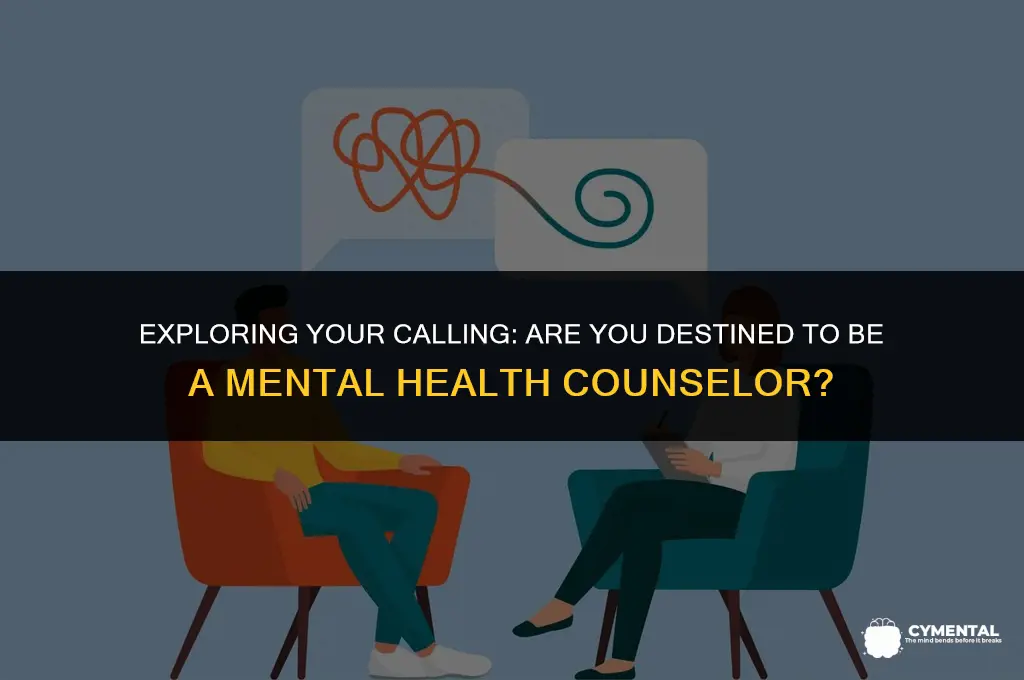
Considering a career as a mental health counselor is a significant and rewarding decision. It requires a deep understanding of human emotions, strong communication skills, and the ability to provide empathetic support. Mental health counselors play a crucial role in helping individuals navigate their emotional and psychological challenges, offering guidance and strategies for coping and healing. If you're contemplating this path, it's essential to reflect on your own emotional intelligence, your capacity for active listening, and your commitment to ongoing education and professional development. Additionally, understanding the various specializations within mental health counseling, such as working with specific age groups, dealing with particular issues like trauma or addiction, or focusing on certain therapeutic approaches, can help you determine if this career aligns with your interests and strengths.
Explore related products


$115.65 $133.32


What You'll Learn
- Personal Qualities: Empathy, patience, and emotional stability are crucial for a mental health counselor
- Educational Requirements: Typically, a master's degree in counseling or a related field is necessary
- Professional Experience: Internships and supervised clinical experience are essential for skill development
- Licensure and Certification: Requirements vary by state, but licensure is generally mandatory to practice
- Career Outlook: Job growth is projected to be strong, with increasing demand for mental health services

Personal Qualities: Empathy, patience, and emotional stability are crucial for a mental health counselor
Empathy is the cornerstone of effective mental health counseling. It allows counselors to understand and share the feelings of their clients, creating a safe and supportive environment. This quality is essential for building trust and rapport, which are critical for successful therapeutic outcomes. Counselors must be able to put themselves in their clients' shoes, recognizing and validating their emotions, even when they are difficult or uncomfortable.
Patience is another vital attribute for mental health counselors. The therapeutic process can be slow and challenging, and clients may not always make progress at the pace the counselor would like. A patient counselor understands that healing takes time and is willing to work with clients through setbacks and obstacles. They provide consistent support and encouragement, helping clients to stay motivated and engaged in their treatment.
Emotional stability is crucial for counselors to maintain their own well-being and to provide effective care. Counselors often work with clients who are experiencing intense emotions, and they must be able to manage their own emotional responses to avoid burnout and maintain a professional demeanor. This includes setting appropriate boundaries, practicing self-care, and seeking supervision or support when needed.
In addition to these core qualities, mental health counselors must also possess strong communication skills, cultural competence, and a commitment to ongoing learning and professional development. They must be able to adapt their approach to meet the unique needs of each client, drawing on a range of therapeutic techniques and strategies. By combining empathy, patience, emotional stability, and these other essential skills, counselors can help their clients to achieve meaningful and lasting change.
Taking the First Step: Self-Admission to a Mental Health Facility
You may want to see also
Explore related products

$119.94 $133.32

![NCMHCE Exam Study Cards: NCMHCE Test Prep 2026-2027 for the National Clinical Mental Health Counseling Examination [Full Color Cards]](https://m.media-amazon.com/images/I/61Vg-0Wk9RL._AC_UL320_.jpg)


Educational Requirements: Typically, a master's degree in counseling or a related field is necessary
To become a mental health counselor, one of the primary educational requirements is typically a master's degree in counseling or a related field. This advanced degree provides the necessary foundation in psychological theories, counseling techniques, and ethical practices that are essential for working in the mental health field. Programs usually include coursework in areas such as psychopathology, human development, research methods, and multicultural counseling, as well as supervised clinical experience.
Beyond the master's degree, licensure is often required to practice as a mental health counselor. The specific licensing requirements vary by state but generally involve completing a certain number of supervised hours of clinical experience, passing a state-administered exam, and adhering to ongoing continuing education requirements. Some states may also require additional certifications or specializations, such as in substance abuse counseling or school counseling.
While a master's degree is the standard educational requirement, some counselors may choose to pursue a doctoral degree for advanced research opportunities or to work in academic or leadership roles. A Ph.D. in counseling or psychology can open doors to teaching at the university level, conducting research, or overseeing mental health programs.
In addition to formal education, mental health counselors must possess certain personal qualities and skills to be effective in their roles. Empathy, active listening, and strong communication skills are crucial for building therapeutic relationships with clients. Counselors must also be able to maintain professional boundaries, manage their own emotions, and work collaboratively with other healthcare professionals.
The educational journey to becoming a mental health counselor is a significant commitment, both in terms of time and resources. However, for those who are passionate about helping others and making a positive impact on mental health, it can be a rewarding and fulfilling career path.
Understanding Mental Health: Decoding the Acronym SUD
You may want to see also
Explore related products


![NCMHCE Secrets Study Guide - Exam Review and NCMHCE Practice Test for the National Clinical Mental Health Counseling Examination: [2nd Edition]](https://m.media-amazon.com/images/I/61st2jwaFIL._AC_UL320_.jpg)


Professional Experience: Internships and supervised clinical experience are essential for skill development
Gaining professional experience through internships and supervised clinical practice is a cornerstone of becoming a proficient mental health counselor. This hands-on training allows aspiring counselors to apply theoretical knowledge in real-world settings, honing their skills under the guidance of experienced professionals. Internships provide a structured environment where students can practice counseling techniques, develop client rapport, and navigate the complexities of mental health care. Supervised clinical experience, on the other hand, offers a more intensive and personalized learning opportunity, where counselors-in-training can delve deeper into case management, treatment planning, and therapeutic interventions.
One of the key benefits of professional experience is the opportunity to develop a diverse skill set. Mental health counseling requires a range of competencies, from active listening and empathy to crisis intervention and cultural sensitivity. Through internships and supervised practice, counselors can gain exposure to various therapeutic approaches, such as cognitive-behavioral therapy (CBT), dialectical behavior therapy (DBT), and motivational interviewing. This exposure helps them to identify their strengths and areas for improvement, ultimately shaping their unique counseling style.
Moreover, professional experience provides a platform for networking and building professional relationships. The mental health field is highly collaborative, and counselors often work closely with other healthcare professionals, social workers, and community organizations. Internships and supervised clinical practice allow aspiring counselors to establish connections within the field, which can lead to job opportunities, mentorship, and ongoing professional development.
Another critical aspect of professional experience is the development of self-awareness and emotional resilience. Mental health counseling can be emotionally demanding, and it is essential for counselors to be aware of their own emotional responses and biases. Through supervised practice, counselors can receive feedback on their performance and learn to manage their emotions effectively, ensuring that they provide the best possible care for their clients.
In conclusion, professional experience through internships and supervised clinical practice is indispensable for anyone aspiring to become a mental health counselor. It provides a unique opportunity to develop a diverse skill set, build professional relationships, and cultivate self-awareness and emotional resilience. By immersing themselves in real-world settings, aspiring counselors can gain the confidence and competence needed to make a meaningful impact in the lives of their clients.
Navigating Recovery: Understanding the Role of Halfway Houses in Mental Health
You may want to see also
Explore related products


Licensure and Certification: Requirements vary by state, but licensure is generally mandatory to practice
To practice as a mental health counselor, obtaining licensure is a critical step that varies significantly from state to state. While the specific requirements can differ, most states mandate licensure to ensure that counselors meet certain professional standards and are qualified to provide mental health services. This typically involves completing a graduate degree in counseling or a related field, gaining supervised clinical experience, and passing a state-administered exam.
The process of obtaining licensure can be complex and time-consuming, often requiring several years of education and practical experience. Aspiring counselors must carefully research the requirements of their state's licensing board to ensure they are on the correct path. This may involve seeking out accredited educational programs, securing internships or practicums, and staying up-to-date on any changes to licensing regulations.
In addition to licensure, many states also require counselors to obtain certification from a professional organization, such as the National Board for Certified Counselors (NBCC). Certification can provide additional credibility and may be necessary for certain job positions or insurance reimbursements. The certification process typically involves meeting specific educational and experience requirements, as well as passing a national exam.
Maintaining licensure and certification is an ongoing process that requires counselors to engage in continuing education and professional development. This ensures that they stay current with the latest research, best practices, and ethical standards in the field. Failure to maintain licensure can result in the loss of the ability to practice, as well as potential legal and ethical consequences.
For those considering a career in mental health counseling, it is essential to be aware of the licensure and certification requirements in their desired state. This information can help guide educational and career decisions, ensuring that aspiring counselors are well-prepared to meet the professional standards necessary to practice in their field. By understanding and meeting these requirements, counselors can embark on a rewarding career helping individuals and communities improve their mental health and well-being.
Exploring Benztropine's Role in Mental Health Treatments
You may want to see also
Explore related products


Career Outlook: Job growth is projected to be strong, with increasing demand for mental health services
The career outlook for mental health counselors is promising, with job growth projected to be strong in the coming years. This is due in part to the increasing demand for mental health services, which has been driven by a growing awareness of the importance of mental health and a decrease in the stigma associated with seeking help. As a result, there is a greater need for qualified mental health professionals to provide counseling and support to individuals, families, and communities.
According to the Bureau of Labor Statistics, employment of mental health counselors is expected to grow by 25% from 2020 to 2030, which is much faster than the average for all occupations. This growth is expected to be driven by an increase in the number of people seeking mental health services, as well as by the expansion of mental health services into new settings, such as schools and primary care clinics.
In addition to the strong job growth, mental health counselors can also expect to enjoy a rewarding career that offers the opportunity to make a positive impact on the lives of others. Mental health counselors work with clients to help them overcome a variety of challenges, including depression, anxiety, substance abuse, and relationship issues. They provide a safe and supportive environment for clients to explore their thoughts and feelings, and they help clients develop the skills and strategies they need to improve their mental health and well-being.
To become a mental health counselor, individuals typically need to complete a master's degree in counseling or a related field, as well as obtain licensure or certification in their state. Some counselors may also choose to pursue additional training or specialization in areas such as addiction counseling, child and adolescent counseling, or trauma counseling.
Overall, the career outlook for mental health counselors is bright, with strong job growth and a rewarding work environment. If you are interested in pursuing a career in mental health counseling, it is important to research the educational and licensure requirements in your state, as well as to consider the personal qualities and skills that are necessary for success in this field.
Exploring Mental Health Privacy in Military Service
You may want to see also
Frequently asked questions
Essential qualities for a mental health counselor include empathy, active listening skills, patience, emotional stability, and a genuine desire to help others. You should also possess strong communication skills and the ability to maintain confidentiality.
To become a mental health counselor, you typically need a master's degree in counseling or a related field. This often includes courses in psychotherapy, counseling theories, and practical experience through internships or supervised clinical work.
Self-reflection is crucial. Consider if you can handle emotionally demanding situations, maintain professional boundaries, and cope with the stress of supporting others through difficult times. Seeking feedback from mentors or professionals in the field can also provide valuable insights.
Common challenges include managing a heavy caseload, dealing with emotionally draining sessions, and navigating complex ethical issues. Preparation involves developing strong time management skills, practicing self-care, and staying updated on ethical guidelines and best practices in the field.