Madison Cole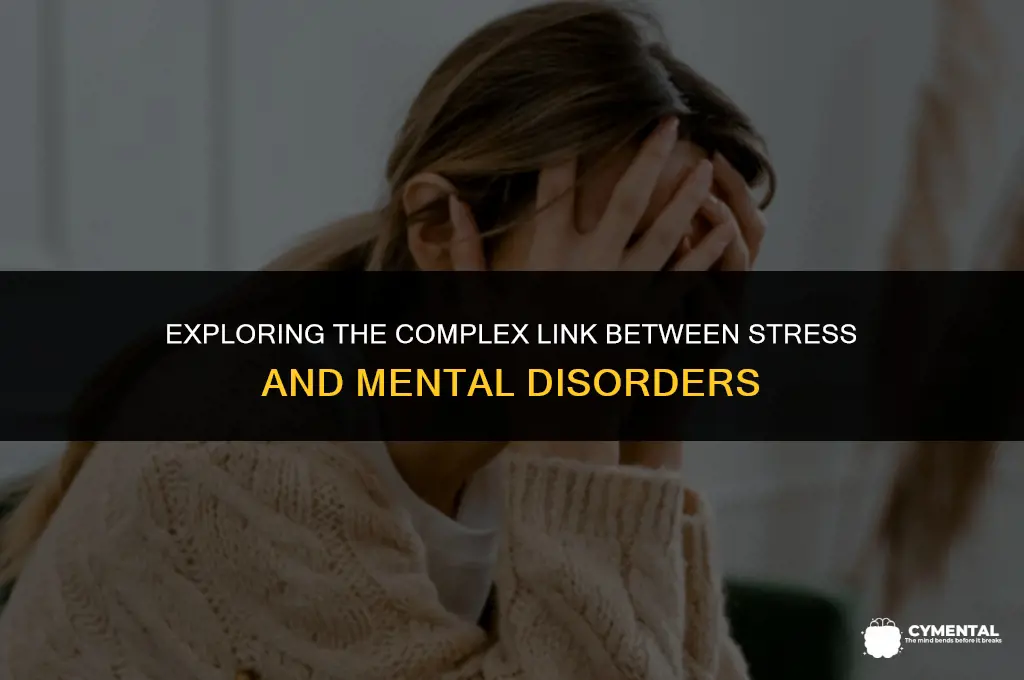
The question of whether all mental disorders are caused by stress is a complex and multifaceted one. While stress is a significant factor that can contribute to the development or exacerbation of many mental health conditions, it is not the sole cause of all mental disorders. Mental health issues can arise from a combination of genetic, environmental, psychological, and social factors. For instance, conditions like schizophrenia and bipolar disorder often have a strong genetic component, while others like post-traumatic stress disorder (PTSD) can be directly linked to traumatic experiences. Additionally, ongoing stressors such as poverty, discrimination, and social isolation can increase the risk of developing mental health problems. Therefore, while stress plays a crucial role in mental health, it is essential to consider the broader context and multiple contributing factors when understanding the causes of mental disorders.
Explore related products


What You'll Learn
- Nature vs. Nurture: Debate on whether mental disorders are genetically inherited or environmentally induced
- Stress as a Trigger: Examination of how stress can exacerbate or trigger mental health conditions
- Trauma and PTSD: Discussion on the link between traumatic experiences and the development of PTSD
- Biological Factors: Exploration of how biological imbalances, such as neurotransmitter deficiencies, contribute to mental disorders
- Socio-Cultural Influences: Analysis of how societal and cultural factors impact mental health and disorder prevalence

Nature vs. Nurture: Debate on whether mental disorders are genetically inherited or environmentally induced
The debate between nature and nurture in the context of mental disorders is a longstanding one, with each side presenting compelling arguments. On one hand, the genetic predisposition to mental illness is well-documented, with numerous studies identifying specific genes and genetic variations that increase the risk of developing disorders such as schizophrenia, bipolar disorder, and major depressive disorder. Twin studies, in particular, have provided strong evidence for the heritability of mental disorders, showing that identical twins are more likely to share a diagnosis than fraternal twins.
On the other hand, environmental factors cannot be discounted. Trauma, abuse, neglect, and chronic stress have all been linked to the development of mental disorders. The diathesis-stress model proposes that individuals with a genetic predisposition to mental illness may be more vulnerable to the effects of environmental stressors, leading to the manifestation of symptoms. Furthermore, epigenetic research has shown that environmental factors can influence gene expression, potentially altering the risk of developing mental disorders.
The interplay between nature and nurture is complex and multifaceted. While genetic factors may predispose an individual to mental illness, environmental factors can play a significant role in determining whether or not symptoms manifest. The debate is not simply a matter of one versus the other, but rather how these two factors interact and influence each other.
In the context of stress, it is clear that chronic and severe stress can exacerbate mental health issues, regardless of genetic predisposition. However, the question remains whether stress is a primary cause of mental disorders or simply a contributing factor. The answer is likely to be nuanced, with stress playing a more significant role in some cases and a lesser role in others.
Ultimately, the nature versus nurture debate highlights the complexity of mental health and the need for a holistic approach to understanding and treating mental disorders. By considering both genetic and environmental factors, clinicians and researchers can develop more effective interventions and support systems for individuals struggling with mental illness.
Understanding Autism: Illness, Disorder, or Neurodiversity?
You may want to see also
Explore related products

$6.55 $19.99


Stress as a Trigger: Examination of how stress can exacerbate or trigger mental health conditions
Chronic stress has been identified as a significant trigger and exacerbator of mental health conditions. While stress is a normal part of life, prolonged exposure to high levels of stress can lead to a range of psychological issues. Research has shown that stress can activate the body's fight-or-flight response, which, when sustained over time, can disrupt normal brain function and contribute to the development of mental disorders.
One of the ways stress can impact mental health is by affecting the balance of neurotransmitters in the brain. Neurotransmitters like serotonin, dopamine, and norepinephrine play crucial roles in regulating mood, motivation, and other cognitive functions. Chronic stress can lead to an imbalance in these neurotransmitters, which can result in symptoms of depression, anxiety, and other mood disorders.
Stress can also impair cognitive function and memory. Studies have shown that prolonged stress can lead to difficulties in concentrating, learning, and remembering information. This can be particularly problematic for individuals who are already struggling with mental health issues, as cognitive impairment can further exacerbate their symptoms.
Furthermore, stress can have a negative impact on sleep quality, which is essential for maintaining good mental health. Poor sleep can lead to increased stress levels, creating a vicious cycle that can be difficult to break. This cycle can contribute to the development and worsening of mental health conditions such as insomnia, anxiety, and depression.
It is important to note that while stress can be a significant trigger for mental health issues, it is not the sole cause. Mental disorders are complex and multifaceted, often resulting from a combination of genetic, environmental, and psychological factors. However, understanding the role of stress in mental health can help individuals and healthcare providers develop more effective strategies for prevention and treatment.
In conclusion, stress is a powerful trigger that can exacerbate and contribute to the development of mental health conditions. By recognizing the impact of stress on mental well-being and taking steps to manage it effectively, individuals can reduce their risk of developing mental disorders and improve their overall quality of life.
Understanding ADHD: A Mental Health Disorder or Not?
You may want to see also
Explore related products


Trauma and PTSD: Discussion on the link between traumatic experiences and the development of PTSD
Traumatic experiences can have a profound impact on an individual's mental health, and one of the most well-documented consequences is the development of Post-Traumatic Stress Disorder (PTSD). PTSD is a complex condition that can arise after exposure to an event that is perceived as threatening or dangerous, leading to a range of symptoms including intrusive memories, avoidance behaviors, and heightened arousal.
The link between trauma and PTSD is multifaceted, involving a combination of biological, psychological, and social factors. From a biological perspective, traumatic experiences can alter the functioning of the brain's stress response systems, leading to an overactive or underactive response to future stressors. This can result in the characteristic symptoms of PTSD, such as hypervigilance or emotional numbing.
Psychologically, trauma can challenge an individual's sense of safety and control, leading to a disruption in their cognitive and emotional processing. This can manifest as difficulties in concentrating, remembering, or regulating emotions, which are all common symptoms of PTSD. Additionally, social factors such as a lack of support or validation after a traumatic event can exacerbate the development of PTSD, as individuals may feel isolated or misunderstood.
It is important to note that not all individuals who experience trauma will develop PTSD, and the severity and duration of symptoms can vary widely. Factors such as the type and intensity of the trauma, the individual's prior mental health history, and their coping mechanisms can all influence the development and course of PTSD.
Treatment for PTSD typically involves a combination of psychotherapy and medication, aimed at helping individuals process their traumatic experiences and develop effective coping strategies. Cognitive-behavioral therapy (CBT) is a commonly used approach, which helps individuals identify and challenge negative thought patterns and behaviors associated with their trauma. Medications such as selective serotonin reuptake inhibitors (SSRIs) can also be effective in reducing symptoms of PTSD.
In conclusion, the link between trauma and PTSD is complex and multifaceted, involving a range of biological, psychological, and social factors. Understanding this link is crucial for developing effective prevention and treatment strategies for PTSD, and for supporting individuals who have experienced trauma.
Exploring the Complex Relationship Between ADHD and Autism
You may want to see also
Explore related products


Biological Factors: Exploration of how biological imbalances, such as neurotransmitter deficiencies, contribute to mental disorders
Neurotransmitter deficiencies have been implicated in the development of various mental disorders. For instance, serotonin is a neurotransmitter that plays a crucial role in regulating mood, appetite, and sleep. Low levels of serotonin have been linked to depression, anxiety, and obsessive-compulsive disorder. Similarly, dopamine is involved in reward and motivation, and its imbalance can contribute to conditions like schizophrenia and attention deficit hyperactivity disorder (ADHD).
Genetic factors also play a significant role in the development of mental disorders. Studies have shown that certain genetic variations can increase the risk of developing conditions like bipolar disorder, schizophrenia, and autism spectrum disorder. These genetic factors can affect the structure and function of the brain, leading to imbalances in neurotransmitters and other biological systems.
Hormonal imbalances can also contribute to mental disorders. For example, thyroid hormones regulate metabolism and energy levels, and an imbalance can lead to symptoms of depression or anxiety. Additionally, cortisol, the body's stress hormone, can have a significant impact on mental health. Chronic stress can lead to elevated cortisol levels, which can contribute to the development of depression, anxiety, and other mental disorders.
Environmental factors can also influence the development of mental disorders. Exposure to toxins, such as heavy metals or pesticides, can affect brain function and contribute to conditions like ADHD and autism. Additionally, nutritional deficiencies, particularly in essential fatty acids and vitamins, can impact brain health and increase the risk of developing mental disorders.
It is important to note that mental disorders are often the result of a complex interplay between biological, genetic, hormonal, and environmental factors. While stress can be a significant contributor to mental health issues, it is not the sole cause. A comprehensive approach to understanding and treating mental disorders must take into account these various biological factors and their interactions.
Unveiling the Psychological Symbolism Behind Disney Princesses
You may want to see also
Explore related products


Socio-Cultural Influences: Analysis of how societal and cultural factors impact mental health and disorder prevalence
Socio-cultural influences play a significant role in shaping mental health outcomes. Cultural norms, societal expectations, and social support systems can either exacerbate or mitigate the risk of developing mental disorders. For instance, in some cultures, the stigma associated with mental illness may prevent individuals from seeking help, thereby worsening their condition. Conversely, cultures that prioritize community and familial support may provide a protective factor against mental health issues.
Research has shown that socio-economic factors, such as poverty and unemployment, can increase the prevalence of mental disorders. This is often due to the chronic stress associated with financial insecurity and the lack of access to mental health resources. Furthermore, social inequality and discrimination can contribute to mental health disparities among different demographic groups. For example, marginalized communities may experience higher rates of depression and anxiety due to systemic barriers and social exclusion.
The impact of socio-cultural influences on mental health is not limited to individual experiences. Collective trauma, resulting from events such as war, genocide, or natural disasters, can have long-lasting effects on the mental health of entire communities. Intergenerational trauma, where the psychological impact of such events is passed down through generations, is a well-documented phenomenon. This highlights the importance of addressing socio-cultural factors in mental health interventions and policies.
In conclusion, socio-cultural influences are a critical component in understanding the prevalence and impact of mental disorders. By recognizing and addressing these factors, mental health professionals and policymakers can develop more effective strategies to promote mental well-being and reduce the burden of mental illness.
Unraveling the Mind of a Notorious Criminal: Ted Bundy's Mental Health
You may want to see also
Frequently asked questions
No, while stress can be a contributing factor to many mental health issues, it is not the sole cause of all mental disorders. Mental health conditions are often the result of a complex interplay of genetic, environmental, and psychological factors.
Yes, chronic or intense stress can trigger mental health issues in some individuals, particularly those who are already vulnerable due to genetic predispositions or past experiences.
Some common mental disorders that can be influenced by stress include anxiety disorders, depressive disorders, and post-traumatic stress disorder (PTSD).
Stress can impact mental health by altering brain chemistry, affecting neurotransmitter function, and disrupting normal thought patterns. Prolonged stress can lead to symptoms such as anxiety, depression, irritability, and difficulty concentrating.
While managing stress is important for maintaining good mental health, it is not a guarantee against developing mental disorders. However, effective stress management techniques can help reduce the risk of mental health issues and improve overall well-being.