Ava Ramirez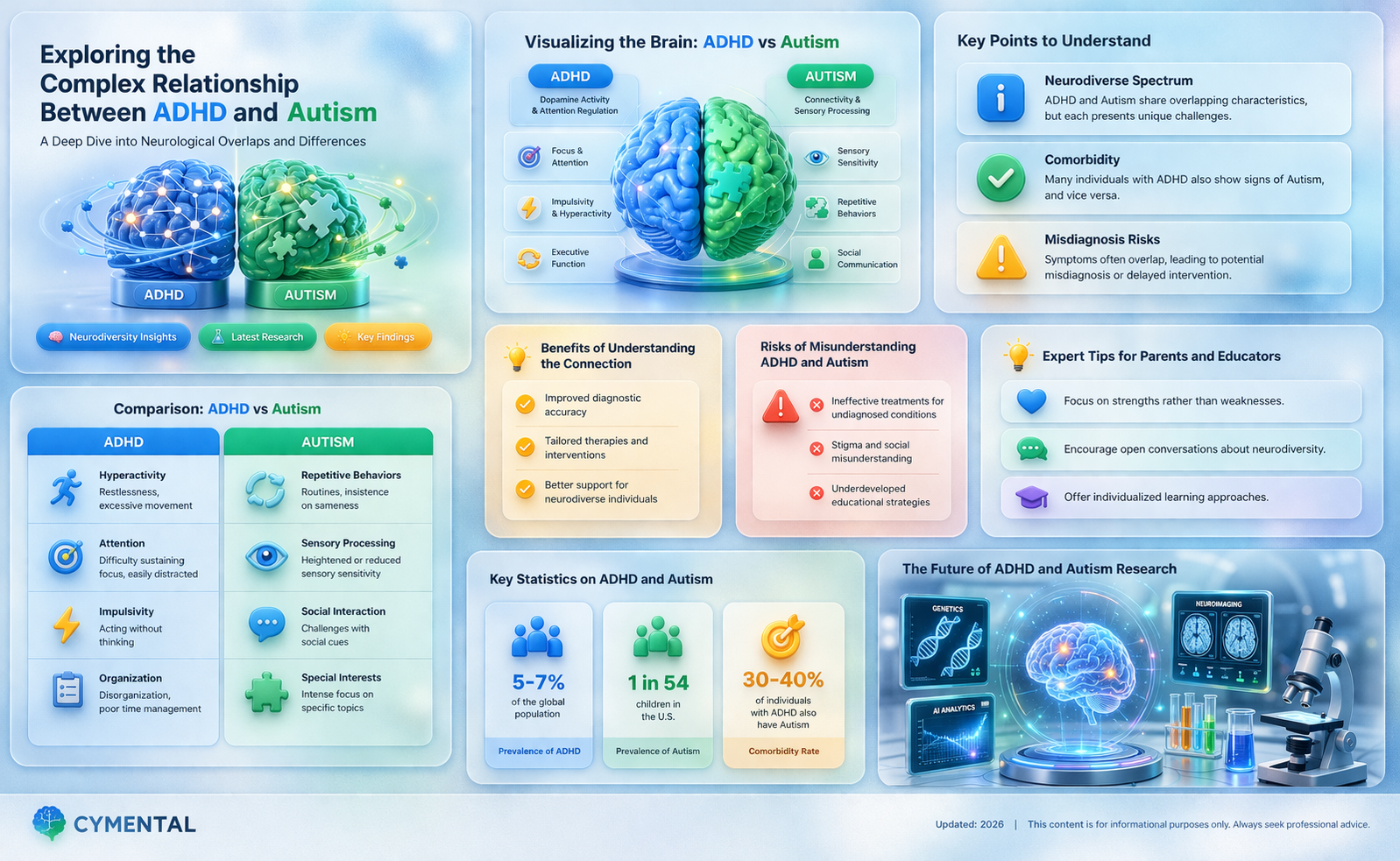
Attention Deficit Hyperactivity Disorder (ADHD) and Autism Spectrum Disorder (ASD) are neurodevelopmental conditions that have been the subject of extensive research and discussion in the field of mental health. While both conditions are characterized by differences in brain function and behavior, they are distinct in their diagnostic criteria and manifestations. ADHD is primarily marked by symptoms of inattention, hyperactivity, and impulsivity, whereas ASD encompasses a range of social, communication, and behavioral challenges. Understanding the nature and classification of these conditions is crucial for accurate diagnosis, effective treatment, and support for individuals and families affected by them.
| Characteristics | Values |
|---|---|
| Definition | ADHD (Attention Deficit Hyperactivity Disorder) and Autism are neurodevelopmental disorders that affect behavior, communication, and social interaction. |
| Prevalence | ADHD affects approximately 8.4% of children and 2.5% of adults in the United States. Autism affects about 1 in 54 children in the United States. |
| Symptoms | ADHD symptoms include inattention, hyperactivity, and impulsivity. Autism symptoms include difficulty with social interaction, communication challenges, and repetitive behaviors. |
| Causes | Both disorders have genetic and environmental risk factors. ADHD is linked to brain structure and function differences, while Autism is associated with genetic mutations and prenatal factors. |
| Diagnosis | ADHD is diagnosed through a combination of behavioral observations, interviews, and rating scales. Autism is diagnosed using standardized assessments and observations. |
| Treatment | ADHD treatments include medication (stimulants and non-stimulants), behavioral therapy, and lifestyle changes. Autism treatments involve behavioral and communication therapies, medications for associated conditions, and educational interventions. |
| Prognosis | With appropriate treatment, individuals with ADHD and Autism can lead fulfilling lives. Early intervention is key to improving outcomes. |
| Comorbidities | ADHD often co-occurs with other conditions like anxiety, depression, and sleep disorders. Autism may be accompanied by intellectual disability, anxiety, and gastrointestinal issues. |
| Impact on Daily Life | Both disorders can affect academic performance, social relationships, and employment opportunities. Individuals may require accommodations and support to thrive. |
| Research and Development | Ongoing research aims to better understand the genetic and environmental causes of ADHD and Autism, develop more effective treatments, and improve diagnostic tools. |
| Awareness and Advocacy | Organizations and advocacy groups work to raise awareness, reduce stigma, and promote understanding and acceptance of ADHD and Autism. |
| Educational Resources | Various resources, including online materials, books, and support groups, are available to help individuals and families navigate ADHD and Autism. |
Explore related products


What You'll Learn
- Definition and Diagnosis: Understanding the criteria and processes used to diagnose ADHD and autism
- Symptoms and Behaviors: Exploring the common symptoms and behaviors associated with ADHD and autism
- Causes and Risk Factors: Investigating the potential causes and risk factors that contribute to ADHD and autism
- Treatment and Therapies: Discussing the various treatments and therapies available for managing ADHD and autism
- Myths and Misconceptions: Addressing common myths and misconceptions surrounding ADHD and autism

Definition and Diagnosis: Understanding the criteria and processes used to diagnose ADHD and autism
ADHD and autism are neurodevelopmental conditions that manifest in early childhood and can persist into adulthood. Both conditions are characterized by distinct sets of symptoms and behaviors that can significantly impact an individual's daily functioning and social interactions. Understanding the criteria and processes used to diagnose these conditions is crucial for early intervention and effective management.
The diagnosis of ADHD typically involves a comprehensive evaluation by a healthcare professional, such as a pediatrician, psychiatrist, or psychologist. The process includes a review of the individual's medical history, behavioral observations, and input from parents, teachers, and other caregivers. The criteria for diagnosing ADHD are outlined in the Diagnostic and Statistical Manual of Mental Disorders (DSM-5), which specifies that an individual must exhibit at least six symptoms of inattention and/or hyperactivity-impulsivity for at least six months to a degree that is inconsistent with developmental level and causes significant impairment in social, academic, or occupational functioning.
In contrast, the diagnosis of autism involves a more complex and multidisciplinary approach. Autism is a spectrum disorder, meaning that it encompasses a wide range of symptoms and severity levels. The diagnostic process typically includes a combination of behavioral assessments, developmental screenings, and sometimes genetic testing. The DSM-5 criteria for autism require that an individual exhibit persistent deficits in social communication and social interaction, as well as restricted, repetitive patterns of behavior, interests, or activities. These symptoms must be present in the early developmental period and cause significant impairment in social, occupational, or other important areas of functioning.
One of the challenges in diagnosing both ADHD and autism is the potential for overlap in symptoms and behaviors. For example, individuals with ADHD may exhibit some of the same social and communication difficulties as those with autism, and vice versa. This can make it difficult to distinguish between the two conditions, especially in cases where symptoms are mild or atypical. As a result, it is not uncommon for individuals to receive a dual diagnosis of both ADHD and autism, or for their diagnosis to change over time as more information becomes available.
Early diagnosis and intervention are critical for both ADHD and autism, as they can significantly improve outcomes and quality of life. For ADHD, treatment typically involves a combination of medication and behavioral therapy, while for autism, interventions may include applied behavior analysis (ABA), speech therapy, occupational therapy, and sometimes medication to address co-occurring conditions. By understanding the criteria and processes used to diagnose these conditions, parents, educators, and healthcare professionals can work together to ensure that individuals receive the appropriate support and resources they need to thrive.
Unraveling the Complexity: A Guide to Recognizing Mental Health Disorders
You may want to see also
Explore related products


Symptoms and Behaviors: Exploring the common symptoms and behaviors associated with ADHD and autism
Attention Deficit Hyperactivity Disorder (ADHD) and autism are neurodevelopmental conditions characterized by distinct symptoms and behaviors. While they are separate conditions, there is some overlap in their symptomatology, which can sometimes lead to confusion in diagnosis.
One of the key symptoms of ADHD is inattention, which manifests as difficulty sustaining focus, following instructions, or completing tasks. Individuals with ADHD may also exhibit hyperactivity, such as fidgeting, restlessness, or excessive talking. Impulsivity is another hallmark of ADHD, leading to behaviors like interrupting others, blurting out answers, or engaging in risky activities without considering the consequences.
Autism, on the other hand, is primarily characterized by difficulties in social interaction and communication. Individuals with autism may struggle with understanding social cues, maintaining eye contact, or engaging in reciprocal conversations. They may also exhibit repetitive behaviors, such as hand flapping, rocking, or insistence on sameness. Sensory sensitivities are common in autism, with individuals often reacting strongly to certain sounds, textures, or smells.
Despite these differences, there is some overlap between ADHD and autism. For example, individuals with autism may also experience inattention or hyperactivity, while those with ADHD may exhibit some social difficulties or repetitive behaviors. This overlap can complicate diagnosis, as clinicians must carefully differentiate between the two conditions based on the specific pattern and severity of symptoms.
It is important to note that both ADHD and autism are considered mental disorders in the Diagnostic and Statistical Manual of Mental Disorders (DSM-5). However, they are not caused by personal weakness or poor parenting. Instead, they are believed to result from a combination of genetic, environmental, and neurological factors. Early diagnosis and intervention can significantly improve outcomes for individuals with ADHD and autism, helping them to manage their symptoms and lead fulfilling lives.
Understanding PTSD: Is It a Mental Disorder?
You may want to see also
Explore related products





Causes and Risk Factors: Investigating the potential causes and risk factors that contribute to ADHD and autism
Recent research has identified several potential causes and risk factors that contribute to the development of ADHD and autism. One of the most significant findings is the role of genetics in these disorders. Studies have shown that ADHD and autism tend to run in families, suggesting a strong genetic component. In fact, researchers have identified specific genes that may increase the risk of developing these conditions. For example, variations in the DAT1 gene, which affects dopamine transport, have been linked to ADHD. Similarly, mutations in the SHANK3 gene, which plays a role in synaptic function, have been associated with autism.
Environmental factors also play a crucial role in the development of ADHD and autism. Exposure to certain toxins, such as lead and pesticides, has been linked to an increased risk of these disorders. Additionally, maternal infection during pregnancy, premature birth, and low birth weight have all been identified as potential risk factors. Research has also suggested that certain lifestyle factors, such as a high-fat diet and lack of exercise, may contribute to the development of ADHD.
Another area of interest is the potential link between ADHD and autism. While these disorders are often considered separate, there is growing evidence to suggest that they may share common underlying causes. For example, both ADHD and autism have been associated with abnormalities in brain structure and function, particularly in regions involved in attention and social cognition. Furthermore, studies have shown that individuals with ADHD are more likely to also have autism, and vice versa.
It is important to note that while these potential causes and risk factors have been identified, the exact mechanisms underlying ADHD and autism remain unclear. Further research is needed to fully understand how these factors contribute to the development of these disorders. However, this knowledge can help inform prevention and treatment strategies, ultimately improving outcomes for individuals with ADHD and autism.
Aging and Mental Health: Do Disorders Intensify Over Time?
You may want to see also
Explore related products



Treatment and Therapies: Discussing the various treatments and therapies available for managing ADHD and autism
Behavioral therapies, such as Applied Behavior Analysis (ABA) and Cognitive Behavioral Therapy (CBT), are commonly used to manage symptoms of both ADHD and autism. ABA focuses on reinforcing positive behaviors and reducing negative ones through a system of rewards and consequences, while CBT helps individuals identify and change negative thought patterns. For ADHD, behavioral therapy can help with organization, time management, and impulse control, whereas for autism, it can improve social skills, communication, and adaptive behaviors.
Medication is another key component in the treatment of ADHD and, to a lesser extent, autism. Stimulants like methylphenidate (Ritalin) and amphetamines (Adderall) are often prescribed to help manage ADHD symptoms by increasing focus and reducing impulsivity. For autism, medications may be used to address associated conditions such as anxiety, depression, or hyperactivity. It's important to note that medication should always be used in conjunction with behavioral therapies for the most effective outcomes.
In addition to traditional therapies, alternative treatments have gained popularity in recent years. These include occupational therapy, which helps individuals develop the skills needed for daily living and working, and speech therapy, which can improve communication abilities. For some, dietary changes and supplements have also been explored as potential ways to manage symptoms, although more research is needed to fully understand their effectiveness.
When considering treatment options, it's crucial to take a personalized approach, as each individual's needs and circumstances are unique. A comprehensive treatment plan should involve a combination of therapies tailored to the specific symptoms and challenges faced by the individual. This may involve working with a multidisciplinary team of healthcare professionals, including psychiatrists, psychologists, therapists, and educators, to ensure that all aspects of the individual's well-being are addressed.
It's also important to recognize that treatment is not a one-size-fits-all solution and that ongoing support and adjustments may be necessary. Regular monitoring and evaluation of the treatment plan can help ensure that it remains effective and that any changes in symptoms or circumstances are addressed promptly. With the right combination of treatments and support, individuals with ADHD and autism can lead fulfilling and successful lives.
Unraveling the Complexities of DID: A Mental Health Disorder Explained
You may want to see also
Explore related products




Myths and Misconceptions: Addressing common myths and misconceptions surrounding ADHD and autism
One prevalent myth is that ADHD and autism are caused by poor parenting or a lack of discipline. This misconception stems from a misunderstanding of the complex neurobiological factors that contribute to these conditions. Research has consistently shown that ADHD and autism are primarily influenced by genetic and environmental factors, not parenting styles. It's crucial to dispel this myth, as it can lead to unnecessary guilt and stigma for parents and caregivers.
Another common misconception is that individuals with ADHD or autism lack intelligence or are incapable of achieving success. In reality, many people with these conditions possess unique strengths and talents, such as exceptional creativity, problem-solving skills, or attention to detail. With appropriate support and accommodations, individuals with ADHD and autism can excel in various fields and make significant contributions to society.
Some people also believe that ADHD and autism are rare conditions, affecting only a small percentage of the population. However, recent studies suggest that these conditions are more common than previously thought, with ADHD affecting approximately 9% of children and autism affecting about 1 in 54 children in the United States. This highlights the importance of increasing awareness and understanding of these conditions to ensure that affected individuals receive the necessary support and resources.
Furthermore, there is a misconception that ADHD and autism are separate entities with no overlap. In truth, there is significant comorbidity between the two conditions, with many individuals exhibiting symptoms of both ADHD and autism. This overlap can complicate diagnosis and treatment, emphasizing the need for a comprehensive and nuanced approach to understanding and addressing these conditions.
Lastly, it's important to address the myth that ADHD and autism are not "real" mental disorders, but rather excuses for bad behavior or laziness. This misconception can lead to a lack of empathy and understanding for individuals struggling with these conditions. ADHD and autism are recognized as legitimate mental disorders by major medical and psychiatric organizations, and they require evidence-based treatments and interventions to manage symptoms and improve quality of life.
Understanding OCD: Is It a Mental Health Disorder?
You may want to see also
Frequently asked questions
Yes, both ADHD (Attention Deficit Hyperactivity Disorder) and Autism are considered neurodevelopmental disorders, which are a type of mental health condition. They affect brain development and function, impacting behavior, communication, and social interaction.
ADHD is primarily characterized by symptoms of inattention, hyperactivity, and impulsivity. Individuals with ADHD may have difficulty focusing, staying organized, and controlling their impulses. Autism, on the other hand, is marked by challenges in social interaction, communication, and repetitive behaviors. People with Autism may have difficulty understanding social cues, engaging in conversation, and adapting to changes in routine.
Yes, it is possible for an individual to have both ADHD and Autism. This is known as comorbidity, where two or more conditions occur together. Research suggests that a significant number of people with Autism also meet the criteria for ADHD, and vice versa. The presence of both conditions can impact the individual's overall functioning and may require a comprehensive treatment approach.