Caleb Wright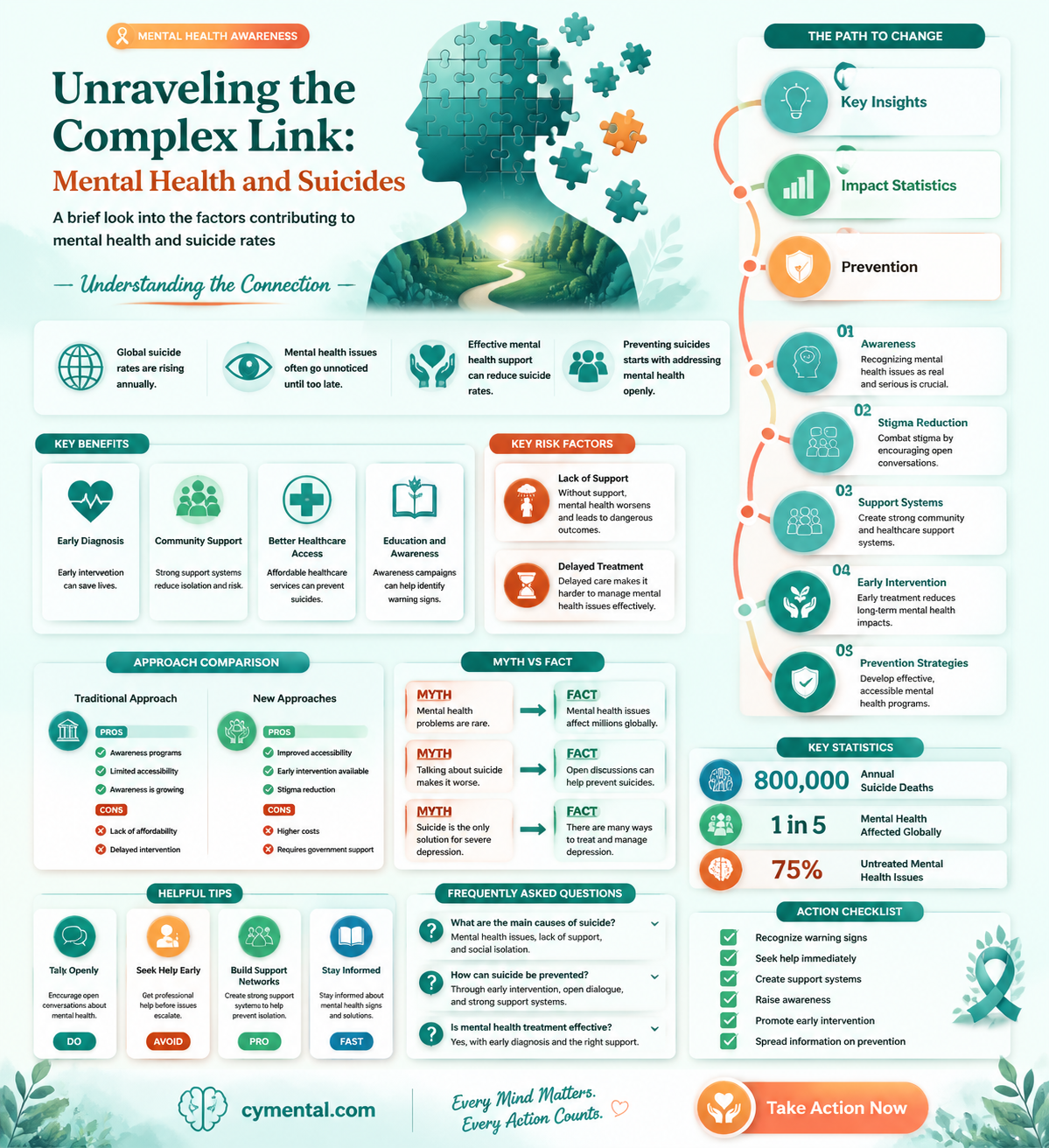
The topic of whether suicides are caused by mental health is a complex and sensitive issue that has been the subject of much debate and research. While mental health conditions can certainly contribute to suicidal thoughts and behaviors, it is important to recognize that suicide is often the result of a multifaceted interplay of factors, including social, environmental, and biological influences. Therefore, it is crucial to approach this topic with nuance and an understanding of the various contributing factors.
| Characteristics | Values |
|---|---|
| Definition | Suicides caused by mental health are those where a person's mental state is a significant contributing factor to their decision to end their life. |
| Common Mental Health Conditions | Depression, anxiety disorders, bipolar disorder, schizophrenia, post-traumatic stress disorder (PTSD), and substance abuse disorders. |
| Warning Signs | Changes in mood, withdrawal from social activities, changes in sleep patterns, loss of interest in hobbies, increased substance use, and expressions of hopelessness or worthlessness. |
| Risk Factors | Previous suicide attempts, family history of suicide, exposure to traumatic events, chronic physical illness, and social isolation. |
| Demographics | Higher rates in males, young adults, and older adults. Certain ethnic and cultural groups may also be at higher risk. |
| Prevention Strategies | Mental health screenings, therapy, medication, crisis hotlines, and community support programs. |
| Statistics | Globally, suicide is the second leading cause of death among 15-29 year olds. Mental health conditions are believed to contribute to approximately 90% of suicides. |
| Myths and Misconceptions | Suicide is not a selfish act, people who talk about suicide are not just seeking attention, and mental health conditions are not a sign of weakness. |
| Impact on Others | Suicide can have a profound impact on family, friends, and communities, leading to grief, guilt, and a sense of loss. |
| Resources | National Suicide Prevention Lifeline (1-800-273-TALK), Crisis Text Line (text HOME to 741741), and local mental health organizations. |
Explore related products



What You'll Learn
- Correlation vs. Causation: Exploring the relationship between mental health conditions and suicidal behavior
- Underlying Mental Disorders: Identifying specific mental illnesses that may contribute to suicidal thoughts
- Environmental and Social Factors: Examining how external factors influence mental health and suicide risk
- Warning Signs and Prevention: Recognizing indicators of suicidal ideation and strategies for intervention
- Treatment and Support Options: Discussing available resources and therapies for those struggling with mental health issues

Correlation vs. Causation: Exploring the relationship between mental health conditions and suicidal behavior
While there is a strong correlation between mental health conditions and suicidal behavior, establishing causation is a complex and nuanced task. Correlation indicates that two variables tend to occur together, but it does not imply that one causes the other. In the context of mental health and suicide, it is essential to recognize that mental health conditions can increase the risk of suicidal thoughts and behaviors, but they are not the sole cause.
To understand the relationship between mental health conditions and suicidal behavior, it is crucial to consider the interplay of various factors. Mental health conditions such as depression, anxiety, and substance abuse can contribute to feelings of hopelessness, helplessness, and emotional distress, which may increase the risk of suicidal ideation. However, other factors such as social isolation, financial problems, and traumatic life events can also play a significant role in the development of suicidal thoughts and behaviors.
Moreover, not all individuals with mental health conditions will experience suicidal thoughts or behaviors. The presence of a mental health condition does not necessarily lead to suicide, and many people with mental health conditions lead fulfilling and meaningful lives. It is essential to avoid oversimplifying the relationship between mental health conditions and suicide, as this can lead to stigma and misunderstanding.
In exploring the relationship between mental health conditions and suicidal behavior, it is also important to consider the role of protective factors. These factors can help mitigate the risk of suicide, even in the presence of mental health conditions. Protective factors include social support, coping skills, and access to mental health care. By strengthening these protective factors, we can help reduce the risk of suicide and promote overall mental health and well-being.
In conclusion, while there is a correlation between mental health conditions and suicidal behavior, it is essential to recognize the complexity of this relationship. Mental health conditions can increase the risk of suicidal thoughts and behaviors, but they are not the sole cause. By considering the interplay of various factors and strengthening protective factors, we can work towards reducing the risk of suicide and promoting mental health and well-being.
Unseen Scars: The Profound Impact of Mental Abuse on Brain Health
You may want to see also
Explore related products


Underlying Mental Disorders: Identifying specific mental illnesses that may contribute to suicidal thoughts
Depression is one of the most common mental illnesses associated with suicidal thoughts. Major depressive disorder, characterized by persistent feelings of sadness, hopelessness, and a lack of interest in activities, can significantly increase the risk of suicide. Dysthymia, a milder but chronic form of depression, can also contribute to suicidal ideation over time. Bipolar disorder, with its extreme mood swings from mania to depression, poses a high risk for suicide, especially during depressive episodes.
Anxiety disorders, such as generalized anxiety disorder, panic disorder, and social anxiety disorder, can also play a role in suicidal thoughts. The constant worry, fear, and stress associated with these conditions can lead to feelings of overwhelming hopelessness. Post-traumatic stress disorder (PTSD), often resulting from traumatic experiences, can cause intense emotional distress and flashbacks, increasing the risk of suicide.
Schizophrenia, a severe mental disorder characterized by hallucinations, delusions, and disorganized thinking, can contribute to suicidal thoughts, especially when the individual experiences command hallucinations instructing them to harm themselves. Eating disorders, such as anorexia nervosa and bulimia nervosa, are also associated with a higher risk of suicide due to the severe physical and emotional toll they take on individuals.
Substance abuse disorders can exacerbate suicidal thoughts, as the misuse of drugs and alcohol can lead to impaired judgment, increased impulsivity, and a worsening of underlying mental health conditions. Personality disorders, such as borderline personality disorder, are also linked to a higher risk of suicide, with individuals often experiencing intense emotional instability and impulsive behaviors.
It is crucial to recognize that suicidal thoughts can be a symptom of these underlying mental disorders and that addressing the root cause through proper diagnosis, treatment, and support can help reduce the risk of suicide. Mental health professionals play a vital role in identifying these disorders and providing the necessary care to help individuals manage their symptoms and improve their overall well-being.
Exploring the Link: Type 2 Diabetes and Mental Health
You may want to see also
Environmental and Social Factors: Examining how external factors influence mental health and suicide risk
Environmental and social factors play a significant role in influencing mental health and suicide risk. Research has shown that individuals exposed to adverse childhood experiences, such as abuse, neglect, or parental substance abuse, are more likely to develop mental health issues and exhibit suicidal behavior later in life. These early life stressors can lead to long-term changes in brain development and functioning, affecting emotional regulation and coping mechanisms.
In addition to childhood experiences, ongoing social stressors, such as poverty, unemployment, and social isolation, can also contribute to mental health problems and increase suicide risk. For example, studies have found that individuals living in poverty are more likely to experience depression, anxiety, and substance abuse, all of which are risk factors for suicide. Similarly, unemployment can lead to feelings of hopelessness and worthlessness, further exacerbating mental health issues.
The impact of environmental factors on mental health is further illustrated by the effects of urbanization and access to green spaces. Research has shown that individuals living in urban areas with limited access to nature are more likely to experience mental health problems, including depression and anxiety. In contrast, those with access to green spaces, such as parks and gardens, tend to have better mental health outcomes. This suggests that environmental factors, such as access to nature, can play a protective role in mitigating mental health issues and reducing suicide risk.
Social media and technology also represent significant environmental factors that can influence mental health and suicide risk. Excessive use of social media has been linked to increased feelings of loneliness, social comparison, and cyberbullying, all of which can contribute to mental health problems. Furthermore, the constant connectivity and barrage of information can lead to heightened stress levels and difficulty disconnecting from work or social obligations.
In conclusion, environmental and social factors are critical in understanding the complex interplay between mental health and suicide risk. By addressing these external influences, such as adverse childhood experiences, social stressors, access to nature, and the impact of technology, we can develop more effective strategies for promoting mental health and reducing suicide rates. It is essential to consider these factors in conjunction with individual biological and psychological vulnerabilities to gain a comprehensive understanding of the issue.
Exploring the Link: Vertigo and Mental Confusion Explained
You may want to see also
Warning Signs and Prevention: Recognizing indicators of suicidal ideation and strategies for intervention
Recognizing the warning signs of suicidal ideation is crucial for timely intervention and prevention. One key indicator is a sudden or persistent change in behavior, such as withdrawing from social activities, neglecting personal hygiene, or exhibiting extreme mood swings. Verbal cues, like expressing feelings of hopelessness, worthlessness, or talking about suicide, should also raise concern. It's essential to take these signs seriously and initiate a conversation with the individual, ensuring they feel heard and supported.
Strategies for intervention include active listening, asking open-ended questions, and avoiding judgmental language. It's important to assess the person's risk level by asking about their plans, means, and timeframe for suicide. If the risk is high, immediate action should be taken, such as contacting emergency services or a mental health crisis line. In less urgent cases, connecting the individual with mental health resources, like therapy or support groups, can be beneficial. Follow-up is crucial to ensure the person continues to receive support and monitoring.
Prevention efforts can also focus on reducing access to lethal means, such as firearms or medications, especially for high-risk individuals. Community-based initiatives, like mental health education programs and peer support networks, can help foster a supportive environment and reduce stigma around mental health issues. Additionally, promoting healthy coping mechanisms, like exercise, mindfulness, and creative expression, can help individuals build resilience against suicidal thoughts.
In conclusion, recognizing the warning signs of suicidal ideation and implementing effective intervention strategies are critical components in preventing suicide. By fostering open communication, providing access to mental health resources, and promoting community support, we can work towards reducing the incidence of suicide and supporting those in need.
Unraveling the Roots of Mental Exhaustion: A Comprehensive Guide
You may want to see also
Treatment and Support Options: Discussing available resources and therapies for those struggling with mental health issues
For individuals struggling with mental health issues, a variety of treatment and support options are available. These can include psychological therapies, such as cognitive-behavioral therapy (CBT) and dialectical behavior therapy (DBT), which have been shown to be effective in reducing symptoms of depression, anxiety, and other mental health conditions. Medications, such as antidepressants and mood stabilizers, may also be prescribed by a psychiatrist to help manage symptoms.
In addition to traditional therapies, there are also alternative and complementary treatments that some individuals may find helpful. These can include mindfulness-based therapies, art therapy, music therapy, and yoga. Peer support groups and online communities can also provide a sense of connection and support for those struggling with mental health issues.
It is important for individuals to work with a mental health professional to determine the best course of treatment for their specific needs. This may involve a combination of therapies and medications, as well as lifestyle changes such as regular exercise, a healthy diet, and adequate sleep. With the right support and treatment, individuals can learn to manage their symptoms and improve their overall mental health and well-being.
Unfortunately, access to mental health care can be limited in some areas, and the stigma surrounding mental illness can prevent individuals from seeking help. It is crucial to address these barriers and ensure that everyone has access to the support and treatment they need. This can involve increasing funding for mental health services, providing training for primary care providers, and promoting awareness and education about mental health issues.
In conclusion, while mental health issues can be complex and challenging, there are a variety of treatment and support options available that can help individuals manage their symptoms and improve their overall well-being. By addressing barriers to care and promoting awareness and education, we can work towards ensuring that everyone has access to the support they need.
Exploring the Link: Can Chronic Stress Lead to Mental Illness?
You may want to see also
Frequently asked questions
While mental health issues are a significant factor in many suicides, they are not the sole cause. Various factors, including social, economic, and environmental stressors, can contribute to suicidal ideation and behavior.
Enhancing mental health services can play a crucial role in preventing suicides by providing better access to care, early intervention, and ongoing support for individuals struggling with mental health issues.
Yes, there is a strong correlation between substance abuse and suicide. Substance abuse can exacerbate mental health issues, impair judgment, and increase the likelihood of suicidal behavior.
Community support can significantly reduce suicide rates by fostering a sense of belonging, providing emotional support, and promoting social connectedness. Initiatives such as peer support groups, crisis hotlines, and community outreach programs can be instrumental in preventing suicides.