Noah Parker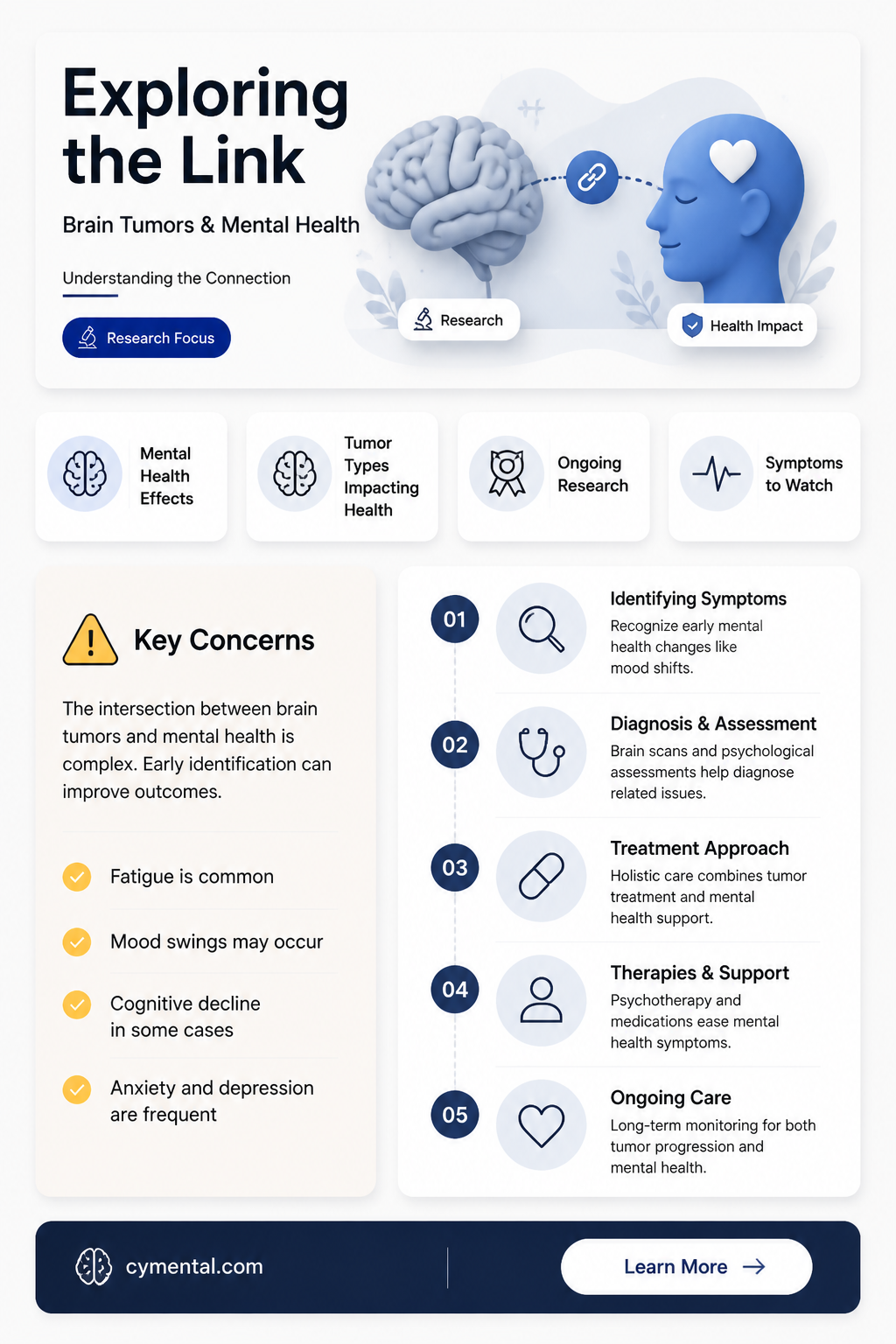
Brain tumors can have a profound impact on mental health, often leading to various psychiatric symptoms. While the direct causation between brain tumors and mental illness is complex and depends on multiple factors, including the tumor's location, size, and type, it is well-documented that patients with brain tumors may experience a range of mental health issues. These can include depression, anxiety, mood swings, and even psychosis. The underlying mechanisms are not fully understood but may involve the tumor's effect on brain chemistry, hormonal imbalances, and the psychological stress of dealing with a serious medical condition. It is crucial for healthcare providers to consider the potential mental health implications when diagnosing and treating patients with brain tumors, ensuring a holistic approach to their care.
Explore related products


What You'll Learn
- Types of Brain Tumors: Explore different types of brain tumors and their potential impact on mental health
- Symptoms of Mental Illness: Discuss common symptoms of mental illness that may arise from brain tumors
- Diagnosis and Treatment: Outline the diagnostic process and treatment options for brain tumors causing mental health issues
- Case Studies: Present real-life case studies of individuals with brain tumors and their mental health experiences
- Research and Statistics: Provide recent research findings and statistics on the prevalence of mental illness in brain tumor patients

Types of Brain Tumors: Explore different types of brain tumors and their potential impact on mental health
Brain tumors can be classified into two main categories: benign and malignant. Benign tumors, such as meningiomas and pituitary adenomas, are non-cancerous and typically grow slowly. They can, however, cause mental health issues if they press on surrounding brain tissue, leading to symptoms like anxiety, depression, or cognitive impairment. Malignant tumors, on the other hand, are cancerous and can grow rapidly, invading nearby tissues and causing more severe mental health disturbances.
Gliomas, a type of malignant tumor, are among the most common and aggressive brain cancers. They can lead to a range of mental health symptoms, including mood swings, personality changes, and memory loss. Medulloblastomas, another type of malignant tumor, are more common in children and can cause symptoms like irritability, anxiety, and difficulty with coordination.
The location of the tumor can also play a significant role in the mental health symptoms experienced. Tumors in the frontal lobe, for example, can lead to changes in personality and behavior, while tumors in the temporal lobe can cause memory problems and language difficulties.
It's important to note that the symptoms of brain tumors can be similar to those of other mental health conditions, making diagnosis challenging. If a person is experiencing persistent or severe mental health symptoms, it's crucial to seek medical attention to rule out the possibility of a brain tumor.
In conclusion, different types of brain tumors can have varying impacts on mental health, depending on their size, location, and aggressiveness. Understanding these differences can help in the early detection and treatment of brain tumors, potentially improving outcomes for patients.
Exploring the Link: Childhood Head Injuries and Mental Health
You may want to see also
Explore related products


Symptoms of Mental Illness: Discuss common symptoms of mental illness that may arise from brain tumors
Brain tumors can manifest through a variety of mental health symptoms, often mimicking or exacerbating existing psychiatric conditions. One of the most common symptoms is a sudden or gradual change in personality. This can include increased irritability, mood swings, or a shift towards more introverted or extroverted behavior. Such changes are particularly concerning when they occur in conjunction with other neurological symptoms, such as headaches or seizures.
Another significant symptom is the development or worsening of anxiety and depressive disorders. Patients may experience persistent feelings of sadness, hopelessness, or anxiety that interfere with their daily lives. These symptoms can be especially challenging to diagnose, as they are common in the general population and may not immediately suggest a neurological cause. However, when accompanied by other symptoms such as cognitive impairment or physical changes, they warrant further investigation.
Cognitive symptoms are also prevalent in individuals with brain tumors. These can include difficulties with memory, attention, and problem-solving. Patients may struggle with tasks that were previously easy for them, such as balancing a checkbook or following a recipe. These cognitive changes can be subtle and may not be noticeable until they significantly impact a person's ability to function.
In some cases, brain tumors can also lead to psychotic symptoms, such as hallucinations or delusions. These symptoms are less common but can be particularly distressing for patients and their families. It is crucial to differentiate these symptoms from other psychiatric conditions, as the treatment approach may differ significantly.
Finally, it is important to note that the specific symptoms of mental illness caused by a brain tumor can vary widely depending on the tumor's location, size, and type. Some tumors may primarily affect emotional regulation, while others may impact cognitive functions more significantly. A comprehensive evaluation by a healthcare professional is essential to determine the underlying cause of any mental health symptoms and to develop an appropriate treatment plan.
Unraveling the Link: Mental Illness and Pathological Lying Explored
You may want to see also
Explore related products


Diagnosis and Treatment: Outline the diagnostic process and treatment options for brain tumors causing mental health issues
The diagnostic process for brain tumors that may be causing mental health issues typically begins with a thorough medical history and neurological examination. Healthcare providers will assess symptoms such as headaches, seizures, and changes in mental status. Imaging studies, including MRI and CT scans, are crucial for visualizing the brain and identifying any abnormalities. In some cases, a biopsy may be necessary to determine the type of tumor and its grade.
Treatment options for brain tumors vary depending on the type, size, and location of the tumor, as well as the patient's overall health. Surgery is often the first line of treatment, with the goal of removing as much of the tumor as possible. Radiation therapy and chemotherapy may also be used, either alone or in combination with surgery, to target remaining tumor cells. For tumors that are causing significant mental health issues, a multidisciplinary approach may be necessary, involving neurologists, psychiatrists, and other mental health professionals.
In addition to medical treatments, supportive care is essential for managing the mental health symptoms associated with brain tumors. This may include medications to alleviate symptoms such as anxiety and depression, as well as counseling and therapy to help patients cope with the emotional impact of their diagnosis. Alternative therapies, such as acupuncture and mindfulness meditation, may also be beneficial in reducing stress and improving overall well-being.
It is important for patients and their families to be aware of the potential mental health effects of brain tumors and to seek support early on. By addressing these issues proactively, healthcare providers can help improve the quality of life for patients and their loved ones.
Unraveling the Complex Web: What Causes Mental Health Issues?
You may want to see also
Explore related products


Case Studies: Present real-life case studies of individuals with brain tumors and their mental health experiences
Sarah, a 32-year-old marketing professional, began experiencing frequent headaches and mood swings. Initially, she attributed these symptoms to work-related stress. However, as the headaches intensified and her mood swings became more erratic, she sought medical attention. An MRI revealed a large glioma in her left frontal lobe. The diagnosis was devastating, but Sarah was determined to fight. She underwent surgery, followed by chemotherapy and radiation. Throughout her treatment, Sarah experienced depression and anxiety, which she managed with the help of a therapist and medication. Today, Sarah is in remission and has become an advocate for brain tumor awareness, sharing her story to help others facing similar challenges.
Michael, a 45-year-old father of two, was diagnosed with a meningioma after experiencing seizures and personality changes. His family was shocked by the diagnosis, as Michael had always been a calm and rational person. The tumor was successfully removed surgically, but Michael continued to struggle with anxiety and mood swings. He found solace in support groups and cognitive-behavioral therapy, which helped him cope with the emotional aftermath of his diagnosis and treatment. Michael's experience has inspired him to become a mentor for others with brain tumors, offering guidance and support.
These case studies illustrate the complex relationship between brain tumors and mental health. While the physical symptoms of a brain tumor can be debilitating, the emotional toll can be equally challenging. Patients may experience a range of mental health issues, including depression, anxiety, and personality changes. These symptoms can stem from the tumor itself, the stress of diagnosis and treatment, or the impact on daily life and relationships. It is crucial for healthcare providers to address the mental health needs of brain tumor patients, offering resources and support to help them navigate their journey. By sharing their stories, individuals like Sarah and Michael can help raise awareness and reduce the stigma surrounding brain tumors and mental illness.
Unraveling the Link: Mental Health Conditions and Personal Hygiene Challenges
You may want to see also
Explore related products


Research and Statistics: Provide recent research findings and statistics on the prevalence of mental illness in brain tumor patients
Recent studies have shed light on the complex relationship between brain tumors and mental illness, revealing some startling statistics. According to a 2022 study published in the Journal of Neuro-Oncology, approximately 40% of brain tumor patients experience at least one mental health disorder, with depression and anxiety being the most common. This is significantly higher than the general population, where around 20% of individuals experience a mental illness in any given year.
Further research has identified specific risk factors that may contribute to the development of mental illness in brain tumor patients. A study conducted by the National Institutes of Health found that patients with tumors located in the frontal lobe were more likely to experience depression and anxiety, while those with tumors in the temporal lobe were at a higher risk for developing psychosis. Additionally, the study revealed that patients who underwent surgery for their tumors were more likely to experience post-operative depression, which may be linked to changes in brain chemistry and function.
The impact of brain tumors on mental health is not limited to the patients themselves. A 2021 study published in the journal Cancer found that caregivers of brain tumor patients also experience high levels of stress, anxiety, and depression. This highlights the need for comprehensive support systems that address the mental health needs of both patients and their caregivers.
While these statistics are concerning, they also underscore the importance of early detection and intervention. Mental health screenings should be a routine part of care for brain tumor patients, and treatment plans should be tailored to address both the physical and emotional needs of individuals. By acknowledging the complex interplay between brain tumors and mental illness, healthcare providers can work towards improving outcomes and quality of life for patients and their families.
Unveiling the Psychological Impact: Narcissistic Abuse and Its Mental Health Consequences
You may want to see also
Frequently asked questions
Yes, a brain tumor can cause mental illness. The presence of a tumor can lead to various neurological and psychiatric symptoms, depending on its location, size, and the structures it affects.
Common mental health symptoms associated with brain tumors include depression, anxiety, mood swings, personality changes, and cognitive impairment. These symptoms can vary widely among individuals and may be mistaken for other mental health conditions.
The location of a brain tumor plays a significant role in determining the mental health symptoms experienced. For example, tumors in the frontal lobe may lead to personality changes and impaired judgment, while tumors in the temporal lobe may cause mood swings and memory problems.
Treatment options for mental health symptoms caused by brain tumors typically involve a multidisciplinary approach. This may include surgical removal of the tumor, radiation therapy, chemotherapy, and medications to manage psychiatric symptoms. Additionally, psychotherapy and counseling can help individuals cope with the emotional and psychological challenges associated with brain tumors.