Ava Ramirez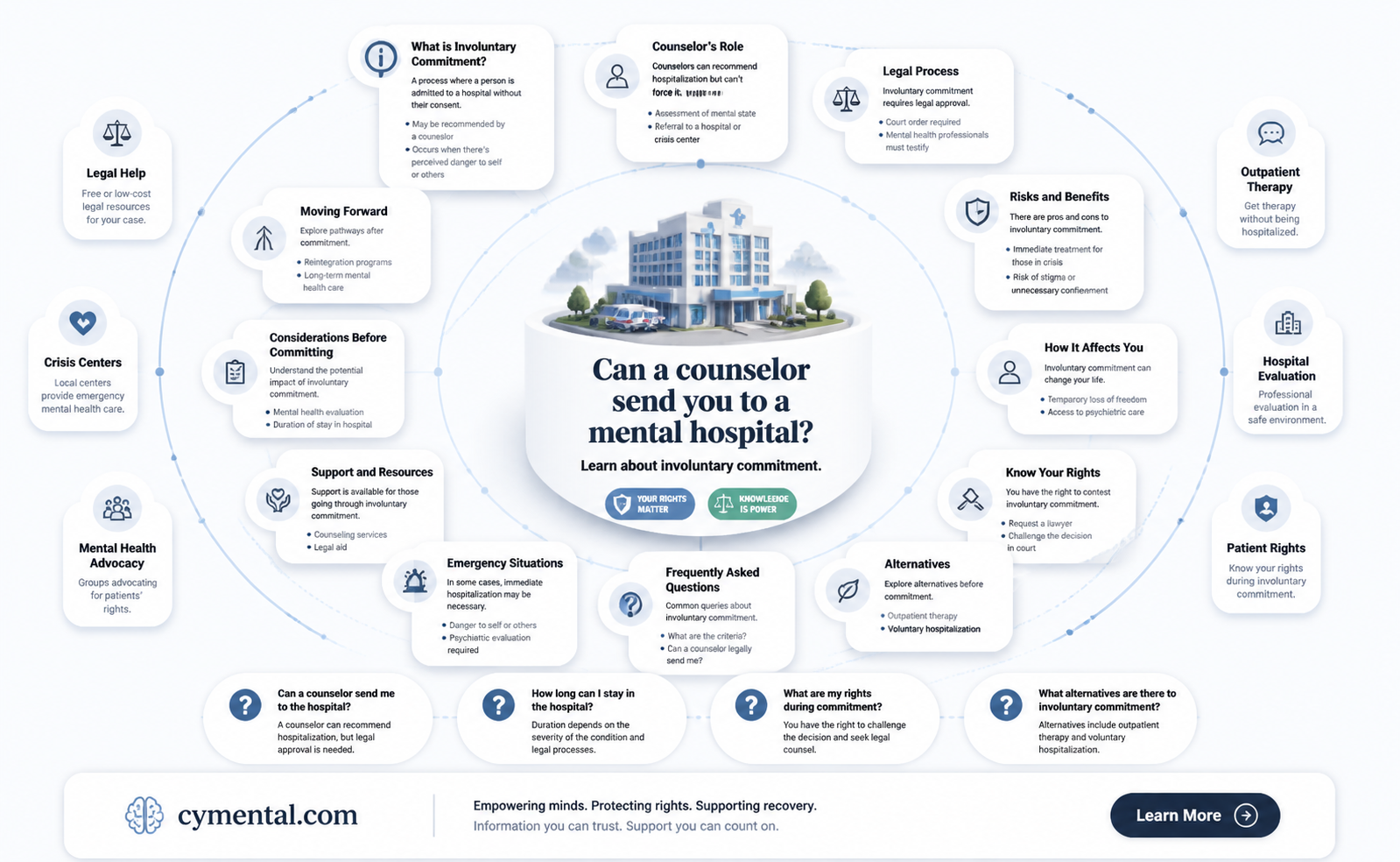
The question of whether a counselor can send someone to a mental hospital is a complex and sensitive topic that involves understanding the roles and responsibilities of mental health professionals, as well as the legal and ethical considerations surrounding involuntary hospitalization. In general, a counselor does not have the authority to involuntarily commit someone to a mental hospital. That power typically rests with psychiatrists, psychologists, or other licensed mental health professionals who have undergone specific training and have the legal authority to make such decisions. However, a counselor can play a crucial role in identifying individuals who may be at risk of harming themselves or others and can help facilitate the process of getting them the necessary support and treatment. It's important to note that the laws and regulations regarding involuntary hospitalization vary by jurisdiction, and it's essential for mental health professionals to be familiar with the specific guidelines in their area.
Explore related products




What You'll Learn

When can a counselor involuntarily commit a patient?
In the realm of mental health care, the question of when a counselor can involuntarily commit a patient is a critical and complex issue. Involuntary commitment, also known as civil commitment, is a legal process where a person is admitted to a psychiatric facility against their will. This measure is typically reserved for situations where a patient poses a significant risk to themselves or others due to their mental state.
Counselors, as mental health professionals, have a duty to assess and manage the risk of harm associated with their patients. In many jurisdictions, they are legally mandated to take action if they believe a patient is a danger to themselves or others. This can involve initiating an involuntary commitment process. However, the specific criteria and procedures for involuntary commitment vary widely by location and are often governed by state or provincial laws.
Generally, for a counselor to involuntarily commit a patient, they must have a reasonable belief that the patient is experiencing a mental health crisis that impairs their judgment and decision-making abilities. This belief must be supported by observable behaviors or statements made by the patient. Common indicators might include suicidal ideation, homicidal thoughts, or a significant deterioration in the patient's mental status.
The process of involuntary commitment usually involves a series of steps. First, the counselor must conduct a thorough assessment of the patient's condition. If the assessment indicates that involuntary commitment is necessary, the counselor may need to obtain a court order or work with law enforcement to transport the patient to a psychiatric facility. Once at the facility, the patient will be evaluated by a psychiatrist or other qualified mental health professional to determine the appropriateness of the commitment.
It's important to note that involuntary commitment is considered a last resort and is only used when other, less restrictive interventions have been unsuccessful. Counselors are trained to explore all available options for supporting their patients before resorting to involuntary measures. Additionally, the legal and ethical considerations surrounding involuntary commitment are stringent, and counselors must adhere to strict guidelines to ensure that patients' rights are protected.
In conclusion, while counselors have the authority to involuntarily commit patients in certain circumstances, this power is exercised with great caution and is subject to legal and ethical oversight. The decision to commit a patient involuntarily is never taken lightly and is always made with the patient's best interests and safety in mind.
Exploring the Myths and Realities of Psychiatric Care Facilities
You may want to see also
Explore related products




What are the legal requirements for involuntary commitment?
Involuntary commitment, also known as civil commitment, is a legal process where an individual is involuntarily placed in a mental health facility for treatment. The legal requirements for involuntary commitment vary by jurisdiction, but generally, there are several key elements that must be met. First, there must be a determination that the individual is a danger to themselves or others due to their mental illness. This often requires a professional assessment by a mental health expert. Second, the individual must be unable to care for themselves or make informed decisions about their treatment. Third, there must be a showing that less restrictive alternatives to involuntary commitment have been tried and failed. Finally, the commitment must be for a specific period of time, and the individual must be provided with due process rights, including the right to a hearing and the right to legal representation.
The process of involuntary commitment typically begins with a petition filed by a mental health professional, a family member, or a law enforcement officer. The petition must allege that the individual meets the legal criteria for involuntary commitment. A hearing is then held, where the individual has the opportunity to present evidence and argue against the commitment. If the court finds that the individual meets the criteria, they will be ordered to be committed to a mental health facility. The length of the commitment will depend on the specific circumstances of the case, but it is typically for a period of several months.
It is important to note that involuntary commitment is a serious legal proceeding that can have significant consequences for the individual's rights and freedoms. As such, it is only used in cases where there is a clear and imminent danger to the individual or others, and where less restrictive alternatives have been exhausted. Mental health professionals and others involved in the process must carefully consider the ethical and legal implications of involuntary commitment before pursuing this option.
In some cases, individuals may be able to challenge their involuntary commitment through legal means. This may involve filing a habeas corpus petition, which is a legal action that seeks to challenge the lawfulness of the individual's detention. Alternatively, the individual may be able to appeal the commitment order to a higher court. It is important for individuals who are facing involuntary commitment to understand their legal rights and to seek legal representation if possible.
In conclusion, involuntary commitment is a complex legal process that involves a careful balancing of the individual's rights and the need to protect them and others from harm. While it can be a necessary tool in some cases, it is important to approach it with caution and to ensure that all legal requirements are met. Mental health professionals, family members, and others involved in the process must work together to ensure that the individual receives the appropriate level of care and support, while also respecting their legal rights and freedoms.
Exploring the Dynamics of Coed Mental Health Facilities
You may want to see also
Explore related products





How does the involuntary commitment process work?
In the context of mental health care, involuntary commitment is a legal process by which an individual is admitted to a psychiatric facility against their will. This process is typically initiated when a person is deemed to be a danger to themselves or others due to a mental health condition. While the specifics can vary by jurisdiction, there are generally several key steps involved.
First, a mental health professional, such as a psychiatrist or a licensed counselor, must assess the individual and determine that they meet the criteria for involuntary commitment. This often involves evaluating the person's behavior, statements, and any available medical records. If the professional believes that the person is a risk to themselves or others, they may then proceed with the commitment process.
Next, the mental health professional must obtain a court order or a warrant for the individual's detention. This usually requires presenting evidence to a judge or a magistrate, who will then decide whether there is sufficient cause for the commitment. In some cases, law enforcement may be involved in transporting the individual to the psychiatric facility.
Once the individual is at the facility, they will undergo a more thorough evaluation by the staff. This may include a physical examination, a psychiatric assessment, and interviews with family members or other relevant parties. The facility will then develop a treatment plan for the individual, which may include medication, therapy, and other interventions.
It's important to note that involuntary commitment is a serious step and is typically only used as a last resort when other, less restrictive options have been exhausted. The process is designed to protect the rights of the individual while also ensuring their safety and the safety of others.
Understanding Mental Health Care: Inside the World of Psychiatric Hospitals
You may want to see also
Explore related products



What are the criteria for determining mental instability?
Determining mental instability involves assessing various criteria that indicate a person's mental state may pose a risk to themselves or others. Mental health professionals, including counselors, use these criteria to evaluate whether inpatient treatment at a mental hospital is necessary. One key criterion is the presence of suicidal ideation or attempts, which signals a critical need for intervention. Other indicators include homicidal thoughts or behaviors, severe mood swings, hallucinations, delusions, or disorganized thinking that impair daily functioning.
The process of evaluation typically involves a thorough psychological assessment, which may include interviews, questionnaires, and observation. Counselors look for signs of mental disorders such as schizophrenia, bipolar disorder, major depressive disorder, or anxiety disorders that could contribute to instability. They also consider the individual's personal history, including past hospitalizations, medication use, and support system.
In addition to these clinical criteria, counselors must also consider legal and ethical guidelines when determining whether to send someone to a mental hospital. Involuntary commitment laws vary by state, but generally require that the individual be deemed a danger to themselves or others and unable to care for their own needs. Counselors must balance the need to protect the individual and others with the person's right to autonomy and freedom.
It's important to note that the decision to hospitalize is not taken lightly and is typically made in consultation with other mental health professionals, such as psychiatrists and social workers. The goal is to provide the necessary level of care to help the individual stabilize and improve their mental health, while also respecting their rights and dignity.
In summary, determining mental instability involves a comprehensive evaluation of clinical criteria, personal history, and legal considerations. Counselors play a crucial role in this process, working to ensure that individuals receive the appropriate level of care while also protecting their rights and well-being.
Understanding Mental Health Care Options for Young Children
You may want to see also
Explore related products


What are the potential consequences of involuntary commitment?
Involuntary commitment, a process where an individual is admitted to a mental health facility against their will, carries several potential consequences that must be carefully considered. One significant consequence is the impact on the individual's autonomy and civil liberties. Being involuntarily committed can lead to feelings of powerlessness and loss of control, which may exacerbate existing mental health issues or create new ones.
Another potential consequence is the stigma associated with involuntary commitment. Society often views mental health issues negatively, and being involuntarily committed can lead to social isolation, discrimination, and damage to one's reputation. This stigma can make it difficult for individuals to reintegrate into their communities after being released from the facility.
Furthermore, involuntary commitment can result in physical and emotional trauma. The process of being forcibly removed from one's home and placed in a confined environment can be distressing and may lead to long-lasting psychological scars. Additionally, the treatment received during involuntary commitment may not always be appropriate or effective, potentially causing further harm to the individual's mental health.
From a legal perspective, involuntary commitment raises complex ethical and constitutional questions. It involves a delicate balance between protecting the rights of the individual and ensuring public safety. Legal battles surrounding involuntary commitment can be lengthy and costly, placing additional stress on the individual and their family.
Lastly, involuntary commitment can have significant financial implications. The cost of treatment and care in a mental health facility can be substantial, and individuals may be left with large medical bills. This financial burden can further compound the stress and challenges faced by those who have been involuntarily committed.
In conclusion, while involuntary commitment may be necessary in certain situations to protect individuals from harming themselves or others, it is crucial to be aware of the potential consequences. These consequences highlight the importance of exploring alternative treatment options and ensuring that involuntary commitment is used only as a last resort.
Understanding Dress Codes: What to Wear in a Mental Health Facility
You may want to see also
Frequently asked questions
Generally, a counselor does not have the authority to involuntarily commit someone to a mental hospital. That power typically lies with medical professionals, such as psychiatrists, or legal authorities.
If a counselor believes a patient needs more intensive care, they can recommend that the patient seek further evaluation from a psychiatrist or other medical professional. They may also help the patient develop a safety plan or connect them with emergency services if the situation is urgent.
Yes, a counselor might be involved in a patient's hospitalization if they are part of the treatment team at the hospital or if they have been asked to provide information about the patient's condition. However, they would not be the one to initiate the hospitalization.
Counselors have an ethical responsibility to prioritize the safety and well-being of their patients. If they believe a patient is at risk of harming themselves or others, they must take appropriate action, which may include recommending hospitalization. However, they must also respect the patient's autonomy and confidentiality, and ensure that any recommendations are made in the patient's best interest.