Madison Cole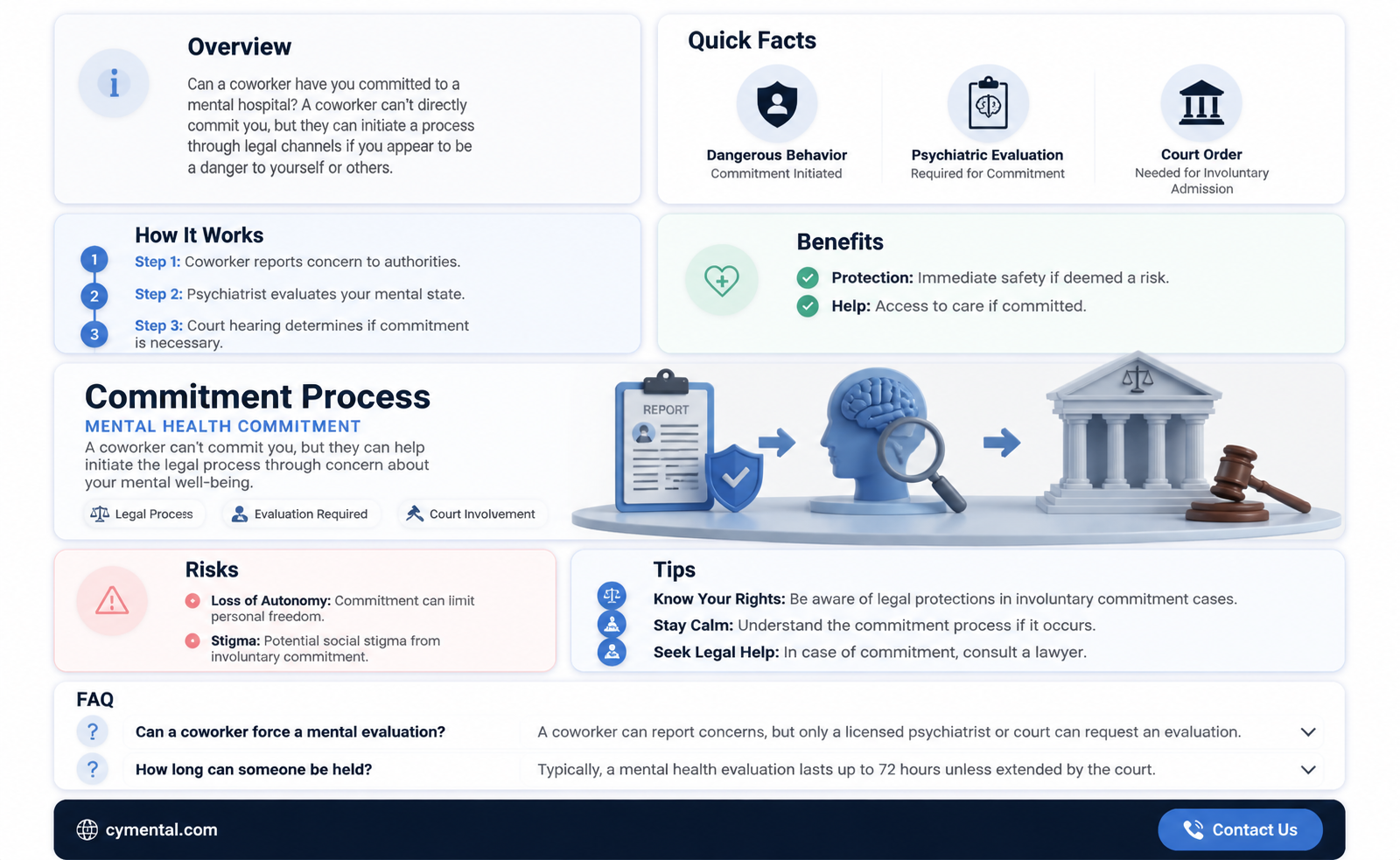
The question of whether a coworker can have someone committed to a mental hospital is a complex and sensitive issue that intersects with legal, ethical, and psychological considerations. In general, the process of involuntary commitment to a mental health facility requires a thorough evaluation by qualified mental health professionals and often involves legal proceedings. A coworker, as a non-medical professional, does not have the authority to initiate such a process. However, they may play a role in alerting supervisors or HR departments if they observe concerning behaviors that could potentially lead to an evaluation. It's crucial to approach such situations with empathy and respect for the individual's rights and dignity, ensuring that any actions taken are in accordance with company policies and relevant laws.
| Characteristics | Values |
|---|---|
| Legal Authority | A coworker does not have the legal authority to have someone committed to a mental hospital. This action typically requires a court order or the involvement of mental health professionals. |
| Involuntary Commitment | Involuntary commitment laws vary by jurisdiction but generally require a person to be a danger to themselves or others, or unable to care for themselves due to a mental illness. A coworker's opinion or observation is not sufficient to meet these criteria. |
| Confidentiality | Discussing someone's mental health without their consent is a breach of confidentiality and can have legal and ethical repercussions. Coworkers should respect privacy and avoid making assumptions or judgments. |
| Support Resources | If a coworker is concerned about someone's mental health, they should encourage them to seek professional help or contact human resources for support. Many workplaces have employee assistance programs (EAPs) or other resources available. |
| Stigma Reduction | It's important to reduce stigma around mental health in the workplace. Coworkers should be supportive and understanding, rather than making threats or judgments about mental health. |
| Intervention | If someone is exhibiting concerning behavior at work, such as extreme agitation or suicidal ideation, coworkers should notify a supervisor or HR immediately. However, this does not equate to having someone committed. |
| Documentation | Any incidents or concerns regarding an employee's mental health should be documented by HR or management, not by coworkers. Documentation should be kept confidential and used to support the employee. |
| Training | Workplaces should provide training on mental health awareness and crisis intervention for employees. This can help coworkers recognize signs of distress and respond appropriately. |
| Referral | If a coworker is concerned about someone's mental health, they should refer them to a mental health professional or encourage them to contact a crisis hotline. |
| Legal Consequences | Threatening to have someone committed can be considered harassment or discrimination, depending on the context. Coworkers should be aware of the legal implications of their actions. |
| Ethical Considerations | It's ethically important to treat all employees with respect and dignity, regardless of their mental health status. Coworkers should avoid making assumptions or judgments based on limited information. |
| Workplace Culture | A supportive and inclusive workplace culture can help reduce the likelihood of mental health crises. Coworkers should contribute to a positive and respectful work environment. |
| Mental Health Professionals | Mental health professionals are trained to assess and treat mental illness. Coworkers should not attempt to diagnose or treat mental health conditions. |
| Emergency Situations | In emergency situations, such as an imminent threat of suicide, coworkers should call 911 or the local emergency number immediately. |
| Follow-up | After a mental health crisis, it's important for coworkers to follow up with the individual and offer support. This can help facilitate a smooth return to work and promote ongoing well-being. |
Explore related products




What You'll Learn

Legal requirements for involuntary commitment
Involuntary commitment to a mental health facility is a serious legal process that requires specific conditions to be met. Generally, it involves a determination by a qualified mental health professional or a court that an individual is unable to care for themselves or poses a danger to themselves or others due to a mental health condition. The laws governing involuntary commitment vary by jurisdiction, but there are some common elements that are typically required.
One of the primary legal requirements for involuntary commitment is a thorough evaluation by a mental health professional. This evaluation must determine that the individual in question is suffering from a mental illness that significantly impairs their judgment, behavior, or capacity to recognize their own need for treatment. In many cases, this evaluation must be conducted by a psychiatrist or a psychologist with specialized training in forensic mental health.
Another key requirement is that the individual must pose a clear and present danger to themselves or others. This danger can be demonstrated through a variety of behaviors, such as suicidal ideation, homicidal threats, or a history of violent behavior. In some cases, the individual may be deemed a danger to themselves if they are unable to provide for their basic needs, such as food, shelter, or medical care.
The legal process for involuntary commitment often involves a court hearing, where evidence is presented to a judge who will make a determination about whether the individual should be committed. This hearing may include testimony from mental health professionals, family members, and other relevant witnesses. The individual who is the subject of the commitment hearing may also have the opportunity to present their own case and argue against commitment.
In addition to the evaluation and danger requirements, there are often procedural safeguards in place to protect the rights of the individual. These may include the right to legal representation, the right to a fair and impartial hearing, and the right to appeal the decision of the court. The goal of these safeguards is to ensure that the process of involuntary commitment is used only when absolutely necessary and that the rights of the individual are not unduly infringed upon.
Overall, the legal requirements for involuntary commitment are designed to balance the need to protect individuals who are unable to care for themselves with the need to respect their autonomy and civil liberties. By requiring a thorough evaluation, a clear showing of danger, and procedural safeguards, the law seeks to ensure that involuntary commitment is used only as a last resort and that it is carried out in a fair and humane manner.
Navigating Mental Health: Self-Admission to Psychiatric Care
You may want to see also
Explore related products





Grounds for commitment: danger to self/others
In the context of involuntary commitment to a mental health facility, the threshold for action is typically when an individual poses a significant danger to themselves or others. This criterion is often the pivotal factor in determining whether a person can be legally detained for psychiatric evaluation or treatment against their will. The assessment of danger is multifaceted, involving a careful evaluation of the individual's behavior, statements, and any relevant medical history. Mental health professionals, law enforcement officers, or designated crisis intervention teams are usually responsible for making this determination.
The process of evaluating danger to self or others involves several key considerations. Firstly, the individual's behavior must be assessed for any signs of suicidal ideation or attempts, self-harm, or neglect of basic needs that could lead to serious physical harm. Secondly, the person's interactions with others must be scrutinized for any threats, aggressive actions, or patterns of violence. Thirdly, the evaluator must consider the individual's psychiatric history, including any previous episodes of violence, self-harm, or suicidal behavior, as well as any known mental health conditions that could contribute to dangerous behavior.
It is important to note that the standard for involuntary commitment varies by jurisdiction, and the specific criteria for what constitutes a danger to self or others can differ significantly. In some cases, the threshold may be lower, requiring only a showing that the individual is unable to care for themselves or is likely to deteriorate without intervention. In other cases, the standard may be higher, necessitating a clear and imminent threat of harm.
In the workplace setting, the question of whether a coworker can have someone committed arises when the individual's behavior becomes disruptive, threatening, or concerning to others. Employers and coworkers have a responsibility to report any such behavior to the appropriate authorities, who can then initiate an evaluation to determine if involuntary commitment is warranted. It is crucial for workplaces to have clear protocols in place for addressing mental health concerns and to provide training to employees on how to recognize and respond to potential threats.
Ultimately, the decision to involuntarily commit an individual to a mental health facility is a serious one that must be made with careful consideration of the potential risks and benefits. While the primary goal is to ensure the safety of the individual and others, it is also important to respect the person's autonomy and to provide them with the necessary support and resources to address their mental health needs.
Finding Help Nearby: Your Guide to Local Mental Health Facilities
You may want to see also
Explore related products


Role of mental health professionals
Mental health professionals play a crucial role in the process of involuntary commitment. They are responsible for assessing an individual's mental state to determine if they pose a danger to themselves or others, which is often the legal threshold for involuntary hospitalization. This assessment involves a thorough evaluation of the person's symptoms, behavior, and medical history.
In the context of a coworker seeking to have someone committed, mental health professionals must navigate complex ethical considerations. They must ensure that the individual's rights are protected while also addressing any potential risks. This may involve consulting with other professionals, such as lawyers or social workers, to ensure that the commitment process is handled appropriately.
The involvement of mental health professionals can also provide support and resources for the individual in question. They can offer counseling, medication, and other forms of treatment to help the person manage their mental health condition. Additionally, they can work with the individual's employer to develop a plan for their return to work, if appropriate.
It is important to note that the role of mental health professionals in involuntary commitment is not without controversy. Some argue that the process can be overly restrictive and stigmatizing, while others believe it is a necessary measure to protect individuals who are unable to care for themselves. Mental health professionals must be aware of these debates and strive to balance the individual's rights with the need to provide appropriate care.
In summary, mental health professionals play a critical role in the process of involuntary commitment, particularly when it involves a coworker seeking to have someone hospitalized. They must navigate complex ethical considerations, provide appropriate care and support, and work to ensure that the individual's rights are protected throughout the process.
Understanding Disability and Mental Health: A Comprehensive Guide
You may want to see also
Explore related products


Employee rights and workplace policies
In the context of workplace dynamics, understanding employee rights and workplace policies is crucial when addressing concerns about mental health and potential involuntary commitments. Employers are generally prohibited from disclosing an employee's mental health information without their consent, and any actions taken must be in accordance with established policies and legal frameworks. If a coworker expresses concerns about an individual's mental state, it is essential to follow proper channels, such as reporting to a supervisor or HR department, rather than taking unilateral action.
Workplace policies often include guidelines for addressing mental health issues, which may involve offering support resources, accommodations, or referrals to professional help. These policies are designed to balance the need for a safe and productive work environment with the rights and dignity of employees. It is important for all employees to be aware of these policies and to understand their roles and responsibilities in supporting colleagues who may be struggling with mental health challenges.
In situations where an employee's mental state may pose a risk to themselves or others, employers may need to take more decisive action, such as placing the employee on administrative leave or seeking an involuntary commitment. However, such actions must be taken with extreme caution and in compliance with all relevant laws and regulations. Employers should consult with legal counsel and mental health professionals to ensure that any interventions are appropriate and necessary.
Employees also have the right to request accommodations for mental health conditions, such as flexible work schedules, modified job duties, or access to counseling services. Employers are required to engage in an interactive process to determine the most effective accommodations, taking into account the individual's specific needs and the operational requirements of the workplace. By fostering an environment of understanding and support, employers can help to mitigate the stigma surrounding mental health issues and promote a culture of inclusivity and respect.
Ultimately, the key to navigating these complex issues is clear communication and a commitment to upholding employee rights while maintaining a safe and productive workplace. By staying informed about workplace policies and seeking guidance when needed, employees and employers can work together to address mental health concerns in a compassionate and effective manner.
Understanding Mental Health Inpatient Care Duration
You may want to see also
Explore related products





Confidentiality and privacy concerns
In the context of mental health and the workplace, confidentiality and privacy concerns are paramount. If a coworker is considering having someone committed to a mental hospital, they must navigate a complex web of ethical, legal, and practical considerations to ensure that the individual's rights are protected. This includes understanding the limits of confidentiality, the importance of consent, and the potential consequences of breaching privacy.
One of the primary concerns is the duty to maintain confidentiality. Healthcare providers, including mental health professionals, are bound by strict confidentiality laws and ethical guidelines. This means that they cannot disclose personal health information without the individual's consent, except in very limited circumstances, such as when there is an imminent risk of harm to the individual or others. Coworkers who are not healthcare providers may not be subject to the same legal requirements, but they should still respect the individual's privacy and avoid sharing personal information without consent.
Another important consideration is the issue of consent. Before any action can be taken to have someone committed to a mental hospital, the individual must provide informed consent. This means that they must be fully informed about the nature of the treatment, the potential risks and benefits, and their rights to refuse treatment. If the individual is unable to provide consent due to their mental state, then a legal representative or guardian may need to be appointed to make decisions on their behalf.
Breaching privacy can have serious consequences, both for the individual and for the coworker. If personal health information is disclosed without consent, the individual may suffer from stigma, discrimination, and loss of trust in their relationships. The coworker may also face legal repercussions, including fines and termination of employment. In addition, breaching privacy can undermine the therapeutic relationship between the individual and their healthcare provider, making it more difficult for them to receive effective treatment.
To address these concerns, coworkers should take a proactive approach to protecting confidentiality and privacy. This includes being aware of their organization's policies and procedures regarding mental health and confidentiality, as well as any relevant laws and regulations. They should also be mindful of their own biases and assumptions about mental health, and avoid making judgments or assumptions about their colleagues based on limited information.
In conclusion, confidentiality and privacy concerns are critical when it comes to mental health in the workplace. Coworkers must be aware of their ethical and legal obligations to protect personal health information, and take steps to ensure that the individual's rights are respected. By doing so, they can help to create a supportive and inclusive work environment that promotes mental health and well-being.
Exploring the Landscape of State Mental Hospitals in the United States
You may want to see also
Frequently asked questions
Generally, no. Commitment to a mental hospital typically requires a legal process that involves a mental health professional's evaluation and a court order. A coworker does not have the legal authority to initiate such a process.
Involuntary commitment usually involves a petition filed with a court by a mental health professional or a legal guardian. The individual in question must be evaluated by a qualified mental health professional who determines that they are a danger to themselves or others due to a mental illness. The court then reviews the petition and, if it finds sufficient evidence, issues an order for involuntary commitment.
Yes, a coworker can report concerns about your mental health to a mental health professional or a supervisor. However, this does not automatically lead to commitment. It may result in an evaluation or a referral for support services.
Common reasons for involuntary commitment include severe mental illness that impairs judgment, poses a risk of harm to oneself or others, or significantly interferes with daily functioning. Examples include acute psychosis, severe depression with suicidal ideation, or mania with dangerous behavior.
If you are facing involuntary commitment, you have the right to legal representation and can contest the petition in court. You can also request a second mental health evaluation by a different professional. It's important to understand your rights and seek legal advice as soon as possible.