Harper Lewis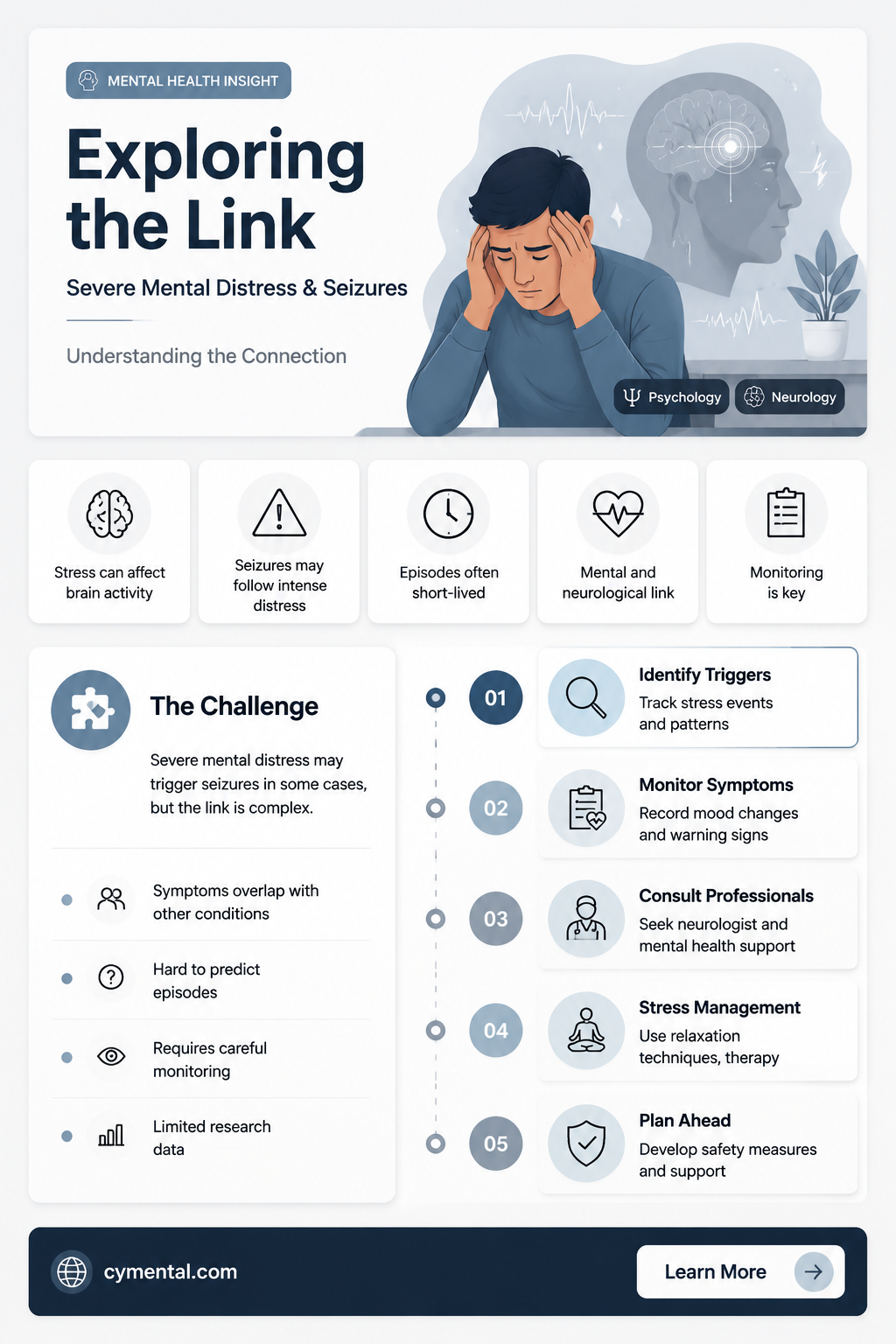
Severe mental distress can indeed trigger seizures in some individuals. This phenomenon is known as a psychogenic seizure, which is a type of seizure that is not caused by neurological conditions but rather by psychological factors. It's important to note that while the seizure itself is real and can be physically harmful, it is not caused by the same brain activity as epileptic seizures. Instead, it is a manifestation of extreme emotional or psychological turmoil. Recognizing the signs and symptoms of psychogenic seizures is crucial for proper diagnosis and treatment, as it often requires a different approach than traditional epilepsy management.
| Characteristics | Values |
|---|---|
| Definition | A seizure caused by severe mental distress, also known as a psychogenic seizure, is a type of seizure that occurs in response to psychological factors rather than neurological factors. |
| Symptoms | Symptoms may include convulsions, loss of consciousness, muscle spasms, and unusual behaviors or movements. |
| Causes | Severe mental distress, emotional trauma, anxiety, fear, or other psychological factors can trigger a psychogenic seizure. |
| Diagnosis | Diagnosis is typically made through a combination of medical history, physical examination, and psychological evaluation. |
| Treatment | Treatment may involve psychotherapy, counseling, stress management techniques, and in some cases, medication to manage symptoms. |
| Prognosis | The prognosis for individuals with psychogenic seizures can vary, but with appropriate treatment, many people are able to manage their symptoms and improve their quality of life. |
| Epidemiology | Psychogenic seizures are more common in women than in men, and they typically occur in adulthood. |
| Risk Factors | Risk factors may include a history of trauma, anxiety disorders, depression, or other mental health conditions. |
| Complications | Complications can include injuries from falls or accidents during seizures, as well as social and emotional challenges related to managing the condition. |
| Prevention | While it may not be possible to prevent psychogenic seizures entirely, managing stress and mental health conditions can help reduce the frequency and severity of seizures. |
| Research | Ongoing research is focused on better understanding the underlying causes of psychogenic seizures and developing more effective treatments. |
| Support | Support groups and resources are available for individuals with psychogenic seizures and their families to help them cope with the condition. |
| Education | Educating healthcare providers and the public about psychogenic seizures can help improve diagnosis, treatment, and support for those affected. |
| Stigma | Reducing stigma surrounding mental health conditions and seizures is crucial for improving the lives of individuals with psychogenic seizures. |
| Policy | Policies and programs that address mental health and neurological conditions can help improve access to care and support for individuals with psychogenic seizures. |
Explore related products


What You'll Learn
- Definition of Seizure: A sudden, uncontrolled electrical discharge in the brain causing convulsions or loss of consciousness
- Link to Mental Distress: Severe mental distress can trigger physiological responses, including seizures, in susceptible individuals
- Underlying Mechanisms: Stress can affect neurotransmitter balance and brain activity, potentially leading to seizure activity
- Clinical Evidence: Studies have shown that psychological stress can precipitate seizures, particularly in those with pre-existing seizure disorders
- Management and Prevention: Addressing mental health concerns and practicing stress management techniques can help reduce the risk of stress-induced seizures

Definition of Seizure: A sudden, uncontrolled electrical discharge in the brain causing convulsions or loss of consciousness
A seizure is a sudden, uncontrolled electrical discharge in the brain that can cause a range of symptoms, from convulsions to loss of consciousness. This neurological event is typically associated with conditions like epilepsy, but it can also be triggered by other factors, including severe mental distress. Understanding the definition of a seizure is crucial in recognizing its symptoms and potential causes, especially when it comes to psychological triggers.
Severe mental distress can manifest in various forms, such as anxiety, depression, or post-traumatic stress disorder (PTSD). In some cases, this distress can be so intense that it disrupts the normal functioning of the brain, leading to a seizure. This type of seizure is often referred to as a psychogenic seizure, which is different from epileptic seizures that are caused by a neurological disorder.
It's important to note that while severe mental distress can cause seizures, not all seizures are a result of psychological factors. A thorough medical evaluation is necessary to determine the underlying cause of a seizure and to rule out other potential triggers, such as brain tumors, infections, or metabolic imbalances.
In conclusion, the definition of a seizure as a sudden, uncontrolled electrical discharge in the brain causing convulsions or loss of consciousness is a critical starting point for understanding the complex relationship between mental distress and seizure activity. Recognizing the symptoms and potential causes of seizures, including psychological triggers, is essential for providing appropriate care and support to individuals who experience these events.
Exploring the Myth: Can a Flu Shot Trigger Mental Health Issues?
You may want to see also
Explore related products


Link to Mental Distress: Severe mental distress can trigger physiological responses, including seizures, in susceptible individuals
Severe mental distress can indeed trigger physiological responses, including seizures, in susceptible individuals. This phenomenon is known as a psychogenic seizure, which is a type of seizure that is not caused by a neurological condition but rather by psychological factors. It is important to note that while psychogenic seizures are not the same as epileptic seizures, they can still be very distressing and disruptive for the individual experiencing them.
Research has shown that individuals who have experienced trauma, such as physical or emotional abuse, are more likely to develop psychogenic seizures. This is because trauma can lead to changes in the brain's structure and function, making it more susceptible to stress-induced seizures. Additionally, individuals with certain mental health conditions, such as anxiety or depression, may also be more prone to psychogenic seizures.
It is crucial for healthcare professionals to be aware of the link between mental distress and seizures, as misdiagnosis can lead to inappropriate treatment. For example, if a psychogenic seizure is mistaken for an epileptic seizure, the individual may be prescribed anticonvulsant medication that is not necessary and could potentially cause harmful side effects. Therefore, a thorough evaluation of the individual's medical and psychological history is essential in order to make an accurate diagnosis.
In terms of treatment, addressing the underlying psychological factors that are contributing to the seizures is key. This may involve therapy, counseling, or medication to manage anxiety or depression. Additionally, stress management techniques, such as meditation or deep breathing exercises, can be helpful in reducing the frequency and severity of psychogenic seizures.
In conclusion, while seizures are often associated with neurological conditions, it is important to recognize that severe mental distress can also trigger physiological responses, including seizures. By understanding the link between mental distress and seizures, healthcare professionals can provide more accurate diagnoses and effective treatments for individuals experiencing this distressing condition.
Unseen Scars: The Profound Impact of Mental Abuse on Brain Health
You may want to see also
Explore related products


Underlying Mechanisms: Stress can affect neurotransmitter balance and brain activity, potentially leading to seizure activity
Stress has a profound impact on the human brain, influencing various physiological and psychological processes. One of the critical mechanisms by which stress affects the brain is through the disruption of neurotransmitter balance. Neurotransmitters are chemical messengers that facilitate communication between neurons, and their equilibrium is essential for maintaining normal brain function. When an individual experiences severe mental distress, the body's stress response system is activated, leading to the release of stress hormones such as cortisol and adrenaline. These hormones can interfere with the normal functioning of neurotransmitters, particularly those involved in regulating mood and emotional responses, such as serotonin and dopamine.
Moreover, stress can also alter brain activity patterns, potentially leading to seizure activity. Seizures are abnormal electrical discharges in the brain that can result in a range of symptoms, from mild twitching to severe convulsions. Research has shown that stress can lower the seizure threshold, making individuals more susceptible to experiencing seizures. This is particularly concerning for those with pre-existing seizure disorders, as stress can exacerbate the frequency and severity of their symptoms. The exact mechanisms by which stress triggers seizures are not fully understood, but it is believed that the combination of neurotransmitter imbalance and altered brain activity plays a significant role.
In addition to its direct effects on neurotransmitter balance and brain activity, stress can also contribute to seizure activity indirectly through its impact on other bodily systems. For example, stress can lead to sleep disturbances, which are known to increase the risk of seizures. Furthermore, stress can cause individuals to engage in unhealthy behaviors, such as excessive alcohol consumption or drug use, which can further disrupt neurotransmitter balance and increase the likelihood of seizure activity.
Understanding the underlying mechanisms by which stress can lead to seizure activity is crucial for developing effective prevention and treatment strategies. By addressing the root causes of stress and its impact on the brain, healthcare professionals can help individuals better manage their mental health and reduce the risk of seizure activity. This may involve a combination of pharmacological interventions, such as antidepressants or anticonvulsants, and non-pharmacological approaches, such as cognitive-behavioral therapy, mindfulness practices, and stress management techniques.
In conclusion, the relationship between stress and seizure activity is complex and multifaceted, involving direct effects on neurotransmitter balance and brain activity, as well as indirect consequences on other bodily systems. By recognizing the critical role that stress plays in seizure activity, healthcare professionals can develop more comprehensive and effective treatment plans for individuals at risk.
Understanding Victim Mentality: The Impact of Controlling Behavior
You may want to see also
Clinical Evidence: Studies have shown that psychological stress can precipitate seizures, particularly in those with pre-existing seizure disorders
Several studies have demonstrated a clear link between psychological stress and the onset of seizures, especially in individuals who already have a seizure disorder. This connection is supported by clinical evidence that highlights the impact of mental distress on neurological activity. For instance, a study published in the journal *Epilepsia* found that high levels of stress were associated with an increased risk of seizure recurrence in patients with epilepsy.
One possible explanation for this phenomenon is that stress can disrupt the balance of neurotransmitters in the brain, leading to hyperexcitability and a lower seizure threshold. Additionally, stress can trigger the release of hormones such as cortisol, which may further exacerbate neurological instability. It is also worth noting that stress can impair sleep quality, and sleep deprivation is a well-known risk factor for seizures.
Clinicians often recommend stress management techniques as part of a comprehensive treatment plan for patients with seizure disorders. These techniques may include cognitive-behavioral therapy, mindfulness meditation, and relaxation exercises. By addressing psychological stress, healthcare providers can help reduce the frequency and severity of seizures in susceptible individuals.
In conclusion, the clinical evidence is compelling: psychological stress can indeed precipitate seizures, particularly in those with pre-existing seizure disorders. Therefore, it is crucial for both patients and healthcare providers to recognize the importance of stress management in the context of seizure prevention and treatment.
Exploring the Link Between Mental Illnesses and Chemical Imbalances
You may want to see also
Management and Prevention: Addressing mental health concerns and practicing stress management techniques can help reduce the risk of stress-induced seizures
Addressing mental health concerns and practicing stress management techniques can significantly reduce the risk of stress-induced seizures. This approach involves a multifaceted strategy that includes both psychological interventions and lifestyle modifications. Cognitive-behavioral therapy (CBT) has been shown to be particularly effective in helping individuals identify and reframe negative thought patterns that contribute to stress. Additionally, mindfulness-based stress reduction (MBSR) programs, which combine meditation, yoga, and education about stress, have been found to decrease the frequency and severity of seizures in some patients.
Regular physical activity is another crucial component of stress management. Exercise has been proven to reduce stress levels by promoting the release of endorphins, which are natural mood elevators. It is recommended that individuals engage in at least 30 minutes of moderate-intensity exercise, such as brisk walking, cycling, or swimming, on most days of the week. Furthermore, maintaining a balanced diet rich in whole foods, fruits, and vegetables can help support overall brain health and reduce the likelihood of stress-induced seizures.
Adequate sleep is also essential for managing stress and preventing seizures. Chronic sleep deprivation can exacerbate stress and increase the risk of seizure activity. Adults should aim for 7-9 hours of sleep per night, while children and adolescents may require more. Establishing a consistent sleep schedule and creating a relaxing bedtime routine can help improve sleep quality.
In addition to these preventive measures, it is important for individuals to learn how to recognize the signs of stress and take steps to mitigate it before it becomes overwhelming. This may involve practicing relaxation techniques such as deep breathing, progressive muscle relaxation, or visualization. Seeking support from friends, family, or mental health professionals can also be beneficial in managing stress and reducing the risk of seizures.
By adopting a comprehensive approach to mental health and stress management, individuals can take proactive steps to reduce their risk of stress-induced seizures. This not only improves their overall quality of life but also helps to prevent the potentially serious consequences associated with seizure activity.
Exploring the Link: Thyroid Function and Mental Health
You may want to see also
Frequently asked questions
Yes, severe mental distress can trigger seizures in some individuals, particularly those with a history of seizure disorders or epilepsy.
Mental distress can lead to physiological changes in the body, such as increased heart rate and blood pressure, which can affect brain activity and potentially trigger a seizure.
Warning signs may include feelings of anxiety, depression, or overwhelming stress, as well as physical symptoms like headaches, nausea, or muscle tension.
While it's not always possible to prevent seizures, managing stress through techniques like meditation, therapy, or medication can help reduce the likelihood of seizures triggered by mental distress.
If someone experiences a seizure, it's important to seek medical attention immediately. Additionally, addressing the underlying mental distress through professional help can aid in preventing future seizures.