Ava Ramirez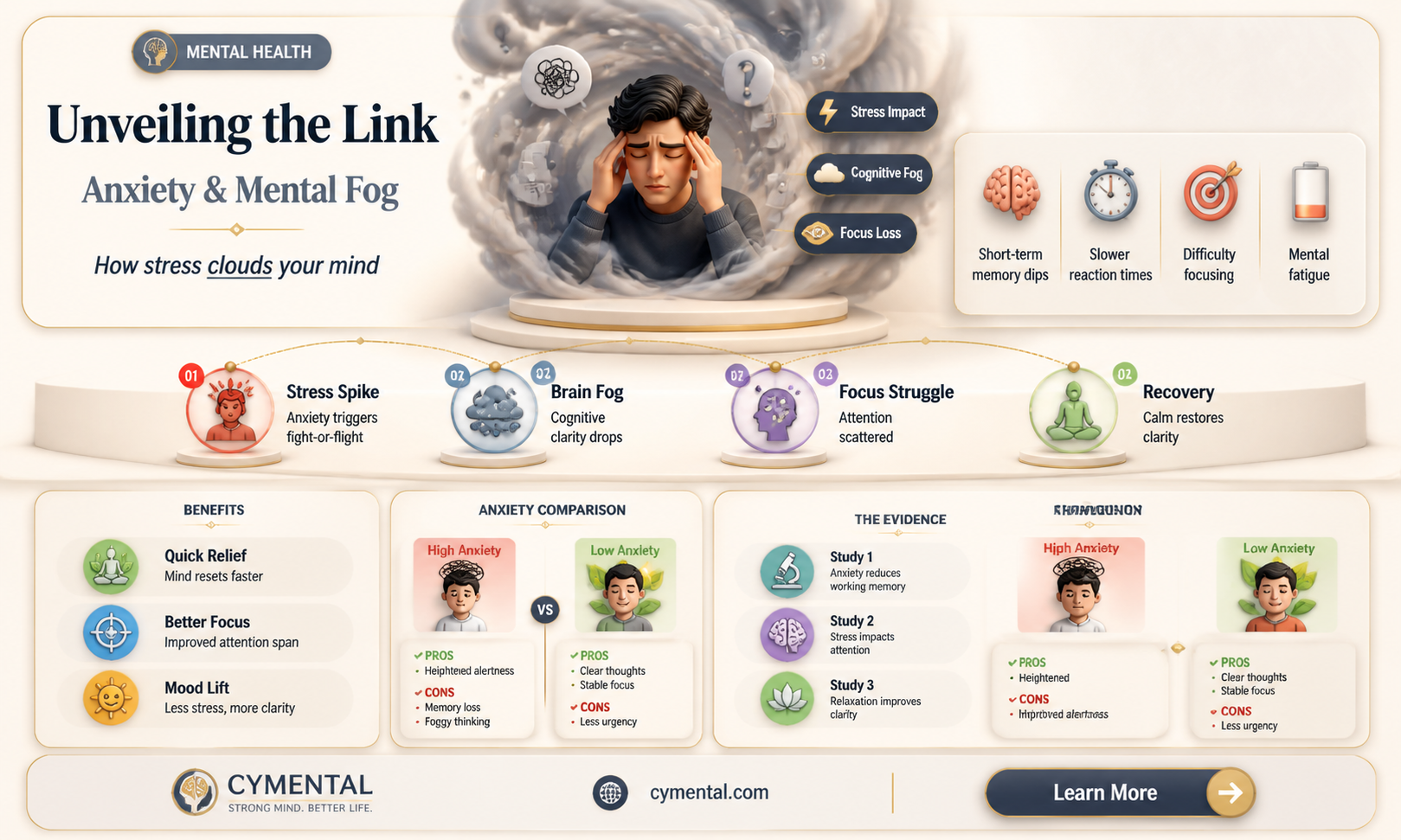
Anxiety is a common mental health condition that can have a significant impact on cognitive function. One of the lesser-known effects of anxiety is the phenomenon often referred to as mental fog. This term describes a state of cognitive impairment characterized by difficulty concentrating, memory problems, and a general sense of confusion or disorientation. While anxiety is primarily associated with emotional distress, its influence on cognitive processes can be profound and far-reaching. Understanding the relationship between anxiety and mental fog is crucial for developing effective strategies to manage and mitigate these symptoms, improving overall mental well-being and quality of life.
Explore related products


What You'll Learn
- Anxiety's Impact on Cognitive Function: Explore how anxiety affects memory, attention, and decision-making processes
- Neurological Mechanisms: Discuss the brain regions and neurotransmitters involved in both anxiety and cognitive fog
- Manifestations of Mental Fog: Describe common symptoms like forgetfulness, confusion, and difficulty concentrating
- Coping Strategies: Suggest methods to manage anxiety-induced mental fog, such as mindfulness and cognitive exercises
- Seeking Professional Help: Explain when to consult a healthcare provider and potential treatments for persistent anxiety and cognitive issues

Anxiety's Impact on Cognitive Function: Explore how anxiety affects memory, attention, and decision-making processes
Anxiety's impact on cognitive function is a complex interplay of psychological and physiological factors. Research indicates that chronic anxiety can lead to impairments in memory, attention, and decision-making processes. This is primarily due to the body's fight-or-flight response, which, when persistently activated, can interfere with the normal functioning of the brain's prefrontal cortex—a region crucial for executive functions.
Memory is often one of the first cognitive functions to be affected by anxiety. Studies have shown that individuals with anxiety disorders may experience difficulties in forming new memories and retrieving old ones. This can manifest as forgetfulness or an inability to concentrate on tasks that require memorization. The hippocampus, a brain structure vital for memory formation, is particularly sensitive to the stress hormones released during anxious states, which can inhibit its function.
Attention is another cognitive domain significantly impacted by anxiety. Anxious individuals may find it challenging to focus on tasks or conversations, often becoming easily distracted by their worries. This can lead to a decrease in productivity and an increase in errors. The constant mental chatter associated with anxiety can occupy working memory, leaving less cognitive space for processing new information.
Decision-making processes are also affected by anxiety. When faced with choices, anxious individuals may experience heightened indecision and a tendency to overanalyze options. This can result in delayed decision-making or the selection of suboptimal choices. The uncertainty and fear of negative outcomes that characterize anxiety can lead to risk aversion, further complicating the decision-making process.
In conclusion, anxiety can have a profound impact on cognitive function, affecting memory, attention, and decision-making processes. Understanding these effects is crucial for developing effective strategies to manage anxiety and mitigate its cognitive consequences. By addressing the root causes of anxiety and employing cognitive-behavioral techniques, individuals can learn to regain control over their mental processes and improve their overall cognitive functioning.
The Hidden Toll: How a Messy Home Can Impact Mental Health
You may want to see also
Explore related products


$13.1


Neurological Mechanisms: Discuss the brain regions and neurotransmitters involved in both anxiety and cognitive fog
The amygdala, a small almond-shaped structure located deep within the temporal lobes of the brain, plays a crucial role in the experience of anxiety. It is responsible for detecting threats and triggering the body's fight-or-flight response. In individuals with anxiety disorders, the amygdala can become hyperactive, leading to an exaggerated response to perceived threats and a heightened state of arousal. This chronic activation can have downstream effects on other brain regions, including those involved in cognitive processes.
One of the key neurotransmitters involved in anxiety is gamma-aminobutyric acid (GABA). GABA is an inhibitory neurotransmitter that helps to regulate the activity of neurons in the brain. In anxiety disorders, there is often a decrease in GABA levels, which can lead to an imbalance in neuronal activity and contribute to the symptoms of anxiety. Additionally, the neurotransmitter serotonin is also implicated in anxiety disorders. Serotonin is involved in mood regulation, and low levels of serotonin have been linked to increased anxiety and depression.
Cognitive fog, also known as brain fog, is a term used to describe a state of mental confusion, difficulty concentrating, and impaired memory. It is a common symptom of anxiety disorders, and the neurological mechanisms underlying this symptom are complex and multifaceted. One of the brain regions involved in cognitive fog is the prefrontal cortex (PFC), which is responsible for executive functions such as decision-making, planning, and problem-solving. In anxiety disorders, the PFC can become impaired, leading to difficulties with these cognitive processes.
Another brain region involved in cognitive fog is the hippocampus, which is crucial for memory formation and retrieval. Chronic stress and anxiety can lead to damage to the hippocampus, resulting in impaired memory and cognitive function. Additionally, the neurotransmitter acetylcholine, which is involved in attention and memory, has been implicated in cognitive fog. Low levels of acetylcholine can lead to difficulties with concentration and memory, which are common symptoms of cognitive fog.
In conclusion, the neurological mechanisms underlying anxiety and cognitive fog are complex and involve multiple brain regions and neurotransmitters. The amygdala, GABA, serotonin, prefrontal cortex, hippocampus, and acetylcholine all play important roles in these processes. Understanding these mechanisms can help to inform the development of effective treatments for anxiety disorders and cognitive fog.
Exploring the Link: Malnutrition and Mental Health Concerns
You may want to see also
Explore related products




Manifestations of Mental Fog: Describe common symptoms like forgetfulness, confusion, and difficulty concentrating
Mental fog, often described as a persistent state of forgetfulness, confusion, and difficulty concentrating, can significantly impact daily functioning. One common manifestation is the inability to recall recent events or conversations, which can lead to feelings of frustration and inadequacy. For instance, an individual may find themselves repeatedly asking for information they were just given or struggling to remember appointments and deadlines.
Another symptom of mental fog is confusion, which can present as disorientation or a feeling of being overwhelmed by simple tasks. This might manifest as difficulty following instructions, making decisions, or understanding new information. For example, a person might get lost in familiar surroundings or have trouble comprehending written material they would normally find straightforward.
Difficulty concentrating is also a hallmark of mental fog. This can involve problems sustaining attention on tasks, easily getting distracted, or feeling mentally exhausted after minimal effort. Imagine trying to focus on a work project but finding your mind constantly wandering, or feeling drained after a short period of studying.
In addition to these primary symptoms, mental fog can also lead to secondary issues such as decreased productivity, increased stress, and strained relationships. It's important to note that while mental fog can be a symptom of anxiety, it can also be caused by other factors such as lack of sleep, poor nutrition, or certain medical conditions. Therefore, a comprehensive approach to addressing mental fog should consider multiple potential underlying causes.
Exploring the Link Between Anxiety and Mental Fatigue: A Comprehensive Guide
You may want to see also
Explore related products



Coping Strategies: Suggest methods to manage anxiety-induced mental fog, such as mindfulness and cognitive exercises
Mindfulness meditation is a powerful tool for managing anxiety-induced mental fog. By focusing on the present moment and observing thoughts without judgment, individuals can reduce the overwhelming nature of anxious thoughts. Start with short, 5-minute sessions and gradually increase duration as comfort with the practice grows. Incorporating deep breathing exercises during meditation can further enhance relaxation and mental clarity.
Cognitive exercises, such as brain teasers and puzzles, can help sharpen mental acuity and distract from anxiety. Engaging in activities like crossword puzzles, Sudoku, or memory games can improve cognitive function and provide a sense of accomplishment. Additionally, practicing gratitude by writing down three things you're thankful for each day can shift focus away from anxious thoughts and promote a more positive outlook.
Physical activity is another effective coping strategy. Exercise releases endorphins, which can reduce anxiety and improve mood. Aim for at least 30 minutes of moderate-intensity exercise, such as brisk walking or cycling, most days of the week. Yoga and tai chi can also be beneficial, as they combine physical movement with mindfulness practices.
Social support is crucial for managing anxiety. Reach out to friends and family members to share your experiences and feelings. Joining a support group or seeking professional counseling can provide additional resources and guidance. Remember, you're not alone in your struggles, and seeking help is a sign of strength, not weakness.
Lastly, maintaining a healthy lifestyle can significantly impact anxiety levels. Ensure you're getting enough sleep, eating a balanced diet, and limiting caffeine and alcohol intake. Establishing a consistent sleep schedule and creating a relaxing bedtime routine can improve sleep quality and reduce anxiety. By addressing these areas, individuals can develop a comprehensive approach to managing anxiety-induced mental fog.
Exploring the Link: Aneurysms and Altered Mental Status
You may want to see also
Explore related products


Seeking Professional Help: Explain when to consult a healthcare provider and potential treatments for persistent anxiety and cognitive issues
Persistent anxiety can significantly impact cognitive function, leading to what is commonly referred to as "mental fog." This condition can manifest as difficulty concentrating, memory problems, and a general sense of confusion or disorientation. If these symptoms persist and interfere with daily life, it is crucial to seek professional help.
A healthcare provider can offer several treatment options for anxiety-related cognitive issues. Cognitive-behavioral therapy (CBT) is often recommended as a first-line treatment. CBT helps individuals identify and challenge negative thought patterns, which can alleviate anxiety and improve cognitive function. Medications such as selective serotonin reuptake inhibitors (SSRIs) may also be prescribed to help manage anxiety symptoms.
In addition to CBT and medication, lifestyle changes can play a significant role in reducing anxiety and improving cognitive function. Regular exercise, a balanced diet, and adequate sleep are essential for maintaining mental health. Mindfulness practices, such as meditation and deep breathing exercises, can also help reduce anxiety and clear mental fog.
It is important to note that while these treatments can be effective, they may not work for everyone. In some cases, a combination of therapies may be necessary to achieve the best results. It is also crucial to consult with a healthcare provider before starting any new treatment regimen, as they can provide personalized advice based on individual needs and medical history.
In conclusion, seeking professional help for persistent anxiety and cognitive issues is essential for improving mental health and overall well-being. With the right treatment and support, individuals can learn to manage their anxiety and overcome mental fog, leading to a more fulfilling and productive life.
Toxic Love: Unraveling the Link Between Relationships and Mental Health
You may want to see also
Frequently asked questions
Yes, anxiety can cause mental fog. Mental fog, also known as brain fog, is a common symptom of anxiety disorders. It can manifest as difficulty concentrating, memory problems, and a general feeling of confusion or disorientation.
Anxiety can lead to mental fog through several mechanisms. One way is by increasing stress levels, which can impair cognitive function. Another way is by disrupting sleep patterns, leading to fatigue and decreased mental clarity. Additionally, anxiety can cause hypervigilance, making it difficult to focus on tasks and leading to a sense of mental overwhelm.
Common symptoms of mental fog caused by anxiety include difficulty concentrating, memory problems, confusion, disorientation, and a feeling of being overwhelmed. People may also experience physical symptoms such as headaches, fatigue, and muscle tension.
Managing mental fog caused by anxiety involves addressing the underlying anxiety disorder. This can include therapy, medication, and lifestyle changes such as exercise, mindfulness practices, and stress management techniques. Additionally, cognitive exercises and brain training activities can help improve cognitive function and reduce mental fog.
You should seek professional help for mental fog caused by anxiety if it is significantly impacting your daily life, work, or relationships. If you are experiencing severe symptoms such as suicidal thoughts, difficulty functioning, or severe memory problems, it is important to seek help immediately. A mental health professional can provide a proper diagnosis and develop a treatment plan to address your symptoms.