Madison Cole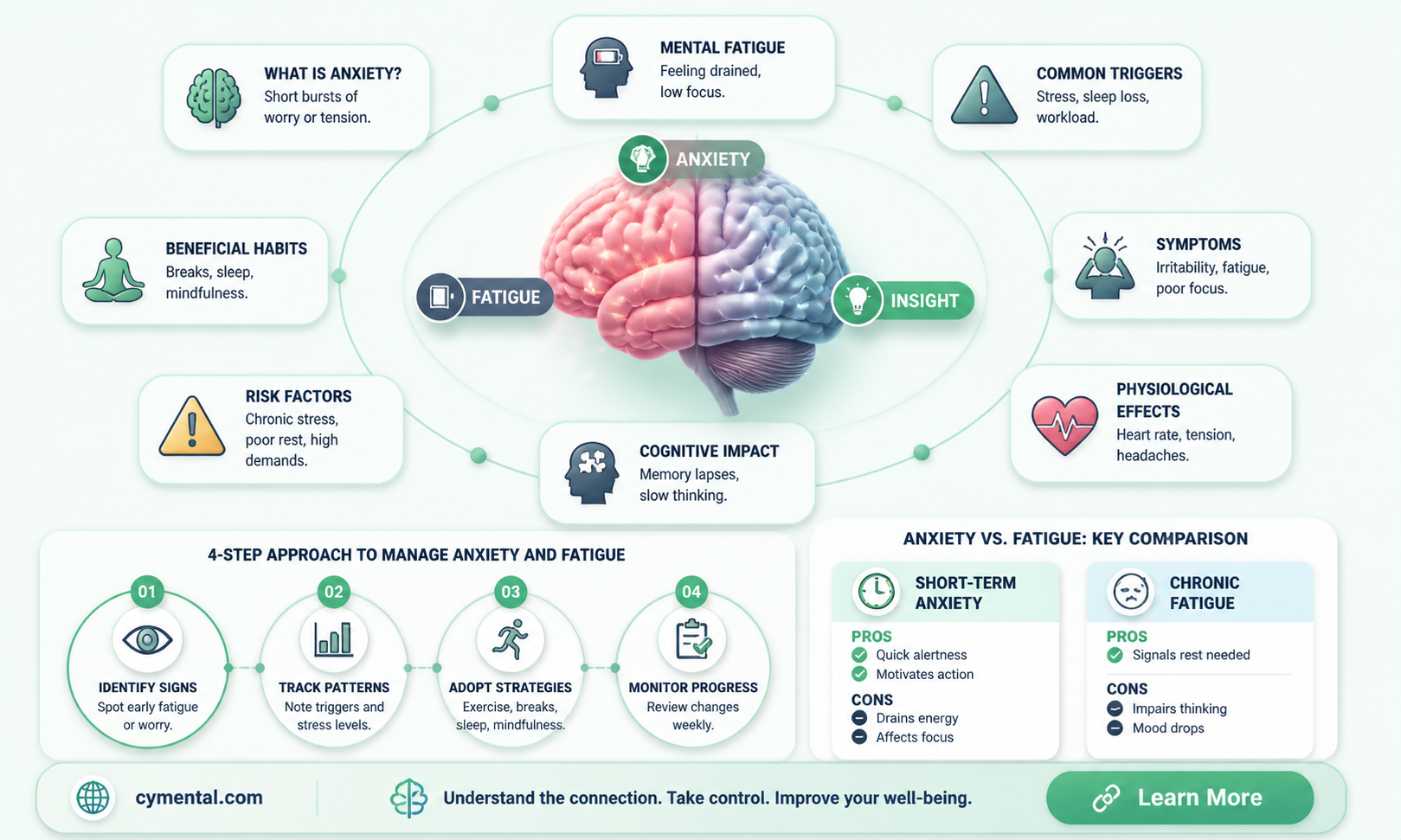
Anxiety is a pervasive mental health condition that affects millions of people worldwide. While it is commonly associated with feelings of worry, fear, and unease, anxiety can also have a profound impact on an individual's cognitive functioning and overall well-being. One often overlooked consequence of anxiety is mental fatigue, a state of persistent tiredness and exhaustion that can significantly impair a person's ability to concentrate, make decisions, and engage in daily activities. This fatigue can stem from the constant mental hyperarousal and stress associated with anxiety, leading to a depletion of cognitive resources and a sense of being overwhelmed. Understanding the relationship between anxiety and mental fatigue is crucial for developing effective coping strategies and interventions to support those struggling with these challenging symptoms.
| Characteristics | Values |
|---|---|
| Definition | Anxiety is a state of heightened alertness and worry, often accompanied by physical symptoms such as rapid heartbeat and sweating. Mental fatigue refers to a state of tiredness or exhaustion that affects cognitive functions. |
| Symptoms of Anxiety | Excessive worry, restlessness, irritability, difficulty concentrating, sleep disturbances, physical symptoms like headaches and stomachaches. |
| Symptoms of Mental Fatigue | Difficulty focusing, decreased productivity, irritability, mood swings, increased errors, physical symptoms like headaches and muscle tension. |
| Can Anxiety Cause Mental Fatigue? | Yes, chronic anxiety can lead to mental fatigue. The constant state of worry and alertness can drain cognitive resources, making it difficult to concentrate and leading to feelings of exhaustion. |
| Mechanism | Anxiety activates the body's stress response, releasing hormones like cortisol and adrenaline. Prolonged exposure to these hormones can impair cognitive functions and lead to mental fatigue. |
| Impact on Daily Life | Anxiety-induced mental fatigue can affect work performance, academic achievement, and overall quality of life. It can make everyday tasks feel overwhelming and lead to avoidance behaviors. |
| Treatment Options | Cognitive-behavioral therapy (CBT), medication, mindfulness practices, exercise, and healthy lifestyle changes can help manage anxiety and reduce mental fatigue. |
| Prevention Strategies | Stress management techniques, regular exercise, adequate sleep, healthy diet, and social support can help prevent anxiety and mental fatigue. |
| Population Affected | Anxiety disorders are common, affecting approximately 1 in 5 adults in the United States. Mental fatigue is a frequent symptom among those with anxiety disorders. |
| Research Findings | Studies have shown a strong correlation between anxiety and mental fatigue. Research suggests that treating anxiety can lead to improvements in mental fatigue and overall well-being. |
| Case Studies | Individuals with generalized anxiety disorder often report experiencing mental fatigue that interferes with their ability to work and maintain relationships. Successful treatment of anxiety has been shown to alleviate mental fatigue in these cases. |
| Expert Opinions | Mental health professionals agree that anxiety can cause mental fatigue and that addressing anxiety is key to reducing fatigue. Experts recommend a multifaceted approach, including therapy, medication, and lifestyle changes. |
| Personal Experiences | Many people with anxiety disorders describe feeling constantly tired and overwhelmed. They often report that managing their anxiety through therapy and medication has helped them feel more energized and focused. |
| Cultural Perspectives | Different cultures may view anxiety and mental fatigue differently. In some cultures, anxiety may be seen as a sign of weakness, while in others, it may be recognized as a legitimate mental health concern. |
| Future Directions | Further research is needed to better understand the relationship between anxiety and mental fatigue. Developing more effective treatments for anxiety-related fatigue is a priority for mental health professionals. |
Explore related products


What You'll Learn
- Anxiety and Cognitive Load: Anxiety increases cognitive load, leading to mental fatigue due to constant worry and stress
- Sleep Disturbances: Anxiety often causes sleep disturbances, resulting in poor sleep quality and subsequent mental fatigue
- Physical Symptoms: Anxiety manifests physically, causing symptoms like headaches and muscle tension, contributing to mental fatigue
- Avoidance Behaviors: Avoidance behaviors due to anxiety can lead to mental fatigue by limiting activities and social interactions
- Impact on Daily Functioning: Anxiety can impair daily functioning, making routine tasks feel overwhelming and causing mental fatigue

Anxiety and Cognitive Load: Anxiety increases cognitive load, leading to mental fatigue due to constant worry and stress
Anxiety has a profound impact on cognitive load, significantly contributing to mental fatigue. This occurs because anxiety demands constant attention and vigilance, forcing the brain to work overtime to process and manage the perceived threats. As a result, individuals experiencing anxiety often find themselves in a state of heightened alertness, which can be mentally exhausting.
The cognitive load imposed by anxiety can be likened to running a marathon. Just as a marathon requires sustained physical effort, anxiety requires sustained mental effort. Over time, this continuous exertion can lead to mental fatigue, characterized by feelings of weariness, decreased concentration, and reduced cognitive performance.
Moreover, anxiety can interfere with the brain's ability to efficiently process information. Normally, the brain filters out irrelevant information to focus on what is important. However, in a state of anxiety, this filtering mechanism becomes less effective, allowing more information to flood the cognitive system. This information overload further exacerbates mental fatigue, as the brain struggles to keep up with the demands placed upon it.
In addition to increasing cognitive load, anxiety can also disrupt sleep patterns, which is a critical factor in mental fatigue. Poor sleep quality can impair cognitive function, making it more difficult to manage anxiety. This creates a vicious cycle where anxiety leads to mental fatigue, which in turn worsens anxiety symptoms.
Breaking this cycle requires addressing both anxiety and cognitive load. Techniques such as mindfulness meditation, deep breathing exercises, and cognitive-behavioral therapy can help reduce anxiety levels. Additionally, strategies to improve sleep hygiene, such as maintaining a consistent sleep schedule and creating a relaxing bedtime routine, can help mitigate the impact of mental fatigue.
In conclusion, anxiety significantly increases cognitive load, leading to mental fatigue through constant worry and stress. Understanding this relationship is crucial for developing effective interventions to alleviate the burden of anxiety and improve overall mental well-being.
Exploring the Link: Epilepsy and Mental Health in Adulthood
You may want to see also
Explore related products


Sleep Disturbances: Anxiety often causes sleep disturbances, resulting in poor sleep quality and subsequent mental fatigue
Anxiety can significantly disrupt sleep patterns, leading to a range of sleep disturbances. These disturbances often manifest as difficulty falling asleep, staying asleep, or experiencing restful sleep. Individuals with anxiety may find themselves lying awake at night, their minds racing with worries and fears, making it challenging to drift off. Alternatively, they might fall asleep quickly but wake up frequently throughout the night, often with a sense of dread or unease.
The impact of these sleep disturbances is profound, resulting in poor sleep quality that leaves individuals feeling mentally fatigued. This fatigue can affect cognitive function, mood, and overall well-being. Chronic sleep deprivation due to anxiety can lead to difficulties with concentration, memory, and decision-making. It can also exacerbate anxiety symptoms, creating a vicious cycle where poor sleep fuels anxiety, and heightened anxiety disrupts sleep further.
Several mechanisms explain how anxiety can lead to sleep disturbances. Firstly, the body's fight-or-flight response, which is activated during periods of anxiety, can make it difficult to relax and fall asleep. Secondly, anxiety can lead to increased levels of cortisol, a hormone that regulates sleep-wake cycles, further disrupting sleep patterns. Additionally, anxious individuals may engage in behaviors that interfere with sleep, such as consuming caffeine or alcohol before bedtime, or using electronic devices that emit blue light, which can suppress melatonin production.
Breaking this cycle requires addressing both the anxiety and the sleep disturbances. Cognitive-behavioral therapy for insomnia (CBT-I) is a useful approach, as it helps individuals identify and change negative thought patterns and behaviors that contribute to sleep problems. Relaxation techniques, such as deep breathing, progressive muscle relaxation, and mindfulness meditation, can also be effective in reducing anxiety and promoting better sleep. In some cases, medication may be necessary to manage anxiety symptoms and improve sleep quality.
In conclusion, anxiety-related sleep disturbances are a significant issue that can have far-reaching consequences for mental health and well-being. By understanding the mechanisms behind these disturbances and implementing targeted interventions, individuals can break the cycle of anxiety and poor sleep, leading to improved overall health and quality of life.
Exploring the Link: Can Allergies Trigger Mental Health Issues?
You may want to see also
Explore related products


Physical Symptoms: Anxiety manifests physically, causing symptoms like headaches and muscle tension, contributing to mental fatigue
Anxiety is often perceived as a mental health issue, but its impact extends far beyond the mind. Physical symptoms are a common manifestation of anxiety, and they can significantly contribute to mental fatigue. Headaches are one of the most prevalent physical symptoms associated with anxiety. These headaches can range from mild to severe, often described as tension headaches that affect the entire head or specific areas such as the temples or forehead. The frequency and intensity of these headaches can vary, but they typically occur during periods of heightened anxiety.
Muscle tension is another physical symptom that can arise from anxiety. This tension often affects the neck, shoulders, and back, leading to stiffness and pain. Prolonged muscle tension can result in chronic pain conditions and further exacerbate mental fatigue. The physical discomfort caused by muscle tension can make it difficult to relax and focus, contributing to a cycle of anxiety and fatigue.
In addition to headaches and muscle tension, anxiety can also cause other physical symptoms such as stomachaches, nausea, and sleep disturbances. These symptoms can disrupt daily life and make it challenging to maintain a healthy routine, which is essential for managing anxiety and preventing mental fatigue. Addressing these physical symptoms is crucial in the overall treatment of anxiety, as they can significantly impact a person's quality of life and mental well-being.
Understanding the connection between physical symptoms and anxiety can help individuals recognize the signs of anxiety and seek appropriate treatment. By addressing both the mental and physical aspects of anxiety, it is possible to reduce symptoms and improve overall health. This holistic approach can lead to better management of anxiety and a reduction in mental fatigue, allowing individuals to lead more fulfilling lives.
Unraveling the Complexities: Do Mental Health Medications Address the Root Cause?
You may want to see also
Explore related products



Avoidance Behaviors: Avoidance behaviors due to anxiety can lead to mental fatigue by limiting activities and social interactions
Avoidance behaviors are a common coping mechanism for individuals experiencing anxiety. These behaviors involve deliberately avoiding situations, activities, or social interactions that trigger feelings of anxiety or discomfort. While avoidance may provide temporary relief, it can also lead to a cycle of mental fatigue.
One way avoidance behaviors contribute to mental fatigue is by limiting a person's range of activities and experiences. When individuals avoid certain situations due to anxiety, they may miss out on opportunities for personal growth, social connection, and enjoyment. This restriction can lead to feelings of boredom, restlessness, and dissatisfaction, all of which can contribute to mental fatigue.
Social interactions, in particular, play a crucial role in mental well-being. Avoidance behaviors that lead to social isolation can exacerbate feelings of loneliness and disconnectedness. This, in turn, can increase the risk of developing depressive symptoms and further contribute to mental fatigue.
Moreover, avoidance behaviors can reinforce the anxiety cycle. By avoiding anxiety-provoking situations, individuals may never learn how to effectively cope with or manage their anxiety. This lack of exposure can prevent the development of resilience and coping skills, leading to increased anxiety and, consequently, more avoidance behaviors.
Breaking the cycle of avoidance and mental fatigue requires a proactive approach. Cognitive-behavioral therapy (CBT) is a helpful tool in addressing avoidance behaviors by gradually exposing individuals to anxiety-provoking situations in a controlled and supportive environment. This exposure helps individuals develop coping strategies and build confidence in their ability to manage anxiety.
In addition to therapy, there are several practical steps individuals can take to combat avoidance behaviors and reduce mental fatigue. These include setting small, achievable goals to gradually face feared situations, practicing relaxation techniques to manage anxiety symptoms, and seeking support from friends, family, or a mental health professional. By taking these steps, individuals can begin to break free from the cycle of avoidance and mental fatigue, leading to a more fulfilling and balanced life.
Unraveling the Link: Abuse and Its Impact on Mental Health
You may want to see also
Explore related products


$19.99


Impact on Daily Functioning: Anxiety can impair daily functioning, making routine tasks feel overwhelming and causing mental fatigue
Anxiety's pervasive influence can significantly hinder an individual's ability to perform daily tasks efficiently. Simple activities such as grocery shopping, cooking, or even getting dressed can become daunting challenges. This impairment occurs as anxiety diverts mental resources, causing a state of hypervigilance where the mind is constantly on high alert, anticipating potential threats or dangers. As a result, concentration and focus are compromised, leading to a decrease in productivity and an increase in the time required to complete tasks.
Moreover, anxiety can lead to mental fatigue, a state characterized by a profound sense of exhaustion and depletion of mental energy. This fatigue can manifest physically as well, with symptoms such as muscle tension, headaches, and sleep disturbances. The cumulative effect of anxiety and mental fatigue can result in a vicious cycle, where the inability to complete tasks due to fatigue exacerbates anxiety, which in turn further depletes mental energy.
The impact of anxiety on daily functioning can also extend to social interactions. Individuals may find it challenging to engage in conversations, attend social events, or maintain relationships due to the overwhelming sense of anxiety. This social withdrawal can lead to feelings of isolation and loneliness, which can further contribute to the deterioration of mental health.
In the workplace, anxiety can impede professional performance, affecting an individual's ability to meet deadlines, make decisions, and collaborate with colleagues. The constant worry and fear associated with anxiety can lead to procrastination, perfectionism, and an excessive need for reassurance, all of which can hinder career advancement and job satisfaction.
To mitigate the effects of anxiety on daily functioning, it is essential to develop effective coping strategies. Techniques such as mindfulness meditation, deep breathing exercises, and cognitive-behavioral therapy can help individuals manage anxiety and reduce its impact on their daily lives. Additionally, establishing a routine, prioritizing tasks, and seeking support from friends, family, or mental health professionals can provide the necessary tools to navigate the challenges posed by anxiety and mental fatigue.
Exploring the Link: Type 2 Diabetes and Mental Health
You may want to see also
Frequently asked questions
Yes, anxiety can indeed cause mental fatigue. When you're anxious, your brain is in a constant state of alertness, which can be exhausting. This heightened state of arousal can lead to feelings of tiredness and fatigue.
Anxiety leads to mental fatigue through a combination of factors. Firstly, the constant worry and fear associated with anxiety can wear you down mentally. Secondly, anxiety can disrupt your sleep patterns, leading to physical tiredness. Lastly, the body's fight-or-flight response, which is triggered by anxiety, can drain your energy reserves.
Common symptoms of mental fatigue caused by anxiety include feeling constantly tired, having difficulty concentrating, feeling irritable, and experiencing a lack of motivation. You might also find it hard to make decisions or feel overwhelmed by tasks that you would normally handle with ease.
Managing mental fatigue caused by anxiety involves addressing the underlying anxiety. This can be done through various methods such as cognitive-behavioral therapy (CBT), medication, and lifestyle changes. Additionally, practicing relaxation techniques like deep breathing, meditation, and yoga can help reduce anxiety and alleviate mental fatigue. It's also important to ensure you're getting enough sleep and maintaining a healthy diet.