Lucas Bennett
Bartonella, a genus of bacteria commonly transmitted by vectors such as ticks and fleas, has been a subject of interest in medical research due to its potential impact on human health. While primarily known for causing diseases like cat scratch fever and trench fever, recent studies have explored a possible link between Bartonella infection and mental health issues. This connection has sparked a debate within the scientific community about whether these bacteria can contribute to the development or exacerbation of mental illnesses. Understanding this relationship requires a deep dive into the complex interplay between infectious agents and the human nervous system.
| Characteristics | Values |
|---|---|
| Bartonella | A genus of bacteria that can cause various diseases in humans and animals |
| Mental Illness | A broad term encompassing various mental health conditions such as depression, anxiety, and schizophrenia |
| Causality | While Bartonella infections can lead to neurological symptoms, a direct causal link to mental illness is not definitively established |
| Symptoms Overlap | Some symptoms of Bartonella infections (e.g., fatigue, headaches) can overlap with those of mental illnesses |
| Diagnostic Challenges | Diagnosing Bartonella-related neurological issues can be complex due to the nonspecific nature of symptoms |
| Treatment Approach | Antibiotics are typically used to treat Bartonella infections, but their effectiveness in treating mental illness symptoms is uncertain |
| Research Status | Ongoing research is needed to fully understand the potential relationship between Bartonella and mental health conditions |
| Public Awareness | Limited public awareness about the possible connection between Bartonella and mental illness |
| Medical Consensus | No clear consensus among medical professionals regarding the causality between Bartonella and mental illness |
| Alternative Explanations | Other factors such as genetics, environment, and lifestyle are well-established contributors to mental illness |
| Case Studies | Anecdotal reports and case studies suggest a possible link, but more rigorous scientific evidence is required |
| Epidemiological Data | Data on the prevalence of Bartonella infections and their correlation with mental illness rates is scarce |
| Pathophysiological Mechanisms | The exact mechanisms by which Bartonella might contribute to mental illness are not fully understood |
| Therapeutic Implications | If a causal link is proven, it could lead to new therapeutic approaches for treating mental illnesses |
| Patient Education | Educating patients about the potential risks and symptoms of Bartonella infections is crucial for early detection and treatment |
Explore related products


What You'll Learn
- Overview of Bartonella: Brief introduction to Bartonella, its types, and common transmission methods
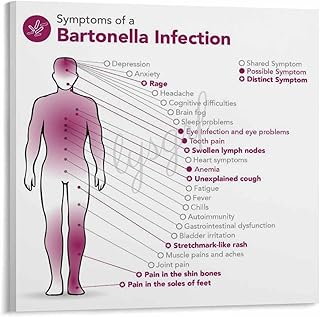
- Symptoms of Bartonella Infection: Detailed list of physical and neurological symptoms associated with Bartonella infections
- Potential Psychiatric Manifestations: Exploration of possible mental health symptoms linked to Bartonella, such as anxiety or depression
- Scientific Research and Evidence: Summary of existing studies and evidence regarding Bartonella's impact on mental health
- Diagnosis and Treatment Options: Information on diagnosing Bartonella infections and available treatment strategies, including antibiotics and supportive care

Overview of Bartonella: Brief introduction to Bartonella, its types, and common transmission methods
Bartonella is a genus of bacteria that includes several species known to cause disease in humans and animals. These bacteria are typically transmitted through the bite of infected insects, such as fleas, ticks, and mosquitoes. Bartonella species can cause a range of infections, from mild to severe, and symptoms can vary widely depending on the specific type of bacteria and the individual's immune response.
One of the most well-known species of Bartonella is Bartonella henselae, which is the causative agent of cat scratch disease. This disease is usually transmitted to humans through the bite or scratch of an infected cat. Symptoms can include fever, headache, and swollen lymph nodes, and in some cases, it can lead to more serious complications such as neuroretinitis or endocarditis.
Another species, Bartonella burgdorferi, is the causative agent of Lyme disease, which is transmitted to humans through the bite of infected blacklegged ticks. Lyme disease is a multisystem inflammatory disease that can affect the skin, joints, nervous system, and heart. If left untreated, it can lead to chronic symptoms and serious health complications.
Bartonella quintana is another species that can cause disease in humans, particularly in immunocompromised individuals. It is often transmitted through the bite of infected body lice and can cause a range of symptoms, including fever, headache, and gastrointestinal issues. In severe cases, it can lead to bacteremia or endocarditis.
Transmission of Bartonella species can occur through various routes, including insect bites, animal scratches or bites, and even blood transfusions. It is important to take precautions to prevent insect bites, such as using insect repellent and wearing protective clothing, especially in areas where these bacteria are known to be prevalent.
In conclusion, Bartonella is a genus of bacteria that can cause a range of diseases in humans and animals. These bacteria are typically transmitted through the bite of infected insects or animals, and symptoms can vary widely depending on the specific type of bacteria and the individual's immune response. It is important to take precautions to prevent transmission and to seek medical attention if symptoms of a Bartonella infection are suspected.
Exploring the Link: Can Viruses Trigger Mental Confusion?
You may want to see also
Explore related products





Symptoms of Bartonella Infection: Detailed list of physical and neurological symptoms associated with Bartonella infections
Bartonella infections, caused by a type of bacteria transmitted through cat scratches or bites, can lead to a range of physical and neurological symptoms. While often associated with cat scratch disease, Bartonella can cause more severe and varied symptoms than commonly realized.
Physical symptoms of Bartonella infection may include fever, swollen lymph nodes, and a characteristic rash that can appear as red streaks or blotches. Joint pain, muscle aches, and fatigue are also common, and can persist for weeks or even months if left untreated. In some cases, Bartonella can cause more serious complications, such as heart valve infections or inflammation of the brain and spinal cord.
Neurological symptoms of Bartonella infection can be particularly concerning, as they may be mistaken for mental illness. These symptoms can include anxiety, depression, mood swings, and cognitive difficulties such as memory loss or confusion. In severe cases, Bartonella can cause psychosis, characterized by hallucinations or delusions. These neurological symptoms can be debilitating and may require psychiatric intervention if not properly diagnosed and treated.
It is important to note that Bartonella infections can be difficult to diagnose, as the symptoms can mimic those of other conditions. If you suspect you may have been infected with Bartonella, it is crucial to seek medical attention and provide your healthcare provider with a detailed history of your symptoms and any potential exposure to cats or other animals.
Treatment for Bartonella infections typically involves antibiotics, and early diagnosis and treatment can help prevent long-term complications. In some cases, additional supportive care may be necessary to manage symptoms and promote recovery. If you are experiencing persistent or severe symptoms, it is important to work closely with your healthcare provider to develop an appropriate treatment plan.
Exploring the Link: Constipation and Mental Confusion Uncovered
You may want to see also
Explore related products



Potential Psychiatric Manifestations: Exploration of possible mental health symptoms linked to Bartonella, such as anxiety or depression
Bartonella, a genus of bacteria commonly transmitted by vectors such as ticks and fleas, has been increasingly recognized for its potential impact on mental health. While the physical symptoms of Bartonella infections, like fever and swollen lymph nodes, are well-documented, the psychiatric manifestations are less understood but equally concerning.
Recent studies have suggested a possible link between Bartonella infections and the development of mental health symptoms such as anxiety and depression. These findings are significant as they expand our understanding of how infections can influence psychiatric conditions. The exact mechanisms by which Bartonella affects mental health are still under investigation, but theories include the bacteria's ability to trigger an inflammatory response in the brain, leading to changes in neurotransmitter function and behavior.
Clinically, the association between Bartonella and mental illness presents a challenge for diagnosis and treatment. Patients may present with psychiatric symptoms without obvious signs of infection, making it difficult to identify the underlying cause. Furthermore, the treatment of Bartonella-related mental health issues requires a multidisciplinary approach, involving both infectious disease specialists and psychiatrists.
Research into the potential psychiatric manifestations of Bartonella is ongoing, with new studies emerging that aim to clarify the relationship between infection and mental health outcomes. These investigations are crucial for developing effective diagnostic tools and treatment protocols for patients suffering from Bartonella-related psychiatric symptoms.
In conclusion, the exploration of potential psychiatric manifestations linked to Bartonella highlights the complex interplay between infectious diseases and mental health. Understanding this relationship is essential for providing comprehensive care to patients and advancing our knowledge of how infections can impact the brain and behavior.
Exploring the Link Between ADHD and Mental Health Crises
You may want to see also
Explore related products


Scientific Research and Evidence: Summary of existing studies and evidence regarding Bartonella's impact on mental health
Recent studies have begun to explore the potential link between Bartonella infection and mental health issues. One study published in the Journal of Clinical Microbiology found that patients with psychiatric disorders were more likely to test positive for Bartonella antibodies compared to healthy controls. This suggests that Bartonella may play a role in the development or exacerbation of mental illness.
Another study, presented at the annual meeting of the American Psychiatric Association, examined the prevalence of Bartonella infection in a sample of patients with treatment-resistant depression. The researchers found that a significant proportion of these patients tested positive for Bartonella, leading them to conclude that the infection may be a contributing factor to their depression.
Further evidence comes from a case report published in the Journal of Neuropsychiatry and Clinical Neurosciences. The report describes a patient with schizophrenia who experienced a significant improvement in their symptoms after being treated for Bartonella infection. This suggests that Bartonella may be a treatable underlying cause of mental illness in some cases.
While these studies provide intriguing evidence, it is important to note that the relationship between Bartonella and mental health is still not fully understood. More research is needed to determine the exact mechanisms by which Bartonella may impact mental health and to develop effective treatment protocols.
In conclusion, the existing scientific research and evidence suggest that Bartonella infection may be a contributing factor to mental illness in some individuals. Further studies are needed to confirm these findings and to explore the potential for Bartonella treatment as a novel approach to managing mental health disorders.
Exploring the Link: Bactrim and Mental Health Concerns
You may want to see also
Explore related products


Diagnosis and Treatment Options: Information on diagnosing Bartonella infections and available treatment strategies, including antibiotics and supportive care
Diagnosing Bartonella infections can be challenging due to the nonspecific nature of symptoms and the need for specialized testing. Healthcare providers typically use a combination of clinical evaluation, laboratory tests, and imaging studies to make an accurate diagnosis. Common diagnostic methods include serology to detect antibodies against Bartonella species, PCR to identify bacterial DNA, and culture to isolate the bacteria from blood or tissue samples. In some cases, a biopsy may be necessary to confirm the presence of Bartonella in specific tissues.
Once a Bartonella infection is diagnosed, treatment usually involves a course of antibiotics. The choice of antibiotic depends on the specific species of Bartonella and the severity of the infection. Commonly used antibiotics include doxycycline, erythromycin, and gentamicin. Treatment duration can vary from several weeks to months, and it is essential to follow the prescribed regimen to prevent antibiotic resistance. In addition to antibiotics, supportive care may be necessary to manage symptoms and complications. This can include pain management, anti-inflammatory medications, and in severe cases, hospitalization for intravenous antibiotics and monitoring.
It is important to note that Bartonella infections can have a significant impact on mental health, and some patients may experience symptoms such as anxiety, depression, and cognitive impairment. Therefore, a comprehensive treatment approach should also address these mental health concerns. This may involve collaboration with mental health professionals, counseling, and in some cases, medication to manage psychiatric symptoms.
Preventing Bartonella infections is crucial, especially for individuals at high risk, such as those who work with animals or live in areas where the bacteria are prevalent. Prevention strategies include wearing protective clothing, using insect repellent, and avoiding contact with potentially infected animals. Regular health check-ups and prompt medical attention for any suspicious symptoms can also help in early detection and treatment of Bartonella infections.
In conclusion, diagnosing and treating Bartonella infections requires a multifaceted approach that includes accurate diagnostic testing, appropriate antibiotic therapy, supportive care, and attention to mental health concerns. By understanding the complexities of Bartonella infections and implementing effective prevention strategies, healthcare providers can improve patient outcomes and reduce the burden of this bacterial infection.
Exploring the Link Between Abuse and Cognitive Development
You may want to see also
Frequently asked questions
While Bartonella is primarily known for causing physical symptoms such as fever, headaches, and swollen lymph nodes, there is some evidence to suggest that it may also contribute to mental health issues. Research has indicated that Bartonella infection could potentially lead to neuropsychiatric symptoms, including anxiety, depression, and cognitive impairment. However, more studies are needed to fully understand the relationship between Bartonella and mental illness.
Bartonella is typically transmitted to humans through the bite of an infected flea, tick, or louse. These insects can carry the bacteria and transfer it to humans when they feed on their blood. In some cases, Bartonella can also be transmitted through contact with the saliva or blood of an infected animal, such as a cat.
The symptoms of a Bartonella infection can vary depending on the specific type of bacteria and the individual's immune system. Common symptoms include fever, chills, headaches, swollen lymph nodes, and skin rashes. In some cases, Bartonella can also cause more severe symptoms such as heart valve infections, meningitis, or osteomyelitis. If left untreated, Bartonella infections can become serious and may require hospitalization.