Noah Parker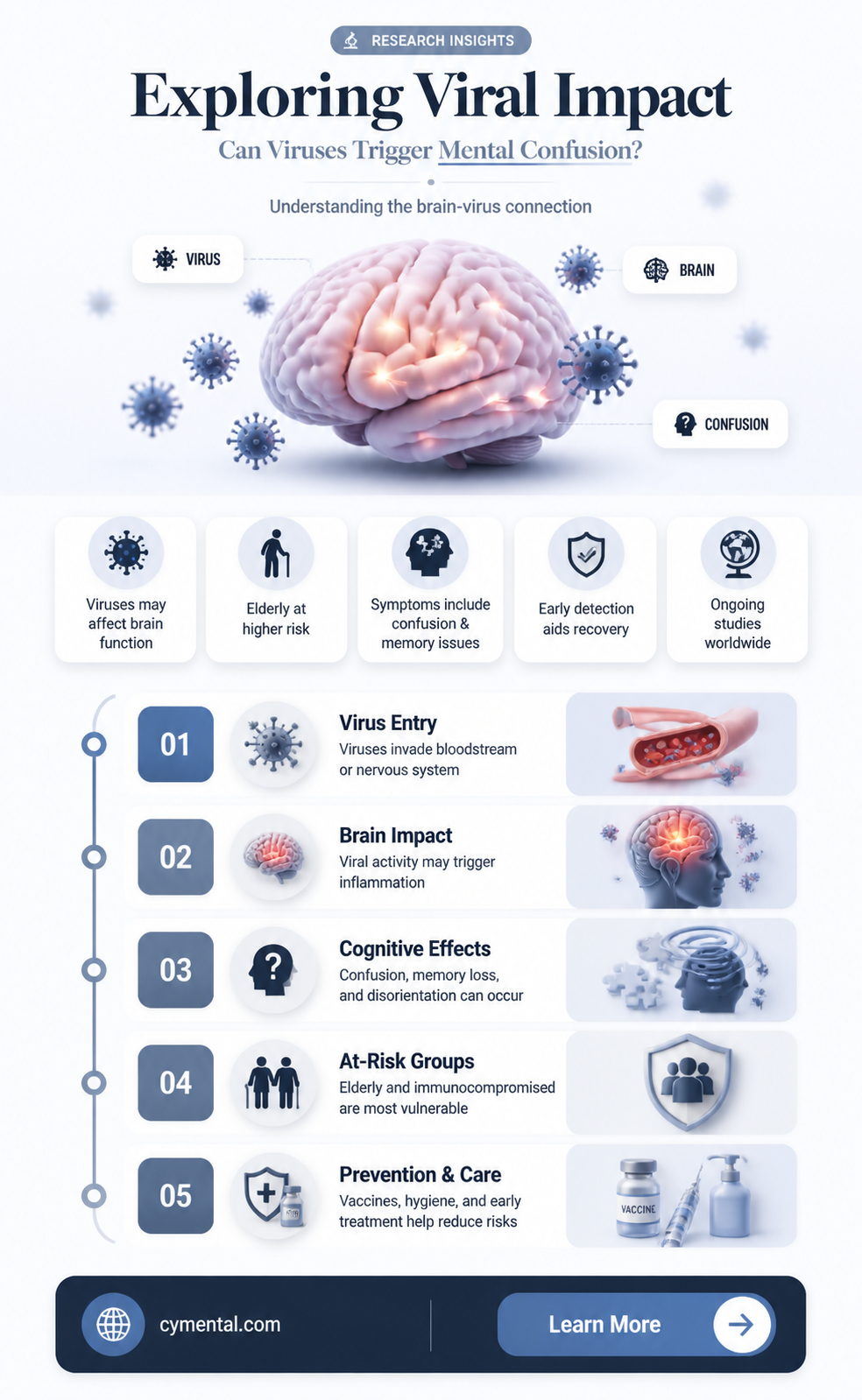
Viruses are known to cause a wide range of physical symptoms, but can they also lead to mental confusion? This question has been the subject of much debate and research in the medical community. While viruses typically target physical systems, some studies suggest that certain viruses may have the ability to affect cognitive function, potentially leading to mental confusion. This phenomenon is often referred to as brain fog and can manifest as difficulty concentrating, memory problems, and a general sense of mental haziness. Understanding the potential link between viruses and mental confusion is crucial for developing effective treatments and prevention strategies.
What You'll Learn
- Viral infections and cognitive impairment: Exploring the link between common viruses and temporary mental confusion
- Neurological effects of viruses: How viruses can impact the brain's function, leading to confusion or other cognitive issues
- Mental health implications: Discussing the potential long-term psychological effects of viral infections on mental clarity
- Viral encephalitis: A severe condition where viruses cause inflammation of the brain, often resulting in confusion
- Prevention and treatment: Strategies for avoiding viral infections and managing their effects on mental health

Viral infections and cognitive impairment: Exploring the link between common viruses and temporary mental confusion
Recent studies have uncovered a fascinating link between common viral infections and temporary cognitive impairment, often referred to as "brain fog." This phenomenon is characterized by a noticeable decline in mental clarity, focus, and memory, which can significantly impact daily functioning. While the exact mechanisms behind this relationship are still under investigation, several viruses have been identified as potential culprits.
One of the most well-documented examples is the herpes simplex virus (HSV). Research has shown that HSV can cause inflammation in the brain, leading to cognitive deficits. This is particularly concerning given the high prevalence of HSV infections worldwide. Another virus that has been implicated in cognitive impairment is the Epstein-Barr virus (EBV). EBV is known to cause a range of neurological symptoms, including fatigue, difficulty concentrating, and memory problems. These symptoms can persist for months or even years after the initial infection.
The human immunodeficiency virus (HIV) is another example of a virus that can lead to cognitive impairment. While HIV is most commonly associated with AIDS, it can also cause neurological damage, resulting in a condition known as HIV-associated neurocognitive disorder (HAND). This disorder is characterized by a range of cognitive deficits, including memory loss, difficulty with executive functions, and slowed information processing.
The exact mechanisms by which these viruses cause cognitive impairment are still under investigation, but several theories have been proposed. One possibility is that the viruses directly infect the brain, leading to inflammation and damage to brain cells. Another theory is that the viruses trigger an immune response that inadvertently damages the brain. Finally, it is also possible that the viruses disrupt the normal functioning of the brain by interfering with neurotransmitter signaling.
Regardless of the underlying mechanisms, the link between viral infections and cognitive impairment is a significant public health concern. It highlights the importance of preventing and treating viral infections, not only to protect physical health but also to safeguard cognitive function. Further research is needed to fully understand this complex relationship and to develop effective strategies for mitigating the cognitive effects of viral infections.
Exploring the Link: Can Physical Health Conditions Trigger Mental Illness?
You may want to see also
Neurological effects of viruses: How viruses can impact the brain's function, leading to confusion or other cognitive issues
Viruses have a profound impact on the brain's function, often leading to a range of neurological symptoms. One of the most common effects is mental confusion, which can manifest as difficulty concentrating, memory loss, or disorientation. This cognitive impairment can be attributed to the virus's ability to disrupt the normal functioning of neurons and neurotransmitters in the brain. For instance, some viruses can cause inflammation in the brain, leading to swelling and damage to brain tissue. This can result in a decrease in cognitive function, as the brain struggles to process information efficiently.
In addition to inflammation, viruses can also affect the brain's function by interfering with the production and release of neurotransmitters. Neurotransmitters are chemical messengers that transmit signals between neurons, and they play a crucial role in regulating mood, memory, and cognitive function. When viruses disrupt this process, it can lead to a range of neurological symptoms, including confusion, anxiety, and depression. For example, the herpes simplex virus has been shown to affect the production of dopamine, a neurotransmitter that is involved in memory and learning. This can result in cognitive impairment and memory loss in infected individuals.
Furthermore, viruses can also cause structural damage to the brain, leading to long-term cognitive issues. For instance, the human immunodeficiency virus (HIV) has been shown to cause damage to the brain's white matter, which is responsible for transmitting signals between different parts of the brain. This can lead to a range of neurological symptoms, including confusion, difficulty concentrating, and memory loss. In severe cases, HIV can also cause dementia, a condition characterized by significant cognitive decline.
It is important to note that the neurological effects of viruses can vary depending on the type of virus, the severity of the infection, and the individual's overall health. In some cases, the cognitive impairment may be temporary and resolve on its own, while in other cases, it may be more severe and require medical intervention. Therefore, it is crucial to seek medical attention if you experience any neurological symptoms following a viral infection.
Exploring the Link Between Mental Illness and Risky Sexual Behavior
You may want to see also
Mental health implications: Discussing the potential long-term psychological effects of viral infections on mental clarity
Viral infections can have profound and lasting impacts on mental health, often overlooked in the immediate concern for physical recovery. Research indicates that certain viruses, such as those causing encephalitis or meningitis, can lead to cognitive impairments, including difficulties with concentration, memory, and decision-making. These effects can persist long after the physical symptoms have subsided, significantly affecting an individual's quality of life and ability to function in daily activities.
One of the most concerning aspects of viral-induced mental confusion is its potential to exacerbate existing mental health conditions. For instance, individuals with pre-existing anxiety or depressive disorders may experience a worsening of symptoms following a viral infection. This can create a vicious cycle, where the mental health decline further compromises the immune system, making the individual more susceptible to future infections and subsequent cognitive impairments.
Moreover, the psychological toll of living with the uncertainty and fear of mental decline following a viral infection cannot be understated. This anxiety can lead to avoidance behaviors, social withdrawal, and a decreased willingness to engage in activities that were once enjoyable. Such changes can have far-reaching consequences, affecting not only the individual but also their relationships, career, and overall sense of well-being.
It is crucial for healthcare providers to recognize and address the mental health implications of viral infections. This includes conducting thorough cognitive assessments as part of the recovery process and providing appropriate referrals to mental health professionals when necessary. Additionally, public health campaigns should aim to raise awareness about the potential long-term psychological effects of viral infections, encouraging individuals to seek support and take proactive steps to maintain their mental health.
In conclusion, the mental health implications of viral infections are a critical area of concern that warrants further research and attention. By understanding the potential long-term psychological effects and taking steps to mitigate these risks, we can improve outcomes for individuals affected by viral-induced mental confusion and promote overall well-being.
Exploring the Link Between Rough Births and Mental Health
You may want to see also
Viral encephalitis: A severe condition where viruses cause inflammation of the brain, often resulting in confusion
Viral encephalitis is a severe and potentially life-threatening condition characterized by inflammation of the brain due to viral infection. This inflammation can lead to a range of neurological symptoms, with mental confusion being one of the most common and distressing. The confusion associated with viral encephalitis can manifest in various ways, including disorientation, difficulty concentrating, memory impairment, and altered consciousness.
The pathophysiology of viral encephalitis involves the direct invasion of the central nervous system by the virus, which can lead to neuronal damage and death. This damage is often accompanied by an immune response, where the body's own immune cells attack the infected brain tissue, further contributing to the inflammation and subsequent neurological dysfunction. The specific symptoms and severity of the confusion can vary depending on the type of virus causing the encephalitis, as well as the individual's age, immune status, and overall health.
Diagnosing viral encephalitis typically involves a combination of clinical evaluation, laboratory tests, and imaging studies. Clinicians may look for signs of encephalitis such as fever, headache, seizures, and altered mental status. Laboratory tests can help identify the specific virus causing the infection, while imaging studies like MRI or CT scans can reveal areas of brain inflammation and damage. Early diagnosis is crucial, as prompt treatment can significantly improve outcomes and reduce the risk of long-term complications.
Treatment for viral encephalitis often involves a multifaceted approach, including antiviral medications to target the underlying viral infection, corticosteroids to reduce inflammation, and supportive care to manage symptoms and prevent complications. In severe cases, patients may require intensive care, including mechanical ventilation and monitoring in a neurological intensive care unit. The prognosis for viral encephalitis can vary widely, with some individuals making a full recovery while others may experience lasting neurological deficits or even death.
Preventing viral encephalitis is key, and this can be achieved through various measures such as vaccination against common viral causes like measles, mumps, and rubella, as well as practicing good hygiene and avoiding close contact with individuals who are sick. Additionally, controlling mosquito populations can help reduce the risk of mosquito-borne viral encephalitis, such as West Nile virus and Japanese encephalitis virus. By understanding the causes, symptoms, and treatment options for viral encephalitis, individuals can take proactive steps to protect themselves and seek timely medical attention if symptoms arise.
Exploring the Link Between Mental Breakdown and Psychosis: A Comprehensive Guide
You may want to see also
Prevention and treatment: Strategies for avoiding viral infections and managing their effects on mental health
Viral infections can have a profound impact on mental health, leading to symptoms such as confusion, delirium, and cognitive impairment. Prevention is key to avoiding these effects. One strategy is to maintain a strong immune system through a balanced diet rich in vitamins and minerals, regular exercise, and adequate sleep. Additionally, practicing good hygiene, such as frequent handwashing and avoiding close contact with sick individuals, can reduce the risk of infection.
In the event of a viral infection, early treatment is crucial to minimizing its impact on mental health. Antiviral medications can be effective in reducing the severity and duration of symptoms. It is also important to stay hydrated and rest to allow the body to recover. In some cases, cognitive rehabilitation therapy may be necessary to address lingering cognitive impairments.
The psychological impact of viral infections should not be overlooked. Anxiety and stress can exacerbate symptoms and prolong recovery. Mindfulness practices, such as meditation and deep breathing exercises, can help manage these feelings. Seeking support from friends, family, or a mental health professional can also be beneficial in coping with the emotional toll of illness.
In conclusion, a multifaceted approach is necessary to prevent and treat viral infections and their effects on mental health. By prioritizing physical health, practicing good hygiene, seeking early treatment, and addressing psychological needs, individuals can reduce their risk of infection and mitigate its impact on their well-being.
Understanding Mental Health: Can a Breakdown Lead to Physical Collapse?
You may want to see also
Frequently asked questions
Yes, certain viruses can cause mental confusion. Viral infections such as encephalitis, which is an inflammation of the brain, can lead to symptoms including confusion, disorientation, and altered mental status. Other viruses like Lyme disease, HIV, and herpes simplex virus can also affect cognitive function and lead to mental confusion.
Some common viruses that can cause mental confusion include encephalitis, Lyme disease, HIV, and herpes simplex virus. Encephalitis is an inflammation of the brain caused by a viral infection, while Lyme disease is a bacterial infection transmitted by ticks that can affect the brain and nervous system. HIV, the virus that causes AIDS, can also lead to cognitive impairment and mental confusion. Herpes simplex virus, which causes cold sores and genital herpes, can cause encephalitis in rare cases.
A virus can cause mental confusion by infecting the brain and nervous system, leading to inflammation and damage to brain cells. This can disrupt normal brain function and lead to symptoms such as confusion, disorientation, and altered mental status. In some cases, the virus may also cause a buildup of toxins in the brain, which can further contribute to mental confusion. The specific mechanism by which a virus causes mental confusion can vary depending on the type of virus and the individual's immune response.