Madison Cole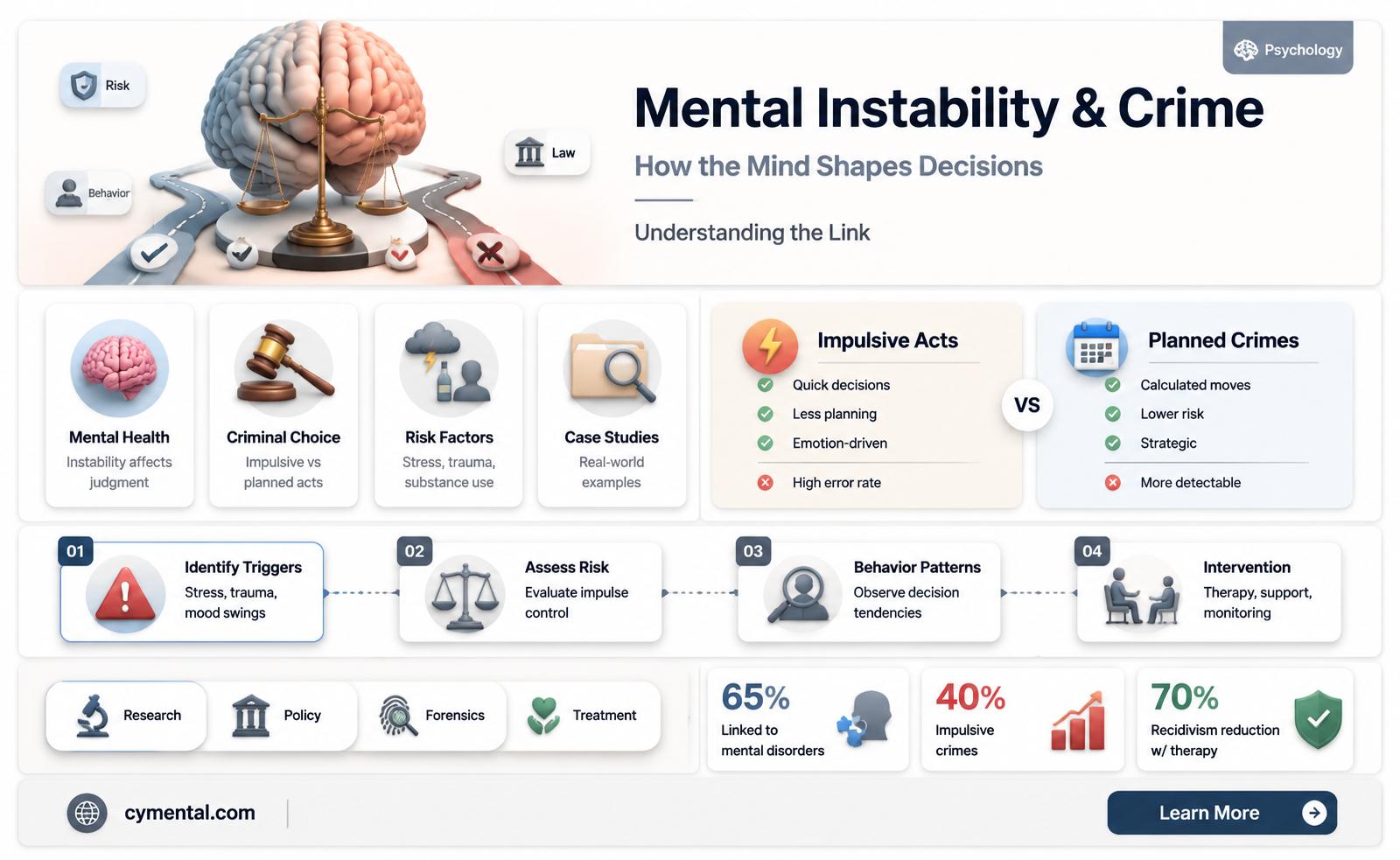
Mental instability can significantly impact an individual's decision-making processes, potentially leading to criminal behavior. This complex interplay between mental health and criminal actions raises important questions about responsibility, culpability, and the role of the justice system in addressing these issues. Understanding the effects of mental instability on decision-making is crucial for developing effective strategies to prevent crime and ensure fair treatment of individuals within the legal framework.
| Characteristics | Values |
|---|---|
| Definition | Mental instability refers to a state where an individual's thoughts, emotions, and behaviors are significantly disturbed, affecting their ability to function normally in daily life. |
| Types of Disorders | This can encompass various mental health disorders such as schizophrenia, bipolar disorder, major depressive disorder, and anxiety disorders. |
| Impact on Decision-Making | Mental instability can impair judgment, leading to difficulties in making rational and informed decisions. This impairment can be due to distorted thinking patterns, emotional dysregulation, and cognitive deficits. |
| Criminal Responsibility | The legal system often considers mental instability when assessing criminal responsibility. In some cases, individuals may be deemed not guilty by reason of insanity if their mental state prevents them from understanding the nature and consequences of their actions. |
| Treatment and Rehabilitation | Addressing mental instability through treatment and rehabilitation can help individuals regain control over their lives and make better decisions. This may involve therapy, medication, and support from mental health professionals. |
| Stigma and Discrimination | Individuals with mental instability often face stigma and discrimination, which can exacerbate their condition and hinder their ability to reintegrate into society. |
| Case Studies | Real-life cases, such as the Hinckley case in the United States, have brought attention to the intersection of mental instability and criminal behavior, sparking debates about accountability and treatment. |
| Prevention Strategies | Early intervention and prevention strategies, including mental health education and access to resources, can help mitigate the risk of mental instability leading to criminal behavior. |
| Research Findings | Studies have shown a complex relationship between mental instability and crime, with some disorders increasing the risk of criminal behavior while others may have little to no impact. |
| Policy Implications | Policymakers must consider the nuances of mental instability when crafting laws and regulations related to criminal justice, ensuring a balance between public safety and the rights of individuals with mental health disorders. |
Explore related products


What You'll Learn
- Impaired Judgment: Mental instability can lead to poor decision-making, increasing the likelihood of criminal behavior
- Lack of Impulse Control: Individuals may struggle to control impulses, potentially resulting in violent or illegal actions
- Distorted Reality: Mental health issues can cause individuals to misinterpret situations, leading to wrongful actions
- Emotional Dysregulation: Difficulty managing emotions may drive individuals to commit crimes in response to stress or anger
- Legal Culpability: The intersection of mental health and criminal responsibility, exploring how instability affects legal accountability

Impaired Judgment: Mental instability can lead to poor decision-making, increasing the likelihood of criminal behavior
Mental instability can significantly impair an individual's judgment, leading to a higher propensity for making poor decisions. This impairment can manifest in various ways, such as difficulty in assessing risks, inability to foresee consequences, and a diminished capacity to understand the impact of one's actions on others. Such cognitive distortions can create a fertile ground for criminal behavior, as individuals may be more likely to engage in actions that they would otherwise deem immoral or illegal.
One of the key factors contributing to impaired judgment in the context of mental instability is the presence of symptoms such as delusions, hallucinations, and disorganized thinking. These symptoms can distort an individual's perception of reality, making it challenging for them to make rational decisions. For instance, a person experiencing delusions may believe they have a special mission or that they are being persecuted, which could lead them to act in ways that are harmful to themselves or others.
Moreover, mental instability can also affect an individual's ability to regulate their emotions, leading to impulsive behavior. This impulsivity can result in a lack of self-control, making it more likely for individuals to engage in criminal activities without fully considering the potential consequences. For example, someone with a history of violent outbursts may react aggressively to a minor provocation, resulting in a criminal act.
It is also important to consider the role of substance abuse in exacerbating impaired judgment among individuals with mental instability. The use of drugs and alcohol can further impair cognitive functions, leading to even more reckless and dangerous behavior. This is particularly concerning given the high rates of substance abuse among individuals with mental health issues.
In conclusion, impaired judgment due to mental instability can significantly increase the likelihood of criminal behavior. This is due to a combination of factors, including distorted perceptions of reality, emotional dysregulation, and the exacerbating effects of substance abuse. Addressing these issues through comprehensive mental health treatment and support can help mitigate the risk of criminal activity and promote better decision-making among affected individuals.
Exploring the Complex Factors That Influence Mental Health
You may want to see also
Explore related products


Lack of Impulse Control: Individuals may struggle to control impulses, potentially resulting in violent or illegal actions
Individuals with certain mental health conditions may experience a profound struggle with impulse control, which can manifest in a variety of ways. This lack of impulse control can be particularly concerning when it leads to violent or illegal actions. Such behaviors are often the result of an inability to regulate emotions, manage stress, or consider the consequences of one's actions. This can be seen in conditions like Antisocial Personality Disorder, where individuals may engage in criminal behavior due to a lack of empathy and impulse control.
The implications of this lack of impulse control are far-reaching. It can lead to a cycle of criminal behavior, as individuals may find themselves repeatedly engaging in actions that they know are wrong but cannot seem to stop. This can result in legal consequences, damage to personal relationships, and a negative impact on one's overall quality of life. Furthermore, the presence of mental health conditions can complicate the legal system's approach to crime, as it raises questions about accountability and the need for treatment versus punishment.
In terms of practical tips, individuals struggling with impulse control can benefit from a variety of strategies. Cognitive-behavioral therapy (CBT) is often effective in helping individuals identify and manage their impulses. Additionally, mindfulness practices can help individuals become more aware of their thoughts and feelings, allowing them to better regulate their behavior. Medication may also be beneficial in some cases, particularly for individuals with underlying mental health conditions that contribute to their lack of impulse control.
It is important to note that while mental health conditions can contribute to criminal behavior, they do not excuse it. Individuals are still responsible for their actions, and it is crucial that they seek help and support to manage their impulses and prevent future offenses. By addressing the underlying mental health issues that contribute to a lack of impulse control, individuals can work towards a more stable and law-abiding life.
Exploring the Complex Link Between Abortion and Mental Health
You may want to see also
Explore related products



Distorted Reality: Mental health issues can cause individuals to misinterpret situations, leading to wrongful actions
Mental health issues can significantly distort an individual's perception of reality, leading to misinterpretations of situations that may result in wrongful actions. This phenomenon is particularly concerning when it intersects with the criminal justice system, as it can lead to unjust outcomes and perpetuate cycles of harm.
One way in which mental health issues can cause individuals to misinterpret situations is through the lens of paranoia. Paranoid thoughts can lead individuals to believe that they are being persecuted or threatened, even when there is no evidence to support these beliefs. This can result in aggressive or defensive behaviors that are disproportionate to the actual situation, potentially leading to criminal charges.
Another example is the impact of depression on decision-making. Depression can impair cognitive function, making it difficult for individuals to think clearly and make rational decisions. This can lead to impulsive actions or a lack of motivation to seek out alternative solutions to problems, increasing the likelihood of engaging in criminal behavior.
Furthermore, mental health issues can also affect an individual's ability to understand the consequences of their actions. For example, individuals with psychosis may experience delusions that prevent them from recognizing the harm that their actions may cause. This lack of insight can lead to repeated criminal behavior, as individuals may not fully comprehend the impact of their actions on others.
It is crucial for the criminal justice system to take into account the role of mental health issues in distorting reality and leading to wrongful actions. This includes providing access to mental health services for individuals who are involved in the criminal justice system, as well as training law enforcement and judicial professionals to recognize the signs of mental health issues and respond appropriately.
Ultimately, addressing the intersection of mental health issues and criminal behavior requires a multifaceted approach that includes prevention, intervention, and support. By acknowledging the complex ways in which mental health issues can affect decision-making and behavior, we can work towards creating a more just and compassionate criminal justice system that takes into account the unique challenges faced by individuals with mental health issues.
The Ripple Effect: Mental Health's Impact on Society
You may want to see also
Explore related products


Emotional Dysregulation: Difficulty managing emotions may drive individuals to commit crimes in response to stress or anger
Individuals with emotional dysregulation often struggle to manage their emotions effectively, which can lead to impulsive behaviors and poor decision-making. This difficulty in emotional management can manifest in various ways, such as intense mood swings, irritability, and a low threshold for frustration. When faced with stressors or situations that evoke strong emotions, individuals with emotional dysregulation may resort to criminal activities as a maladaptive coping mechanism.
Research has shown that emotional dysregulation is a significant factor in criminal behavior, particularly in cases involving violence or aggression. For example, a study published in the Journal of Criminal Justice found that individuals with high levels of emotional dysregulation were more likely to engage in violent crimes compared to those with lower levels of emotional dysregulation. This suggests that the inability to manage emotions effectively can lead to a higher propensity for criminal behavior.
Furthermore, emotional dysregulation can impair an individual's ability to consider the consequences of their actions, leading to a higher likelihood of engaging in risky or illegal behaviors. This is because the emotional response overrides the rational thought process, resulting in impulsive decisions that may not align with societal norms or legal boundaries.
It is important to note that emotional dysregulation is not a standalone factor in criminal behavior but rather interacts with other variables such as environmental factors, genetic predispositions, and life experiences. Addressing emotional dysregulation through therapeutic interventions and support systems can help individuals develop healthier coping mechanisms and reduce the likelihood of engaging in criminal activities.
In conclusion, emotional dysregulation can significantly impact an individual's decision-making process, potentially leading to criminal behavior. Understanding the role of emotional dysregulation in crime can inform prevention strategies and interventions aimed at reducing recidivism and promoting healthier emotional management skills.
Digital Detox: Unraveling the Impact of Screen Time on Mental Health
You may want to see also
Explore related products





Legal Culpability: The intersection of mental health and criminal responsibility, exploring how instability affects legal accountability
The legal system often grapples with cases where defendants claim mental instability as a defense. This raises complex questions about the intersection of mental health and criminal responsibility. In many jurisdictions, the law recognizes that individuals with severe mental disorders may not be fully accountable for their actions. However, determining the precise threshold for legal culpability is a contentious issue. Courts must balance the need to protect society from harmful acts with the obligation to ensure that individuals are not unjustly punished for actions beyond their control.
One key aspect of this debate is the concept of diminished capacity. This legal principle acknowledges that individuals with mental impairments may have a reduced ability to understand the nature and consequences of their actions or to control their behavior. In such cases, the law may allow for a lesser charge or a more lenient sentence. For example, a person with schizophrenia who commits a crime during a psychotic episode may be found not guilty by reason of insanity if they can demonstrate that they were unable to comprehend the wrongfulness of their actions.
Another important consideration is the role of mental health professionals in the legal process. Psychiatrists and psychologists are often called upon to provide expert testimony regarding a defendant's mental state. Their assessments can significantly influence the outcome of a case, as they help to determine whether the defendant meets the legal criteria for diminished capacity or insanity. However, mental health professionals must navigate ethical dilemmas, such as maintaining confidentiality while also providing accurate and unbiased evaluations.
Furthermore, the stigma surrounding mental illness can impact how individuals are perceived and treated within the legal system. Defendants with mental health issues may face discrimination or be viewed as more dangerous than those without such conditions. This can lead to harsher sentences or unfair treatment during the legal proceedings. Advocates argue that greater education and awareness about mental health are needed to combat these biases and ensure that individuals with mental illnesses are treated fairly under the law.
In conclusion, the intersection of mental health and criminal responsibility is a complex and multifaceted issue. It requires careful consideration of legal principles, mental health expertise, and societal attitudes. As the legal system continues to evolve, it is crucial that policymakers and legal professionals work to strike a balance between accountability and compassion, ensuring that individuals with mental illnesses are treated justly and humanely.
Exploring the Impact of Skull Fractures on Mental Health
You may want to see also
Frequently asked questions
Yes, mental instability can significantly impact an individual's decision-making process, potentially leading to criminal behavior. Mental health conditions can impair judgment, impulse control, and the ability to understand the consequences of one's actions.
Conditions such as schizophrenia, bipolar disorder, major depressive disorder, and antisocial personality disorder are often associated with an increased risk of criminal behavior. These conditions can affect an individual's ability to regulate emotions, control impulses, and make rational decisions.
The legal system recognizes mental instability as a potential factor in criminal cases. In many jurisdictions, individuals who are deemed mentally incompetent to stand trial may be diverted to mental health treatment programs. Additionally, some legal defenses, such as the insanity defense, take into account an individual's mental state at the time of the crime.
Failing to address mental instability in individuals who commit crimes can lead to a range of negative consequences, including recidivism, increased risk to public safety, and the perpetuation of a cycle of violence and victimization. It is crucial to provide appropriate mental health treatment and support to individuals within the criminal justice system to address these issues effectively.