Noah Parker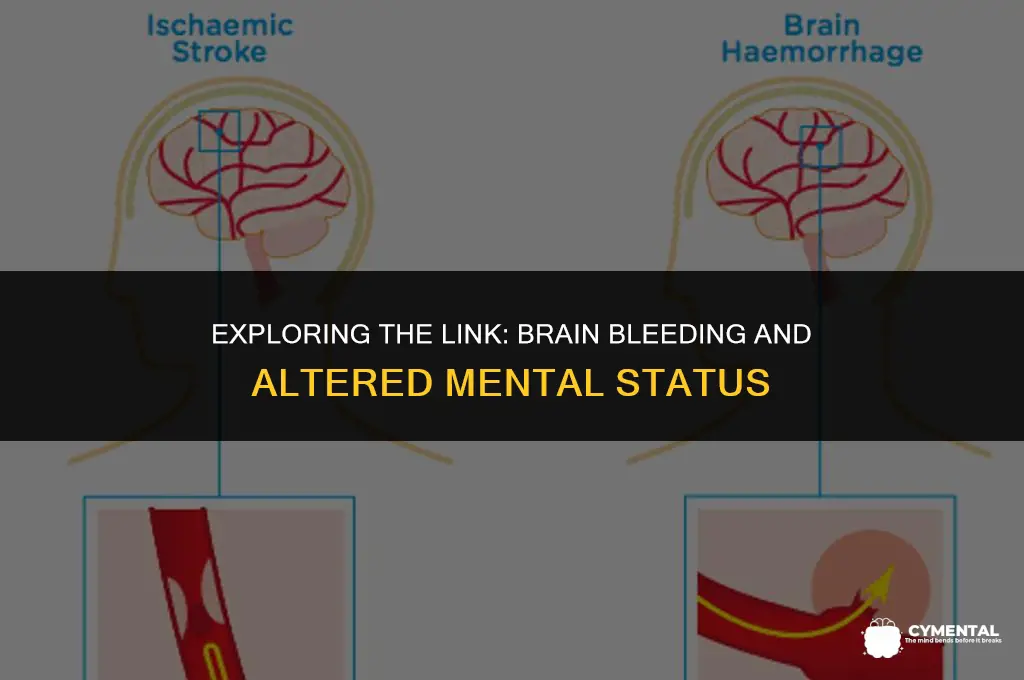
Bleeding in the brain, also known as intracranial hemorrhage, can indeed cause altered mental status. This condition occurs when blood vessels in the brain rupture, leading to bleeding that can put pressure on surrounding brain tissue. The increased pressure can result in symptoms such as confusion, disorientation, and changes in consciousness. In severe cases, it can even lead to coma or death. Altered mental status is a serious concern and requires immediate medical attention to prevent further complications.
| Characteristics | Values |
|---|---|
| Condition | Can bleeding in the brain cause altered mental status? |
| Cause | Bleeding in the brain, also known as intracranial hemorrhage, can result from trauma, ruptured aneurysms, or other vascular abnormalities. |
| Symptoms | Symptoms may include sudden severe headache, nausea, vomiting, altered consciousness, confusion, slurred speech, or weakness in limbs. |
| Diagnosis | Diagnosis is typically made through a combination of clinical evaluation and imaging studies such as CT or MRI scans. |
| Treatment | Treatment depends on the severity and location of the bleed and may include medications to reduce swelling, surgical intervention, or supportive care. |
| Prognosis | The prognosis varies widely depending on the size and location of the hemorrhage, the patient's overall health, and the promptness of treatment. |
| Complications | Potential complications include increased intracranial pressure, brain herniation, seizures, and long-term neurological deficits. |
| Prevention | Preventive measures may include managing hypertension, avoiding excessive alcohol consumption, and using protective gear during high-risk activities. |
| Epidemiology | Intracranial hemorrhage is a relatively common condition, with an estimated incidence of 24.5 per 100,000 person-years in the United States. |
| Risk Factors | Risk factors include advanced age, hypertension, diabetes, smoking, and a history of cerebrovascular disease. |
| Pathophysiology | Bleeding in the brain can lead to altered mental status by causing direct damage to brain tissue, disrupting normal brain function, and increasing intracranial pressure. |
Explore related products


What You'll Learn
- Types of brain bleeds: Intracerebral hemorrhage, subdural hematoma, epidural hematoma, and subarachnoid hemorrhage
- Common causes: Trauma, hypertension, aneurysms, arteriovenous malformations, and anticoagulant use
- Symptoms of altered mental status: Confusion, disorientation, agitation, lethargy, and changes in consciousness level
- Diagnosis methods: Neurological examination, CT scans, MRI, and lumbar puncture
- Treatment approaches: Surgical evacuation, medical management, and supportive care in intensive care units

Types of brain bleeds: Intracerebral hemorrhage, subdural hematoma, epidural hematoma, and subarachnoid hemorrhage
Intracerebral hemorrhage (ICH) is a type of brain bleed that occurs within the brain tissue itself. It is often caused by high blood pressure, which can lead to the rupture of small blood vessels. ICH can result in altered mental status due to the accumulation of blood within the brain, which can cause swelling and pressure on surrounding brain tissue. Symptoms may include sudden headache, nausea, vomiting, confusion, and changes in consciousness.
Subdural hematoma is a collection of blood between the dura mater and the arachnoid mater, two of the protective membranes surrounding the brain. It is commonly caused by trauma to the head, which can result in the tearing of blood vessels. Subdural hematomas can lead to altered mental status due to the pressure exerted on the brain by the accumulating blood. Symptoms may include headache, nausea, vomiting, confusion, and changes in consciousness. In severe cases, subdural hematomas can cause brain herniation, a life-threatening condition where brain tissue is pushed through an opening in the skull.
Epidural hematoma is a type of brain bleed that occurs between the dura mater and the skull. It is typically caused by trauma to the head, which can result in the tearing of blood vessels. Epidural hematomas can lead to altered mental status due to the pressure exerted on the brain by the accumulating blood. Symptoms may include sudden headache, nausea, vomiting, confusion, and changes in consciousness. Epidural hematomas are often associated with skull fractures and can be life-threatening if not treated promptly.
Subarachnoid hemorrhage (SAH) is a type of brain bleed that occurs within the subarachnoid space, which is the area between the arachnoid mater and the pia mater, two of the protective membranes surrounding the brain. SAH is often caused by the rupture of an aneurysm, a weakened area in a blood vessel that can balloon and burst. SAH can result in altered mental status due to the irritation of the brain by the blood and the potential for blood to clot and cause further damage. Symptoms may include sudden, severe headache, nausea, vomiting, confusion, and changes in consciousness. SAH is a medical emergency and requires immediate treatment to prevent further complications.
Unveiling the Truth: Black Mold's Impact on Mental Clarity
You may want to see also
Explore related products


Common causes: Trauma, hypertension, aneurysms, arteriovenous malformations, and anticoagulant use
Trauma to the brain, whether from a fall, car accident, or physical assault, is a leading cause of bleeding within the cranial cavity. Such trauma can rupture blood vessels, leading to hemorrhage and subsequent swelling, which may result in altered mental status due to increased intracranial pressure.
Hypertension, or high blood pressure, is another significant risk factor for brain bleeding. Chronically elevated blood pressure can weaken the walls of blood vessels, making them more susceptible to rupture. This is particularly concerning in older adults, where the combination of age-related vessel fragility and hypertension can significantly increase the risk of hemorrhagic stroke.
Aneurysms, which are abnormal dilations of blood vessels, can also lead to bleeding in the brain. These balloon-like structures can rupture, causing a sudden and severe hemorrhage. Aneurysms are often congenital, but they can also be acquired due to factors such as trauma or infection.
Arteriovenous malformations (AVMs) are another cause of brain bleeding. AVMs are abnormal connections between arteries and veins that disrupt normal blood flow and oxygen circulation. They can rupture, leading to hemorrhage, and may also cause symptoms such as seizures or headaches prior to bleeding.
The use of anticoagulant medications, such as warfarin or aspirin, can increase the risk of bleeding in the brain. These medications are often prescribed to prevent blood clots in conditions like atrial fibrillation or deep vein thrombosis. However, they can also make it more difficult for the blood to clot when a vessel is injured, potentially leading to excessive bleeding and altered mental status.
Exploring the Link Between Stroke and Mental Health Challenges
You may want to see also
Explore related products


Symptoms of altered mental status: Confusion, disorientation, agitation, lethargy, and changes in consciousness level
Confusion is often the first noticeable symptom of altered mental status due to brain bleeding. It manifests as a lack of clarity in thought processes, difficulty in concentrating, and an inability to process information effectively. Individuals may appear disoriented, struggling to recognize familiar surroundings or people. This disorientation can progress to agitation, where the person becomes restless, anxious, or even aggressive. Such behavioral changes are indicative of the brain's struggle to maintain normal function in the presence of bleeding.
Lethargy is another common symptom, characterized by a significant decrease in energy levels and responsiveness. Affected individuals may appear unusually tired, have slow reactions, and show little interest in their environment. This lethargy can be a sign of the brain's attempt to conserve energy in response to the trauma caused by bleeding. Changes in consciousness level are particularly concerning, as they can range from mild drowsiness to deep coma. These changes reflect the severity of the brain injury and the body's response to the bleeding.
In cases of brain bleeding, prompt recognition of these symptoms is crucial. Immediate medical attention is necessary to prevent further complications and improve the chances of recovery. Healthcare professionals will typically conduct a thorough evaluation, including physical examination, neurological assessment, and imaging studies, to determine the extent and location of the bleeding. Treatment may involve surgical intervention to remove the blood clot, medication to manage symptoms and prevent further bleeding, and supportive care to ensure the individual's safety and comfort during recovery.
Exploring the Link: Can AIDS Contribute to Mental Illness?
You may want to see also
Explore related products


Diagnosis methods: Neurological examination, CT scans, MRI, and lumbar puncture
A thorough neurological examination is often the first step in diagnosing a potential brain bleed. This involves assessing the patient's mental status, including their level of consciousness, orientation, and ability to follow commands. The examiner will also test the patient's reflexes, muscle strength, and coordination, as well as examine their eyes for signs of injury or swelling.
CT scans are a quick and effective way to visualize the brain and identify areas of bleeding. They use X-rays to create detailed images of the brain's structures, allowing doctors to pinpoint the location and size of a bleed. CT scans are particularly useful in emergency situations, as they can be performed rapidly and do not require the patient to remain still for an extended period.
MRI scans provide even more detailed images of the brain than CT scans, but they take longer to perform and require the patient to remain still inside a large, noisy machine. MRI scans use powerful magnets and radio waves to create images of the brain's soft tissues, including the brainstem and spinal cord. They are particularly useful for identifying small bleeds or bleeds in areas that are difficult to see on a CT scan.
Lumbar puncture, also known as a spinal tap, involves inserting a needle into the lower back to collect cerebrospinal fluid (CSF). This fluid can be analyzed for signs of bleeding, infection, or other abnormalities. Lumbar puncture is a more invasive procedure than the other diagnostic methods, but it can provide valuable information about the patient's condition.
In conclusion, a combination of neurological examination, CT scans, MRI scans, and lumbar puncture may be used to diagnose a brain bleed and determine its cause. The specific diagnostic methods used will depend on the patient's symptoms, medical history, and the suspected location and severity of the bleed.
Exploring the Link: Bactrim and Mental Health Concerns
You may want to see also
Explore related products




Treatment approaches: Surgical evacuation, medical management, and supportive care in intensive care units
Surgical evacuation is often the primary treatment approach for significant brain bleeds causing altered mental status. This procedure involves removing the blood clot through a surgical incision in the skull, which can help alleviate pressure on the brain and improve neurological function. Surgeons may use various techniques, such as craniotomy or burr hole trephination, depending on the size and location of the bleed. Postoperative care is crucial, as patients may be at risk for complications like infection or rebleeding.
Medical management plays a vital role in the treatment of brain bleeds, particularly in cases where surgical intervention is not feasible or as a complementary approach to surgery. This may involve the administration of medications to reduce swelling, lower blood pressure, and prevent seizures. Additionally, medical professionals may use techniques like lumbar puncture to relieve pressure on the brain by draining excess cerebrospinal fluid. Close monitoring of the patient's condition is essential, as medical management often requires adjustments based on the patient's response and any changes in their status.
Supportive care in intensive care units (ICUs) is critical for patients with brain bleeds, as it helps maintain their overall health and stability during the treatment process. This may include mechanical ventilation to ensure adequate oxygenation, nutritional support to prevent malnutrition, and measures to prevent complications like deep vein thrombosis or pneumonia. ICU staff also play a key role in monitoring the patient's neurological status, providing interventions to manage pain or agitation, and facilitating communication between the patient, their family, and the medical team. The goal of supportive care is to create an optimal environment for healing and recovery, while also addressing any immediate threats to the patient's well-being.
Exploring the Potential Mental Health Effects of Amlodipine
You may want to see also
Frequently asked questions
Yes, bleeding in the brain, also known as a hemorrhage, can lead to altered mental status. This is because the bleeding can put pressure on the brain, leading to symptoms such as confusion, disorientation, and changes in consciousness.
Common causes of bleeding in the brain include hypertension (high blood pressure), aneurysms (weakened blood vessels that balloon and can rupture), arteriovenous malformations (abnormal connections between arteries and veins), and trauma to the head.
Symptoms of altered mental status due to brain bleeding can include sudden severe headache, nausea and vomiting, changes in vision, difficulty speaking or understanding speech, weakness or numbness in the face, arm, or leg, and changes in consciousness such as fainting or coma.
Bleeding in the brain is typically diagnosed using imaging tests such as a CT (computed tomography) scan or an MRI (magnetic resonance imaging). These tests can show the location and size of the bleed, helping doctors determine the best course of treatment.
Treatment options for bleeding in the brain depend on the cause, location, and size of the bleed. They can include medications to control blood pressure and prevent further bleeding, surgery to remove the bleed or repair damaged blood vessels, and rehabilitation to help recover from any resulting neurological deficits.