Lucas Bennett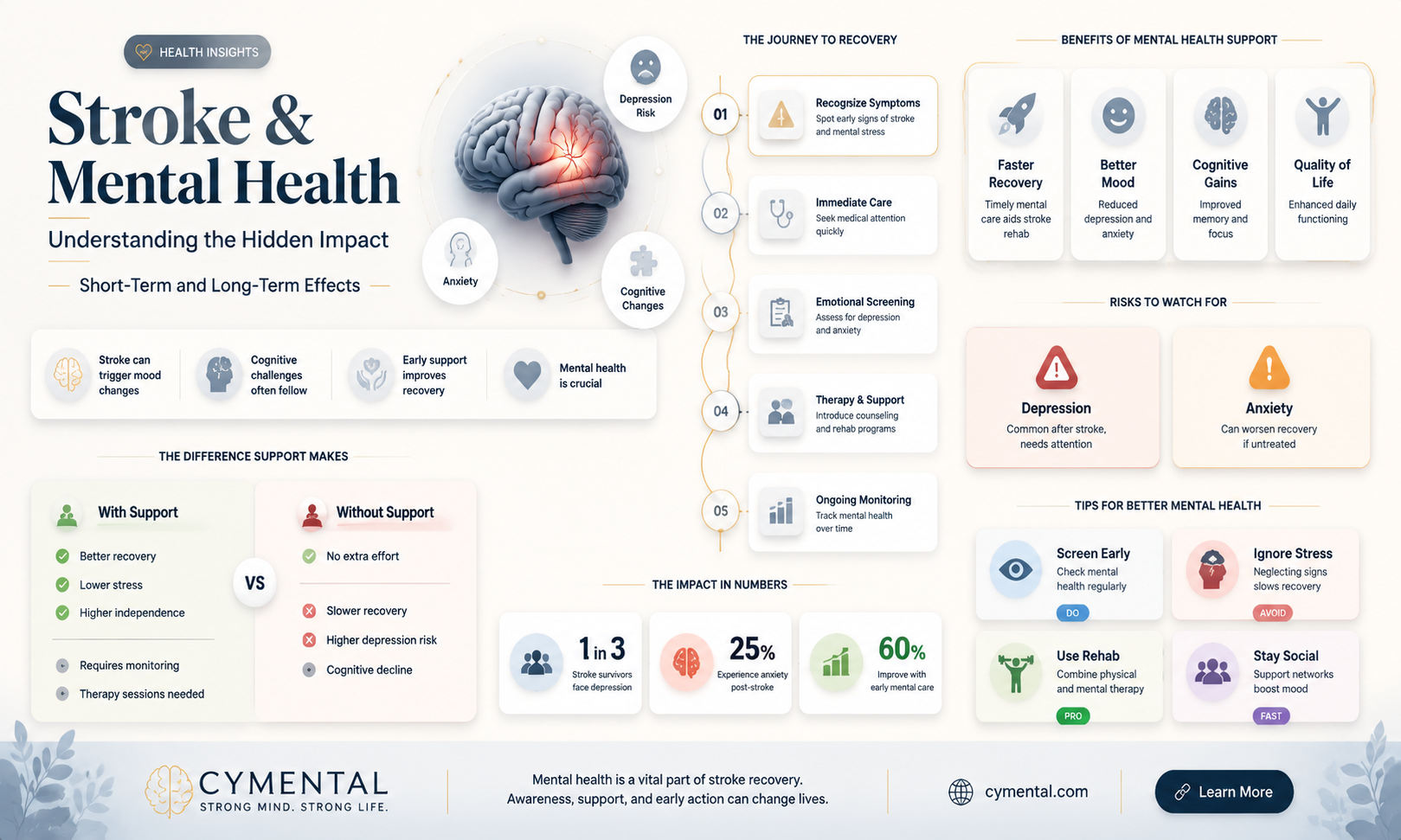
A stroke, which occurs when the blood supply to part of the brain is interrupted, can have profound effects on an individual's physical and cognitive abilities. While the immediate impact of a stroke is often focused on physical symptoms such as paralysis or speech difficulties, there is growing recognition of the potential long-term mental health consequences. Research indicates that a stroke can indeed contribute to the development of mental illnesses, including depression, anxiety, and cognitive impairment. The disruption of neural pathways and the subsequent changes in brain chemistry can lead to a range of psychological challenges that may persist long after the initial event. Understanding the complex interplay between stroke and mental health is crucial for providing comprehensive care and support to those affected.
| Characteristics | Values |
|---|---|
| Definition | A stroke is a medical condition where blood flow to the brain is disrupted, leading to brain cell damage. Mental illness refers to a range of psychiatric disorders affecting mood, thinking, and behavior. |
| Types of Mental Illness Post-Stroke | Depression, anxiety, post-traumatic stress disorder (PTSD), bipolar disorder, schizophrenia, and personality changes. |
| Prevalence | Studies suggest that up to 50% of stroke survivors experience some form of mental illness within the first year post-stroke. |
| Risk Factors | Age, gender, history of mental illness, severity of stroke, location of brain damage, and social support. |
| Symptoms | Symptoms vary depending on the type of mental illness but may include persistent sadness, anxiety, mood swings, hallucinations, delusions, and changes in personality. |
| Diagnosis | Mental illness post-stroke is typically diagnosed through a combination of patient history, physical examination, and psychological assessments. |
| Treatment | Treatment may include medication, psychotherapy, or a combination of both. Antidepressants, anti-anxiety medications, and antipsychotics are commonly used. |
| Prognosis | The prognosis varies depending on the individual and the severity of the stroke and mental illness. With proper treatment, many stroke survivors can manage their mental health symptoms effectively. |
| Prevention | While not all strokes can be prevented, lifestyle changes such as maintaining a healthy diet, exercising regularly, and managing chronic conditions like hypertension can reduce the risk. |
| Support | Support groups and counseling services are available for stroke survivors and their families to help manage the emotional and psychological impact of stroke. |
| Research | Ongoing research is focused on understanding the biological mechanisms linking stroke and mental illness, developing new treatments, and improving post-stroke care. |
| Resources | Resources include the National Stroke Association, the American Heart Association, and the National Institute of Mental Health, which provide information and support for stroke survivors and their families. |
Explore related products


What You'll Learn
- Post-Stroke Depression: Investigates the link between stroke and the onset of depression
- Anxiety Disorders Post-Stroke: Examines the prevalence and management of anxiety after a stroke
- Stroke and Psychosis: Discusses rare cases of psychosis emerging after a stroke
- Cognitive Impairment: Explores how stroke can lead to cognitive difficulties and dementia
- Emotional Lability: Addresses sudden emotional changes and their impact on mental health post-stroke

Post-Stroke Depression: Investigates the link between stroke and the onset of depression
A stroke can significantly impact a person's mental health, and one of the most common psychological effects is depression. Post-stroke depression (PSD) is a serious condition that can affect up to 30% of stroke survivors. It is characterized by feelings of sadness, hopelessness, and a loss of interest in activities that were once enjoyable. PSD can occur within the first few months after a stroke, but it can also develop years later.
The exact cause of PSD is not fully understood, but it is believed to be related to the physical changes in the brain that occur as a result of a stroke. A stroke can damage the areas of the brain that regulate mood, leading to an imbalance of neurotransmitters such as serotonin and dopamine. Additionally, the emotional stress of coping with the physical and cognitive effects of a stroke can contribute to the development of depression.
Diagnosing PSD can be challenging, as its symptoms can overlap with those of other conditions, such as dementia or delirium. However, it is important to identify and treat PSD as early as possible, as it can have a significant impact on a person's quality of life and recovery. Treatment options for PSD include antidepressant medications, psychotherapy, and lifestyle changes such as regular exercise and social support.
Research has shown that PSD is more common in people who have experienced a severe stroke or who have a history of depression. It is also more prevalent in older adults and those who live alone. By understanding the risk factors for PSD, healthcare providers can better identify and support those who are most vulnerable to this condition.
In conclusion, post-stroke depression is a complex and multifaceted condition that requires careful attention and treatment. By investigating the link between stroke and the onset of depression, we can better understand the underlying causes of PSD and develop more effective strategies for prevention and treatment. This knowledge is crucial for improving the mental health and well-being of stroke survivors and their families.
Exploring the Long-Term Effects of Mental Breakdowns: Can They Cause Permanent Damage?
You may want to see also
Explore related products


Anxiety Disorders Post-Stroke: Examines the prevalence and management of anxiety after a stroke
Anxiety disorders are a significant concern following a stroke, with studies indicating that up to 50% of stroke survivors experience symptoms of anxiety. This heightened prevalence is attributed to the profound impact of stroke on both physical and cognitive functioning, leading to increased dependency, loss of autonomy, and fear of recurrence. Effective management of post-stroke anxiety is crucial to improve quality of life and facilitate rehabilitation.
Cognitive-behavioral therapy (CBT) has emerged as a leading intervention for anxiety disorders in stroke survivors. CBT focuses on identifying and challenging negative thought patterns, promoting adaptive coping strategies, and gradually exposing individuals to feared situations. Research suggests that CBT can lead to significant reductions in anxiety symptoms and improved functional outcomes. In addition to CBT, pharmacological interventions such as selective serotonin reuptake inhibitors (SSRIs) may be considered, particularly for individuals with severe or persistent symptoms.
It is essential to adopt a multidisciplinary approach to managing post-stroke anxiety, involving collaboration between healthcare professionals, patients, and caregivers. This approach ensures that interventions are tailored to the unique needs and circumstances of each individual, taking into account factors such as the severity of the stroke, pre-existing mental health conditions, and social support networks. Regular monitoring and adjustment of treatment plans are necessary to address the dynamic nature of anxiety disorders and promote optimal recovery.
In conclusion, anxiety disorders are a prevalent and significant complication following stroke, necessitating proactive and comprehensive management strategies. By integrating evidence-based interventions such as CBT and pharmacotherapy, and fostering a collaborative care environment, healthcare professionals can help stroke survivors mitigate the impact of anxiety and enhance their overall well-being.
Exploring the Complex Link Between Mental Illnesses and Chemical Imbalances
You may want to see also
Explore related products


Stroke and Psychosis: Discusses rare cases of psychosis emerging after a stroke
In rare instances, a stroke can lead to the emergence of psychosis, a condition characterized by a disconnection from reality. This phenomenon, known as post-stroke psychosis, can manifest in various ways, including hallucinations, delusions, and disorganized thinking. While the exact cause of this condition is not fully understood, it is believed to be related to the disruption of neural pathways in the brain caused by the stroke.
Post-stroke psychosis can occur in individuals with no prior history of mental illness, making it a particularly challenging condition for both patients and healthcare providers. The symptoms can be distressing and may significantly impact a person's ability to function in daily life. It is essential for healthcare professionals to be aware of this potential complication and to monitor patients closely for any signs of psychosis following a stroke.
The treatment of post-stroke psychosis typically involves a combination of medication and psychotherapy. Antipsychotic medications may be prescribed to help manage symptoms, while cognitive-behavioral therapy can be beneficial in addressing the psychological impact of the condition. In some cases, electroconvulsive therapy may be considered as an additional treatment option.
It is important to note that post-stroke psychosis is a relatively rare occurrence, and the majority of individuals who experience a stroke will not develop this condition. However, for those who do, it is crucial to provide appropriate support and treatment to help them manage their symptoms and improve their quality of life.
Research into the causes and treatment of post-stroke psychosis is ongoing, and further studies are needed to better understand this complex condition. By increasing awareness and knowledge about post-stroke psychosis, healthcare providers can be better equipped to identify and treat this condition, ultimately leading to improved outcomes for patients.
Unraveling the Mind: Mental Illnesses Behind Paranoia
You may want to see also
Explore related products




Cognitive Impairment: Explores how stroke can lead to cognitive difficulties and dementia
Stroke, a leading cause of disability worldwide, can have profound effects on cognitive function. When a stroke occurs, it disrupts the blood supply to the brain, leading to the death of brain cells in the affected area. This can result in a range of cognitive impairments, depending on the location and extent of the damage. For instance, strokes affecting the left hemisphere of the brain may lead to language difficulties, such as aphasia, while those impacting the right hemisphere may cause visual-spatial problems.
One of the most significant long-term cognitive consequences of stroke is the increased risk of dementia. Studies have shown that individuals who have had a stroke are at a higher risk of developing dementia compared to those who have not. This risk is particularly elevated in the first year following a stroke, but it remains higher than the general population even years later. The exact mechanisms underlying this increased risk are not fully understood, but it is thought that the brain damage caused by stroke may accelerate the progression of underlying neurodegenerative diseases, such as Alzheimer's disease.
In addition to the risk of dementia, stroke survivors may experience a range of other cognitive difficulties. These can include problems with memory, attention, and executive functions, such as planning and decision-making. The severity of these impairments can vary widely, from mild difficulties that may not significantly impact daily life to severe impairments that can lead to dependence on caregivers. Rehabilitation programs, including cognitive therapy and exercises to improve memory and attention, can help stroke survivors manage these challenges and improve their quality of life.
It is also important to consider the psychological impact of stroke on cognitive function. Depression and anxiety are common in stroke survivors and can exacerbate cognitive difficulties. Addressing these mental health issues through therapy and medication can be an important part of the recovery process. Furthermore, social support and engagement in mentally stimulating activities can help protect against cognitive decline and improve overall well-being.
In conclusion, stroke can have significant and long-lasting effects on cognitive function, increasing the risk of dementia and causing a range of other cognitive difficulties. Understanding these effects and providing appropriate rehabilitation and support can help stroke survivors manage their challenges and improve their quality of life.
Exploring the Connection: Panic Attacks and Mental Health Crises
You may want to see also
Explore related products



Emotional Lability: Addresses sudden emotional changes and their impact on mental health post-stroke
Sudden emotional changes, known as emotional lability, are a common phenomenon experienced by individuals who have suffered a stroke. This condition can manifest as rapid shifts from happiness to sadness, anger to calm, or any other emotional state, often without a clear trigger. Such unpredictable emotional fluctuations can significantly impact a person's mental health and well-being, leading to increased stress, anxiety, and depression.
The pathophysiology behind emotional lability post-stroke is complex and not fully understood. However, it is believed that damage to certain areas of the brain, such as the limbic system, which regulates emotions, can disrupt the normal emotional response mechanisms. Additionally, the psychological impact of experiencing a stroke, including the fear of recurrence and the challenges of rehabilitation, can contribute to emotional instability.
Managing emotional lability is crucial for improving the quality of life for stroke survivors. Various therapeutic approaches, such as cognitive-behavioral therapy (CBT), can help individuals develop coping strategies to deal with sudden emotional changes. Medications, including antidepressants and mood stabilizers, may also be prescribed to help regulate emotional responses. Furthermore, support groups and counseling can provide a safe space for stroke survivors to express their feelings and connect with others who understand their experiences.
It is essential for caregivers and healthcare professionals to recognize the signs of emotional lability and provide appropriate support and interventions. By addressing this aspect of post-stroke recovery, we can help improve the overall mental health and well-being of stroke survivors, enabling them to lead more fulfilling lives.
Exploring the Link: Can a Common Cold Cause Mental Confusion?
You may want to see also
Frequently asked questions
Yes, a stroke can cause mental illness. The brain damage resulting from a stroke can lead to various mental health issues, including depression, anxiety, and mood swings.
Common mental health issues that can arise after a stroke include depression, anxiety, mood swings, irritability, and cognitive impairment, which can affect memory, attention, and problem-solving abilities.
The location of the stroke in the brain can significantly affect the likelihood of developing mental illness. For example, strokes in the left hemisphere of the brain, particularly in the frontal and temporal lobes, are more likely to result in depression and anxiety. Strokes in the right hemisphere can lead to mood swings and irritability.
Treatment options for mental illness caused by a stroke may include antidepressant medications, psychotherapy, cognitive-behavioral therapy, and lifestyle changes such as regular exercise and a healthy diet. It's essential to work with a healthcare professional to develop an individualized treatment plan.