Noah Parker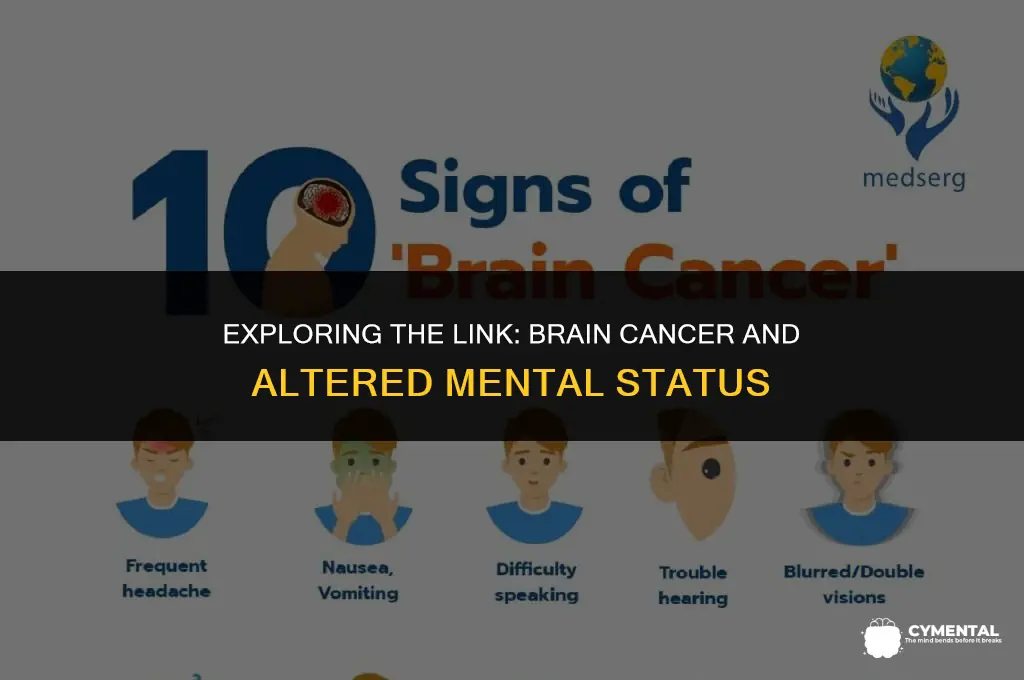
Brain cancer can significantly impact a person's mental status, leading to noticeable changes in their cognitive and emotional functioning. As the tumor grows and affects different areas of the brain, it can cause a range of symptoms including memory loss, confusion, difficulty concentrating, and mood swings. These changes can be distressing for both the patient and their loved ones, and may require medical intervention to manage. Understanding the relationship between brain cancer and altered mental status is crucial for early detection and effective treatment.
| Characteristics | Values |
|---|---|
| Definition | Altered mental status (AMS) refers to a change in a person's mental state, affecting their level of consciousness, awareness, and responsiveness. |
| Causes | Brain cancer can cause AMS due to increased intracranial pressure, brain edema, or direct invasion of brain tissue. |
| Symptoms | Symptoms of AMS can include confusion, disorientation, drowsiness, agitation, and changes in personality or behavior. |
| Onset | AMS can occur gradually or suddenly, depending on the type and location of the brain cancer, as well as the individual's overall health. |
| Diagnosis | Diagnosis of AMS due to brain cancer typically involves a combination of medical history, physical examination, and diagnostic tests such as MRI or CT scans. |
| Treatment | Treatment options for AMS caused by brain cancer may include surgery, radiation therapy, chemotherapy, or supportive care to manage symptoms. |
| Prognosis | The prognosis for individuals with brain cancer and AMS varies depending on factors such as the type and stage of cancer, age, and overall health. |
| Complications | Complications of AMS can include increased risk of falls, infections, and decreased quality of life. |
| Prevention | While brain cancer cannot be prevented, early detection and treatment can help manage symptoms and improve outcomes. |
| Research | Ongoing research is focused on developing new treatments and improving the understanding of the relationship between brain cancer and AMS. |
| Support | Supportive care, including counseling and rehabilitation services, can help individuals and their families cope with the challenges of AMS due to brain cancer. |
| Resources | Resources such as the American Brain Tumor Association and the National Cancer Institute provide information and support for individuals affected by brain cancer and AMS. |
Explore related products


What You'll Learn
- Cognitive Changes: Brain cancer can lead to noticeable cognitive changes, including memory loss and confusion
- Personality Shifts: Patients may experience significant personality changes, such as increased aggression or apathy
- Motor Function Impairment: Altered mental status can manifest as difficulties with coordination and balance
- Speech and Language Issues: Brain cancer might cause speech difficulties, language comprehension problems, or both
- Emotional Instability: Patients could exhibit rapid mood swings, depression, or anxiety due to brain cancer

Cognitive Changes: Brain cancer can lead to noticeable cognitive changes, including memory loss and confusion
Brain cancer can significantly impact cognitive functions, leading to noticeable changes in memory and mental clarity. These cognitive alterations can manifest in various ways, affecting a person's ability to process information, recall memories, and maintain focus. Memory loss is a common symptom, where individuals may struggle to remember recent events or conversations. Confusion is another prevalent issue, characterized by difficulty in understanding or processing new information. These changes can be distressing for both the patient and their loved ones, as they may affect daily activities and overall quality of life.
The cognitive changes associated with brain cancer can result from several factors, including the location and size of the tumor, the type of cancer, and the treatments used. For instance, tumors in areas of the brain responsible for memory, such as the hippocampus, may lead to more pronounced memory loss. Additionally, treatments like chemotherapy and radiation therapy can have side effects that contribute to cognitive impairment. It is essential for healthcare providers to monitor these changes and offer appropriate support and interventions to manage them effectively.
Patients experiencing cognitive changes due to brain cancer may benefit from various strategies to help cope with memory loss and confusion. These can include using memory aids like calendars and reminders, engaging in cognitive exercises to improve mental agility, and maintaining a structured daily routine to reduce stress and confusion. Furthermore, seeking support from mental health professionals and joining support groups can provide emotional relief and practical advice for managing these challenges.
In conclusion, cognitive changes are a significant concern for individuals with brain cancer, impacting their memory and mental clarity. Understanding the causes and implementing supportive strategies can help patients and their families navigate these difficulties more effectively.
Exploring the Link Between Stroke and Mental Health Challenges
You may want to see also
Explore related products


Personality Shifts: Patients may experience significant personality changes, such as increased aggression or apathy
Patients with brain cancer may undergo profound personality shifts, presenting challenges not only to themselves but also to their caregivers and loved ones. These changes can manifest in various ways, including increased aggression, apathy, or even a complete transformation in one's demeanor. Such alterations are often a result of the tumor's impact on critical brain regions responsible for emotional regulation and impulse control.
In some cases, the onset of these personality changes can be sudden and dramatic. A patient who was once calm and collected may become irritable and prone to outbursts. This shift can be particularly distressing for family members, who may struggle to understand and cope with the sudden change in their loved one's behavior. It is essential for caregivers to recognize these changes as potential symptoms of the underlying condition and seek appropriate medical and psychological support.
The apathy that can accompany brain cancer is equally concerning. Patients may exhibit a lack of interest in activities they once enjoyed, withdraw from social interactions, and neglect personal hygiene and self-care. This apathy can be mistaken for depression or other mental health conditions, highlighting the importance of a comprehensive medical evaluation to determine the root cause of these symptoms.
Understanding the potential for personality shifts in brain cancer patients is crucial for providing effective care and support. Healthcare professionals must be vigilant in monitoring for these changes and addressing them promptly. This may involve adjustments to the patient's treatment plan, as well as providing resources and guidance to help patients and their families navigate these challenging emotional and behavioral changes.
Ultimately, the impact of brain cancer on personality underscores the complex interplay between the brain's physical health and an individual's mental and emotional well-being. By recognizing and addressing these changes, we can improve the quality of life for patients and their families, and better support them through the challenges posed by this devastating condition.
Exploring the Link: Can Herpes Impact Mental Health?
You may want to see also
Explore related products


Motor Function Impairment: Altered mental status can manifest as difficulties with coordination and balance
Motor function impairment is a significant indicator of altered mental status, often observed in individuals with brain cancer. This impairment can manifest as difficulties with coordination and balance, affecting a person's ability to perform daily activities. For instance, a person may struggle with simple tasks such as walking, buttoning their shirt, or even holding a cup of coffee. These challenges can arise due to the disruption of neural pathways that control motor functions, which can be caused by the growth of a brain tumor.
In some cases, motor function impairment can be subtle and may only be noticeable in specific situations. For example, a person might have trouble with fine motor skills, such as typing on a keyboard or writing with a pen, but still be able to walk and perform other gross motor tasks. Conversely, some individuals may experience significant difficulties with balance and coordination, making it hard for them to stand or move around without assistance.
The severity of motor function impairment can vary widely depending on the type, size, and location of the brain tumor. Tumors that affect the cerebellum, for instance, are more likely to cause problems with balance and coordination, while tumors in the frontal lobe may primarily impact fine motor skills and cognitive functions. Additionally, the progression of the tumor and the effectiveness of treatment can also influence the extent of motor function impairment.
It is crucial for healthcare providers to monitor motor function closely in patients with brain cancer, as changes can indicate the progression of the disease or the need for adjustments in treatment. Physical therapy and occupational therapy can be beneficial in helping patients maintain their motor skills and adapt to any impairments. Assistive devices, such as canes, walkers, or adaptive utensils, may also be necessary to support individuals in their daily lives.
In conclusion, motor function impairment is a common and significant symptom of altered mental status in brain cancer patients. Understanding the specific manifestations and underlying causes of this impairment can help healthcare providers and caregivers offer more effective support and interventions, ultimately improving the quality of life for those affected by the disease.
Exploring the Link: Suicidal Thoughts and Mental Illness
You may want to see also
Explore related products


Speech and Language Issues: Brain cancer might cause speech difficulties, language comprehension problems, or both
Brain cancer can significantly impact a person's speech and language abilities, leading to a range of difficulties that may affect their daily communication. These issues can manifest in various ways, including problems with articulation, fluency, and comprehension. For instance, a person may struggle to pronounce words correctly, experience stuttering or difficulty in forming sentences, or have trouble understanding spoken or written language. These challenges can arise due to the cancer's location in the brain, particularly if it affects areas responsible for language processing, such as Broca's area or Wernicke's area.
The severity of speech and language issues can vary widely depending on the type, size, and location of the tumor, as well as the individual's overall health and cognitive function. In some cases, these difficulties may be mild and manageable, while in others, they can be severe and significantly impact a person's quality of life. It is essential for individuals with brain cancer to undergo regular assessments by speech-language pathologists to monitor and address these issues proactively.
Treatment for speech and language difficulties associated with brain cancer may involve a combination of approaches, including speech therapy, medication, and surgical interventions. Speech therapy can help individuals improve their communication skills by addressing specific areas of difficulty, such as articulation, fluency, or comprehension. Medications may be used to manage symptoms like stuttering or to enhance cognitive function. In some cases, surgical removal of the tumor or interventions to reduce its size or impact on surrounding brain tissue may be necessary to alleviate speech and language problems.
It is crucial for caregivers and healthcare providers to be aware of the potential for speech and language issues in individuals with brain cancer and to provide appropriate support and resources. This may include facilitating access to speech therapy services, offering communication aids or devices, and educating family members and friends about how to best support the individual's communication needs. By addressing these issues early and comprehensively, it is possible to improve outcomes and enhance the overall quality of life for those affected by brain cancer.
Exploring the Link: UTIs and Mental Confusion
You may want to see also
Explore related products


Emotional Instability: Patients could exhibit rapid mood swings, depression, or anxiety due to brain cancer
Brain cancer can significantly impact a patient's emotional well-being, leading to pronounced instability. This instability often manifests as rapid mood swings, where patients may experience sudden shifts from sadness to irritability or even brief periods of euphoria. Such emotional turbulence can be distressing for both patients and their caregivers, as it disrupts daily life and can lead to misunderstandings and conflicts.
Depression is another common emotional symptom associated with brain cancer. Patients may feel a deep sense of hopelessness or despair, which can be exacerbated by the physical symptoms of cancer and the side effects of treatment. This depression can be particularly challenging to treat, as traditional antidepressant medications may interact with cancer treatments or be less effective due to the underlying neurological changes caused by the tumor.
Anxiety is also prevalent among brain cancer patients. The uncertainty of the disease's progression, the fear of death, and the potential for cognitive decline can all contribute to heightened anxiety levels. This anxiety can manifest as excessive worry, restlessness, or even panic attacks. Managing anxiety in brain cancer patients often requires a multifaceted approach, including medication, therapy, and support groups.
The emotional instability caused by brain cancer can have significant implications for patient care. It can affect treatment adherence, as patients may struggle to maintain a consistent routine or remember to take medications. Additionally, emotional distress can impact the patient's quality of life, making it difficult to enjoy activities they once found pleasurable. Therefore, addressing emotional instability is a crucial component of comprehensive brain cancer care.
Healthcare providers can help mitigate emotional instability in brain cancer patients by offering early intervention and ongoing support. This may include referrals to mental health professionals, the use of targeted therapies, and the implementation of coping strategies. By acknowledging and addressing the emotional impact of brain cancer, providers can improve patient outcomes and enhance their overall well-being.
Unraveling the Mind: Understanding Mental Illnesses Behind Delusions
You may want to see also
Frequently asked questions
Yes, brain cancer can cause altered mental status. This is because tumors in the brain can affect the areas responsible for cognitive functions, leading to changes in behavior, thinking, and memory.
Common signs of altered mental status due to brain cancer include confusion, disorientation, difficulty with memory and concentration, changes in personality, and impaired judgment.
The location of the brain tumor plays a significant role in the type of mental status changes observed. For example, tumors in the frontal lobe may affect decision-making and personality, while tumors in the temporal lobe may impact memory and language.
Other factors that can contribute to altered mental status in brain cancer patients include the size and growth rate of the tumor, the presence of edema (swelling) around the tumor, and the patient's overall health and medical history.