Noah Parker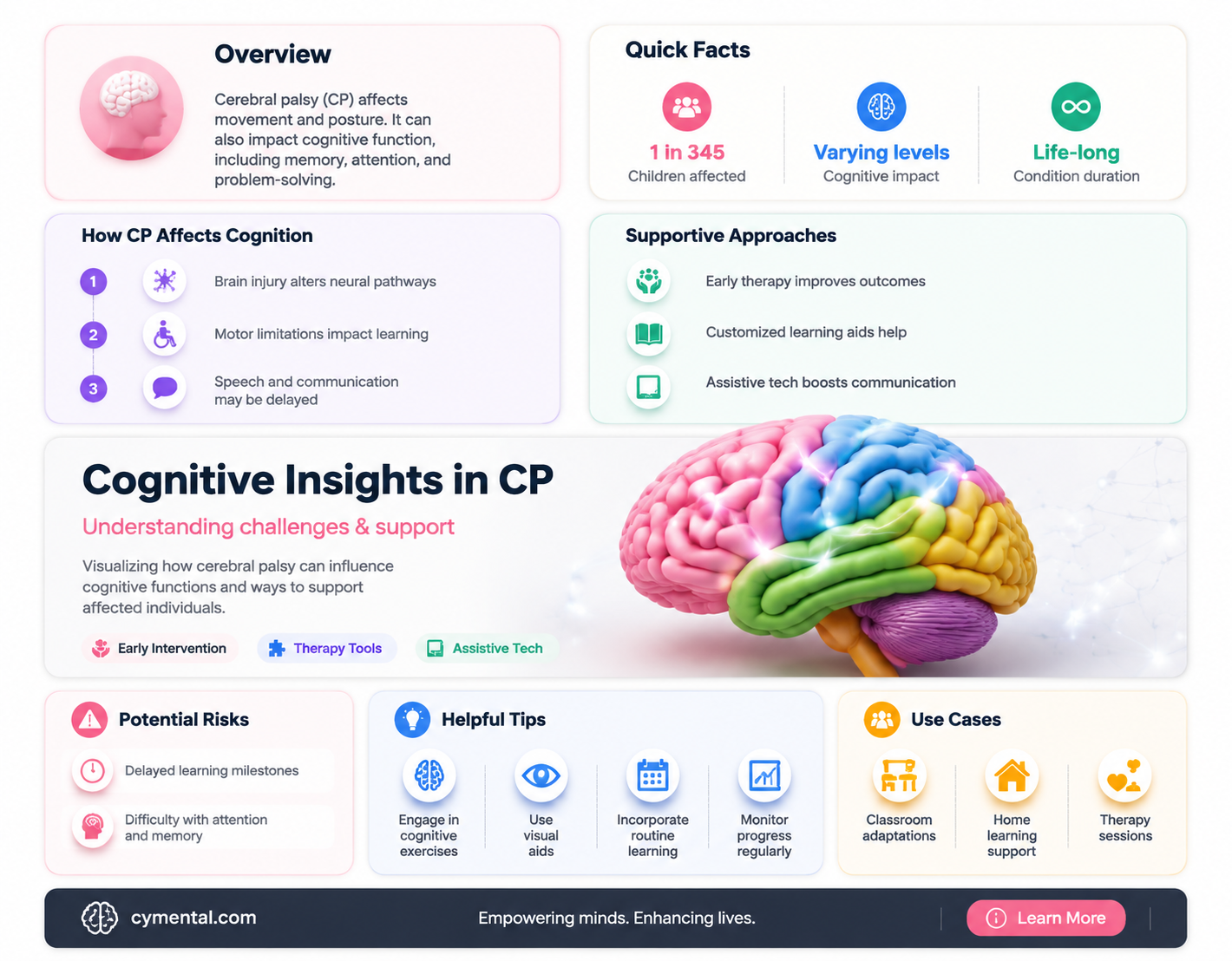
Cerebral palsy is a neurological disorder that primarily affects motor function and coordination. However, it can also have an impact on mental functioning. Individuals with cerebral palsy may experience cognitive impairments, learning disabilities, and emotional challenges. These can manifest in difficulties with problem-solving, memory, attention, and communication. Additionally, the emotional toll of living with a physical disability can lead to anxiety, depression, and other mental health concerns. It is important to recognize that the effects of cerebral palsy on mental functioning can vary widely from person to person, and that with appropriate support and interventions, many individuals with cerebral palsy can lead fulfilling and meaningful lives.
| Characteristics | Values |
|---|---|
| Definition | Cerebral palsy is a group of neurological disorders that affect movement and coordination. It does not directly affect mental functioning but can have associated cognitive challenges. |
| Causes | Cerebral palsy is caused by damage to the developing brain, which can occur due to various factors such as premature birth, low birth weight, infections, or brain injuries. |
| Types | There are several types of cerebral palsy, including spastic, dyskinetic, ataxic, and mixed. Each type has different effects on movement and coordination. |
| Symptoms | Symptoms of cerebral palsy can include muscle stiffness, tremors, difficulty with balance and coordination, and problems with speech and swallowing. Cognitive symptoms may include learning disabilities, attention deficits, and behavioral challenges. |
| Diagnosis | Cerebral palsy is typically diagnosed in early childhood through a combination of physical examinations, developmental assessments, and imaging studies such as MRI or CT scans. |
| Treatment | Treatment for cerebral palsy often involves a multidisciplinary approach, including physical therapy, occupational therapy, speech therapy, and medications to manage symptoms. In some cases, surgery may be recommended to improve mobility. |
| Prognosis | The prognosis for individuals with cerebral palsy varies depending on the severity of their condition and the effectiveness of their treatment. With appropriate interventions, many individuals with cerebral palsy can lead fulfilling lives and achieve their full potential. |
| Complications | Complications of cerebral palsy can include contractures, scoliosis, hip dislocation, and respiratory problems. Cognitive complications may include learning disabilities, attention deficits, and behavioral challenges. |
| Prevention | While cerebral palsy cannot be completely prevented, certain risk factors can be minimized, such as ensuring proper prenatal care, reducing the risk of infections, and preventing brain injuries. |
| Research | Ongoing research is focused on understanding the underlying causes of cerebral palsy, developing new treatments, and improving the quality of life for individuals with the condition. |
| Support | Support for individuals with cerebral palsy and their families is crucial, including access to healthcare services, educational resources, and community support programs. |
| Awareness | Raising awareness about cerebral palsy can help reduce stigma, promote understanding, and ensure that individuals with the condition receive the support and resources they need. |
Explore related products



What You'll Learn
- Cognitive Impairment: Exploring the range and severity of cognitive challenges faced by individuals with cerebral palsy
- Communication Difficulties: Discussing speech and language impairments and alternative communication methods used by those with cerebral palsy
- Emotional and Behavioral Issues: Addressing common emotional and behavioral challenges, including anxiety, depression, and mood disorders
- Learning Disabilities: Examining the impact of cerebral palsy on learning abilities and educational strategies to support affected individuals
- Neurological Complications: Investigating associated neurological conditions, such as seizures, sleep disorders, and pain management in cerebral palsy patients

Cognitive Impairment: Exploring the range and severity of cognitive challenges faced by individuals with cerebral palsy
Cerebral palsy (CP) is a neurological disorder that primarily affects motor function, but it can also have a significant impact on cognitive abilities. The range and severity of cognitive challenges faced by individuals with CP can vary widely, depending on factors such as the type and extent of brain damage, as well as the individual's overall health and environment.
Some individuals with CP may experience only mild cognitive difficulties, such as problems with attention or memory. Others may face more severe challenges, including difficulties with problem-solving, decision-making, and communication. In some cases, individuals with CP may also experience intellectual disability, which can further compound cognitive challenges.
It is important to note that cognitive impairment is not a universal feature of CP, and many individuals with the condition do not experience significant cognitive difficulties. However, for those who do, it can be a major factor in determining their overall quality of life and ability to participate in daily activities.
Assessment and diagnosis of cognitive impairment in individuals with CP can be complex, as it requires careful consideration of both the individual's cognitive abilities and their motor function. A comprehensive evaluation typically involves a team of professionals, including neurologists, psychologists, and speech-language pathologists.
Treatment and management of cognitive impairment in CP may involve a range of interventions, including cognitive-behavioral therapy, speech therapy, and occupational therapy. In some cases, medications may also be used to address specific cognitive symptoms, such as attention deficit hyperactivity disorder (ADHD) or anxiety.
Ultimately, understanding the range and severity of cognitive challenges faced by individuals with CP is crucial for developing effective interventions and supports that can help them lead fulfilling and independent lives. By recognizing the unique cognitive needs of individuals with CP, we can work to ensure that they receive the appropriate care and resources to thrive.
Unveiling the Impact: Mental Health and Work Performance Connection
You may want to see also
Explore related products


Communication Difficulties: Discussing speech and language impairments and alternative communication methods used by those with cerebral palsy
Speech and language impairments are common among individuals with cerebral palsy, affecting their ability to communicate effectively. These impairments can range from mild difficulties with articulation to severe challenges that render verbal communication impossible. In such cases, alternative communication methods become essential tools for expression and interaction.
One widely used alternative communication method is augmentative and alternative communication (AAC). AAC encompasses a variety of techniques and devices, including picture boards, electronic communication aids, and even sign language. These methods allow individuals with cerebral palsy to convey their thoughts, needs, and emotions when verbal communication is not feasible.
Assistive technology has also revolutionized communication for those with cerebral palsy. Devices such as speech-generating machines and tablets with communication apps can provide a voice for individuals who are unable to speak. These technologies often utilize text-to-speech software or pre-recorded messages to facilitate communication in various settings, from personal interactions to educational environments.
In addition to technological aids, non-verbal communication strategies play a crucial role. Body language, facial expressions, and gestures can convey a wealth of information and emotion. For individuals with cerebral palsy, these non-verbal cues may be particularly important, as they can supplement or even replace verbal communication.
It is essential for caregivers, educators, and healthcare professionals to understand and support these alternative communication methods. By doing so, they can help individuals with cerebral palsy to express themselves more effectively, participate fully in their communities, and lead more independent lives.
Exploring the Impact of Skull Fractures on Mental Health
You may want to see also
Explore related products


Emotional and Behavioral Issues: Addressing common emotional and behavioral challenges, including anxiety, depression, and mood disorders
Individuals with cerebral palsy often face a myriad of emotional and behavioral challenges that can significantly impact their quality of life. Anxiety, depression, and mood disorders are common among this population, and addressing these issues requires a multifaceted approach. It is essential to recognize that these emotional and behavioral challenges are not a direct result of cerebral palsy itself but rather a consequence of the various stressors and limitations individuals with cerebral palsy may experience.
One effective strategy for addressing these challenges is through cognitive-behavioral therapy (CBT). CBT helps individuals identify and challenge negative thought patterns and behaviors, replacing them with more adaptive coping mechanisms. For example, a person with cerebral palsy who experiences anxiety due to mobility limitations may benefit from CBT by learning to reframe their thoughts about their abilities and developing strategies to manage their anxiety in social situations.
In addition to therapy, medication can also play a role in managing emotional and behavioral issues. Antidepressants and anti-anxiety medications may be prescribed to help alleviate symptoms. However, it is crucial to carefully monitor the side effects of these medications, as individuals with cerebral palsy may have unique reactions due to their underlying neurological condition.
Support groups and social skills training can also be beneficial for individuals with cerebral palsy. These interventions provide opportunities for social interaction, peer support, and the development of communication skills, all of which can contribute to improved emotional well-being. Furthermore, it is important to address the environmental factors that may exacerbate emotional and behavioral challenges, such as accessibility issues, stigma, and lack of support from family and friends.
In conclusion, addressing emotional and behavioral issues in individuals with cerebral palsy requires a comprehensive approach that includes therapy, medication, social support, and environmental modifications. By recognizing the unique challenges faced by this population and providing targeted interventions, we can help improve their overall mental health and quality of life.
The Impact of School on Students' Mental Health: A Comprehensive Look
You may want to see also
Explore related products


Learning Disabilities: Examining the impact of cerebral palsy on learning abilities and educational strategies to support affected individuals
Cerebral palsy, a neurological disorder resulting from brain damage, can significantly impact an individual's learning abilities. This condition affects muscle control, coordination, and balance, which can lead to difficulties in performing everyday tasks, including those related to education. For instance, a child with cerebral palsy may struggle with writing due to impaired fine motor skills or have trouble navigating school environments if they use a wheelchair.
Educational strategies tailored to support individuals with cerebral palsy are crucial for their academic success. One effective approach is the use of assistive technology, such as speech-to-text software or specialized keyboards, to facilitate communication and writing. Additionally, providing extra time for assignments and exams can help accommodate the slower pace at which some students with cerebral palsy may work. Physical therapy and occupational therapy can also play a vital role in improving motor skills and functional abilities, indirectly enhancing learning capabilities.
Moreover, creating an inclusive classroom environment is essential. This involves not only physical accessibility, such as ramps and elevators, but also ensuring that teaching materials are presented in a way that is easily understandable for students with cerebral palsy. Teachers should be trained to recognize and address the unique challenges faced by these students, adapting their teaching methods accordingly. For example, using visual aids and interactive learning tools can help engage students and make abstract concepts more concrete.
Research has shown that early intervention and support can significantly improve educational outcomes for individuals with cerebral palsy. By identifying learning difficulties early on and implementing appropriate strategies, educators can help these students reach their full potential. It is also important to involve parents and caregivers in the educational process, as they can provide valuable insights into the child's needs and abilities.
In conclusion, while cerebral palsy can present challenges to learning, the right educational strategies and support can make a substantial difference. By leveraging assistive technology, adapting teaching methods, and fostering an inclusive environment, educators can help individuals with cerebral palsy overcome their learning disabilities and achieve academic success.
How Your Home's Blueprint Might Be Impacting Your Mental Well-being
You may want to see also
Explore related products


$40.84 $57.99

$37.04 $43.99

$127.2 $159


Neurological Complications: Investigating associated neurological conditions, such as seizures, sleep disorders, and pain management in cerebral palsy patients
Cerebral palsy (CP) is primarily known for its impact on motor function, but it can also be associated with various neurological complications that affect mental functioning. One such complication is seizures, which are common in individuals with CP. Seizures can vary in severity and frequency, and their management often requires a combination of medication and lifestyle modifications. It is crucial for caregivers and healthcare providers to monitor seizure activity closely and adjust treatment plans as needed to minimize the impact on the individual's daily life.
Sleep disorders are another neurological complication that can significantly affect mental functioning in individuals with CP. These disorders can manifest as insomnia, sleep apnea, or restless leg syndrome, among others. Poor sleep quality can exacerbate cognitive difficulties, mood disturbances, and fatigue, which are already common challenges for individuals with CP. Addressing sleep disorders may involve behavioral interventions, such as establishing a consistent sleep routine, creating a sleep-conducive environment, and avoiding stimulants before bedtime. In some cases, medication or assistive devices, like continuous positive airway pressure (CPAP) machines, may be necessary to improve sleep quality.
Pain management is also a critical aspect of addressing neurological complications in CP patients. Chronic pain can result from muscle spasticity, joint contractures, or other secondary conditions associated with CP. Effective pain management strategies may include a combination of pharmacological interventions, such as muscle relaxants or anti-inflammatory medications, and non-pharmacological approaches, like physical therapy, massage, or acupuncture. It is essential to work with a multidisciplinary team of healthcare professionals to develop a comprehensive pain management plan that addresses the individual's specific needs and minimizes the impact of pain on their mental and emotional well-being.
In conclusion, neurological complications such as seizures, sleep disorders, and pain can significantly affect mental functioning in individuals with CP. By understanding these complications and implementing appropriate management strategies, caregivers and healthcare providers can help improve the overall quality of life for individuals with CP. It is crucial to approach each complication with a tailored and comprehensive plan that addresses the unique needs of the individual, taking into account their specific symptoms, medical history, and personal preferences.
Unveiling the Impact: Mental Health's Influence on Daily Living
You may want to see also
Frequently asked questions
Cerebral palsy primarily affects motor function and coordination, but it can also impact cognitive abilities. The extent of mental functioning impairment varies widely among individuals with cerebral palsy.
Common cognitive challenges may include difficulties with attention, memory, problem-solving, and learning. Some individuals may also experience speech and language impairments.
While there is no direct correlation, individuals with more severe motor impairments may also experience more significant cognitive challenges. However, cognitive abilities can vary greatly even among those with similar motor function.
Various support and interventions are available, including special education programs, speech therapy, occupational therapy, and assistive technologies. These can help individuals with cerebral palsy develop strategies to manage cognitive challenges and improve their overall quality of life.