Ava Ramirez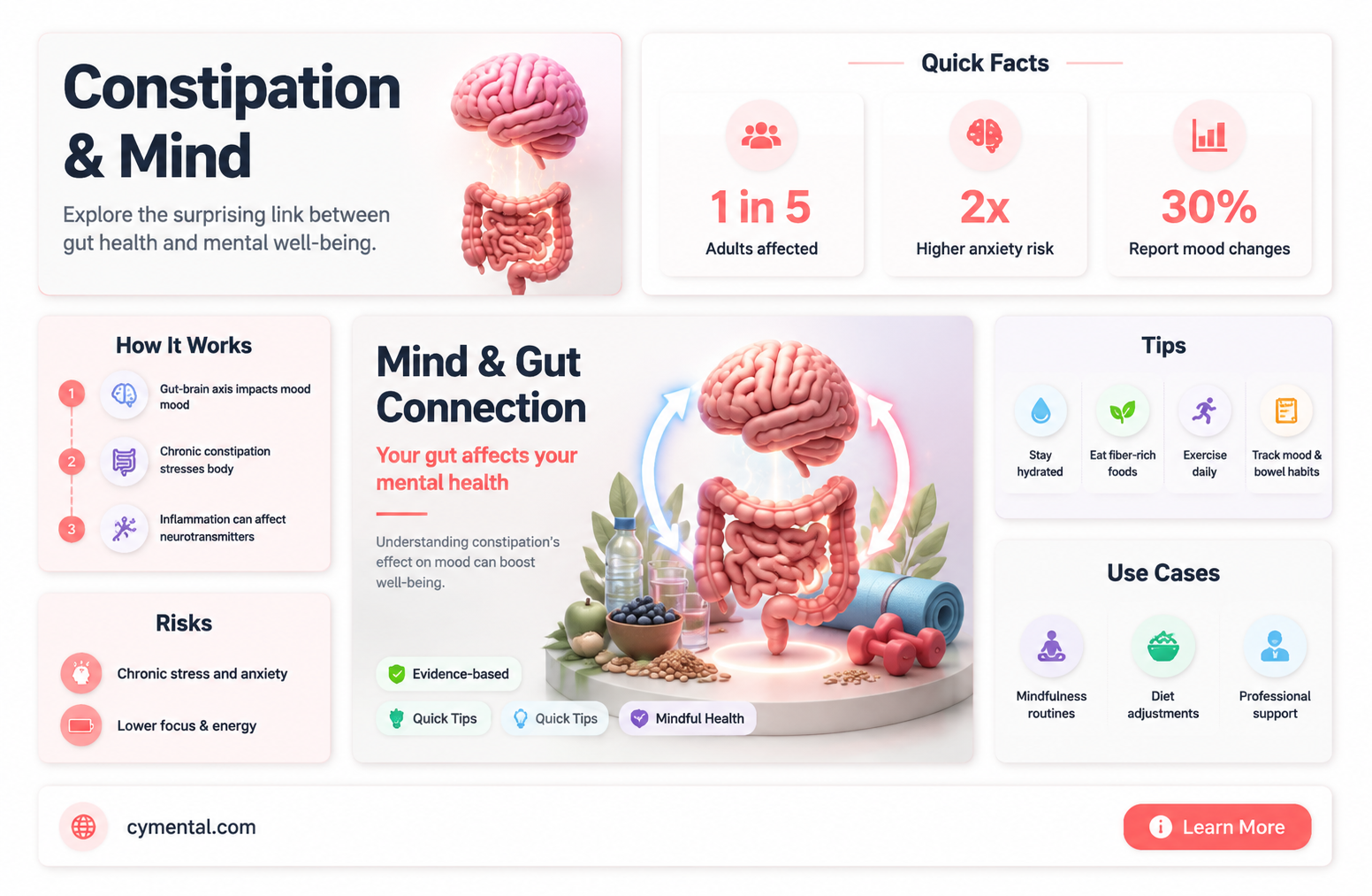
Constipation is a common digestive issue that can have a significant impact on an individual's overall well-being, including their mental health. While it may seem like a purely physical ailment, constipation can lead to a range of psychological symptoms such as anxiety, depression, and stress. The discomfort and pain associated with constipation can disrupt daily life, leading to feelings of frustration and helplessness. Additionally, the stigma surrounding constipation can cause individuals to feel embarrassed or ashamed, further exacerbating mental health issues. Understanding the relationship between constipation and mental health is crucial for developing effective treatment strategies that address both the physical and psychological aspects of this condition.
| Characteristics | Values |
|---|---|
| Definition | Constipation is a common gastrointestinal issue characterized by infrequent bowel movements or difficulty passing stool. |
| Prevalence | It affects approximately 16% of adults in the United States. |
| Causes | Factors include a low-fiber diet, dehydration, lack of physical activity, certain medications, and underlying medical conditions. |
| Symptoms | Symptoms include abdominal pain, bloating, straining during bowel movements, and a feeling of incomplete evacuation. |
| Impact on Mental Health | Constipation can have a significant impact on mental health, leading to anxiety, depression, and reduced quality of life. |
| Mechanism | The gut-brain axis plays a crucial role, with disruptions in this communication pathway potentially contributing to mental health issues. |
| Treatment | Lifestyle changes such as increasing fiber intake, staying hydrated, and exercising regularly can help alleviate symptoms. |
| Medications | Laxatives and other medications may be prescribed in more severe cases. |
| Complications | Chronic constipation can lead to complications like hemorrhoids, anal fissures, and fecal impaction. |
| Research | Studies have shown a link between constipation and mental health disorders, highlighting the importance of addressing this issue holistically. |
| Patient Education | Educating patients about the connection between constipation and mental health can empower them to seek appropriate treatment and make lifestyle changes. |
| Healthcare Provider Role | Healthcare providers should consider the potential mental health implications of constipation when diagnosing and treating patients. |
| Alternative Therapies | Alternative therapies like acupuncture, probiotics, and herbal remedies may also be beneficial in managing constipation and its mental health effects. |
| Public Awareness | Raising public awareness about the impact of constipation on mental health can help reduce stigma and encourage more people to seek help. |
| Future Research Directions | Further research is needed to fully understand the mechanisms underlying the relationship between constipation and mental health, and to develop more effective treatments. |
Explore related products


![NatureWise Total Colon Care Fiber Cleanse - Natural Laxative Blend - Herbal Laxatives, Prebiotics, & Enzymes for Regularity, Digestion, Weight & Gut Health - Non-GMO - 60 Capsules[30-Day Supply]](https://m.media-amazon.com/images/I/71pXHzrDlaL._AC_UL320_.jpg)


What You'll Learn
- The Gut-Brain Connection: Exploring how gut health influences mental well-being and mood regulation
- Stress and Anxiety: Discussing how constipation can exacerbate stress and anxiety levels
- Depression: Investigating potential links between chronic constipation and depressive symptoms
- Cognitive Function: Examining the impact of constipation on cognitive performance and mental clarity
- Quality of Life: Analyzing how constipation affects overall mental health and quality of life

The Gut-Brain Connection: Exploring how gut health influences mental well-being and mood regulation
The gut-brain connection is a bidirectional communication network between the central nervous system (CNS) and the gastrointestinal (GI) tract. This intricate relationship is facilitated through various pathways, including the vagus nerve, the immune system, and the production of neurotransmitters and hormones. Research has shown that the health of the gut microbiome can significantly influence mental well-being and mood regulation. An imbalance in the gut flora, often referred to as dysbiosis, has been linked to various mental health conditions, including anxiety, depression, and even autism spectrum disorder.
One of the key mechanisms by which the gut microbiome affects mental health is through the production of neurotransmitters. For instance, serotonin, a neurotransmitter crucial for mood regulation, is predominantly produced in the gut. An imbalance in the gut microbiome can lead to altered serotonin levels, which in turn can affect mood and emotional states. Additionally, the gut microbiome plays a role in the regulation of the hypothalamic-pituitary-adrenal (HPA) axis, which is responsible for the body's stress response. Dysbiosis can disrupt the HPA axis, leading to increased stress levels and a heightened risk of developing mental health disorders.
Constipation, a common GI issue, can also have a significant impact on mental health. Chronic constipation can lead to an accumulation of toxins in the body, which can contribute to feelings of fatigue, irritability, and anxiety. Furthermore, the physical discomfort associated with constipation can lead to increased stress levels, which can exacerbate mental health issues. In some cases, constipation can also be a symptom of underlying mental health conditions, such as depression or anxiety, creating a vicious cycle where the physical symptom worsens the mental health issue and vice versa.
To support gut health and promote mental well-being, it is essential to maintain a balanced diet rich in fiber, fruits, and vegetables. Probiotics, which are beneficial bacteria that support the gut microbiome, can also be helpful in improving gut health. Regular exercise and stress management techniques, such as meditation and yoga, can further support the gut-brain connection and promote overall well-being. In cases where constipation is a persistent issue, it is important to consult with a healthcare professional to determine the underlying cause and develop an appropriate treatment plan.
In conclusion, the gut-brain connection is a complex and multifaceted relationship that plays a crucial role in mental health and well-being. By understanding and supporting this connection, individuals can take proactive steps to improve their mental health and overall quality of life.
The Surprising Link Between Dental Health and Mental Well-being
You may want to see also
Explore related products




Stress and Anxiety: Discussing how constipation can exacerbate stress and anxiety levels
Constipation can significantly exacerbate stress and anxiety levels, creating a vicious cycle that impacts overall mental health. When individuals experience constipation, they may feel physical discomfort, bloating, and a sense of being unwell. These physical symptoms can contribute to increased stress levels, as the body's natural response to stress is to tense up, which can further aggravate digestive issues.
Moreover, the psychological impact of constipation should not be underestimated. The feeling of being unable to relieve oneself can lead to a sense of helplessness and frustration, which can heighten anxiety levels. This anxiety, in turn, can worsen constipation symptoms, as the body's stress response can slow down digestion and make it more difficult to have a bowel movement.
Research has shown that there is a strong connection between the gut and the brain, with the gut microbiome playing a crucial role in regulating mood and cognitive function. When constipation disrupts the balance of the gut microbiome, it can lead to an increase in stress and anxiety levels. This highlights the importance of addressing constipation not only as a physical ailment but also as a potential contributor to mental health issues.
In addition to the physical and psychological impacts, constipation can also affect an individual's quality of life. The discomfort and distress associated with constipation can lead to social withdrawal, decreased productivity, and a reduced ability to engage in daily activities. This can further exacerbate stress and anxiety levels, as individuals may feel isolated and overwhelmed by their symptoms.
To break the cycle of constipation-related stress and anxiety, it is essential to address the underlying causes of constipation. This may include dietary changes, increased physical activity, stress management techniques, and, in some cases, medical intervention. By taking a holistic approach to treating constipation, individuals can not only alleviate their physical symptoms but also improve their mental health and overall well-being.
Hormonal Harmony: The Intricate Link Between Hormones and Mental Health
You may want to see also
Explore related products


Depression: Investigating potential links between chronic constipation and depressive symptoms
Recent studies have begun to explore the intriguing connection between chronic constipation and depression, shedding light on how gastrointestinal health may influence mental well-being. One such study, published in the Journal of Affective Disorders, found a significant correlation between the severity of depressive symptoms and the frequency of constipation in a sample of over 1,000 adults. This correlation persisted even after controlling for other potential confounding factors, such as age, gender, and overall health status.
The mechanisms underlying this relationship are still under investigation, but several hypotheses have been proposed. One possibility is that chronic constipation may lead to an imbalance in the gut microbiome, which in turn could affect the production of neurotransmitters like serotonin and dopamine that play a crucial role in mood regulation. Another theory suggests that the physical discomfort and distress associated with constipation may contribute to the development of depressive symptoms over time.
Further research is needed to establish causality and to determine the most effective interventions for addressing this issue. However, the emerging evidence highlights the importance of considering gastrointestinal health as a potential factor in the assessment and treatment of depression. Healthcare providers may need to incorporate questions about bowel habits into their routine screenings for depressive symptoms, and patients with chronic constipation may benefit from discussing their mental health concerns with their healthcare provider.
In conclusion, the potential links between chronic constipation and depressive symptoms represent a fascinating area of research with important implications for clinical practice. By exploring this connection more deeply, we may uncover new insights into the complex interplay between physical and mental health, and develop more effective strategies for promoting overall well-being.
The Impact of Bullying on Mental Health: A Comprehensive Guide
You may want to see also
Explore related products





Cognitive Function: Examining the impact of constipation on cognitive performance and mental clarity
Constipation can have a profound impact on cognitive function, affecting mental clarity and overall brain performance. Research has shown that the gut-brain axis plays a crucial role in maintaining cognitive health, and disruptions in this axis can lead to a range of cognitive impairments. When constipation occurs, the body's ability to eliminate waste products is compromised, leading to a buildup of toxins in the bloodstream. These toxins can then cross the blood-brain barrier, affecting neurotransmitter function and impairing cognitive processes such as memory, attention, and decision-making.
Studies have demonstrated that constipation can lead to decreased cognitive performance in both children and adults. In one study, children with constipation were found to have lower scores on cognitive tests compared to their peers without constipation. Similarly, adults with constipation have been shown to experience decreased mental clarity, difficulty concentrating, and impaired memory function. These cognitive impairments can have a significant impact on daily life, affecting work performance, academic achievement, and overall quality of life.
The impact of constipation on cognitive function is thought to be mediated by several factors, including changes in gut microbiota, increased inflammation, and alterations in neurotransmitter function. The gut microbiota plays a crucial role in maintaining cognitive health, and disruptions in this microbiota can lead to cognitive impairments. Inflammation is another key factor, as chronic inflammation has been linked to a range of cognitive disorders. Finally, alterations in neurotransmitter function, particularly serotonin and dopamine, can also contribute to cognitive impairments in individuals with constipation.
In addition to its impact on cognitive function, constipation can also affect mental health more broadly. Individuals with constipation may experience increased anxiety, depression, and stress, which can further exacerbate cognitive impairments. This highlights the importance of addressing constipation as a potential underlying factor in cognitive and mental health disorders.
Fortunately, there are several strategies that can be employed to alleviate constipation and improve cognitive function. Dietary changes, such as increasing fiber intake and staying hydrated, can be effective in promoting regular bowel movements. Additionally, probiotics and prebiotics can help to restore a healthy gut microbiota, while anti-inflammatory medications may be beneficial in reducing inflammation. In some cases, cognitive-behavioral therapy may also be helpful in addressing the psychological impact of constipation on mental health.
In conclusion, constipation can have a significant impact on cognitive function and mental clarity, affecting individuals of all ages. By understanding the underlying mechanisms and implementing appropriate interventions, it is possible to alleviate constipation and improve cognitive and mental health outcomes.
The Impact of Mental and Emotional Illnesses on Social Well-being
You may want to see also
Explore related products


Quality of Life: Analyzing how constipation affects overall mental health and quality of life
Constipation can significantly impact a person's mental health and overall quality of life. Research has shown that individuals who suffer from chronic constipation are more likely to experience symptoms of depression and anxiety. This is partly due to the physical discomfort and pain associated with constipation, which can lead to feelings of distress and hopelessness. Moreover, the inability to have regular bowel movements can disrupt daily routines and social activities, causing embarrassment and isolation.
The psychological effects of constipation can also manifest in reduced self-esteem and body image issues. People may feel ashamed of their condition and avoid seeking help, which can exacerbate their mental health struggles. Furthermore, the stress of managing constipation can lead to sleep disturbances and fatigue, which in turn can worsen mental health symptoms.
It is essential to address the mental health implications of constipation in treatment plans. Healthcare providers should consider the psychological impact of the condition and offer support and resources to help patients cope. This may include referrals to mental health professionals, support groups, or cognitive-behavioral therapy to address the emotional distress associated with constipation.
In addition to seeking professional help, individuals can take steps to improve their mental well-being while managing constipation. Engaging in regular physical activity, practicing stress-reduction techniques such as meditation or yoga, and maintaining a balanced diet can all contribute to better mental health outcomes. It is also important to stay hydrated and avoid foods that can exacerbate constipation symptoms.
Overall, the relationship between constipation and mental health is complex and multifaceted. By acknowledging the psychological impact of constipation and taking a holistic approach to treatment, individuals can improve their quality of life and mental well-being.
Unveiling the Impact: Mental Health's Influence on Daily Living
You may want to see also
Frequently asked questions
Yes, constipation can directly impact mental health. The discomfort and distress associated with constipation can lead to feelings of anxiety and depression. Additionally, the physical symptoms of constipation, such as bloating and abdominal pain, can contribute to a negative body image and low self-esteem, further affecting mental well-being.
Common psychological symptoms associated with constipation include anxiety, depression, irritability, and stress. These symptoms can be a result of the physical discomfort and distress caused by constipation, as well as the potential for constipation to disrupt daily life and social interactions.
Constipation can affect cognitive function in several ways. The physical discomfort and distress associated with constipation can make it difficult to concentrate and focus, leading to decreased productivity and performance. Additionally, constipation can lead to fatigue and lethargy, which can further impair cognitive function.
Effective ways to manage constipation and its impact on mental health include increasing fiber intake, staying hydrated, exercising regularly, and practicing stress management techniques such as meditation and deep breathing. Additionally, seeking medical attention and following a treatment plan prescribed by a healthcare professional can help alleviate constipation and its associated psychological symptoms.