Lucas Bennett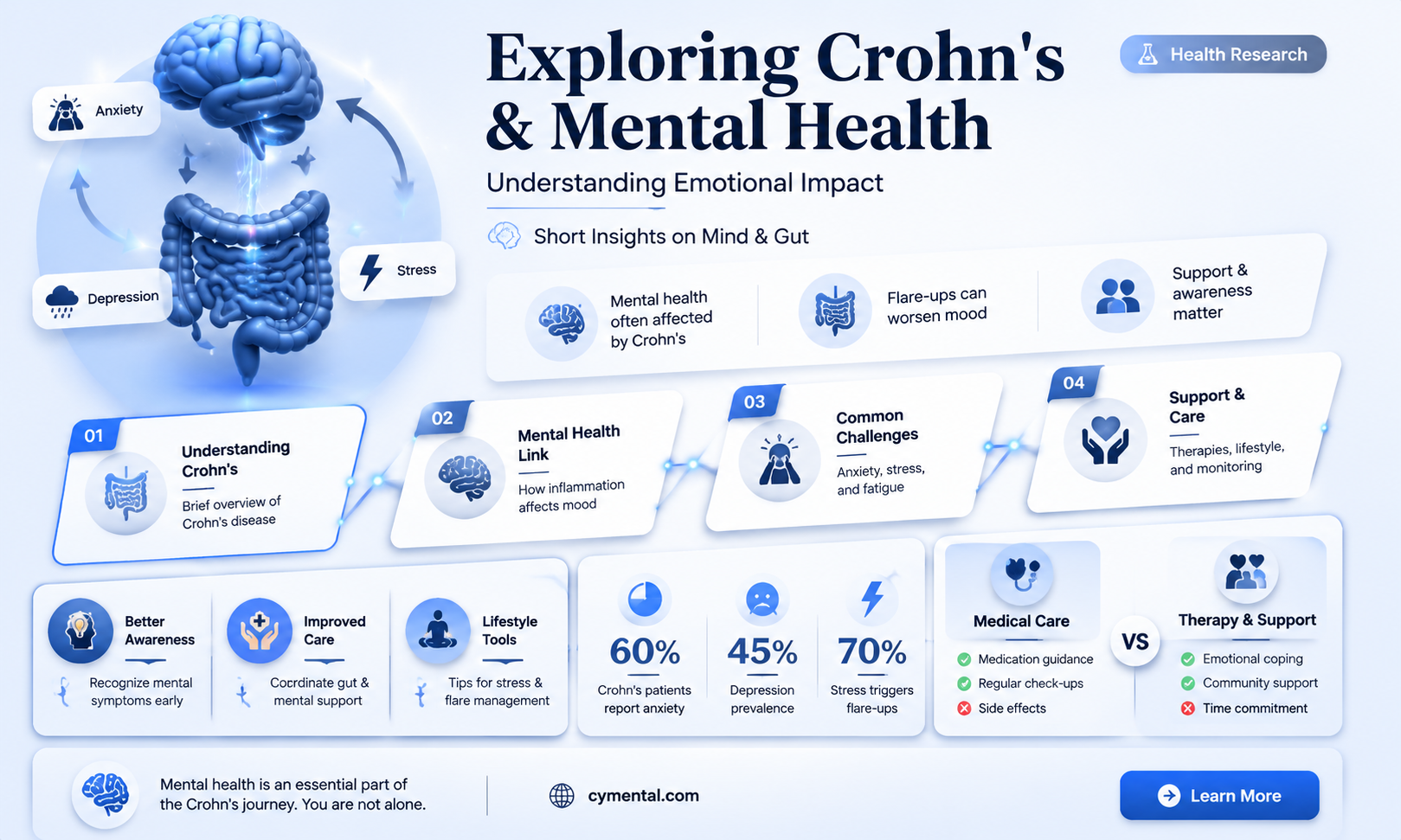
Crohn's disease, a chronic inflammatory condition affecting the gastrointestinal tract, can have far-reaching impacts beyond physical symptoms. Research indicates that individuals with Crohn's disease are at a higher risk of developing mental health issues such as depression, anxiety, and stress-related disorders. The unpredictable nature of Crohn's disease, characterized by periods of remission and flare-ups, can lead to significant emotional distress and uncertainty. Furthermore, the disease's impact on daily life, including dietary restrictions and social limitations, can contribute to feelings of isolation and reduced quality of life. Understanding the interplay between Crohn's disease and mental health is crucial for providing comprehensive care and support to those affected by this condition.
Explore related products




What You'll Learn
- Anxiety and Depression: Crohn's disease can lead to increased levels of anxiety and depression due to chronic pain and uncertainty
- Stress Management: Managing stress is crucial for individuals with Crohn's as stress can exacerbate symptoms and impact mental well-being
- Social Isolation: Crohn's can cause social isolation due to frequent bathroom trips, fatigue, and fear of symptom flare-ups in public
- Body Image Issues: The physical impact of Crohn's, such as weight loss or gain, can lead to body image concerns and lowered self-esteem
- Coping Strategies: Developing effective coping strategies, such as mindfulness and cognitive-behavioral therapy, can help manage the mental health impact of Crohn's

Anxiety and Depression: Crohn's disease can lead to increased levels of anxiety and depression due to chronic pain and uncertainty
Living with Crohn's disease often means enduring chronic pain and facing significant uncertainty about one's health and future. This persistent discomfort and unpredictability can take a substantial toll on mental well-being, leading to heightened levels of anxiety and depression. Research indicates that individuals with Crohn's disease are more likely to experience these mental health challenges compared to the general population.
The chronic pain associated with Crohn's disease can disrupt daily life, making it difficult to maintain a regular routine, hold down a job, or engage in social activities. This disruption can lead to feelings of isolation and helplessness, which are common precursors to depression. Furthermore, the uncertainty of living with a chronic illness can cause constant worry about symptoms worsening, the need for medical interventions, and the potential impact on long-term health. These concerns can fuel anxiety, making it challenging to cope with the day-to-day demands of managing Crohn's disease.
It's crucial for individuals with Crohn's disease to recognize the signs of anxiety and depression and seek appropriate support. Mental health professionals can provide strategies for managing these conditions, such as cognitive-behavioral therapy, mindfulness techniques, and medication. Additionally, support groups and online communities can offer a sense of connection and understanding, helping to alleviate feelings of isolation.
Healthcare providers treating Crohn's disease should also be attentive to the mental health needs of their patients. Screening for anxiety and depression should be a routine part of care, and referrals to mental health specialists should be made when necessary. By addressing both the physical and mental aspects of Crohn's disease, patients can achieve a better quality of life and more effectively manage their condition.
In conclusion, the chronic pain and uncertainty of Crohn's disease can significantly impact mental health, leading to increased levels of anxiety and depression. Recognizing these challenges and seeking support is essential for individuals with Crohn's disease to maintain their overall well-being.
The Impact of Fast Food on Mental Health: A Comprehensive Look
You may want to see also
Explore related products


Stress Management: Managing stress is crucial for individuals with Crohn's as stress can exacerbate symptoms and impact mental well-being
Individuals with Crohn's disease often face a complex interplay between their physical symptoms and mental health. Stress, in particular, can be a significant exacerbating factor, intensifying the severity of Crohn's symptoms and negatively impacting overall mental well-being. Understanding the relationship between stress and Crohn's is essential for developing effective management strategies.
Research has shown that stress can trigger inflammation in the body, which is a key component of Crohn's disease. When individuals with Crohn's experience high levels of stress, it can lead to increased inflammation in the digestive tract, resulting in worsened symptoms such as abdominal pain, diarrhea, and fatigue. Furthermore, chronic stress can contribute to the development of mental health issues like anxiety and depression, which are already prevalent among those with Crohn's.
To manage stress effectively, individuals with Crohn's can employ a variety of techniques. Mindfulness practices, such as meditation and deep breathing exercises, have been shown to reduce stress levels and improve mental health outcomes. Engaging in regular physical activity can also help alleviate stress, as exercise releases endorphins that promote feelings of well-being. Additionally, maintaining a balanced diet and ensuring adequate sleep are crucial for managing stress and supporting overall health.
It's important for individuals with Crohn's to recognize the signs of stress and take proactive steps to address it. This may involve seeking support from mental health professionals, joining support groups, or engaging in stress-reducing hobbies and activities. By prioritizing stress management, individuals with Crohn's can better control their symptoms and improve their quality of life.
In conclusion, stress management is a critical component of Crohn's disease care. By understanding the impact of stress on Crohn's symptoms and mental health, and by employing effective stress-reducing strategies, individuals with Crohn's can achieve better health outcomes and improve their overall well-being.
Unveiling the Hidden Impact: Cancer's Toll on Mental Health
You may want to see also
Explore related products


Social Isolation: Crohn's can cause social isolation due to frequent bathroom trips, fatigue, and fear of symptom flare-ups in public
Living with Crohn's disease often means navigating a complex web of physical and emotional challenges. One of the less visible but deeply impactful aspects of this condition is the social isolation it can cause. Frequent bathroom trips, debilitating fatigue, and the constant fear of symptom flare-ups in public can significantly limit a person's ability to engage in social activities, leading to feelings of loneliness and disconnection.
Imagine being in the middle of a social gathering, enjoying the company of friends or family, when suddenly the familiar cramps and urgency strike. The need to find a bathroom quickly can be both physically and emotionally distressing, often resulting in abrupt departures that may be misunderstood by others. Over time, this can lead to a reluctance to attend social events, fearing the embarrassment or inconvenience of such episodes.
Fatigue is another major contributor to social isolation in Crohn's patients. The chronic inflammation and pain associated with the disease can leave individuals feeling exhausted, making it difficult to muster the energy required for social interactions. This fatigue can be particularly challenging to explain to others, as it may not always be visible or understood, leading to further feelings of isolation and misunderstanding.
The fear of symptom flare-ups in public is a pervasive concern for many Crohn's patients. The unpredictability of the disease means that symptoms can arise at any time, making it difficult to plan or commit to social activities. This constant uncertainty can lead to anxiety and stress, further exacerbating the tendency to withdraw from social situations.
Breaking the cycle of social isolation requires a multifaceted approach. Crohn's patients can benefit from connecting with others who understand their experiences, either through support groups or online communities. Educating friends and family about the realities of living with Crohn's can also help foster empathy and support. Additionally, working with healthcare providers to develop strategies for managing symptoms and fatigue can empower individuals to re-engage in social activities with greater confidence.
In conclusion, the social isolation caused by Crohn's disease is a significant and often overlooked challenge. By acknowledging and addressing the specific factors contributing to this isolation, patients can begin to rebuild their social connections and improve their overall quality of life.
Navigating Choices: The Impact of Stress and Mental Health on Decision-Making
You may want to see also
Explore related products

$23.32 $32.95


Body Image Issues: The physical impact of Crohn's, such as weight loss or gain, can lead to body image concerns and lowered self-esteem
The physical manifestations of Crohn's disease can significantly impact a person's body image. Weight fluctuations, whether it be loss or gain, are common symptoms of the condition. These changes can be rapid and unpredictable, making it difficult for individuals to maintain a stable sense of self-perception. Weight loss may lead to feelings of vulnerability and frailty, while weight gain can result in discomfort and self-consciousness. Both scenarios can contribute to a negative body image, which in turn can affect mental health and overall well-being.
Crohn's disease can also cause visible symptoms such as skin lesions, joint pain, and abdominal discomfort. These physical manifestations can be distressing and may lead to feelings of embarrassment or shame. Individuals may become self-conscious about their appearance and avoid social situations or activities that they once enjoyed. This can further exacerbate feelings of isolation and low self-esteem.
The unpredictable nature of Crohn's disease can also contribute to body image issues. Flare-ups can occur without warning, leading to sudden changes in physical appearance and function. This unpredictability can make it difficult for individuals to feel in control of their bodies, leading to anxiety and stress. Over time, this can result in a diminished sense of self-worth and a negative body image.
It is important for individuals with Crohn's disease to address body image concerns as part of their overall treatment plan. This may involve working with a mental health professional to develop coping strategies and improve self-esteem. Additionally, maintaining a healthy lifestyle, including regular exercise and a balanced diet, can help mitigate the physical impact of the disease and improve overall well-being. By addressing body image issues, individuals with Crohn's disease can better manage their mental health and improve their quality of life.
Exploring the Impact of Skull Fractures on Mental Health
You may want to see also
Explore related products


Coping Strategies: Developing effective coping strategies, such as mindfulness and cognitive-behavioral therapy, can help manage the mental health impact of Crohn's
Living with Crohn's disease can significantly impact one's mental health, often leading to stress, anxiety, and depression. Developing effective coping strategies is crucial to manage these mental health challenges. Mindfulness practices, such as meditation and deep breathing exercises, can help individuals with Crohn's disease to reduce stress and increase their overall sense of well-being. By focusing on the present moment, mindfulness can alleviate worries about the future and ruminations about the past, providing a mental break from the constant stress of managing a chronic illness.
Cognitive-behavioral therapy (CBT) is another valuable tool for coping with the mental health impact of Crohn's disease. CBT is a form of psychotherapy that helps patients identify and challenge negative thought patterns and behaviors. By working with a therapist, individuals can learn to reframe their thoughts about their condition, develop more adaptive coping mechanisms, and improve their problem-solving skills. CBT can be particularly helpful in addressing the feelings of helplessness and hopelessness that often accompany chronic illnesses like Crohn's disease.
In addition to mindfulness and CBT, other coping strategies can include physical activity, social support, and creative outlets. Regular exercise can help reduce symptoms of anxiety and depression, while also improving overall physical health. Engaging in social activities and maintaining strong relationships with friends and family can provide emotional support and help combat feelings of isolation. Creative pursuits, such as art, music, or writing, can offer a healthy outlet for expressing emotions and reducing stress.
It's important to note that developing effective coping strategies is an individual process, and what works for one person may not work for another. Experimenting with different techniques and finding a combination that works best for the individual is key. Additionally, seeking professional help from a mental health provider can be instrumental in developing and implementing these strategies effectively.
In conclusion, coping with the mental health impact of Crohn's disease requires a multifaceted approach. By incorporating mindfulness practices, cognitive-behavioral therapy, physical activity, social support, and creative outlets, individuals can develop a comprehensive toolkit to manage their mental health and improve their overall quality of life.
The Silent Struggle: Loneliness and Its Impact on Mental Health
You may want to see also
Frequently asked questions
Yes, Crohn's disease can significantly impact mental health due to the chronic nature of the condition, the stress of managing symptoms, and the potential for social isolation.
Common mental health issues associated with Crohn's disease include depression, anxiety, stress, and in some cases, suicidal thoughts. The unpredictability and severity of Crohn's symptoms can lead to feelings of hopelessness and helplessness.
Someone with Crohn's disease might experience mental health challenges due to the physical pain and discomfort, the need for frequent medical appointments and treatments, dietary restrictions, and the impact on daily activities and social interactions. The chronic inflammation associated with Crohn's can also affect brain function.
Individuals with Crohn's disease can manage their mental health by seeking support from mental health professionals, joining support groups, practicing stress-reduction techniques such as meditation and yoga, maintaining a healthy diet, engaging in regular exercise, and communicating openly with friends and family about their experiences.