Noah Parker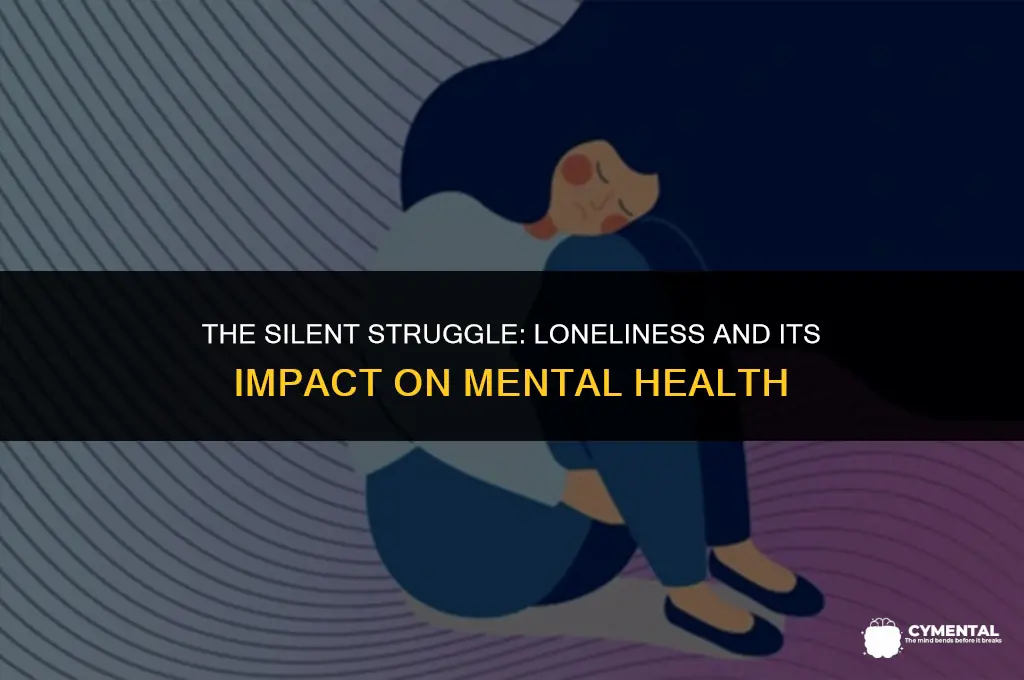
Loneliness is a pervasive issue that significantly impacts mental health. It is characterized by a sense of isolation and a lack of meaningful social connections, which can lead to a range of negative psychological effects. Research has shown that prolonged loneliness can contribute to the development of mental health disorders such as depression, anxiety, and even cognitive decline. The absence of social interaction can disrupt the normal functioning of neurotransmitters in the brain, leading to imbalances that affect mood and emotional well-being. Furthermore, loneliness can exacerbate existing mental health conditions, making it a critical factor to consider in the overall treatment and prevention of psychological illnesses. Understanding the mechanisms by which loneliness affects mental health is essential for developing effective interventions and support systems to mitigate its harmful effects.
Explore related products


What You'll Learn
- Increased Risk of Depression: Loneliness can lead to feelings of sadness and hopelessness, contributing to depressive disorders
- Anxiety and Stress: Social isolation may heighten anxiety levels and stress responses, impacting overall mental well-being
- Cognitive Decline: Prolonged loneliness can affect cognitive functions, including memory and problem-solving abilities
- Sleep Disturbances: Lonely individuals often experience sleep issues, such as insomnia or excessive sleepiness
- Reduced Self-Esteem: Lack of social connections can erode self-confidence and self-worth, leading to negative self-perception

Increased Risk of Depression: Loneliness can lead to feelings of sadness and hopelessness, contributing to depressive disorders
Loneliness can significantly increase the risk of depression, as it often leads to feelings of sadness and hopelessness. When individuals are isolated, they may experience a lack of social support and connection, which can exacerbate negative emotions and contribute to the development of depressive disorders. This is particularly concerning given that depression is a leading cause of disability worldwide, affecting millions of people and impacting their quality of life, relationships, and overall well-being.
Research has shown that loneliness can activate the body's stress response, leading to increased levels of cortisol and other stress hormones. Prolonged exposure to these hormones can have detrimental effects on both physical and mental health, including impaired immune function, increased inflammation, and changes in brain structure and function. These biological changes can further contribute to the development of depression, creating a vicious cycle of loneliness, stress, and mental health decline.
Moreover, loneliness can also lead to maladaptive coping mechanisms, such as substance abuse or unhealthy eating habits, which can worsen mental health outcomes. Individuals who are lonely may turn to these behaviors as a way to cope with their negative emotions, but they often end up exacerbating their feelings of isolation and low self-worth. This can create a sense of helplessness and hopelessness, making it even more difficult for individuals to seek help and recover from depression.
It is important to note that the relationship between loneliness and depression is not always straightforward. While loneliness can certainly contribute to the development of depression, it is not the only factor at play. Other factors, such as genetics, life experiences, and personality traits, can also influence an individual's risk of developing depression. However, addressing loneliness and promoting social connection can be an important part of preventing and treating depression, particularly in vulnerable populations such as the elderly, those with chronic illnesses, and individuals who have experienced trauma or loss.
In conclusion, the link between loneliness and depression is complex and multifaceted. Loneliness can lead to feelings of sadness and hopelessness, which can contribute to the development of depressive disorders. This risk is further compounded by the biological and psychological effects of loneliness, as well as maladaptive coping mechanisms that individuals may adopt. Addressing loneliness and promoting social connection can be an important part of preventing and treating depression, particularly in vulnerable populations. By understanding the relationship between loneliness and depression, we can better support individuals who are struggling with these challenging conditions.
The Impact of Beauty Standards on Mental Health: A Comprehensive Look
You may want to see also
Explore related products


Anxiety and Stress: Social isolation may heighten anxiety levels and stress responses, impacting overall mental well-being
Social isolation can significantly exacerbate anxiety levels and stress responses, leading to a decline in overall mental well-being. This is due in part to the lack of social support that typically helps individuals cope with stressors. When people are isolated, they may feel as though they have no one to turn to for help or comfort, which can intensify feelings of anxiety and helplessness.
Research has shown that social isolation can lead to increased activity in the brain's stress response system, which can result in elevated levels of stress hormones like cortisol. Over time, this can have negative effects on both physical and mental health, including increased risk of depression, cardiovascular disease, and impaired cognitive function.
One of the ways in which social isolation can heighten anxiety is by disrupting the body's natural sleep-wake cycle. When people are isolated, they may experience changes in their sleep patterns, which can lead to increased anxiety and stress. This is because sleep plays a critical role in regulating emotions and stress responses, and disruptions to sleep can have a significant impact on mental health.
Another way in which social isolation can impact anxiety levels is by reducing opportunities for physical activity and exercise. Exercise is a well-known stress-reducer and mood-booster, and when people are isolated, they may be less likely to engage in physical activity. This can lead to increased anxiety and stress, as well as other negative health outcomes.
To mitigate the effects of social isolation on anxiety and stress, it is important to find ways to stay connected with others, even if it is not possible to do so in person. This can include using social media, video conferencing, or phone calls to stay in touch with friends and family. Additionally, engaging in regular physical activity, practicing relaxation techniques like meditation or deep breathing, and maintaining a healthy sleep schedule can all help to reduce anxiety and stress levels.
The Gut-Brain Connection: Unveiling the Impact of Gut Health on Mental Well-being
You may want to see also
Explore related products

$9.99 $19.99


Cognitive Decline: Prolonged loneliness can affect cognitive functions, including memory and problem-solving abilities
Prolonged loneliness can have a profound impact on cognitive functions, including memory and problem-solving abilities. Research has shown that individuals who experience chronic loneliness may be at a higher risk for cognitive decline as they age. This decline can manifest in various ways, such as difficulty remembering recent events, trouble learning new information, and challenges with executive functions like planning and decision-making.
One study published in the journal Psychological Medicine found that older adults who reported feeling lonely had a 20% greater risk of developing dementia over a six-year period compared to those who did not feel lonely. Another study conducted by the Rush Alzheimer's Disease Center in Chicago found that loneliness was associated with a faster rate of cognitive decline in older adults, even after controlling for other factors such as education, physical activity, and social engagement.
The mechanisms underlying the relationship between loneliness and cognitive decline are not fully understood, but several theories have been proposed. One theory suggests that loneliness may lead to increased stress, which can have negative effects on the brain, including impairing memory and cognitive function. Another theory posits that loneliness may result in reduced social engagement and mental stimulation, which can contribute to cognitive decline over time.
It is important to note that loneliness is a subjective experience and can affect individuals differently. Some people may be able to cope with loneliness without experiencing significant cognitive decline, while others may be more vulnerable to its effects. Additionally, loneliness is not the same as solitude, which can be a positive and restorative experience for many people.
In conclusion, the impact of loneliness on cognitive functions is a complex and multifaceted issue that warrants further research. Understanding the relationship between loneliness and cognitive decline can help inform interventions and strategies to mitigate the negative effects of loneliness on mental health and well-being.
Nurturing Mental Wellness: The Power of Supportive Friendships
You may want to see also
Explore related products




Sleep Disturbances: Lonely individuals often experience sleep issues, such as insomnia or excessive sleepiness
Lonely individuals often find themselves trapped in a vicious cycle of sleep disturbances. Insomnia, characterized by difficulty falling asleep or staying asleep, is a common complaint among those experiencing loneliness. This sleep disorder can stem from the heightened state of alertness and anxiety that loneliness can induce, making it challenging for the mind to wind down and enter a restful state. Conversely, excessive sleepiness can also be a manifestation of loneliness, as the lack of social interaction and mental stimulation may lead to a decrease in overall energy levels and motivation.
Research has shown that sleep disturbances can have a profound impact on mental health, exacerbating feelings of loneliness and contributing to a decline in overall well-being. A study published in the journal Sleep found that individuals who reported feeling lonely were more likely to experience sleep disruptions, which in turn led to increased feelings of loneliness and social isolation. This cyclical relationship between sleep disturbances and loneliness can create a significant challenge for those affected, as the lack of quality sleep can further compound the negative effects of loneliness on mental health.
To address sleep disturbances related to loneliness, it is essential to adopt a multifaceted approach that targets both the sleep issues and the underlying feelings of loneliness. Cognitive-behavioral therapy for insomnia (CBT-I) has been shown to be effective in improving sleep quality and reducing the symptoms of insomnia. This form of therapy focuses on identifying and challenging negative thought patterns and behaviors that contribute to sleep disturbances. Additionally, incorporating relaxation techniques, such as mindfulness meditation or deep breathing exercises, can help to calm the mind and promote a more restful state.
In conjunction with addressing sleep disturbances, it is crucial to tackle the root cause of loneliness. This may involve seeking out social support, joining community groups or clubs, or engaging in volunteer work to increase social interaction and build meaningful connections. Online platforms and support groups can also provide a valuable resource for those struggling with loneliness, offering a sense of community and connection in a virtual space.
Ultimately, breaking the cycle of sleep disturbances and loneliness requires a comprehensive approach that addresses both the symptoms and the underlying causes. By prioritizing sleep hygiene, seeking social support, and engaging in activities that promote mental well-being, individuals can begin to alleviate the negative effects of loneliness on their sleep and overall mental health.
The Pandemic's Impact: Unraveling the Mental Health Consequences
You may want to see also
Explore related products


Reduced Self-Esteem: Lack of social connections can erode self-confidence and self-worth, leading to negative self-perception
Lack of social connections can significantly impact an individual's self-esteem, leading to a downward spiral of negative self-perception. This erosion of self-confidence can manifest in various ways, such as increased self-criticism, feelings of inadequacy, and a diminished sense of self-worth. When individuals are isolated, they may begin to question their value and relevance, leading to a decline in their overall mental well-being.
One of the primary mechanisms through which loneliness affects self-esteem is the absence of positive social feedback. Social interactions often provide opportunities for individuals to receive validation, support, and encouragement from others. When these interactions are lacking, individuals may struggle to maintain a positive self-image, as they are not receiving the necessary reinforcement to counterbalance negative self-talk and self-doubt.
Furthermore, loneliness can lead to a sense of disconnection from the world around us, exacerbating feelings of worthlessness and insignificance. This disconnection can be particularly damaging for individuals who already struggle with low self-esteem, as it reinforces their negative beliefs about themselves and their place in the world. In extreme cases, prolonged social isolation can even lead to a complete loss of self-identity, as individuals begin to define themselves solely by their loneliness and lack of social connections.
To mitigate the effects of loneliness on self-esteem, it is essential to prioritize building and maintaining social connections. This can involve joining social groups, volunteering, or simply reaching out to friends and family members to re-establish contact. Additionally, practicing self-compassion and self-care can help individuals to develop a more positive self-image, even in the absence of social validation. By taking steps to address loneliness and promote social connection, individuals can begin to rebuild their self-esteem and improve their overall mental health.
The Impact of Peer Pressure on Mental Health: A Comprehensive Guide
You may want to see also
Frequently asked questions
Loneliness can have a significant impact on mental health, leading to increased feelings of sadness, anxiety, and depression. It can also exacerbate existing mental health conditions and contribute to the development of new ones.
Common signs of loneliness include feelings of isolation, emptiness, and a lack of meaningful connections with others. People may also experience changes in appetite, sleep patterns, and energy levels.
Yes, loneliness can be a contributing factor to depression. The lack of social support and connection can lead to feelings of hopelessness and despair, which are common symptoms of depression.
Overcoming loneliness often involves reaching out to others and building meaningful connections. This can be done through joining social groups, volunteering, or simply making an effort to connect with friends and family. Additionally, practicing self-care and seeking professional help if needed can also be beneficial.