Ava Ramirez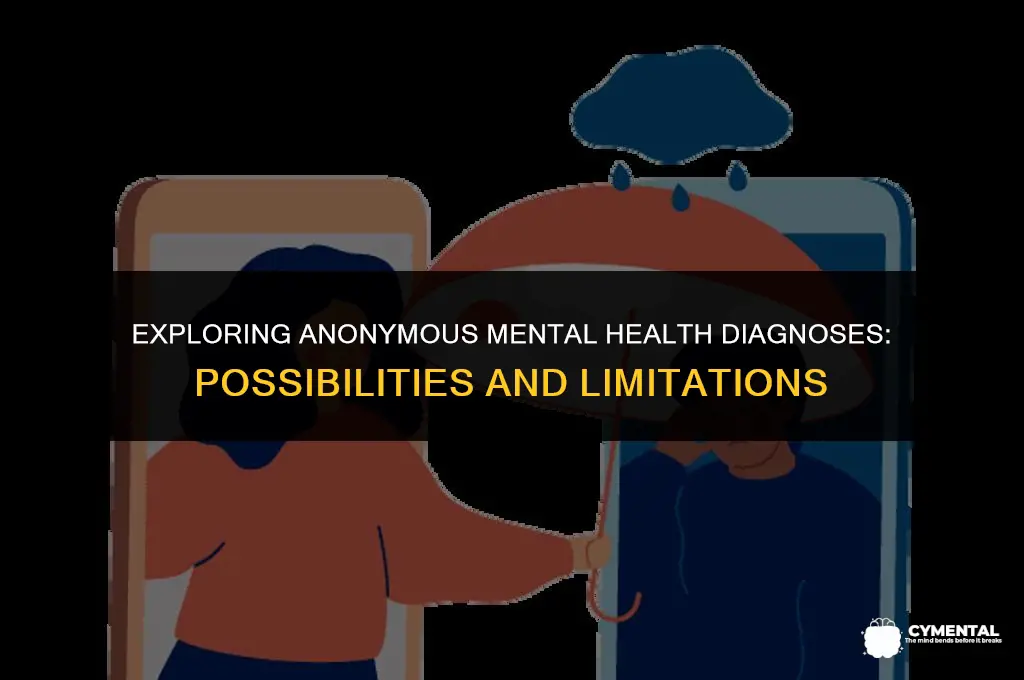
The question of whether one can receive a mental health diagnosis anonymously is a significant concern for many individuals seeking psychological support. In today's digital age, the possibility of obtaining medical advice or diagnoses online has become increasingly prevalent. However, when it comes to mental health, the anonymity of such interactions raises important ethical and practical considerations. This discussion will delve into the nuances of anonymous mental health diagnoses, exploring the potential benefits and drawbacks, as well as the current state of online mental health services.
What You'll Learn
- Online Mental Health Services: Platforms offering anonymous consultations with licensed professionals
- Confidentiality and Privacy: Ensuring personal information is protected during anonymous assessments
- Types of Anonymous Assessments: Various methods available for anonymous mental health evaluations
- Benefits of Anonymous Diagnosis: Advantages of seeking mental health help without revealing identity
- Limitations and Considerations: Potential drawbacks and important factors to consider in anonymous mental health services

Online Mental Health Services: Platforms offering anonymous consultations with licensed professionals
Online mental health services have revolutionized the way individuals seek help for their psychological well-being. These platforms provide a safe and confidential space for users to discuss their concerns with licensed professionals without the fear of judgment or stigma often associated with traditional face-to-face therapy. One of the key benefits of these services is the anonymity they offer, allowing individuals to receive professional guidance while maintaining their privacy.
Several reputable platforms have emerged in recent years, each with its own unique approach to online mental health care. For instance, BetterHelp offers a wide range of therapy options, including individual, couples, and family therapy, all conducted via video calls, phone calls, or live chats. Another platform, Talkspace, provides users with the flexibility to choose between video sessions, audio sessions, or unlimited messaging with their therapists. These platforms typically require users to fill out a brief questionnaire to match them with a suitable therapist based on their specific needs and preferences.
The process of getting mentally diagnosed anonymously through these online services usually involves several steps. First, the user creates an account and completes an initial assessment to provide the platform with basic information about their mental health concerns. Then, they are matched with a licensed therapist who specializes in their area of need. The user can then schedule a session with their therapist, during which they can discuss their symptoms, concerns, and goals for treatment. Based on the information gathered during these sessions, the therapist may provide a diagnosis and recommend a treatment plan tailored to the user's specific needs.
It is important to note that while online mental health services offer a high level of anonymity, they are not completely without risks. Users should be aware of the potential for data breaches or unauthorized access to their personal information. Additionally, online therapy may not be suitable for all individuals or all types of mental health conditions. In some cases, face-to-face therapy or more intensive treatment options may be necessary to address complex or severe mental health issues.
Despite these limitations, online mental health services have the potential to make a significant impact on the lives of individuals struggling with mental health concerns. By providing a convenient, accessible, and anonymous way to seek professional help, these platforms can help reduce the stigma surrounding mental illness and encourage more people to take the first step towards recovery.
Navigating Mental Health Insurance: A Comprehensive Guide
You may want to see also
Confidentiality and Privacy: Ensuring personal information is protected during anonymous assessments
In the realm of mental health assessments, ensuring confidentiality and privacy is paramount, especially when individuals seek anonymous evaluations. This is because the sensitive nature of mental health information requires stringent protection to prevent unauthorized access or disclosure. When undergoing an anonymous assessment, it is crucial to understand the measures in place to safeguard personal information and the legal frameworks that govern such processes.
One of the primary methods to ensure confidentiality during anonymous assessments is through the use of secure online platforms. These platforms often employ encryption technologies to protect data transmission and storage. Additionally, they may utilize anonymization techniques, such as removing identifiable information or using pseudonyms, to further shield the identity of the individuals being assessed. It is important for users to verify the credibility and security measures of such platforms before proceeding with an assessment.
Another key aspect of maintaining privacy is the adherence to ethical guidelines and regulations by mental health professionals. These guidelines, such as those set forth by the American Psychological Association (APA) or the General Data Protection Regulation (GDPR) in the European Union, outline the responsibilities of professionals in protecting client information. They also provide frameworks for obtaining informed consent and ensuring that clients are aware of their rights regarding their data.
Furthermore, individuals seeking anonymous assessments should be aware of the limitations and potential risks involved. While anonymity can provide a sense of security, it may also limit the comprehensiveness of the assessment and the ability of professionals to provide personalized recommendations or interventions. Additionally, there may be legal or ethical situations where maintaining anonymity is not possible or advisable, such as in cases involving child abuse or imminent harm to oneself or others.
In conclusion, ensuring confidentiality and privacy during anonymous mental health assessments involves a combination of technological security measures, adherence to ethical guidelines, and informed decision-making by individuals seeking such services. By understanding these factors and taking appropriate precautions, it is possible to navigate the process of anonymous assessments while protecting personal information and promoting mental well-being.
Pursuing a Medical License with a Mental Illness: Challenges and Triumphs
You may want to see also
Types of Anonymous Assessments: Various methods available for anonymous mental health evaluations
Online Questionnaires and Surveys
One common method for anonymous mental health evaluations is through online questionnaires and surveys. These tools allow individuals to self-assess their symptoms and receive immediate feedback. Platforms like Psychology Today and BetterHelp offer a range of free online assessments for various mental health conditions, such as depression, anxiety, and ADHD. These assessments typically consist of a series of multiple-choice questions that the individual answers based on their experiences and feelings. The results are then analyzed and provided to the user, often with recommendations for further action or resources.
Mobile Apps
Another method for anonymous mental health evaluations is through mobile apps. Apps like Wysa, Happify, and Calm offer assessments and tracking tools for mental health symptoms. These apps often use gamification and interactive elements to engage users and make the assessment process more approachable. Some apps also offer anonymous peer support communities where individuals can share their experiences and receive feedback from others who are going through similar struggles.
Telehealth Services
Telehealth services have become increasingly popular for mental health evaluations, especially in the wake of the COVID-19 pandemic. Platforms like Teladoc and Amwell offer virtual consultations with licensed mental health professionals. These consultations can be conducted via video chat, phone call, or messaging, allowing individuals to receive a diagnosis and treatment plan from the comfort of their own homes. While not completely anonymous, telehealth services offer a level of privacy and convenience that traditional in-person evaluations do not.
Support Groups and Forums
Online support groups and forums can also provide a form of anonymous mental health evaluation. Websites like Reddit and 7 Cups offer communities where individuals can share their experiences and receive feedback from others. These platforms allow users to create anonymous accounts and participate in discussions without revealing their true identities. While not a substitute for professional diagnosis, support groups and forums can offer valuable insights and validation from peers who understand what the individual is going through.
Professional Evaluations with Guaranteed Anonymity
For those who prefer a more traditional evaluation but still wish to maintain their anonymity, some mental health professionals offer services with guaranteed confidentiality. These professionals may use pseudonyms or anonymous communication channels to ensure that the individual's identity is protected. While these services may be more difficult to find and may require more upfront communication to establish trust, they can provide a thorough and professional evaluation for those who need it.
Pursuing a PhD in Mental Health Counseling: A Comprehensive Guide
You may want to see also
Benefits of Anonymous Diagnosis: Advantages of seeking mental health help without revealing identity
Seeking mental health help anonymously can provide a sense of security and comfort for individuals who may be hesitant to reveal their identity. This approach allows people to explore their mental health concerns without fear of judgment or repercussions, which can be particularly beneficial for those in sensitive professions or with concerns about privacy. Anonymous diagnosis can also help reduce the stigma associated with mental health issues, encouraging more people to seek help when needed.
One of the key advantages of anonymous diagnosis is the ability to access professional guidance without the constraints of traditional therapeutic settings. This can be especially helpful for individuals who live in areas with limited mental health resources or who have busy schedules that make in-person appointments challenging. Online platforms and apps that offer anonymous mental health services can provide a convenient and accessible way for people to receive support and advice from qualified professionals.
Another benefit of anonymous diagnosis is the potential for increased honesty and openness in communication. When individuals are not required to reveal their identity, they may feel more comfortable sharing personal details and expressing their true feelings, which can lead to more accurate diagnoses and effective treatment plans. This can be particularly important for addressing sensitive issues such as trauma, addiction, or relationship problems, where anonymity can help individuals feel safer and more in control.
However, it is important to note that anonymous diagnosis is not without its limitations. While it can provide a valuable starting point for addressing mental health concerns, it may not be suitable for all individuals or all types of issues. In some cases, a more personalized and in-depth approach may be necessary to fully understand and address complex mental health problems. Additionally, anonymous diagnosis may not provide the same level of accountability and follow-up care as traditional therapeutic settings, which can be important for ensuring ongoing support and progress.
Overall, the benefits of anonymous diagnosis lie in its ability to provide a safe, accessible, and non-judgmental space for individuals to explore their mental health concerns. By reducing barriers to seeking help and encouraging more open and honest communication, anonymous diagnosis can play a valuable role in promoting mental health awareness and support. However, it is important to weigh the potential benefits against the limitations and to consider the individual's specific needs and circumstances when deciding whether anonymous diagnosis is the right approach.
Navigating the Journey to a Mental Health Diagnosis: A Comprehensive Guide
You may want to see also
Limitations and Considerations: Potential drawbacks and important factors to consider in anonymous mental health services
While anonymous mental health services offer a valuable avenue for individuals seeking help without fear of stigma or judgment, there are several limitations and considerations that must be taken into account. One significant drawback is the lack of continuity of care. Without a consistent healthcare provider, individuals may receive fragmented care that does not fully address their needs or take into account their medical history. This can lead to misdiagnosis, ineffective treatment, and a lack of support during critical periods.
Another important factor to consider is the potential for miscommunication. In anonymous settings, it can be challenging to convey complex emotions, symptoms, and experiences accurately. This may result in misunderstandings or misinterpretations by healthcare providers, which can have serious consequences for the individual's treatment and well-being. Additionally, the absence of nonverbal cues and the limitations of written communication can make it difficult for providers to assess the individual's emotional state and provide appropriate support.
Confidentiality is also a concern in anonymous mental health services. While these services often claim to be secure and private, there is always a risk of data breaches or unauthorized access to sensitive information. Individuals must be aware of these risks and take steps to protect their privacy, such as using secure communication channels and being cautious about the information they share.
Furthermore, anonymous mental health services may not be suitable for all individuals or all types of mental health issues. For example, individuals with severe mental health conditions or those who are at risk of self-harm may require more intensive and personalized care than what can be provided in an anonymous setting. In such cases, it is crucial to seek out traditional mental health services that can offer the necessary level of support and intervention.
Finally, it is essential to recognize that anonymous mental health services are not a replacement for traditional mental health care. While they can provide a valuable supplement to existing services, they should not be seen as a substitute for in-person therapy or counseling. Individuals should carefully consider their needs and circumstances before deciding whether anonymous mental health services are right for them.
Navigating the Workforce: Employment Opportunities for Individuals with Mental Illness
You may want to see also
Frequently asked questions
Yes, it is possible to receive a mental health diagnosis anonymously online through various platforms and services that offer teletherapy or online counseling. These services often allow you to communicate with mental health professionals without revealing your identity.
Online mental health diagnoses can be accurate, but they may not always be as comprehensive as in-person diagnoses. The accuracy depends on the quality of the platform, the expertise of the mental health professional, and the information you provide. In-person diagnoses typically involve more thorough assessments and interactions.
The benefits of getting a mental health diagnosis anonymously include increased privacy, reduced stigma, and the convenience of accessing mental health services from anywhere. It can also be helpful for individuals who are hesitant to seek in-person treatment due to concerns about confidentiality or social anxiety.
Potential drawbacks of anonymous mental health diagnoses include the lack of a comprehensive assessment, limited follow-up care, and the possibility of misdiagnosis due to insufficient information. Additionally, online platforms may not be suitable for individuals with severe mental health conditions that require immediate in-person attention.
To choose a reputable online platform for an anonymous mental health diagnosis, research the platform's credentials, read reviews from other users, and ensure that the platform uses secure and confidential communication methods. Look for platforms that employ licensed mental health professionals and offer a range of services to meet your needs.