Lucas Bennett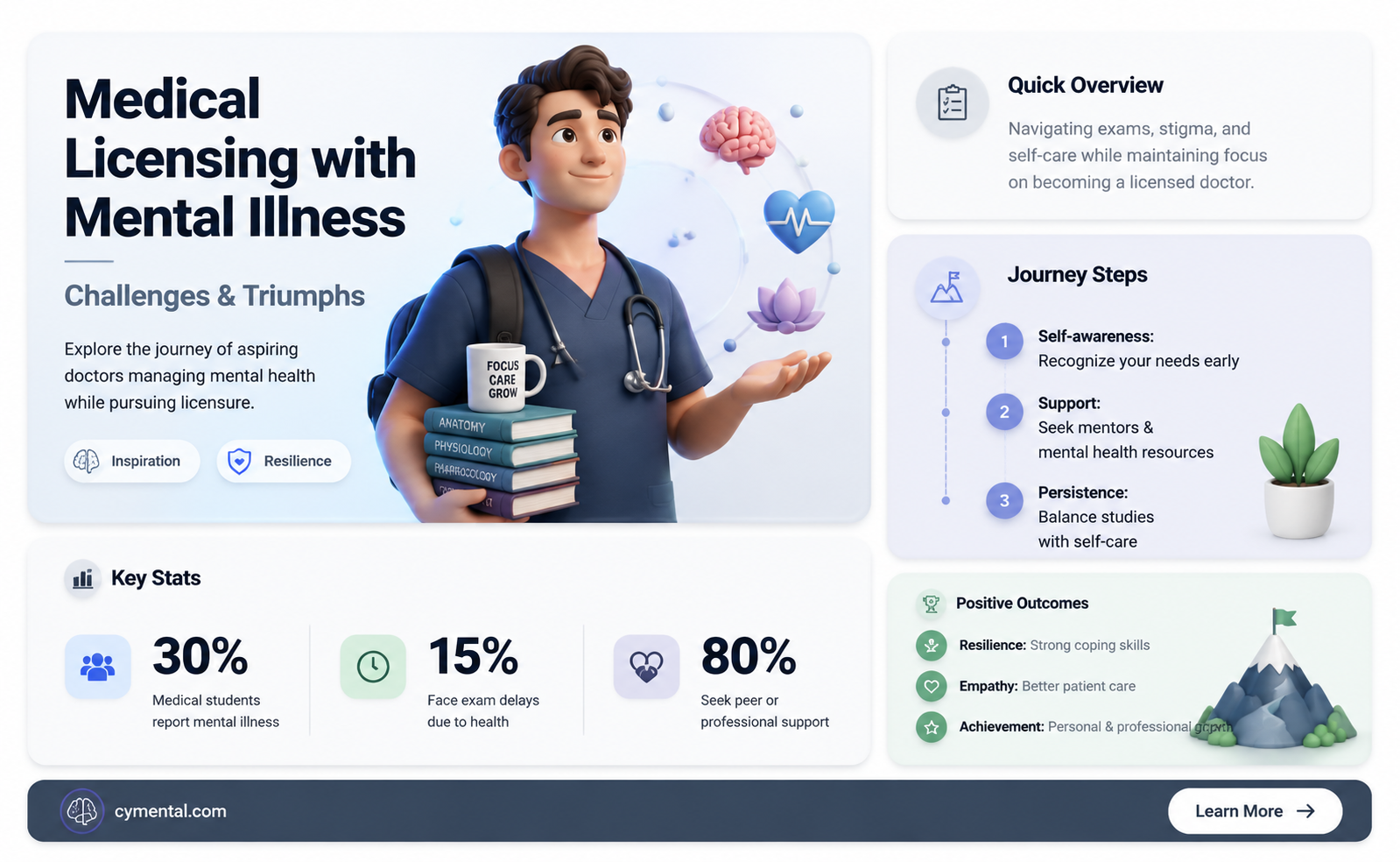
The question of whether one can obtain a medical license with a mental illness is a complex and nuanced topic that intersects with medical ethics, legal considerations, and the evolving understanding of mental health. In many jurisdictions, the process of becoming a licensed physician involves rigorous academic and clinical training, as well as a thorough evaluation of the candidate's physical and mental fitness to practice medicine. While a mental illness diagnosis does not automatically disqualify an individual from pursuing a medical career, it may necessitate additional scrutiny and accommodations to ensure that the individual can meet the demanding requirements of the profession without compromising patient care or their own well-being.
Explore related products


What You'll Learn
- Eligibility Criteria: Varies by jurisdiction, often requiring disclosure of mental health conditions
- Disclosure Requirements: Applicants must reveal mental illness history, including treatment and symptoms
- Fitness to Practice: Assessments may be conducted to ensure the applicant can perform medical duties safely
- Support and Resources: Availability of mental health support and resources for medical professionals
- Legal Protections: Laws protecting individuals with mental illness from discrimination in licensing processes

Eligibility Criteria: Varies by jurisdiction, often requiring disclosure of mental health conditions
Eligibility criteria for obtaining a medical license can vary significantly by jurisdiction, and one of the key factors that can influence this process is the requirement to disclose mental health conditions. This criterion is in place to ensure that medical professionals are fit to practice and can provide safe and effective care to their patients. However, it also raises important questions about privacy, stigma, and the potential for discrimination against individuals with mental health conditions.
In some jurisdictions, applicants for a medical license may be required to undergo a mental health evaluation or to provide documentation from a mental health professional attesting to their fitness to practice. This can be a challenging and potentially invasive process, particularly for individuals who have experienced mental health issues in the past. It is important for applicants to be aware of the specific requirements in their jurisdiction and to seek guidance from a qualified professional if needed.
One of the concerns surrounding the disclosure of mental health conditions is the potential for stigma and discrimination. Mental health issues are often misunderstood, and there may be a perception that individuals with these conditions are less capable or less trustworthy. This can create significant barriers for individuals who are seeking to obtain a medical license, and it is important for licensing bodies to take steps to address these concerns and to ensure that all applicants are treated fairly and with respect.
Another important consideration is the impact that the disclosure of mental health conditions can have on an individual's privacy. Medical professionals have a right to privacy, and the requirement to disclose mental health conditions can feel like an invasion of that privacy. It is important for licensing bodies to have clear policies in place regarding the confidentiality of mental health information and to ensure that this information is only used for the purposes of assessing an individual's fitness to practice.
In conclusion, the eligibility criteria for obtaining a medical license, particularly the requirement to disclose mental health conditions, can be a complex and challenging process. It is important for applicants to be aware of the specific requirements in their jurisdiction and to seek guidance from a qualified professional if needed. Additionally, it is crucial for licensing bodies to take steps to address concerns about stigma, discrimination, and privacy, and to ensure that all applicants are treated fairly and with respect.
Mastering Emotional Resilience: A Guide to Staying Calm and Collected
You may want to see also
Explore related products


Disclosure Requirements: Applicants must reveal mental illness history, including treatment and symptoms
Applicants seeking a medical license are required to disclose any history of mental illness, including details about treatment and symptoms. This requirement is in place to ensure that medical professionals are fit to practice and can provide safe and effective care to their patients. The disclosure process typically involves filling out a detailed questionnaire about one's mental health history, which may include information about diagnoses, hospitalizations, medication use, and therapy sessions.
The specific requirements for disclosure may vary depending on the state or country in which the medical license is being sought. Some jurisdictions may require additional documentation, such as letters from treating physicians or copies of medical records. It is important for applicants to carefully review the disclosure requirements for their specific licensing board to ensure that they provide all necessary information.
Disclosure of mental illness history can be a sensitive and personal matter. Applicants may be concerned about how their mental health history will be perceived by the licensing board and whether it will impact their ability to obtain a license. It is important to remember that the goal of the disclosure process is not to stigmatize or discriminate against individuals with mental illness, but rather to ensure that medical professionals are capable of providing safe and effective care.
In some cases, applicants with a history of mental illness may be required to undergo additional evaluations or provide more detailed information about their condition. This may include undergoing a psychiatric evaluation, providing documentation of treatment compliance, or demonstrating that they have a support system in place to help them manage their mental health.
Ultimately, the decision of whether to grant a medical license to an individual with a mental illness history will depend on a variety of factors, including the severity of the condition, the applicant's treatment history, and their ability to demonstrate fitness to practice. It is important for applicants to be honest and transparent about their mental health history, as failure to disclose relevant information can result in serious consequences, including denial of licensure or disciplinary action.
Exploring Brain Scans: A Key to Unlocking Mental Health Mysteries
You may want to see also
Explore related products


Fitness to Practice: Assessments may be conducted to ensure the applicant can perform medical duties safely
Fitness to Practice assessments are a critical component of the medical licensing process, designed to evaluate whether an applicant with a mental illness can safely perform medical duties. These assessments are typically conducted by medical professionals or psychologists who specialize in evaluating the mental health and functional capabilities of healthcare providers. The evaluation may include a thorough review of the applicant's medical and psychiatric history, as well as a series of psychological tests and interviews to assess their current mental state and ability to practice medicine safely.
The purpose of these assessments is not to discriminate against individuals with mental illness, but rather to ensure that they are capable of meeting the demanding and high-stakes requirements of medical practice. This is particularly important in cases where an applicant's mental illness may have a direct impact on their ability to make sound clinical judgments, manage stress, or interact effectively with patients and colleagues. By conducting these assessments, licensing boards can make informed decisions about whether an applicant is fit to practice medicine, while also protecting the health and safety of the public.
In some cases, applicants with mental illness may be required to undergo additional training or treatment before they are deemed fit to practice. This could include completing a residency program, participating in a peer support group, or working with a mental health professional to develop coping strategies and improve their overall well-being. The specific requirements will vary depending on the individual's circumstances and the nature of their mental illness.
It is important to note that Fitness to Practice assessments are not a one-time event, but rather an ongoing process that may be repeated periodically throughout an individual's medical career. This is particularly true for those with chronic mental illnesses, who may need to be monitored regularly to ensure that their condition does not impact their ability to practice medicine safely. By maintaining a proactive approach to mental health and wellness, medical professionals can help to mitigate the risks associated with mental illness and ensure that they are able to provide the highest level of care to their patients.
In conclusion, Fitness to Practice assessments play a vital role in ensuring that medical professionals with mental illness are able to practice medicine safely and effectively. By evaluating an individual's mental health and functional capabilities, licensing boards can make informed decisions about their fitness to practice, while also providing support and resources to help them succeed in their careers. This approach not only protects the public, but also promotes a culture of openness and understanding around mental health issues in the medical profession.
Navigating Security Clearances: Mental Health Considerations and Realities
You may want to see also
Explore related products


Support and Resources: Availability of mental health support and resources for medical professionals
Medical professionals, like anyone else, can face mental health challenges. However, the stigma associated with mental illness in the medical field can often prevent individuals from seeking the help they need. It's crucial to recognize that mental health support and resources are available to medical professionals, and utilizing these can be a sign of strength rather than weakness.
One of the primary resources available to medical professionals is their Employee Assistance Program (EAP). EAPs are designed to provide confidential support and resources for employees dealing with personal or professional issues, including mental health concerns. These programs often offer counseling services, stress management workshops, and referrals to mental health professionals.
In addition to EAPs, many medical institutions and professional organizations offer mental health resources specifically tailored to the needs of medical professionals. For example, the American Medical Association (AMA) provides a Physician Well-being Toolkit, which includes resources on stress management, burnout prevention, and mental health treatment options. Similarly, the National Alliance on Mental Illness (NAMI) offers a program called NAMI on Campus, which provides mental health education and support to college and university students, including those in medical school.
Another important resource for medical professionals is peer support groups. These groups provide a safe and confidential space for individuals to share their experiences and connect with others who understand the unique challenges of working in the medical field. Peer support groups can be found through professional organizations, medical institutions, or online platforms.
Finally, it's essential to recognize that seeking mental health support is not a sign of inadequacy or a threat to one's medical license. In fact, many medical boards and professional organizations encourage physicians to seek help when needed, as it can improve patient care and overall well-being. Medical professionals should be aware of the resources available to them and feel empowered to utilize these resources when needed.
Exploring the Complex Relationship Between Substance Use and Mental Health
You may want to see also
Explore related products


Legal Protections: Laws protecting individuals with mental illness from discrimination in licensing processes
Individuals with mental illness often face significant barriers when pursuing professional licenses, including medical licenses. However, various legal protections are in place to prevent discrimination based on mental health status. These laws aim to ensure that all applicants are evaluated fairly and that mental illness is not used as a pretext to deny someone the opportunity to practice their profession.
One key legal protection is the Americans with Disabilities Act (ADA), which prohibits discrimination against individuals with disabilities, including mental illness, in all aspects of employment, including licensing processes. The ADA requires licensing boards to make reasonable accommodations for applicants with mental illness, such as providing additional time to complete exams or offering alternative testing formats.
Another important legal safeguard is the Rehabilitation Act of 1973, which also prohibits discrimination against individuals with disabilities in programs and activities that receive federal financial assistance. This act applies to many licensing boards and requires them to ensure that their processes are accessible to all applicants, including those with mental illness.
In addition to these federal laws, many states have their own laws and regulations that protect individuals with mental illness from discrimination in licensing processes. For example, some states have laws that specifically prohibit licensing boards from denying an application based solely on a mental health diagnosis.
Despite these legal protections, individuals with mental illness may still face challenges in obtaining professional licenses. Licensing boards may require additional documentation or evaluations to assess an applicant's fitness to practice, which can be burdensome and invasive. Furthermore, stigma and misconceptions about mental illness can still influence the decision-making process of licensing boards.
To address these challenges, advocacy groups and professional organizations are working to raise awareness about mental health issues and to promote fair and equitable licensing processes. These efforts include providing education and training to licensing board members, developing guidelines for evaluating applicants with mental illness, and supporting legislation that strengthens legal protections against discrimination.
Exploring the Complex Intersection of Mental Health and Criminal Responsibility
You may want to see also
Frequently asked questions
The possibility of obtaining a medical license with a mental illness depends on the specific circumstances and the policies of the licensing board in your jurisdiction. Generally, if your mental illness is well-managed and does not impair your ability to practice medicine safely and effectively, you may be eligible for a license. However, you may need to provide documentation from a mental health professional regarding your condition and treatment.
Typically, you would need to provide a letter from a licensed mental health professional, such as a psychiatrist or psychologist, who has been treating you. This letter should detail your diagnosis, the duration of your treatment, the effectiveness of your treatment plan, and any potential impact your condition might have on your ability to practice medicine. Additionally, you may need to provide copies of your medical records related to your mental health treatment.
There are no specific mental illnesses that would automatically disqualify you from obtaining a medical license. Each case is evaluated individually based on the severity of the illness, the effectiveness of treatment, and the potential impact on your ability to practice medicine safely. It is important to be honest about your condition and to provide thorough documentation to support your application.