Madison Cole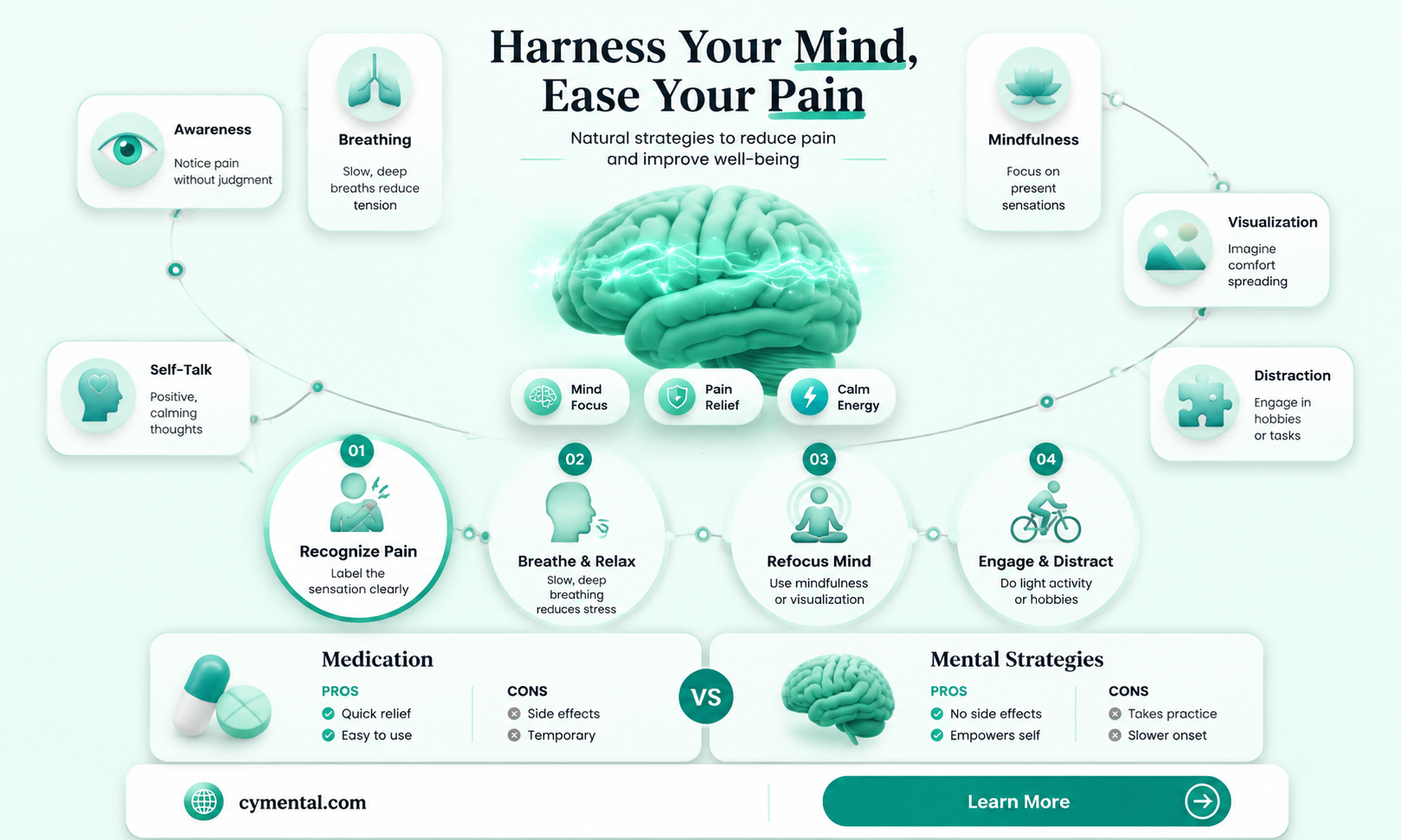
Chronic pain, a persistent and often debilitating condition, affects millions of people worldwide, significantly impacting their quality of life. While traditional treatments focus on physical interventions like medication and therapy, there is growing interest in the role of mental and psychological strategies to manage and alleviate this pain. Techniques such as mindfulness, cognitive-behavioral therapy (CBT), and relaxation exercises have shown promise in helping individuals reframe their relationship with pain, reduce stress, and improve overall well-being. By harnessing the power of the mind, individuals may find complementary ways to ease chronic pain and regain a sense of control over their lives.
| Characteristics | Values |
|---|---|
| Mind-Body Connection | Chronic pain involves complex interactions between physical sensations and emotional/cognitive responses. Mental strategies can influence pain perception and management. |
| Cognitive Behavioral Therapy (CBT) | Effective in reducing chronic pain by changing negative thought patterns and behaviors associated with pain. |
| Mindfulness and Meditation | Practices like mindfulness-based stress reduction (MBSR) and meditation can decrease pain intensity and improve quality of life by fostering present-moment awareness and acceptance. |
| Relaxation Techniques | Deep breathing, progressive muscle relaxation, and guided imagery can reduce muscle tension and alleviate pain symptoms. |
| Biofeedback | Teaches individuals to control physiological responses (e.g., heart rate, muscle tension) to reduce pain. |
| Acceptance and Commitment Therapy (ACT) | Focuses on accepting pain rather than fighting it, while committing to actions aligned with personal values. |
| Hypnotherapy | Can alter pain perception and reduce discomfort through suggestion and relaxation. |
| Positive Psychology | Gratitude, optimism, and focusing on strengths can improve emotional well-being and reduce pain-related distress. |
| Social Support | Emotional support from friends, family, or support groups can reduce feelings of isolation and improve pain management. |
| Neuroplasticity | Mental practices can rewire the brain to reduce pain sensitivity and improve coping mechanisms. |
| Stress Reduction | Chronic stress exacerbates pain; mental techniques like mindfulness and CBT can mitigate stress-related pain. |
| Placebo Effect | Belief in a treatment’s effectiveness can lead to measurable pain relief, highlighting the power of the mind. |
| Self-Efficacy | Building confidence in one’s ability to manage pain improves outcomes and reduces reliance on external interventions. |
| Emotional Regulation | Managing emotions like anxiety and depression can reduce pain intensity and improve overall functioning. |
| Sleep Improvement | Mental techniques like relaxation and mindfulness can improve sleep quality, which is crucial for pain management. |
| Holistic Approach | Combining mental strategies with physical treatments (e.g., exercise, medication) enhances overall pain management. |
Explore related products


What You'll Learn

Mindfulness meditation techniques for pain management
Chronic pain affects millions, often intertwining physical discomfort with emotional distress. Mindfulness meditation, rooted in ancient practices, offers a modern solution by reshaping how the brain perceives pain. Studies show that regular mindfulness practice can reduce pain intensity by 30% and improve emotional well-being, making it a valuable tool for those seeking non-pharmacological relief.
Step-by-Step Mindfulness Meditation for Pain Relief
Begin with a comfortable seated or lying position, ensuring your body is relaxed but alert. Close your eyes and focus on your breath, observing its natural rhythm without altering it. When pain arises, acknowledge it without judgment, labeling it as "sensation" rather than "pain." Gradually expand your awareness to include the entire body, noting where tension resides. Practice this for 10–20 minutes daily, increasing duration as tolerance builds. For beginners, guided meditations via apps like Headspace or Calm can provide structure.
The Science Behind Mindfulness and Pain
Mindfulness meditation alters brain activity in regions associated with pain processing, such as the anterior cingulate cortex and insula. Research from the Journal of Neuroscience reveals that experienced meditators show reduced neural responses to painful stimuli. This suggests mindfulness doesn’t eliminate pain but changes its emotional and cognitive impact, fostering detachment from suffering.
Practical Tips for Integration
Incorporate mindfulness into daily routines by practicing "micro-meditations"—brief, focused moments of awareness during activities like walking or eating. For chronic pain sufferers, pairing mindfulness with gentle movement, such as yoga or tai chi, can enhance benefits. Consistency is key; aim for daily practice, even if only for 5 minutes. Avoid forcing relaxation; instead, cultivate a non-reactive stance toward pain, allowing it to exist without resistance.
Cautions and Considerations
While mindfulness is generally safe, it’s not a replacement for medical treatment. Individuals with severe mental health conditions, such as PTSD or acute psychosis, should consult a healthcare provider before starting meditation practices. Additionally, mindfulness may initially heighten awareness of pain, which can be unsettling. If this occurs, reduce session length and focus on grounding techniques, like counting breaths or visualizing a calming scene.
Mindfulness meditation is a powerful, accessible tool for managing chronic pain, offering both immediate and long-term benefits. By shifting focus from pain to the present moment, individuals can reduce suffering and regain control over their lives. Start small, stay consistent, and approach the practice with curiosity and compassion.
Financial Assistance for Mental Health: Options and Resources to Explore
You may want to see also
Explore related products


Cognitive-behavioral therapy to reframe pain perception
Chronic pain often feels like an unyielding adversary, but cognitive-behavioral therapy (CBT) offers a strategic counterattack by targeting the mind’s role in pain perception. Unlike treatments that focus solely on physical symptoms, CBT addresses the psychological and emotional factors that amplify pain. Research shows that chronic pain isn’t just a sensory experience; it’s heavily influenced by thoughts, beliefs, and behaviors. For instance, catastrophizing—dwelling on the worst-case scenario—can intensify pain signals, creating a cycle of distress. CBT breaks this cycle by teaching individuals to identify and challenge negative thought patterns, replacing them with more adaptive responses. This reframing doesn’t eliminate the physical cause of pain but transforms how the brain interprets and reacts to it.
Consider a practical example: a 45-year-old with fibromyalgia who believes her pain is a sign of irreversible damage. Through CBT, she learns to question this belief, recognizing that pain doesn’t always equate to harm. Her therapist guides her to reframe the sensation as a signal to rest, not a threat. Over 8–12 sessions, she practices mindfulness techniques, such as body scans, to observe pain without judgment. Gradually, her anxiety around pain diminishes, and she reports a 30% reduction in perceived intensity. This isn’t placebo; it’s neuroplasticity in action. Studies confirm that CBT can alter brain regions like the prefrontal cortex, which regulates emotional responses to pain, making it a scientifically grounded approach.
Implementing CBT for pain reframing requires specific steps. First, track pain triggers and associated thoughts in a journal. For instance, note if pain spikes after stressful meetings and whether thoughts like “I can’t handle this” accompany it. Second, challenge these thoughts using evidence. Ask, “What proof do I have that this pain is unbearable?” or “Have I managed similar situations before?” Third, practice behavioral activation by engaging in activities that bring a sense of accomplishment, even on painful days. This counters the tendency to avoid movement, which can worsen pain over time. Finally, incorporate relaxation techniques like progressive muscle relaxation or deep breathing to reduce the body’s stress response, which often exacerbates pain.
While CBT is effective, it’s not a one-size-fits-all solution. Success depends on active participation and consistency. Some individuals may struggle with homework assignments, such as thought records, or feel discouraged if progress is slow. It’s also crucial to manage expectations; CBT aims to improve coping, not cure the underlying condition. For those with severe depression or anxiety, combining CBT with medication or other therapies may yield better results. Additionally, finding a therapist trained in pain management is essential, as generic CBT may lack the specificity needed for chronic pain.
In conclusion, reframing pain perception through CBT is a skill, not a quick fix. It empowers individuals to reclaim control over their lives by changing their relationship with pain. The process is demanding but rewarding, offering a sustainable way to reduce suffering without relying solely on medication. As one CBT practitioner puts it, “Pain is inevitable, but misery is optional.” By mastering cognitive and behavioral tools, chronic pain sufferers can rewrite their narrative, turning pain from an enemy into a manageable part of life.
Anime's Impact: Exploring Mental Health Benefits and Emotional Healing
You may want to see also
Explore related products


Relaxation strategies for reducing muscle tension
Chronic pain often manifests as persistent muscle tension, a physical response that can be exacerbated by stress and anxiety. Relaxation strategies, when practiced consistently, can interrupt this cycle, offering a mental reprieve that translates into physical relief. By targeting the mind-body connection, these techniques reduce the neurological signals that perpetuate tension, allowing muscles to release and pain to subside.
One effective method is progressive muscle relaxation (PMR), a structured practice where you systematically tense and then release different muscle groups. Start by sitting or lying comfortably. Inhale deeply, then deliberately tighten the muscles in your feet for 5–10 seconds before exhaling and letting them go completely. Move upward through your legs, abdomen, chest, arms, neck, and face, spending 10–15 minutes on the full sequence. PMR is particularly beneficial for those with tension headaches or lower back pain, as it increases awareness of physical sensations and teaches the body to recognize and release tightness.
Another powerful tool is guided imagery, which combines relaxation with visualization to create a mental escape from pain. Close your eyes and imagine a serene setting—perhaps a beach or forest. Engage all your senses: feel the warmth of the sun, hear the rustling leaves, smell the salt air. As you immerse yourself in this scene, consciously direct your attention away from pain, focusing instead on the calmness of the environment. Studies show that 20–30 minutes of guided imagery daily can reduce muscle tension by lowering cortisol levels and promoting a parasympathetic response.
For those who prefer movement, gentle yoga or tai chi offers a dual benefit: physical stretching and mental focus. Poses like child’s pose or cat-cow stretch the spine and hips, releasing tension in the lower back and shoulders. Tai chi’s slow, flowing movements improve circulation and flexibility while calming the mind. Both practices emphasize deep breathing, which further enhances relaxation. Aim for 15–30 minutes daily, adjusting poses or movements as needed to avoid strain.
Finally, mindfulness meditation trains the mind to observe pain without reacting to it, reducing the emotional distress that amplifies tension. Sit quietly and focus on your breath, noting sensations without judgment. When your mind wanders to pain, gently redirect it to the present moment. Start with 5–10 minutes daily, gradually increasing duration. Research indicates that regular mindfulness practice can alter brain pathways associated with pain perception, making it a valuable long-term strategy.
While these techniques are accessible to all ages, consistency is key. Combining multiple strategies—such as PMR in the morning, yoga in the afternoon, and meditation at night—can maximize benefits. Always consult a healthcare provider before starting new practices, especially if you have underlying conditions. By integrating relaxation into your routine, you can reclaim control over muscle tension and, in turn, alleviate chronic pain.
Assessing Mental Illness Impairment: Essential Tools for Clinicians
You may want to see also
Explore related products




Visualization exercises to distract from pain
Chronic pain often feels all-consuming, but visualization exercises offer a mental escape route. By engaging the imagination, these techniques shift focus away from discomfort, leveraging the brain’s ability to prioritize sensory input. Studies suggest that guided imagery can reduce pain perception by up to 30%, making it a valuable tool for those seeking non-pharmacological relief.
Begin with a simple practice: close your eyes and picture a serene environment, such as a beach or forest. Focus on sensory details—the warmth of the sun, the sound of waves, or the scent of pine. Spend 5–10 minutes daily immersing yourself in this mental space. For enhanced effectiveness, pair this exercise with deep breathing, inhaling for 4 seconds, holding for 4, and exhaling for 6. Consistency is key; regular practice trains the mind to access this distraction more readily during pain flare-ups.
For a more structured approach, try the "body scan with visualization" technique. Start at the toes, mentally picturing each body part bathed in soothing light or color. As you move upward, imagine tension dissolving. This method not only distracts from pain but also promotes relaxation, reducing muscle tightness that may exacerbate discomfort. Caution: avoid visualizing the pain itself, as this can inadvertently amplify its presence.
Comparatively, visualization outperforms passive distractions like watching TV, as it actively engages cognitive resources. Unlike medication, it has no side effects and can be practiced anywhere, making it ideal for sudden pain episodes. However, it’s not a standalone cure—combine it with physical therapy or mindfulness for comprehensive management.
Incorporate thematic variations to keep the practice engaging. For instance, visualize yourself as a character in a favorite story or imagine shrinking the pain into a manageable object. Tailor the imagery to personal preferences; what works for one person may not resonate with another. Over time, these exercises can rewire neural pathways, fostering resilience against chronic pain’s grip.
Nature's Healing Power: Boosting Mental Health and Well-being Naturally
You may want to see also
Explore related products




Breathing techniques to calm the nervous system
Chronic pain often triggers a cascade of stress responses, amplifying discomfort through heightened nervous system activity. Breathing techniques, however, offer a direct countermeasure by engaging the parasympathetic nervous system, the body’s natural "rest and digest" mode. Diaphragmatic breathing, for instance, slows heart rate and reduces cortisol levels, creating a physiological environment less conducive to pain perception. This method involves inhaling deeply through the nose for a count of four, holding for a count of four, and exhaling through the mouth for a count of six, repeated for 5–10 minutes daily. Consistency is key; integrating this practice into a morning or evening routine maximizes its calming effects.
Consider the 4-7-8 breathing technique, a structured approach popularized by Dr. Andrew Weil. This method requires inhaling through the nose for four seconds, holding the breath for seven seconds, and exhaling forcefully through the mouth for eight seconds. The extended exhale activates the vagus nerve, a critical component of the parasympathetic nervous system, which helps dampen stress responses. Ideal for acute pain flare-ups, this technique can be practiced anytime, anywhere, making it a versatile tool for chronic pain management. However, individuals with respiratory conditions like asthma should consult a healthcare provider before attempting forceful exhalations.
Comparatively, alternate nostril breathing offers a more meditative approach, balancing the autonomic nervous system while fostering mental clarity. To practice, sit comfortably, close the right nostril with the right thumb, and inhale slowly through the left nostril for a count of four. Close both nostrils briefly, then exhale through the right nostril for a count of four. Repeat on the opposite side, completing 5–10 cycles. This technique is particularly effective for those whose pain is exacerbated by anxiety or mental tension, as it promotes a sense of equilibrium. It’s best practiced in a quiet space, free from distractions, to enhance focus and relaxation.
While breathing techniques are powerful, they are not a standalone cure for chronic pain. Their effectiveness lies in their ability to complement other treatments by reducing stress-induced pain amplification. For optimal results, combine these practices with physical therapy, medication, or mindfulness-based interventions. Additionally, tracking progress through a pain journal can help identify which techniques yield the most relief. Remember, the goal is not to eliminate pain entirely but to cultivate resilience and reduce its impact on daily life. With patience and persistence, breathing techniques can become a cornerstone of holistic pain management.
Can Faith and Divine Intervention Aid Mental Health Struggles?
You may want to see also
Frequently asked questions
Yes, mental techniques such as mindfulness, cognitive-behavioral therapy (CBT), and relaxation exercises can help reduce the perception of pain and improve coping mechanisms, though they may not eliminate the pain entirely.
Mindfulness meditation helps by shifting focus away from pain, reducing stress, and promoting a non-judgmental awareness of bodily sensations, which can lessen the emotional impact of chronic pain.
Yes, through practices like neuroplasticity-based therapies, CBT, and biofeedback, the brain can be retrained to respond differently to pain signals, reducing their intensity and frequency.
Absolutely, stress reduction techniques like deep breathing, progressive muscle relaxation, and yoga can lower stress hormones that exacerbate pain, providing relief and improving overall well-being.