Madison Cole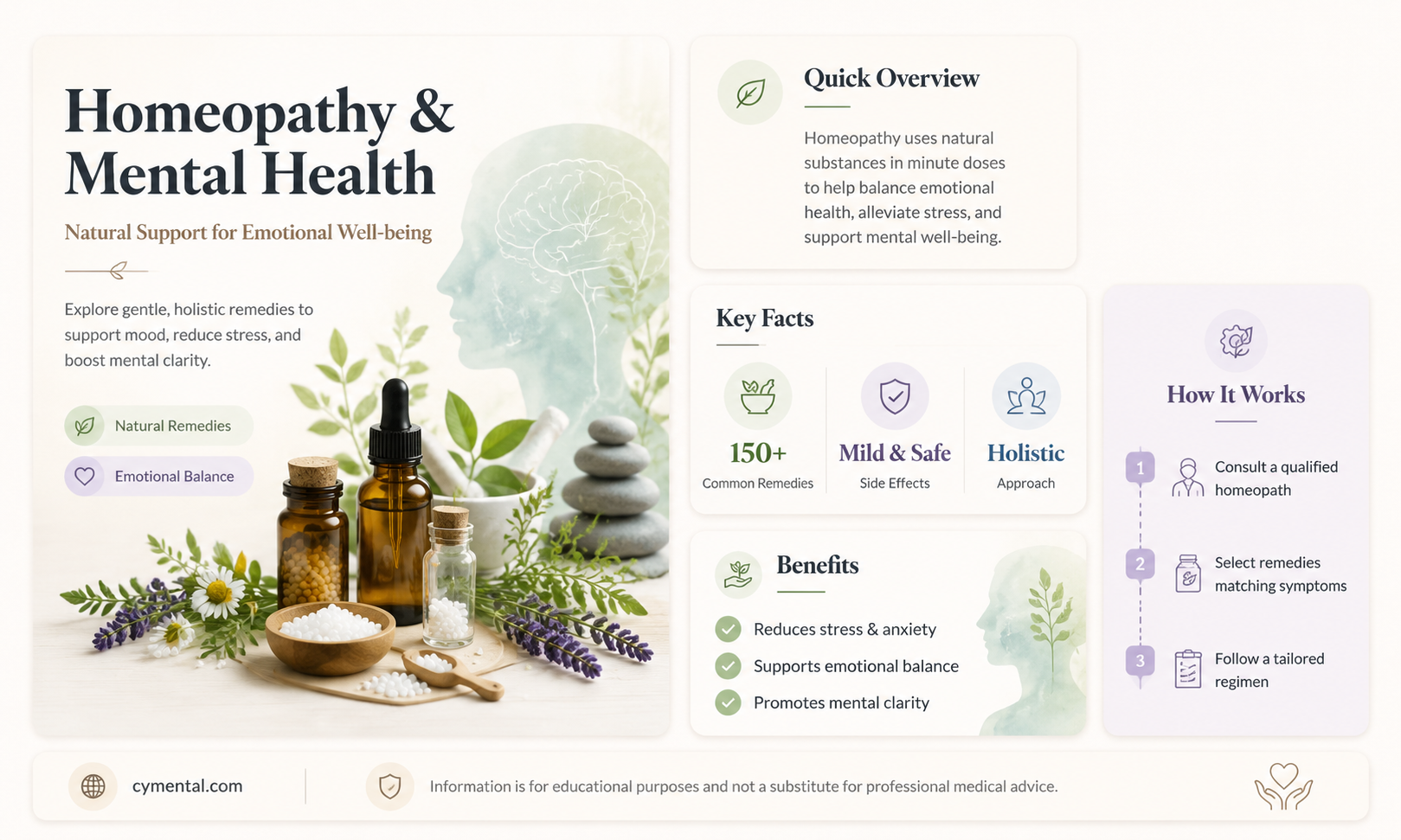
Homeopathy, a holistic system of medicine that uses highly diluted substances to stimulate the body’s natural healing processes, has been explored as a complementary approach to mental health. While conventional treatments like psychotherapy and medication remain the cornerstone of mental health care, some individuals turn to homeopathy seeking alternative or adjunctive support for conditions such as anxiety, depression, and stress. Proponents argue that homeopathic remedies, tailored to an individual’s unique symptoms and constitution, may address underlying imbalances contributing to mental health issues. However, scientific evidence supporting its efficacy remains limited, with many studies highlighting the need for more rigorous research. As interest in integrative mental health care grows, the question of whether homeopathy can genuinely aid mental well-being continues to spark debate among practitioners, patients, and researchers alike.
Explore related products


What You'll Learn

Homeopathy for anxiety and stress relief
Anxiety and stress are pervasive in modern life, often manifesting as physical symptoms like insomnia, fatigue, or digestive issues. Homeopathy offers a gentle, individualized approach to alleviating these conditions by addressing the root cause rather than merely suppressing symptoms. Unlike conventional treatments, which often rely on sedatives or antidepressants, homeopathic remedies are highly diluted substances chosen based on the principle of "like cures like." For instance, Aconitum napellus is prescribed for sudden, intense anxiety, while Arsenicum album suits those with perfectionist tendencies and restlessness. These remedies are tailored to the person’s unique emotional and physical state, making them a holistic option for those seeking non-invasive relief.
To use homeopathy effectively for anxiety and stress, start with a low potency (6C or 30C) and take 3–5 pellets under the tongue, up to three times daily. For acute episodes, such as panic attacks, remedies can be taken every 15–30 minutes until symptoms subside. Chronic cases, however, require a more structured approach, ideally under the guidance of a qualified homeopath. It’s crucial to monitor responses and adjust dosages accordingly. For children or the elderly, lower potencies (6C or 12C) are recommended due to their sensitivity. Pairing remedies with lifestyle changes, like mindfulness or exercise, can enhance their efficacy, creating a synergistic effect on mental well-being.
One of the strengths of homeopathy lies in its minimal side effects, making it suitable for long-term use. However, it’s not a quick fix; results may take weeks or months, depending on the individual’s constitution and the severity of their condition. Skeptics often question its scientific basis, but anecdotal evidence and some studies suggest its effectiveness in reducing anxiety symptoms. For example, a 2018 review in *Complementary Therapies in Medicine* highlighted its potential as an adjunct therapy. Still, it’s essential to consult a healthcare provider before replacing conventional treatments, especially for severe cases.
Practical tips for integrating homeopathy into stress management include keeping a symptom journal to track progress and selecting remedies based on specific triggers. For work-related stress, Kali phosphoricum can help with mental exhaustion, while Ignatia is ideal for grief or emotional upheaval. Combining these remedies with relaxation techniques, such as deep breathing or meditation, can amplify their calming effects. Remember, homeopathy is about restoring balance, not just alleviating discomfort, so patience and consistency are key. When used thoughtfully, it can be a valuable tool in the arsenal against anxiety and stress.
Exercise Boosts Elderly Mental Health: Benefits and Strategies for Wellbeing
You may want to see also
Explore related products


Treating depression with individualized homeopathic remedies
Depression, a pervasive mental health condition, often resists one-size-fits-all treatments. Individualized homeopathic remedies offer a tailored approach, addressing the unique physical, emotional, and mental symptoms of each person. Unlike conventional antidepressants, which target neurotransmitters broadly, homeopathy seeks to stimulate the body’s innate healing mechanisms by prescribing substances based on the principle of "like cures like." For instance, a person experiencing depression with profound fatigue and indifference might be prescribed *Natrum muriaticum*, while someone with anxiety-driven depression could benefit from *Aurum metallicum*. The key lies in matching the remedy to the individual’s specific symptom profile, not just the diagnosis.
To begin treatment, a detailed case-taking session is essential. This involves exploring the patient’s emotional state, triggers, physical symptoms, and even personality traits. For example, a patient who feels worse in the mornings, craves solitude, and has a history of suppressed grief might be a candidate for *Nux vomica* or *Ignatia*. Dosage and potency are equally critical; low potencies (e.g., 6C or 30C) are often used for chronic conditions, with a single dose repeated weekly or as symptoms dictate. Practitioners may also recommend lifestyle adjustments, such as stress reduction techniques or dietary changes, to complement the remedy’s effects.
One of the strengths of individualized homeopathy is its adaptability. For instance, a teenager with depression linked to academic pressure might respond to *Calcarea carbonica*, while a menopausal woman with depressive symptoms could benefit from *Sepia*. However, caution is advised: homeopathy should not replace conventional treatment in severe cases, especially when suicidal ideation is present. It is often used as an adjunct therapy, particularly for those seeking alternatives to pharmaceutical side effects. Regular follow-ups with a qualified homeopath are crucial to monitor progress and adjust the remedy as needed.
Critics argue that the evidence for homeopathy in treating depression is limited, with studies often yielding mixed results. Yet, anecdotal reports and some small-scale trials suggest improvements in mood and overall well-being. The placebo effect cannot be ruled out, but proponents argue that the individualized nature of homeopathy—its focus on the person, not just the condition—may contribute to its perceived efficacy. For those open to exploring holistic approaches, individualized homeopathic remedies offer a gentle, personalized option worth considering alongside other therapeutic modalities.
Supporting Mental Health: Practical Ways to Help Someone in Need
You may want to see also
Explore related products


Managing insomnia through homeopathic approaches
Insomnia, a pervasive sleep disorder, affects millions worldwide, often exacerbating mental health challenges like anxiety and depression. Homeopathic approaches offer a gentle, holistic alternative to conventional treatments, targeting the root cause rather than merely symptoms. Remedies such as *Coffea cruda* (for racing thoughts), *Nux vomica* (for stress-induced sleeplessness), and *Passiflora* (for calming the nervous system) are commonly prescribed based on individual symptoms. Dosage typically involves 3–5 pellets of a 30C potency, taken 30 minutes before bed, with adjustments made by a qualified homeopath.
Consider the case of a 45-year-old professional whose insomnia stemmed from work-related stress. After conventional sleep aids caused grogginess, they turned to homeopathy. A regimen of *Nux vomica* 30C nightly, paired with lifestyle changes like reducing caffeine, restored their sleep within six weeks. This example underscores the importance of tailoring remedies to the individual, a cornerstone of homeopathic practice. Unlike one-size-fits-all solutions, homeopathy addresses the unique mental and emotional triggers of insomnia.
However, managing insomnia homeopathically requires patience and consistency. Results may take weeks to manifest, and self-prescribing can lead to suboptimal outcomes. Consulting a certified homeopath ensures precise remedy selection and dosage, particularly for children or the elderly, who may require lower potencies like 6C or 12C. Additionally, combining homeopathy with sleep hygiene practices—such as maintaining a regular sleep schedule and creating a restful environment—amplifies effectiveness.
Critics argue that homeopathy lacks empirical evidence for insomnia treatment, but anecdotal success stories and small-scale studies suggest its potential. For instance, a 2019 review in *Sleep Science* highlighted improvements in sleep quality among patients using individualized homeopathic remedies. While not a panacea, homeopathy offers a low-risk, side-effect-free option for those wary of dependency on sedatives. Its focus on restoring balance aligns with the growing demand for integrative mental health care.
In practice, managing insomnia homeopathically involves more than popping a pill. It’s a commitment to understanding one’s body and mind, often revealing deeper imbalances. For instance, a patient whose insomnia stems from grief might benefit from *Ignatia*, while someone with fear-induced sleeplessness might respond to *Aconite*. By addressing the emotional underpinnings, homeopathy not only alleviates insomnia but also fosters overall mental well-being. This nuanced approach makes it a compelling option for those seeking sustainable relief.
Athletes and Mental Health: Why Seeking Help Remains a Challenge
You may want to see also
Explore related products



Homeopathy’s role in reducing PTSD symptoms
Post-traumatic stress disorder (PTSD) is a complex condition often resistant to conventional treatments, leaving many to explore alternative therapies like homeopathy. While scientific evidence remains limited, anecdotal reports and some preliminary studies suggest homeopathic remedies may alleviate specific PTSD symptoms by addressing underlying imbalances. For instance, Aconitum napellus is often recommended for acute anxiety and panic attacks triggered by flashbacks, while Arsenicum album may help individuals experiencing relentless restlessness and fear. These remedies are typically prescribed in highly diluted forms (e.g., 30C potency), taken 2–3 times daily, under professional guidance.
Consider the case of a 35-year-old veteran who, after traditional therapy and medication yielded minimal results, turned to homeopathy. His practitioner prescribed Ignatia amara, a remedy often used for emotional shock and mood swings, alongside Argentum nitricum for anticipatory anxiety. Over six months, he reported reduced hypervigilance and improved sleep quality. This example underscores homeopathy’s individualized approach, where remedies are tailored to the patient’s specific symptoms and emotional state, rather than a one-size-fits-all solution.
However, integrating homeopathy into PTSD treatment requires caution. Critics argue its efficacy lacks robust clinical validation, and reliance on it alone could delay evidence-based interventions like cognitive-behavioral therapy (CBT) or medication. For those considering homeopathy, it’s essential to consult both a qualified homeopath and a mental health professional to ensure a comprehensive care plan. Additionally, homeopathic remedies should not replace prescribed medications without medical supervision, especially in severe cases.
Practical tips for those exploring homeopathy for PTSD include maintaining a symptom journal to track remedy effectiveness, starting with low potencies (e.g., 6C or 12C) to assess tolerance, and avoiding self-prescription. While homeopathy may not be a standalone cure, its potential to complement traditional treatments warrants consideration, particularly for individuals seeking holistic or non-pharmacological options. As research evolves, its role in PTSD management may become clearer, but for now, it remains a promising yet adjunctive tool in the mental health toolkit.
Supporting Loved Ones: Practical Ways to Help Family with Mental Illness
You may want to see also
Explore related products


Addressing ADHD with homeopathic treatments
ADHD, characterized by inattention, hyperactivity, and impulsivity, often responds to conventional treatments like stimulants and behavioral therapy. However, some individuals seek alternative approaches, including homeopathy, due to concerns about side effects or a desire for holistic care. Homeopathic treatments for ADHD are individualized, based on the principle of "like cures like," where substances that cause symptoms in a healthy person are diluted to treat similar symptoms in a patient. For instance, Stramonium might be prescribed for children with ADHD who exhibit fearfulness or aggression, while Hyoscyamus could address impulsivity and restlessness. These remedies are highly diluted, often to the point where no molecules of the original substance remain, a practice that remains controversial in scientific circles.
Implementing homeopathic treatments for ADHD requires a detailed consultation with a trained homeopath, who assesses physical, emotional, and behavioral symptoms to tailor a remedy. For example, a child with ADHD who struggles with focus during schoolwork but becomes hyperactive in social settings might receive Cina, derived from the wormseed plant. Dosages are typically administered in pellet or liquid form, with instructions to dissolve under the tongue. Parents should note that homeopathic remedies are not standardized, and potency levels (e.g., 6C, 30C) vary widely. While some practitioners recommend daily doses, others suggest intermittent use based on symptom flare-ups. It’s crucial to monitor responses and communicate with the homeopath regularly to adjust the treatment plan.
Critics argue that the efficacy of homeopathy for ADHD lacks robust scientific evidence, with studies often yielding mixed or inconclusive results. Proponents, however, point to anecdotal success stories and emphasize the absence of adverse effects compared to stimulant medications. For families considering this route, it’s essential to integrate homeopathy with conventional care, especially for severe cases. Practical tips include maintaining a symptom journal to track progress, ensuring consistency in remedy administration, and avoiding self-prescription. Homeopathy should not replace evidence-based treatments but can serve as a complementary approach for those open to exploring its potential.
A comparative perspective highlights the differences between homeopathy and conventional ADHD treatments. While stimulants like methylphenidate act quickly to improve focus, homeopathic remedies focus on long-term constitutional balance, often taking weeks or months to show effects. This slower pace may frustrate those seeking immediate relief but aligns with homeopathy’s holistic philosophy. Additionally, homeopathy’s individualized approach contrasts with the one-size-fits-all nature of many pharmaceutical interventions. For families prioritizing natural, non-invasive options, homeopathy offers a unique pathway, though it demands patience, commitment, and realistic expectations.
In conclusion, addressing ADHD with homeopathic treatments involves a personalized, symptom-based approach that diverges from conventional methods. While scientific validation remains limited, its appeal lies in its gentle, tailored nature and minimal side effects. Families considering this route should approach it as part of a broader treatment strategy, combining it with behavioral interventions and, if necessary, traditional medications. By understanding its principles, processes, and limitations, caregivers can make informed decisions about whether homeopathy aligns with their child’s needs and values.
Comic Books and Cartoons: Unlocking Mental Health Benefits Through Art
You may want to see also
Frequently asked questions
Homeopathy is considered a complementary therapy, and while some individuals report improvements in symptoms, scientific evidence supporting its effectiveness for mental health conditions is limited. It should not replace conventional treatments without medical advice.
Homeopathy focuses on individualized treatment, using highly diluted substances to stimulate the body’s healing response. Conventional medicine typically relies on evidence-based therapies, medications, and psychological interventions.
Homeopathic remedies are generally considered safe due to their high dilution, but relying solely on homeopathy for severe mental health conditions can delay proper treatment. Always consult a healthcare professional.
Some people use homeopathy as a complementary therapy alongside conventional treatments. However, it’s important to inform your healthcare provider to avoid potential interactions or conflicts.
Current scientific evidence is insufficient to conclusively support homeopathy’s effectiveness for mental health. Most studies lack robust methodology, and results are often inconclusive or based on anecdotal reports.