Madison Cole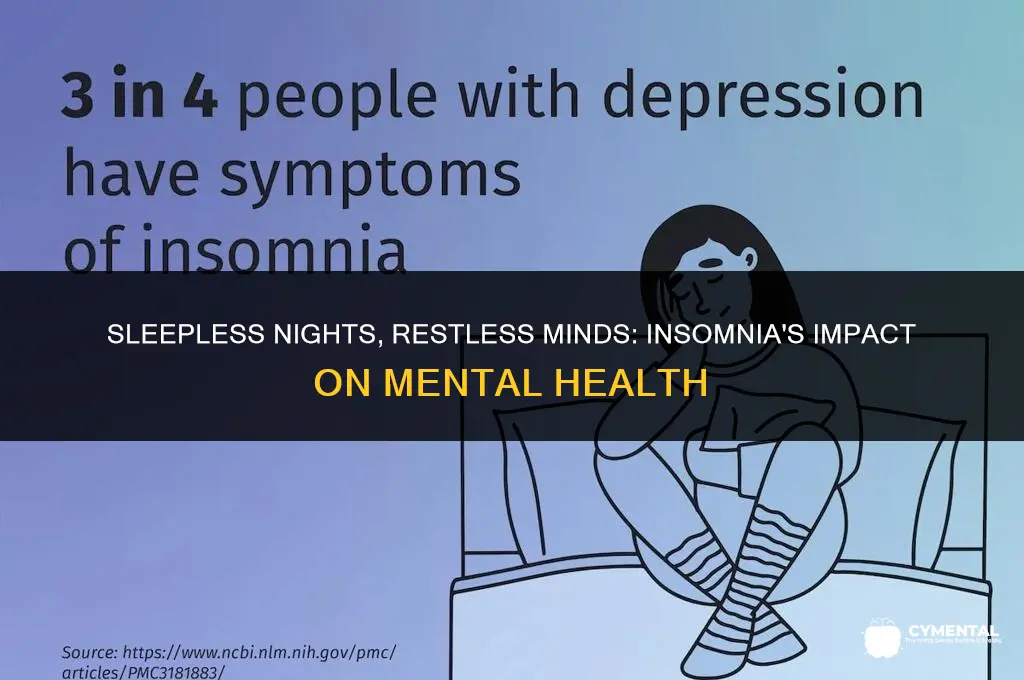
Insomnia, a common sleep disorder characterized by difficulty falling asleep, staying asleep, or both, can significantly impact an individual's mental status. Chronic sleep deprivation has been linked to a range of cognitive and emotional disturbances, including impaired concentration, memory lapses, irritability, anxiety, and depression. Furthermore, insomnia can exacerbate existing mental health conditions and increase the risk of developing new ones. Understanding the relationship between insomnia and mental status is crucial for developing effective treatment strategies and promoting overall well-being.
| Characteristics | Values |
|---|---|
| Definition | Insomnia is a sleep disorder characterized by difficulty falling asleep, staying asleep, or both, despite adequate opportunity and environment for sleep. |
| Prevalence | Insomnia is a common condition, affecting approximately 10-15% of the general population. |
| Causes | Insomnia can be caused by various factors including stress, anxiety, depression, physical discomfort, noise, irregular sleep schedule, caffeine, nicotine, alcohol, and certain medications. |
| Symptoms | Symptoms of insomnia include difficulty falling asleep, frequent awakenings during the night, early morning awakenings, daytime fatigue, irritability, difficulty concentrating, and mood disturbances. |
| Impact on Mental Status | Insomnia can significantly affect mental status by impairing cognitive function, memory, and emotional regulation. It can also exacerbate existing mental health conditions such as depression and anxiety. |
| Diagnosis | Insomnia is typically diagnosed through a combination of medical history, physical examination, and sleep studies such as polysomnography or actigraphy. |
| Treatment Options | Treatment for insomnia may include behavioral therapies (e.g., cognitive behavioral therapy for insomnia), medications (e.g., benzodiazepines, non-benzodiazepine hypnotics), and lifestyle modifications (e.g., improving sleep hygiene, regular exercise). |
| Prognosis | The prognosis for insomnia varies depending on the underlying cause and the effectiveness of treatment. In many cases, insomnia can be effectively managed with appropriate interventions. |
| Complications | Chronic insomnia can lead to complications such as decreased quality of life, impaired work performance, increased risk of accidents, and potential long-term health consequences including cardiovascular disease and diabetes. |
| Research and Future Directions | Ongoing research is focused on understanding the neurobiological mechanisms of insomnia, developing more effective treatments, and investigating the potential use of novel therapies such as mindfulness-based interventions and digital health technologies. |
Explore related products

$19.84 $19.99


What You'll Learn
- Cognitive Impairment: Insomnia can lead to difficulties in concentration, memory, and decision-making
- Mood Disturbances: Lack of sleep may contribute to irritability, anxiety, and depressive symptoms
- Psychomotor Retardation: Insomnia can cause slowed reactions and movements, impacting daily functioning
- Hallucinations: Severe sleep deprivation may result in auditory or visual hallucinations
- Impaired Judgment: Insufficient sleep can affect the ability to make sound judgments and assess risks

Cognitive Impairment: Insomnia can lead to difficulties in concentration, memory, and decision-making
Insomnia's impact on cognitive function is a critical area of concern, as it can significantly impair an individual's ability to concentrate, remember, and make decisions. Research has shown that chronic sleep deprivation can lead to a decrease in cognitive performance, with effects ranging from mild to severe. For instance, a study published in the journal Sleep found that participants who were sleep-deprived for 24 hours performed significantly worse on cognitive tasks than those who had received adequate sleep.
One of the primary ways in which insomnia affects cognitive function is by impairing attention and concentration. This can manifest in difficulty focusing on tasks, increased distractibility, and a decreased ability to process information quickly and accurately. Memory is also significantly impacted by insomnia, with studies showing that sleep deprivation can lead to difficulties in both short-term and long-term memory recall. This can result in forgetfulness, difficulty learning new information, and an increased risk of developing memory-related disorders such as dementia.
Decision-making is another cognitive function that is often impaired by insomnia. Sleep deprivation can lead to a decrease in the ability to make sound judgments, assess risks, and evaluate options. This can result in impulsive decisions, poor problem-solving skills, and an increased likelihood of engaging in risky behaviors. In addition to these cognitive impairments, insomnia can also lead to a range of emotional and psychological issues, including anxiety, depression, and irritability.
It is important to note that the effects of insomnia on cognitive function can vary depending on the individual and the severity of their sleep deprivation. However, even mild sleep deprivation can have a significant impact on cognitive performance. Therefore, it is essential to prioritize sleep hygiene and seek treatment for insomnia if necessary. Cognitive behavioral therapy for insomnia (CBT-I) is a highly effective treatment option that can help individuals improve their sleep quality and cognitive function.
In conclusion, insomnia can have a profound impact on cognitive function, leading to difficulties in concentration, memory, and decision-making. It is essential to recognize the signs of insomnia and seek treatment if necessary to mitigate these cognitive impairments and improve overall mental health.
Exploring the Surprising Link Between Viruses and Mental Health
You may want to see also
Explore related products

$30.53 $39.99


Mood Disturbances: Lack of sleep may contribute to irritability, anxiety, and depressive symptoms
Chronic sleep deprivation has a profound impact on emotional regulation, often leading to heightened states of irritability. This increased irritability can manifest in various ways, such as short-tempered responses, exaggerated reactions to minor inconveniences, and a general sense of agitation. Over time, these emotional disturbances can strain interpersonal relationships and affect overall quality of life.
In addition to irritability, lack of sleep can significantly contribute to anxiety disorders. Sleep plays a crucial role in the regulation of neurotransmitters like serotonin and dopamine, which are essential for maintaining a balanced mood. When sleep is disrupted, these neurotransmitters can become imbalanced, leading to increased feelings of anxiety and worry. This can result in physical symptoms such as rapid heartbeat, sweating, and trembling, as well as psychological symptoms like intrusive thoughts and catastrophic thinking.
Depressive symptoms are also commonly associated with sleep disturbances. Prolonged sleep deprivation can lead to a decrease in the production of melatonin, a hormone that regulates sleep-wake cycles. This disruption can result in a range of depressive symptoms, including persistent feelings of sadness, loss of interest in previously enjoyable activities, and changes in appetite and weight. Furthermore, sleep deprivation can impair cognitive function, leading to difficulties in concentration, memory, and decision-making, which can exacerbate depressive symptoms.
It is essential to address sleep disturbances to mitigate their impact on mental health. Establishing a consistent sleep schedule, creating a relaxing bedtime routine, and ensuring a sleep-conducive environment can be beneficial. In some cases, cognitive-behavioral therapy for insomnia (CBT-I) may be necessary to address underlying sleep issues. By prioritizing sleep health, individuals can reduce the risk of developing mood disturbances and improve their overall mental well-being.
Exploring the Impact of Relationships on Mental Well-being
You may want to see also
Explore related products

$19.99 $20.21


Psychomotor Retardation: Insomnia can cause slowed reactions and movements, impacting daily functioning
Insomnia's impact on mental status is multifaceted, with one significant aspect being psychomotor retardation. This condition manifests as a slowing down of both reactions and movements, which can profoundly affect an individual's ability to function effectively in their daily life. For instance, a person experiencing psychomotor retardation due to insomnia might find it challenging to perform tasks that require quick reflexes or precise movements, such as driving or operating machinery.
The underlying cause of this retardation is the sleep deprivation resulting from insomnia. When the body is consistently deprived of adequate sleep, it enters a state of heightened alertness, which can paradoxically lead to slower cognitive and physical responses. This heightened state of arousal can also exacerbate anxiety and stress, further contributing to the slowing down of psychomotor functions.
Moreover, the effects of psychomotor retardation can extend beyond immediate physical tasks. Cognitive processes such as decision-making, problem-solving, and memory recall can also be impaired. This impairment can lead to difficulties in the workplace, where quick thinking and efficient task completion are often essential. In educational settings, students struggling with insomnia may find it harder to concentrate and process information, potentially affecting their academic performance.
It is crucial to address insomnia promptly to mitigate the risk of developing psychomotor retardation. Treatment options can include behavioral therapies, such as cognitive-behavioral therapy for insomnia (CBT-I), which helps individuals develop better sleep habits and address underlying psychological factors contributing to their sleep problems. In some cases, medication may be prescribed to help manage the symptoms of insomnia, although it is important to use these treatments under the guidance of a healthcare professional due to potential side effects and dependency risks.
In conclusion, psychomotor retardation is a significant concern for individuals suffering from insomnia. It can impact various aspects of daily functioning, from physical tasks to cognitive processes. Recognizing the signs of psychomotor retardation and seeking appropriate treatment for insomnia can help alleviate these symptoms and improve overall quality of life.
Exploring the Link Between Low-Carb Diets and Mental Health
You may want to see also
Explore related products


Hallucinations: Severe sleep deprivation may result in auditory or visual hallucinations
Severe sleep deprivation can lead to a range of cognitive impairments, but one of the most striking and potentially alarming symptoms is the occurrence of hallucinations. These can manifest as auditory or visual hallucinations, where individuals may hear voices or see things that are not actually present. This phenomenon is not merely a figment of the imagination but a serious indicator of the brain's compromised state due to lack of sleep.
Auditory hallucinations are often characterized by hearing voices, music, or other sounds that seem real but have no external source. These can range from faint whispers to loud, clear voices that engage in conversation or provide commentary on the individual's actions. Visual hallucinations, on the other hand, involve seeing images, shapes, or figures that are not present in the environment. These can be simple geometric shapes or complex scenes that appear vivid and lifelike.
The underlying mechanisms behind these hallucinations are not fully understood, but it is believed that sleep deprivation disrupts the normal functioning of the brain's sensory processing centers. Without adequate rest, the brain's ability to filter out irrelevant sensory information is impaired, leading to the misinterpretation of internal signals as external stimuli. This can result in the generation of false perceptions that are experienced as hallucinations.
It is important to note that hallucinations due to sleep deprivation are generally temporary and resolve once the individual receives sufficient rest. However, they can be a significant source of distress and may even pose safety risks if they lead to impaired judgment or decision-making. In some cases, sleep deprivation-induced hallucinations can be mistaken for symptoms of more serious mental health conditions, such as schizophrenia or bipolar disorder, highlighting the importance of proper diagnosis and treatment.
To mitigate the risk of hallucinations and other cognitive impairments associated with sleep deprivation, it is essential to prioritize good sleep hygiene practices. This includes maintaining a consistent sleep schedule, creating a restful sleep environment, avoiding stimulants before bedtime, and engaging in regular physical activity. In cases where sleep deprivation is unavoidable, such as during long work shifts or travel across time zones, strategies like power naps, caffeine consumption, and exposure to bright light can help improve alertness and cognitive function.
In conclusion, while hallucinations due to severe sleep deprivation are a concerning symptom, they are generally reversible with proper rest and care. By understanding the underlying causes and implementing effective sleep management strategies, individuals can reduce the risk of experiencing these distressing and potentially dangerous symptoms.
How Entities Impact Your Mental Well-being: A Deep Dive
You may want to see also
Explore related products


$9.99


Impaired Judgment: Insufficient sleep can affect the ability to make sound judgments and assess risks
Insufficient sleep significantly impairs judgment and risk assessment, critical cognitive functions necessary for navigating daily life safely and effectively. Research indicates that sleep deprivation can lead to a reduction in reaction time, increased impulsivity, and a diminished capacity to evaluate the consequences of actions. This impairment can manifest in various ways, such as poor decision-making in personal and professional contexts, increased likelihood of engaging in risky behaviors, and a higher propensity for accidents.
One study published in the Journal of Sleep Research found that individuals who were sleep-deprived for 24 hours showed a significant decrease in their ability to perform tasks requiring judgment and decision-making. Participants in the study were more likely to choose risky options and exhibited a reduced capacity to learn from their mistakes. These findings suggest that sleep plays a crucial role in maintaining the neural mechanisms underlying judgment and risk assessment.
The impact of sleep deprivation on judgment can be particularly pronounced in situations requiring quick thinking and rapid decision-making. For example, drivers who are sleep-deprived may have slower reaction times and be more likely to make errors in judgment, increasing the risk of accidents. Similarly, individuals in high-stress professions, such as healthcare workers or emergency responders, may be more prone to making critical errors when they are not well-rested.
To mitigate the effects of sleep deprivation on judgment and risk assessment, it is essential to prioritize adequate sleep hygiene. This includes maintaining a consistent sleep schedule, creating a restful sleep environment, and avoiding stimulants such as caffeine and nicotine before bedtime. Additionally, individuals should be aware of the signs of sleep deprivation, such as excessive daytime sleepiness, irritability, and difficulty concentrating, and seek medical attention if these symptoms persist.
In conclusion, impaired judgment due to insufficient sleep is a significant concern that can have far-reaching consequences in various aspects of life. By understanding the impact of sleep deprivation on cognitive functions and taking steps to maintain good sleep hygiene, individuals can reduce the risk of judgment errors and improve their overall mental status.
Mental Health and Security Clearances: Navigating the Complex Intersection
You may want to see also
Frequently asked questions
Yes, insomnia can significantly affect mental status. Chronic sleep deprivation can lead to cognitive impairment, mood disturbances, and an increased risk of developing mental health disorders such as depression and anxiety.
Insomnia can impair cognitive function by affecting memory, attention, and decision-making abilities. Lack of sleep can also reduce reaction time and increase the likelihood of making errors, which can be detrimental in both personal and professional settings.
Common mental health issues associated with insomnia include depression, anxiety disorders, and bipolar disorder. Insomnia can exacerbate symptoms of these conditions and may also contribute to their development.
Research suggests that there may be a link between insomnia and psychosis. Sleep deprivation can trigger psychotic episodes in individuals who are already predisposed to psychotic disorders. Additionally, chronic insomnia can increase the risk of developing psychosis in the general population.