Madison Cole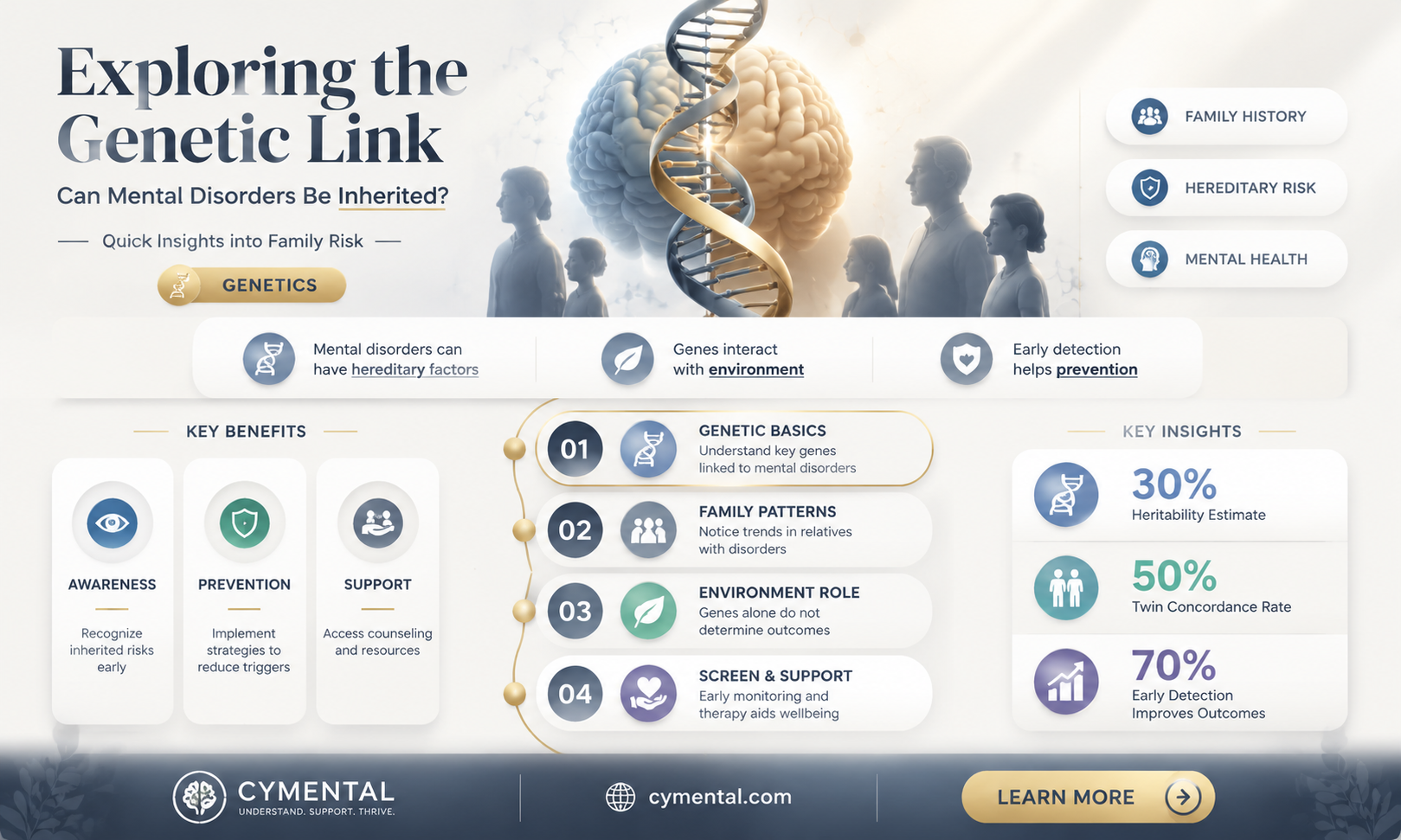
Mental disorders can indeed have a genetic component, meaning they can be inherited from one's parents. While the inheritance of mental disorders is complex and not fully understood, research has shown that certain conditions, such as schizophrenia, bipolar disorder, and major depressive disorder, can run in families. This suggests that there may be specific genes or combinations of genes that increase the risk of developing these disorders. However, it's important to note that genetics is just one factor among many that can contribute to the development of mental health issues. Environmental factors, such as life experiences, social support, and access to healthcare, also play a significant role. Therefore, while mental disorders can be inherited, they are not solely determined by genetics, and a comprehensive approach that considers both genetic and environmental factors is necessary for understanding and treating these conditions.
| Characteristics | Values |
|---|---|
| Genetic Influence | While there is no single "mental disorder" gene, research suggests that genetic factors can contribute to the development of mental disorders. Certain genetic variations may increase the risk of developing conditions like depression, anxiety, or schizophrenia. |
| Environmental Factors | Environmental factors, such as life experiences, trauma, and social circumstances, can also play a significant role in the development of mental disorders. These factors can interact with genetic predispositions to influence the onset and severity of symptoms. |
| Epigenetics | Epigenetic changes, which affect how genes are expressed, may also be involved in the inheritance of mental disorders. These changes can be influenced by both genetic and environmental factors and may contribute to the development of mental health conditions. |
| Family History | Having a family history of mental disorders can increase an individual's risk of developing a mental health condition. This may be due to a combination of genetic, environmental, and epigenetic factors passed down through generations. |
| Twin Studies | Studies of twins have shown that mental disorders can have a strong genetic component. Identical twins, who share 100% of their genes, are more likely to both develop a mental disorder compared to fraternal twins, who share about 50% of their genes. |
| Adoption Studies | Adoption studies have also provided evidence for the genetic influence on mental disorders. Adopted children with a biological parent who has a mental disorder are more likely to develop a mental health condition themselves, even if they were raised in a different environment. |
| Gene-Environment Interaction | The interaction between genes and the environment is complex and can influence the development of mental disorders. For example, a person with a genetic predisposition to depression may be more likely to develop the condition if they experience significant life stressors. |
| Polygenic Inheritance | Mental disorders are often polygenic, meaning they are influenced by multiple genes rather than a single gene. This makes it difficult to pinpoint specific genetic causes and highlights the importance of considering both genetic and environmental factors. |
| Personal Resilience | Personal resilience, which is the ability to cope with stress and adversity, can also play a role in the development of mental disorders. Individuals with higher resilience may be better able to manage genetic and environmental risk factors. |
| Preventive Measures | While mental disorders can have a genetic component, preventive measures such as maintaining a healthy lifestyle, seeking social support, and practicing stress management techniques can help reduce the risk of developing a mental health condition. |
| Early Intervention | Early intervention and treatment can significantly improve outcomes for individuals with mental disorders, regardless of the underlying genetic or environmental factors. Seeking help from a mental health professional is crucial for managing symptoms and improving quality of life. |
| Ongoing Research | Research into the genetic and environmental factors contributing to mental disorders is ongoing. Advances in genetics, neuroscience, and psychology continue to provide new insights into the complex interplay between nature and nurture in the development of mental health conditions. |
Explore related products

$14.15 $20

$32.99 $32.99


What You'll Learn
- Genetic Factors: Exploring the role of genetics in the development of mental disorders
- Environmental Influences: Discussing how environmental factors interact with genetic predispositions
- Twin Studies: Analyzing research on twins to understand the hereditability of mental health conditions
- Family History: Investigating the impact of family mental health history on an individual's risk
- Epigenetics: Examining how epigenetic changes might influence the inheritance of mental disorders

Genetic Factors: Exploring the role of genetics in the development of mental disorders
Recent studies have identified specific genetic mutations that increase the risk of developing mental disorders such as schizophrenia, bipolar disorder, and major depressive disorder. For instance, variations in the CACNA1C gene have been linked to an increased risk of schizophrenia and bipolar disorder, while mutations in the SLC6A4 gene have been associated with a higher likelihood of developing depression. These findings suggest that genetic factors play a significant role in the development of mental disorders, and that understanding these genetic influences may lead to improved diagnosis and treatment options.
One of the key challenges in studying the genetic basis of mental disorders is the complex interplay between genetic and environmental factors. While certain genetic mutations may increase the risk of developing a mental disorder, environmental factors such as stress, trauma, and social support can also play a significant role in the onset and progression of these conditions. Disentangling the relative contributions of genetic and environmental factors is a major area of ongoing research, with scientists using advanced statistical and molecular techniques to better understand these complex interactions.
Another important area of research is the development of genetic testing for mental disorders. While genetic testing is currently available for some rare genetic disorders, the development of genetic tests for more common mental disorders is still in its early stages. Researchers are working to identify specific genetic markers that can be used to predict the risk of developing mental disorders, which could lead to earlier diagnosis and more targeted treatment approaches. However, there are also concerns about the potential misuse of genetic testing, such as discrimination against individuals with a genetic predisposition to mental illness.
In addition to genetic testing, researchers are also exploring the potential of gene therapy for the treatment of mental disorders. Gene therapy involves introducing genes into the body to treat or prevent diseases, and early studies have shown promise for the use of gene therapy in treating conditions such as depression and anxiety. However, more research is needed to fully understand the safety and efficacy of gene therapy for mental disorders.
Overall, the study of genetic factors in mental disorders is a rapidly evolving field with significant implications for our understanding of these conditions. By uncovering the genetic underpinnings of mental disorders, researchers hope to develop more effective treatments and improve the lives of individuals affected by these conditions.
Exploring Elon Musk's Mental Health: A Closer Look at Asperger's Syndrome
You may want to see also
Explore related products

$24.95 $15.95


Environmental Influences: Discussing how environmental factors interact with genetic predispositions
Environmental factors play a crucial role in the development of mental disorders, often interacting with genetic predispositions in complex ways. While genes can set the stage for certain mental health conditions, it is the environment that can trigger or mitigate the expression of these genetic traits. For instance, a person with a genetic predisposition to depression may never develop the disorder if they are raised in a supportive and nurturing environment. Conversely, someone without a genetic predisposition may develop depression due to chronic stress or trauma.
One key environmental factor is early life experiences. Adverse childhood experiences (ACEs), such as abuse, neglect, or parental substance abuse, can significantly increase the risk of developing mental disorders later in life. These experiences can alter the brain's structure and function, affecting the regulation of emotions and stress responses. Furthermore, ACEs can lead to epigenetic changes, which are modifications to DNA that influence gene expression without altering the genetic code itself.
Another important environmental factor is socioeconomic status. Individuals living in poverty or with limited access to resources are at a higher risk of developing mental health issues. This can be attributed to chronic stress, lack of access to healthcare, and exposure to violence or crime. Additionally, cultural and societal norms can impact mental health. For example, certain cultures may stigmatize mental illness, leading individuals to hide their symptoms or avoid seeking treatment.
Environmental toxins, such as air pollution and exposure to chemicals, have also been linked to mental health problems. These toxins can affect brain development and function, leading to an increased risk of disorders like autism, ADHD, and schizophrenia. Moreover, lifestyle factors, including diet, exercise, and sleep patterns, can influence mental health. A diet high in processed foods and sugar, for instance, has been associated with an increased risk of depression and anxiety.
In conclusion, while genetic predispositions can play a role in the development of mental disorders, environmental factors are equally, if not more, important. By understanding and addressing these environmental influences, we can potentially prevent or mitigate the onset of mental health issues, even in individuals with a genetic predisposition.
Exploring Canine Mental Health: Do Dogs Experience Disorders?
You may want to see also
Explore related products





Twin Studies: Analyzing research on twins to understand the hereditability of mental health conditions
Identical twins, who share 100% of their genes, provide a unique opportunity to study the hereditability of mental health conditions. Research on twins has shown that when one identical twin develops a mental disorder, the other twin is more likely to develop the same disorder compared to fraternal twins or the general population. This suggests a strong genetic component to mental health conditions.
One well-known twin study is the Minnesota Twin Family Study, which has followed over 11,000 twins since 1984. The study has found that identical twins are more likely to both develop depression, anxiety, and other mental health conditions compared to fraternal twins. For example, if one identical twin develops depression, the other twin has a 40% chance of also developing depression, while the risk for fraternal twins is only 14%.
Another important twin study is the UK-based Twins Early Development Study, which has followed over 15,000 twins since 1994. This study has found that identical twins are more likely to both develop autism spectrum disorder (ASD) compared to fraternal twins. The study also found that identical twins are more likely to both develop attention deficit hyperactivity disorder (ADHD) and other neurodevelopmental conditions.
While twin studies provide valuable insights into the genetic basis of mental health conditions, it's important to note that they have some limitations. For example, twin studies can't account for environmental factors that may contribute to mental health conditions, such as childhood trauma or socioeconomic status. Additionally, twin studies are often limited by small sample sizes and may not be generalizable to the broader population.
Despite these limitations, twin studies have contributed significantly to our understanding of the hereditability of mental health conditions. By analyzing the similarities and differences between identical and fraternal twins, researchers can gain insights into the complex interplay between genetic and environmental factors that contribute to mental health. This knowledge can help inform the development of more effective treatments and interventions for mental health conditions.
Exploring the Psychological Enigma: Hitler's Mental Health Debated
You may want to see also
Explore related products



Family History: Investigating the impact of family mental health history on an individual's risk
Researchers have long been interested in the potential genetic link between family members and the development of mental disorders. Studies have shown that certain mental health conditions, such as schizophrenia, bipolar disorder, and major depressive disorder, tend to run in families. This suggests that there may be a genetic component that increases an individual's risk of developing these conditions.
One way to investigate the impact of family mental health history on an individual's risk is through twin studies. Identical twins share the same genetic makeup, so if one twin develops a mental disorder, the other twin has a higher risk of developing the same condition. Fraternal twins, on the other hand, share only about 50% of their genetic makeup, so the risk of developing a mental disorder is lower if one twin is affected. By comparing the rates of mental disorders in identical and fraternal twins, researchers can estimate the genetic contribution to these conditions.
Another approach is to study adopted children. If a child is adopted and their biological parents have a history of mental illness, the child may be at a higher risk of developing mental health problems. This is because the child shares the same genetic makeup as their biological parents, even though they were raised in a different environment. By comparing the rates of mental disorders in adopted children with and without a family history of mental illness, researchers can better understand the role of genetics in the development of these conditions.
It is important to note that having a family history of mental illness does not necessarily mean that an individual will develop a mental disorder. Many other factors, such as environment, lifestyle, and personal experiences, can also contribute to the development of mental health problems. However, understanding the genetic link between family members and mental disorders can help researchers develop more effective prevention and treatment strategies.
In conclusion, investigating the impact of family mental health history on an individual's risk is a complex and ongoing area of research. By using twin studies, adoption studies, and other methods, researchers are working to better understand the genetic contribution to mental disorders and how this information can be used to improve mental health outcomes.
Understanding Dyslexia: A Neurological Perspective on Reading Challenges
You may want to see also
Explore related products


Epigenetics: Examining how epigenetic changes might influence the inheritance of mental disorders
Epigenetic changes are modifications to the DNA molecule that do not alter the underlying genetic sequence but can significantly impact gene expression. These changes can be inherited and have been implicated in the transmission of mental disorders across generations. For instance, studies have shown that children of parents who experienced trauma may exhibit epigenetic alterations that affect their stress response systems, potentially increasing their risk for developing mental health conditions such as depression or anxiety.
One of the key mechanisms by which epigenetic changes can influence mental health is through the regulation of gene expression in the brain. Epigenetic modifications can either silence or activate genes, leading to alterations in the levels of proteins that are critical for normal brain function. For example, a study published in the journal Nature Neuroscience found that epigenetic changes in a gene called BDNF, which is involved in neuronal growth and survival, were associated with an increased risk for developing schizophrenia.
Epigenetic changes can also affect the structure and function of the brain. For instance, research has shown that epigenetic modifications can influence the development of neural circuits that are involved in emotional regulation and cognitive function. These changes can have long-lasting effects on behavior and mental health, and may even be passed down to future generations.
Understanding the role of epigenetics in the inheritance of mental disorders has important implications for the development of new treatments and preventive strategies. By identifying specific epigenetic changes that are associated with mental health conditions, researchers may be able to develop targeted interventions that can reverse or mitigate these effects. Additionally, epigenetic research may lead to the development of new diagnostic tools that can help identify individuals who are at risk for developing mental disorders, allowing for early intervention and treatment.
In conclusion, epigenetics represents a promising area of research for understanding the complex interplay between genetics, environment, and mental health. By examining how epigenetic changes can influence the inheritance of mental disorders, researchers are gaining valuable insights into the underlying mechanisms of these conditions and are paving the way for the development of new and innovative treatments.
Exploring Rapunzel's Mental Health: A Tale of Tangles and Trauma
You may want to see also
Frequently asked questions
Yes, mental disorders can have a genetic component, which means they can be inherited. However, it's often a complex interplay between genetics and environmental factors.
Disorders such as schizophrenia, bipolar disorder, major depressive disorder, and anxiety disorders are known to have a strong genetic link.
Environmental factors such as childhood trauma, stress, substance abuse, and social isolation can trigger or exacerbate mental disorders, even in individuals with a genetic predisposition.
While it's not possible to guarantee prevention, individuals with a family history of mental disorders can benefit from early intervention, lifestyle changes, and monitoring for symptoms to potentially reduce the risk of developing a disorder.