Lucas Bennett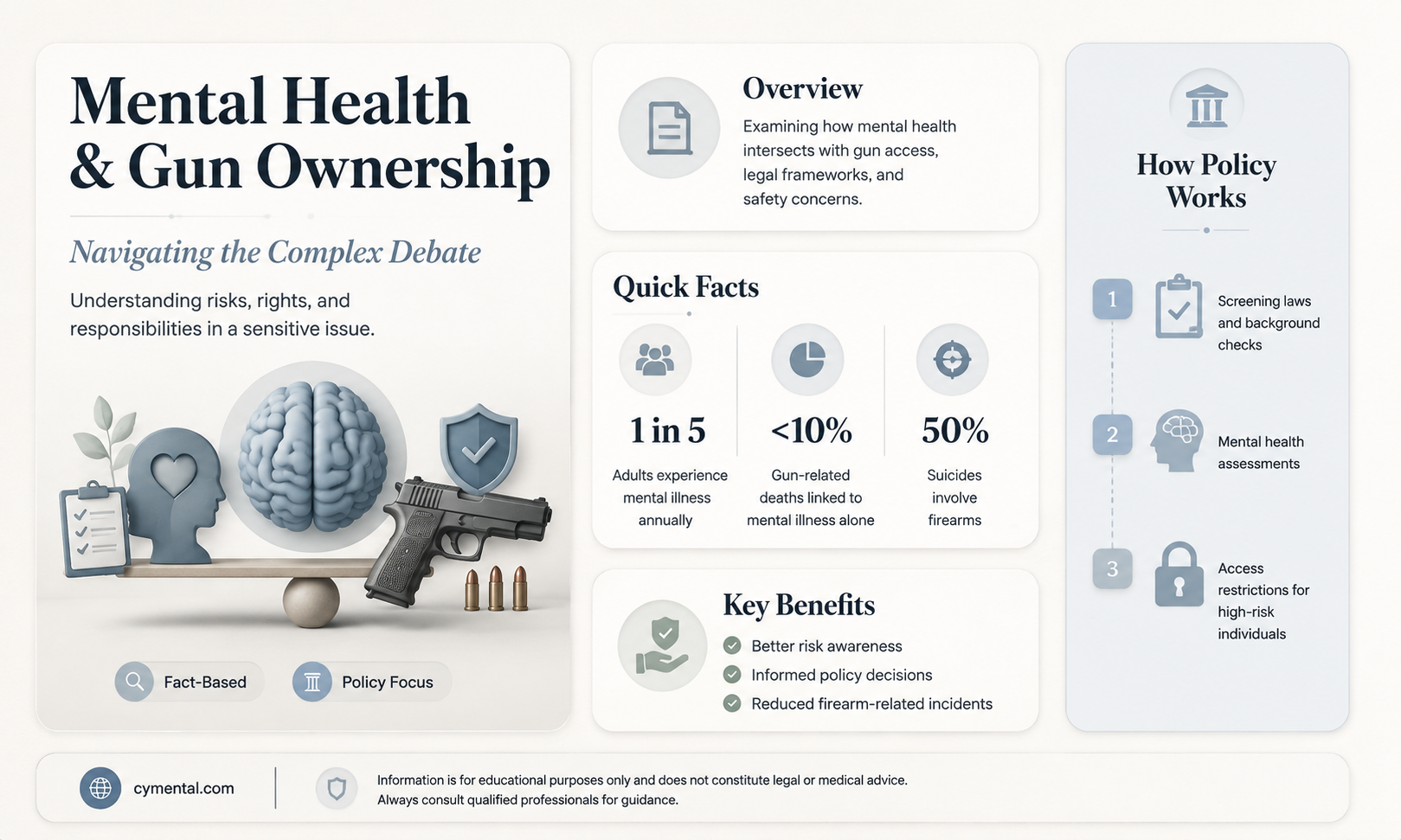
The question of whether someone with mental health issues can own a gun is a complex and sensitive topic that intersects with legal, ethical, and psychological considerations. In many countries, gun ownership laws include provisions that restrict access to firearms for individuals deemed to have certain mental health conditions, often with the intent to prevent potential harm to themselves or others. However, these laws vary widely in their specifics, and the criteria for determining who is considered a risk can be subjective and controversial. Mental health professionals, policymakers, and advocacy groups often find themselves at odds over how to balance the rights of individuals with mental health issues against the need for public safety. This debate is further complicated by the stigma surrounding mental illness and the lack of understanding about the vast majority of people with mental health conditions, who are not violent and pose no threat to others.
Explore related products

What You'll Learn
- Legal Requirements: Overview of laws regulating gun ownership for individuals with mental health conditions
- Background Checks: Explanation of how mental health records are checked during the gun purchase process
- Red Flags: Indicators that might disqualify someone with mental health issues from owning a firearm
- Support Systems: Resources and support available for individuals with mental health concerns who wish to own guns
- Controversies: Discussion on the ethical and societal debates surrounding mental health and gun ownership

Legal Requirements: Overview of laws regulating gun ownership for individuals with mental health conditions
In the United States, the legal requirements for gun ownership are complex and vary significantly from state to state. For individuals with mental health conditions, these laws can be particularly challenging to navigate. The Second Amendment of the U.S. Constitution protects the right to keep and bear arms, but this right is not absolute. Federal law prohibits the sale of firearms to individuals who have been adjudicated as mentally defective or committed to a mental institution. However, the specifics of these prohibitions and the processes for enforcing them differ widely across jurisdictions.
Some states have implemented more stringent laws that require mental health evaluations or prohibit gun ownership for individuals with certain diagnoses. For example, California has a law that allows family members or law enforcement to petition a court to temporarily remove firearms from individuals who may pose a risk to themselves or others due to mental illness. Other states, such as Texas, have laws that protect the gun rights of individuals with mental health conditions, provided they have not been involuntarily committed or adjudicated as mentally defective.
The legal landscape surrounding gun ownership and mental health is further complicated by the lack of uniformity in how mental health conditions are defined and evaluated. Different states use varying criteria to determine whether an individual is considered mentally defective or a danger to themselves or others. This inconsistency can lead to confusion and potential legal issues for individuals with mental health conditions who wish to own firearms.
Moreover, the stigma associated with mental illness can exacerbate these legal challenges. Individuals with mental health conditions may face discrimination and prejudice when attempting to exercise their right to bear arms. This stigma can also deter people from seeking necessary mental health treatment, fearing that it may impact their ability to own firearms in the future.
In conclusion, the legal requirements for gun ownership for individuals with mental health conditions are multifaceted and can vary greatly depending on the state. While federal law provides some guidelines, the specifics are often left to individual states, leading to a patchwork of regulations that can be difficult to understand and navigate. It is crucial for individuals with mental health conditions to be aware of their rights and the laws in their state to ensure they can make informed decisions about gun ownership.
Legal Guide: Establishing Mental Incompetence in a Loved One
You may want to see also
Background Checks: Explanation of how mental health records are checked during the gun purchase process
In the United States, the process of purchasing a firearm involves a thorough background check, which includes an evaluation of the buyer's mental health records. This is a critical step aimed at preventing individuals who may pose a risk to themselves or others from obtaining firearms. The National Instant Criminal Background Check System (NICS) is the primary tool used for this purpose. When a person attempts to buy a gun from a licensed dealer, the dealer must contact NICS to conduct a background check. This check includes a review of the buyer's criminal history, as well as any available mental health records.
The mental health records check is designed to identify individuals who have been involuntarily committed to a mental institution or have been adjudicated as mentally defective. This information is reported to NICS by various sources, including state and local law enforcement agencies, mental health facilities, and courts. If the background check reveals any disqualifying mental health records, the gun purchase will be denied. However, it's important to note that not all mental health issues will result in a denial. The specific circumstances and the nature of the mental health condition are taken into account during the evaluation process.
One of the challenges associated with the mental health records check is the variability in how different states and jurisdictions report and maintain these records. Some states have more comprehensive reporting systems than others, which can lead to inconsistencies in the background check process. Additionally, there are concerns about the potential for false positives or the stigmatization of individuals with mental health conditions who may not pose a risk.
To address these issues, there have been efforts to improve the reporting and sharing of mental health records across different agencies and jurisdictions. The goal is to ensure that the background check process is as accurate and comprehensive as possible, while also protecting the rights of individuals with mental health conditions. This includes initiatives to standardize reporting formats, increase training for law enforcement and mental health professionals, and enhance the overall coordination between different entities involved in the background check process.
In conclusion, the mental health records check is a crucial component of the gun purchase process in the United States. It is designed to prevent individuals who may pose a risk due to their mental health status from obtaining firearms, while also striving to maintain accuracy and fairness. Ongoing efforts to improve the reporting and sharing of mental health records are essential to achieving these goals and ensuring the safety of all members of society.
Nurturing Resilience: How to Comfort a Mentally Exhausted Friend
You may want to see also
Red Flags: Indicators that might disqualify someone with mental health issues from owning a firearm
Individuals with certain mental health conditions may exhibit behaviors or symptoms that could be considered "red flags" when it comes to firearm ownership. These indicators are not definitive proof that someone should be disqualified from owning a gun, but they can serve as warning signs that further evaluation may be necessary. It's important to note that mental health professionals and law enforcement agencies often work together to assess these situations on a case-by-case basis.
Some potential red flags include a history of violent behavior, threats of self-harm or suicide, or a diagnosis of a severe mental illness such as schizophrenia or bipolar disorder. Additionally, individuals who have been hospitalized for mental health reasons or who have a history of substance abuse may also be considered at higher risk. It's crucial to remember that these are general guidelines and that each individual's situation should be evaluated separately.
In some cases, individuals with mental health issues may be disqualified from owning firearms if they have been deemed a danger to themselves or others by a court of law. This can happen if someone has been involuntarily committed to a mental health facility or if they have a restraining order against them. However, it's important to note that these laws vary by state and country, and that not all mental health diagnoses will automatically disqualify someone from owning a firearm.
Ultimately, the decision of whether or not someone with mental health issues should own a firearm is a complex one that requires careful consideration of a variety of factors. Mental health professionals, law enforcement agencies, and policymakers all have a role to play in ensuring that individuals who may pose a risk to themselves or others are not able to access firearms. At the same time, it's important to respect the rights of individuals with mental health issues and to avoid stigmatizing them unnecessarily.
Understanding Cognitive Pace: What Does It Mean to Be Mentally Slow?
You may want to see also
Support Systems: Resources and support available for individuals with mental health concerns who wish to own guns
Individuals with mental health concerns who wish to own guns often face unique challenges and require specific support systems. One crucial resource is mental health professionals who can provide assessments and recommendations regarding firearm ownership. These professionals can help individuals understand the potential risks and benefits of owning a gun and develop strategies for safe ownership.
Another important support system is gun safety education programs. These programs can teach individuals with mental health concerns about proper gun handling, storage, and maintenance. They can also provide information on how to recognize and respond to potential threats, both from oneself and others.
Additionally, peer support groups can be invaluable for individuals with mental health concerns who wish to own guns. These groups can provide a safe space for individuals to share their experiences, ask questions, and receive support from others who understand their unique challenges.
It is also essential to consider the role of family and friends in supporting individuals with mental health concerns who wish to own guns. Loved ones can provide emotional support, help with gun safety, and serve as a sounding board for concerns and questions.
Finally, it is important to be aware of the legal and regulatory framework surrounding gun ownership for individuals with mental health concerns. This includes understanding the laws and regulations in one's state or country, as well as any potential restrictions or requirements related to mental health history.
In conclusion, individuals with mental health concerns who wish to own guns require a comprehensive support system that includes mental health professionals, gun safety education, peer support, family and friends, and legal guidance. By leveraging these resources, individuals can make informed decisions about gun ownership and develop strategies for safe and responsible use.
Understanding Involuntary Commitment to Mental Health Facilities
You may want to see also
Controversies: Discussion on the ethical and societal debates surrounding mental health and gun ownership
The intersection of mental health and gun ownership is a contentious issue, sparking ethical and societal debates that touch on individual rights, public safety, and the complexities of mental illness. One of the primary controversies centers around the question of whether individuals with mental health conditions should be allowed to possess firearms. Advocates for gun rights argue that mental health status should not be a determining factor in one's ability to own a gun, citing concerns about stigmatization and the potential for discrimination. On the other hand, proponents of stricter gun control laws contend that individuals with certain mental health conditions may pose a heightened risk of violence, either to themselves or others, and therefore should be subject to more stringent regulations regarding firearm ownership.
A key aspect of this debate involves the definition and classification of mental health conditions that would potentially disqualify an individual from owning a gun. Mental health professionals and policymakers often grapple with the challenge of identifying specific conditions or criteria that would warrant restrictions on gun ownership. This task is complicated by the diverse nature of mental illness, the variability in individual experiences, and the limited research on the relationship between mental health and violent behavior. Furthermore, there are concerns about the potential for overreach or misuse of mental health information to infringe upon individuals' rights, highlighting the need for careful consideration and nuanced approaches to this issue.
Another dimension of the controversy surrounds the question of how to balance individual rights with public safety concerns. While the right to bear arms is enshrined in the Constitution, there is also a compelling interest in protecting the public from potential harm. This tension is particularly acute in cases where individuals with mental health conditions have access to firearms and may pose a risk to themselves or others. Policymakers must navigate this delicate balance, weighing the importance of preserving individual liberties against the need to prevent violence and protect vulnerable populations.
The debate also raises important questions about the role of mental health professionals in assessing and managing the risks associated with gun ownership. Some argue that mental health providers should play a more active role in identifying individuals who may be at risk of harming themselves or others and in facilitating interventions to prevent such outcomes. However, others caution against the potential for mental health professionals to overstep their bounds or to make judgments that are not within their expertise. These concerns underscore the need for clear guidelines and ethical standards to govern the involvement of mental health professionals in matters related to gun ownership.
Ultimately, the controversies surrounding mental health and gun ownership reflect broader societal tensions and ethical dilemmas. As a society, we must grapple with the complex interplay between individual rights, public safety, and the challenges posed by mental illness. This requires a thoughtful and multifaceted approach, one that takes into account the diverse perspectives and experiences of all stakeholders involved. By engaging in open and honest dialogue, we can work towards developing policies and practices that strike a balance between protecting individual liberties and promoting public safety.
Navigating Tough Choices: When to Distance Yourself from Mental Illness
You may want to see also
Frequently asked questions
The legality of gun ownership for individuals with mental health diagnoses varies by country and jurisdiction. In many places, there are laws that restrict gun ownership for those deemed to be a danger to themselves or others, which can include individuals with certain mental health conditions. However, not all mental health diagnoses automatically disqualify someone from owning a gun.
Factors typically considered include the specific mental health diagnosis, the severity of the condition, the individual's treatment history, and their overall behavior and stability. Authorities may also look at whether the person has been hospitalized or committed to a mental institution, and if they have a history of violent behavior.
Yes, there are advocacy groups that argue for the rights of individuals with mental health conditions to own guns, provided they do not pose a significant risk to themselves or others. These groups often emphasize the importance of individual assessment and argue against blanket restrictions based solely on a mental health diagnosis.
Potential risks include the increased likelihood of suicide, especially if the individual has a history of suicidal thoughts or attempts. There is also a concern about the potential for violent behavior, particularly if the person's mental health condition is not well-managed or if they experience a crisis.
Individuals with mental health issues should consult with legal professionals and mental health experts to understand the laws in their jurisdiction. They should also be proactive in managing their mental health condition, seeking treatment and support as needed, and being transparent about their mental health status when required by law.