Noah Parker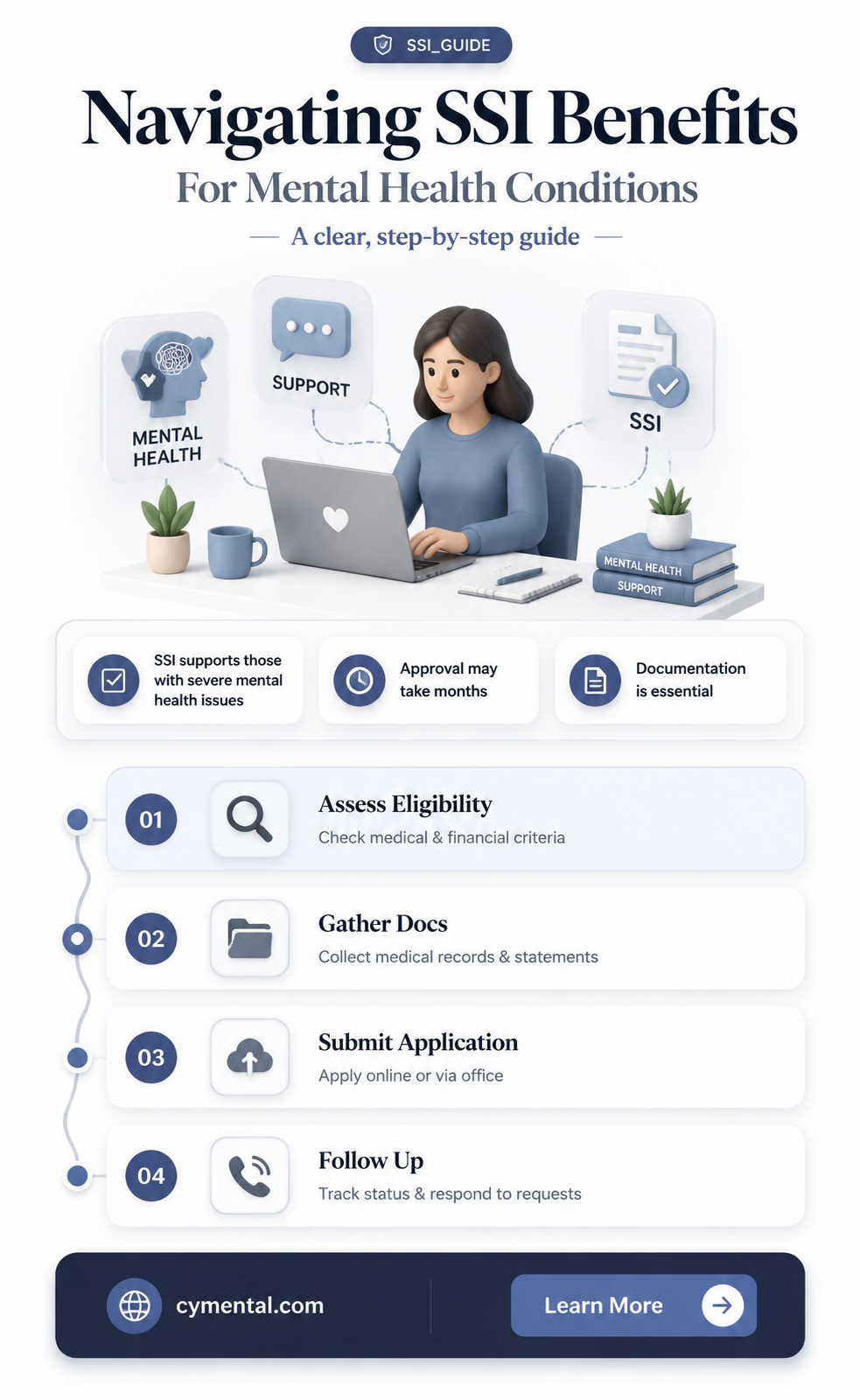
Supplemental Security Income (SSI) is a federal program that provides financial assistance to individuals with limited income and resources who are elderly, blind, or disabled. Mental illness can qualify as a disability under SSI, but the process of obtaining benefits can be complex and requires thorough documentation of the condition and its impact on the individual's ability to work. Applicants must meet specific medical criteria and provide evidence from medical professionals to support their claim. The Social Security Administration (SSA) evaluates each case individually to determine eligibility based on the severity of the mental illness and its effect on the person's daily functioning and employability.
| Characteristics | Values |
|---|---|
| Eligibility | To qualify for SSI benefits due to mental illness, an individual must meet the SSA's definition of disability, which means their mental condition must significantly limit their ability to perform basic work activities and is expected to last at least one year or result in death. |
| Documentation | Medical records, psychological evaluations, and other supporting documents are required to substantiate the claim. |
| Benefits | SSI provides monthly cash benefits to help cover basic needs such as food, clothing, and shelter. The amount varies by state and individual circumstances. |
| Application | Applications can be submitted online, by phone, or in person at a local SSA office. |
| Appeals | If an application is denied, the individual has the right to appeal the decision through a formal process. |
| Additional Support | SSI recipients may also be eligible for other benefits such as Medicaid, Medicare, and food stamps. |
Explore related products


What You'll Learn
- Eligibility Criteria: Understand the specific mental health conditions that qualify for SSI benefits
- Application Process: Learn the steps to apply for SSI, including necessary documentation and forms
- Benefit Amount: Discover how much financial assistance SSI provides for mental illness
- Appeals and Denials: Find out what to do if your SSI application is denied and how to appeal
- Additional Resources: Explore other support services and resources available for those with mental illness

Eligibility Criteria: Understand the specific mental health conditions that qualify for SSI benefits
To qualify for SSI benefits based on mental illness, individuals must meet specific eligibility criteria set forth by the Social Security Administration (SSA). The SSA evaluates mental health conditions under the Mental Disorders category, which includes a range of impairments such as schizophrenia, depression, anxiety disorders, and intellectual disabilities. Each condition has its own set of criteria that must be met to be considered disabling under SSI guidelines.
For instance, to be eligible for SSI benefits due to depression, an individual must experience at least five of the following symptoms: persistent feelings of sadness or emptiness, loss of interest in activities once enjoyed, appetite disturbances, sleep disturbances, fatigue, feelings of worthlessness or guilt, difficulty concentrating, and recurrent thoughts of death or suicide. Additionally, these symptoms must significantly limit the individual's ability to perform basic work-related activities, such as remembering instructions, maintaining a regular work schedule, or interacting appropriately with others in a work setting.
Similarly, for anxiety disorders, the SSA requires documentation of at least three of the following symptoms: persistent worry or fear, restlessness or feeling on edge, fatigue, difficulty concentrating, irritability, muscle tension, or sleep disturbances. These symptoms must also result in significant limitations in work-related functions.
It's important to note that the SSA does not simply rely on a diagnosis to determine eligibility. Instead, they assess the severity and impact of the mental health condition on the individual's daily life and ability to work. This often involves reviewing medical records, conducting mental status examinations, and considering statements from treating physicians and other mental health professionals.
In some cases, individuals with mental illness may also qualify for SSI benefits under the "residual functional capacity" (RFC) assessment. This assessment evaluates the individual's ability to perform work-related tasks despite their mental health limitations. If the RFC assessment determines that the individual cannot perform any substantial gainful activity due to their mental illness, they may be eligible for SSI benefits even if they do not meet the specific criteria for a listed mental disorder.
Understanding the eligibility criteria for SSI benefits related to mental illness is crucial for individuals seeking financial assistance. By familiarizing themselves with the SSA's guidelines and working closely with mental health professionals, individuals can better navigate the application process and increase their chances of receiving the support they need.
Navigating the VA Disability Claims Process for Depression: A Comprehensive Guide
You may want to see also
Explore related products


Application Process: Learn the steps to apply for SSI, including necessary documentation and forms
To apply for SSI benefits due to mental illness, you must follow a specific process that involves gathering necessary documentation and filling out the appropriate forms. The first step is to collect all relevant medical records, including diagnoses, treatment plans, and any hospitalizations or emergency room visits related to your mental health condition. It's crucial to obtain detailed reports from your treating physicians that outline the severity and impact of your mental illness on your daily functioning and ability to work.
Once you have your medical documentation in order, you'll need to fill out the SSI application form, which can be done online, by phone, or in person at your local Social Security office. The form will ask for personal information, such as your name, address, and contact details, as well as specifics about your mental health condition and how it affects your life. Be prepared to provide detailed answers and supporting evidence to substantiate your claims.
In addition to the application form, you may also need to complete other forms, such as the Mental Residual Functional Capacity Assessment, which evaluates your ability to perform various mental tasks and activities. This form is typically filled out by a mental health professional and provides the Social Security Administration with a comprehensive understanding of your mental health limitations.
After submitting your application and supporting documentation, you may be required to undergo a medical examination or psychological evaluation to further assess the severity of your mental illness. This step is often necessary to determine your eligibility for SSI benefits, so it's essential to cooperate fully with the evaluation process.
Finally, if your application is approved, you'll begin receiving SSI benefits, which can provide crucial financial support to help you manage your mental health condition and improve your overall quality of life. Remember that the application process can be complex and time-consuming, so it's important to be patient and persistent in pursuing the benefits you deserve.
Exploring Careers in Mental Health: A Comprehensive Guide
You may want to see also
Explore related products



Benefit Amount: Discover how much financial assistance SSI provides for mental illness
The benefit amount for SSI (Supplemental Security Income) related to mental illness varies based on several factors, including the severity of the condition, the individual's work history, and the state in which they reside. As of 2023, the federal base payment for SSI is $794 per month for an individual and $1,191 per month for a couple. However, these amounts can be supplemented by state payments, which can increase the total benefit significantly.
To determine the exact benefit amount, the Social Security Administration (SSA) conducts a thorough evaluation of the applicant's mental health condition. This includes reviewing medical records, conducting interviews, and assessing the individual's ability to perform daily tasks and maintain employment. The SSA uses a specific set of criteria to determine if the mental illness qualifies for SSI benefits, including the duration of the condition, its impact on daily life, and the effectiveness of treatment.
Once eligibility is established, the benefit amount is calculated based on the individual's countable income and resources. Countable income includes wages, pensions, and other forms of financial support, while countable resources include cash, savings accounts, and property. The SSA has strict limits on the amount of income and resources an individual can have and still qualify for SSI benefits.
In addition to the federal base payment, some states provide additional supplements to the SSI benefit. These state supplements can vary widely, with some states offering as much as $400 or more per month on top of the federal payment. The availability and amount of these supplements depend on the state's budget and policies regarding SSI benefits.
It's important to note that SSI benefits are not intended to be a long-term solution for financial support. Rather, they are designed to provide temporary assistance to individuals who are unable to work due to a mental illness or other disability. The SSA encourages recipients to seek treatment and rehabilitation with the goal of eventually returning to the workforce.
In conclusion, the benefit amount for SSI related to mental illness can vary significantly depending on individual circumstances and state policies. While the federal base payment provides a foundation for financial support, state supplements and other factors can influence the total benefit amount. Understanding the eligibility criteria and benefit calculation process is essential for individuals seeking SSI assistance for mental health conditions.
Hope Amidst Hardship: Will Things Ever Get Better?
You may want to see also
Explore related products


Appeals and Denials: Find out what to do if your SSI application is denied and how to appeal
If your SSI application for mental illness benefits is denied, it's crucial to understand the reasons behind the denial and the steps you can take to appeal the decision. The Social Security Administration (SSA) may deny your application for various reasons, such as insufficient medical evidence, failure to meet the eligibility criteria, or errors in the application process. To begin the appeals process, you must first receive a written notice of the denial, which will explain the reasons for the decision and your right to appeal.
The appeals process typically involves four stages: reconsideration, hearing, Appeals Council review, and federal court review. During the reconsideration stage, a different SSA employee will review your application and any new evidence you submit. If your application is still denied, you can request a hearing before an administrative law judge, who will listen to your case and make a decision based on the evidence presented. If the judge denies your application, you can then appeal to the SSA's Appeals Council, which will review the judge's decision and either uphold it or reverse it. Finally, if the Appeals Council denies your application, you can file a lawsuit in federal court to challenge the decision.
Throughout the appeals process, it's essential to gather and submit any new medical evidence that supports your claim, such as updated psychiatric evaluations, treatment records, or statements from mental health professionals. You may also want to consider hiring a disability attorney or advocate to help you navigate the appeals process and represent you at hearings. Remember that the appeals process can be lengthy and complex, so it's important to be patient and persistent in pursuing your claim for SSI benefits.
In addition to understanding the appeals process, it's also crucial to be aware of common mistakes that can lead to a denial of your SSI application. For example, failing to provide complete and accurate information on your application, not following through with recommended medical treatments, or not cooperating with the SSA's requests for information can all negatively impact your claim. By being proactive and informed, you can increase your chances of successfully appealing a denial and receiving the SSI benefits you need to support your mental health.
Nourishing Care: Feeding Practices in Mental Health Facilities
You may want to see also
Explore related products





Additional Resources: Explore other support services and resources available for those with mental illness
Beyond SSI: A Multifaceted Approach to Mental Health Support
While SSI provides crucial financial assistance, it's equally important to explore the broader spectrum of support services and resources available for individuals with mental illness. These resources can significantly enhance the quality of life and provide a more comprehensive approach to mental health care.
Community Mental Health Centers: Accessible and Affordable Care
Community mental health centers are a valuable resource, offering a range of services including therapy, counseling, and psychiatric care. These centers often operate on a sliding scale fee basis, making them accessible to individuals regardless of their financial situation. They can provide ongoing support and treatment, which is essential for managing mental health conditions.
Support Groups: Building Connections and Reducing Isolation
Support groups, both in-person and online, offer a platform for individuals with mental illness to connect with others who share similar experiences. These groups foster a sense of community and belonging, which can be instrumental in reducing feelings of isolation and stigma. They also provide an opportunity to learn from others, share coping strategies, and gain emotional support.
Educational Resources: Empowering Through Knowledge
Educational resources, such as online courses, workshops, and seminars, can empower individuals with mental illness by providing them with a deeper understanding of their condition. This knowledge can help them make informed decisions about their treatment and care. Additionally, educational resources can also be beneficial for family members and caregivers, helping them to better support their loved ones.
Technology and Apps: Innovative Tools for Mental Health Management
The advent of technology has brought about a plethora of innovative tools and apps designed to aid in mental health management. These tools can range from mood tracking apps to virtual reality therapy sessions. They offer convenient and often cost-effective ways to access mental health support and can be particularly beneficial for those who may have difficulty accessing traditional services.
In conclusion, while SSI is a vital component of support for individuals with mental illness, it is just one piece of the puzzle. By exploring and utilizing the various support services and resources available, individuals can create a more holistic and effective approach to managing their mental health.
Navigating Your Path to Recovery: A Guide to Mental Health Care Options
You may want to see also
Frequently asked questions
Yes, it is possible to get Supplemental Security Income (SSI) for mental illness. The Social Security Administration (SSA) provides SSI to individuals who are disabled, including those with mental health conditions, and have limited income and resources.
The SSA does not have a specific list of mental illnesses that automatically qualify for SSI. Instead, they evaluate each case based on the severity of the condition and its impact on the individual's ability to work. Common mental health conditions that may qualify include schizophrenia, bipolar disorder, major depressive disorder, anxiety disorders, and post-traumatic stress disorder (PTSD), among others.
To apply for SSI for mental illness, you can start by contacting your local Social Security office or applying online through the SSA's website. You will need to provide medical evidence of your condition, such as a diagnosis from a mental health professional and records of your treatment. Additionally, you will need to provide information about your income, resources, and work history. It is recommended to consult with a disability attorney or advocate to help navigate the application process.