Ava Ramirez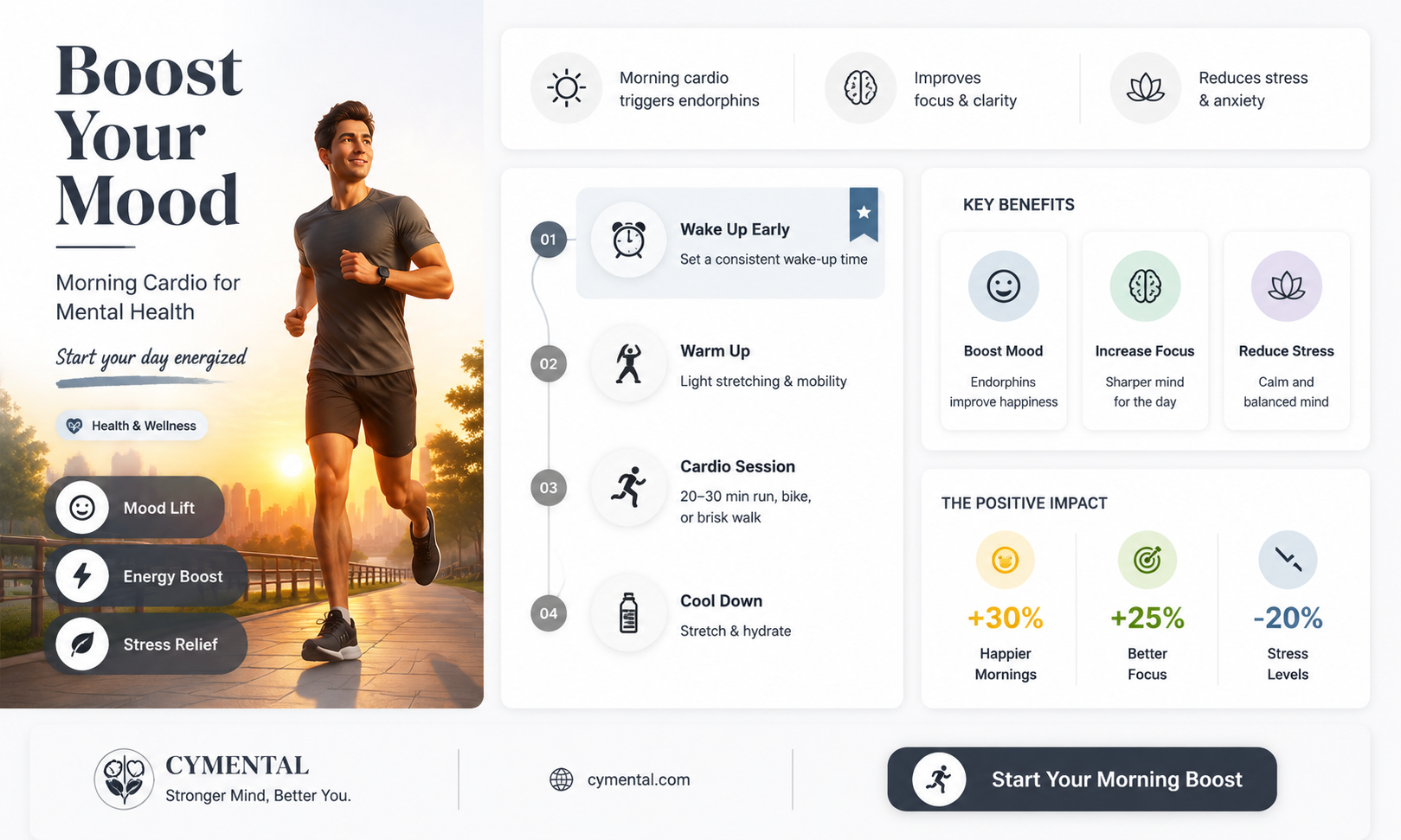
Engaging in a morning cardio session has been widely recognized as a powerful tool for enhancing mental health, offering a multitude of benefits that extend beyond physical fitness. Regular cardiovascular exercise, such as running, cycling, or swimming, triggers the release of endorphins, often referred to as feel-good hormones, which can significantly reduce symptoms of anxiety and depression. Additionally, morning workouts help regulate sleep patterns, boost energy levels, and improve cognitive function, setting a positive tone for the day. The structured routine of morning cardio also provides a sense of accomplishment and discipline, which can enhance self-esteem and overall mental well-being. As research continues to highlight the mind-body connection, incorporating cardio into one's morning routine emerges as a simple yet effective strategy to support mental health and foster resilience against daily stressors.
| Characteristics | Values |
|---|---|
| Stress Reduction | Morning cardio stimulates the release of endorphins, natural mood lifters that reduce stress and anxiety. Studies show a significant decrease in cortisol (stress hormone) levels after aerobic exercise. |
| Improved Mood | Regular morning cardio is linked to increased serotonin and dopamine production, neurotransmitters associated with happiness and well-being. |
| Enhanced Cognitive Function | Increased blood flow to the brain during cardio improves focus, memory, and overall cognitive performance throughout the day. |
| Better Sleep Quality | Morning exercise helps regulate the sleep-wake cycle, promoting deeper and more restful sleep, crucial for mental health. |
| Increased Self-Esteem | Achieving fitness goals through morning cardio boosts confidence and self-worth, positively impacting mental well-being. |
| Reduced Symptoms of Depression and Anxiety | Studies suggest regular aerobic exercise, including morning cardio, can be as effective as medication or therapy in reducing symptoms of mild to moderate depression and anxiety. |
| Improved Resilience to Stress | Consistent morning cardio training enhances the body's ability to cope with stress, leading to greater emotional resilience. |
| Social Connection (if done in groups) | Group cardio sessions in the morning can provide social support and a sense of community, further benefiting mental health. |
| Regulation of Circadian Rhythm | Morning exercise helps synchronize the body's internal clock, promoting a healthy sleep-wake cycle and overall well-being. |
| Increased Energy Levels | Morning cardio boosts energy levels throughout the day, combating fatigue and improving overall mood. |
Explore related products


What You'll Learn
- Cardio and Stress Relief: Physical activity reduces cortisol, promoting relaxation and stress reduction
- Mood Enhancement: Endorphins released during cardio boost mood and combat depression/anxiety
- Improved Sleep Quality: Morning cardio regulates sleep patterns, aiding mental health recovery
- Cognitive Function Boost: Increased blood flow enhances focus, memory, and mental clarity
- Anxiety Reduction: Consistent cardio lowers anxiety symptoms through physiological and psychological mechanisms

Cardio and Stress Relief: Physical activity reduces cortisol, promoting relaxation and stress reduction
Cortisol, often dubbed the "stress hormone," spikes in response to pressure, anxiety, or fear, triggering the body’s fight-or-flight response. While essential for survival, chronically elevated cortisol levels can lead to fatigue, weakened immunity, and mental health issues like depression and anxiety. Enter cardio: studies show that moderate-intensity aerobic exercise, such as brisk walking, cycling, or swimming, significantly reduces cortisol levels. A 2018 meta-analysis published in *Psychoneuroendocrinology* found that 30–45 minutes of cardio, performed 3–5 times weekly, effectively lowers cortisol in adults aged 18–65. This reduction isn’t just biological—it translates to tangible mental benefits, including improved mood and reduced stress perception.
To harness cardio’s cortisol-lowering power, focus on consistency over intensity. High-intensity interval training (HIIT) can sometimes elevate cortisol temporarily, so opt for steady-state activities like jogging, dancing, or rowing. Morning workouts are particularly effective, as they set a calm tone for the day and align with the body’s natural cortisol rhythm, which peaks upon waking. Pair cardio with mindfulness techniques, such as deep breathing during cool-downs, to amplify relaxation. For beginners, start with 20-minute sessions and gradually increase duration and frequency. Remember, the goal isn’t to exhaust yourself but to create a sustainable routine that fosters both physical and mental resilience.
Comparing cardio to other stress-relief methods highlights its unique advantages. While meditation and yoga excel at calming the mind, cardio addresses stress at its physiological root by regulating cortisol. Unlike medication or supplements, cardio offers holistic benefits, including improved cardiovascular health and weight management. However, it’s not a one-size-fits-all solution. Individuals with adrenal fatigue or chronic stress should consult a healthcare provider before starting a new exercise regimen. Combining cardio with other stress-management strategies, such as journaling or therapy, can yield even greater mental health improvements.
Practical implementation is key to reaping cardio’s stress-relief benefits. Schedule morning workouts as non-negotiable appointments with yourself, treating them as essential as sleep or meals. Invest in comfortable gear and choose activities you genuinely enjoy to stay motivated. Track progress not just by physical changes but by mental markers—notice how stress feels less overwhelming or how mood stabilizes over time. For those short on time, even 10 minutes of jumping jacks or stair-climbing can provide a cortisol-lowering boost. The takeaway? Cardio isn’t just about burning calories; it’s a powerful tool to recalibrate your stress response and cultivate lasting mental clarity.
Mental Health Apps: Effective Tools or Just Digital Placebos?
You may want to see also
Explore related products


Mood Enhancement: Endorphins released during cardio boost mood and combat depression/anxiety
Cardio exercise triggers the release of endorphins, often referred to as "feel-good" hormones, which act as natural painkillers and mood elevators. These chemicals interact with receptors in the brain to reduce stress and enhance feelings of well-being. For individuals struggling with depression or anxiety, this biochemical response can provide immediate relief, offering a sense of calm and positivity that lasts beyond the workout itself. Studies show that even moderate-intensity activities, such as a 30-minute brisk walk or jog, can stimulate this endorphin release, making morning cardio an accessible and effective tool for mood enhancement.
To maximize the mood-boosting benefits of cardio, consistency is key. Aim for at least 150 minutes of moderate aerobic activity per week, as recommended by health guidelines. For those with busy schedules, breaking this into shorter sessions, like a 20-minute morning run or cycling session, can be equally effective. Incorporating variety—such as alternating between running, swimming, or dancing—can keep the routine engaging and sustainable. For older adults or beginners, starting with low-impact options like walking or water aerobics ensures safety while still reaping the endorphin-driven rewards.
While endorphins are a significant player, cardio’s impact on mood extends beyond this single hormone. Exercise also reduces levels of cortisol, the stress hormone, and promotes the production of serotonin and dopamine, neurotransmitters linked to happiness and motivation. This multi-faceted approach makes morning cardio particularly powerful for combating symptoms of anxiety and depression. For instance, a study published in the *Journal of Psychiatric Research* found that participants who engaged in regular aerobic exercise experienced a 26% reduction in depression symptoms compared to non-exercisers.
Practical tips can enhance the mental health benefits of morning cardio. Pairing exercise with natural light exposure, such as an outdoor jog or walk, can further elevate mood by regulating circadian rhythms. Listening to uplifting music or podcasts during workouts can also amplify the experience, creating a positive association with the activity. For those with anxiety, mindfulness techniques—like focusing on breathing or the rhythm of movement—can deepen the calming effects. Finally, tracking progress, whether through a journal or fitness app, provides tangible evidence of improvement, reinforcing motivation and a sense of accomplishment.
Incorporating morning cardio into a mental health routine requires awareness of individual needs and limitations. While endorphins offer a natural and immediate mood boost, they are not a standalone solution for severe depression or anxiety. Combining exercise with therapy, medication, or other treatments can yield more comprehensive results. For those new to exercise, starting slowly and consulting a healthcare provider ensures safety and builds confidence. Ultimately, the endorphin-driven mood enhancement from morning cardio is a simple yet powerful step toward greater mental well-being, offering both short-term relief and long-term resilience.
Diagnosis and Beyond: How Mental Health Labels Impacted My Journey
You may want to see also
Explore related products


$27.99 $27.99


Improved Sleep Quality: Morning cardio regulates sleep patterns, aiding mental health recovery
Morning cardio isn’t just about burning calories—it’s a powerful tool for resetting your body’s internal clock. Research shows that engaging in 30–45 minutes of moderate-intensity aerobic exercise, such as brisk walking, cycling, or swimming, in the morning can significantly regulate your circadian rhythm. This rhythm, which governs sleep-wake cycles, often becomes disrupted in individuals with mental health challenges like anxiety or depression. By exposing yourself to natural light during morning exercise, you signal to your brain that it’s time to wake up, enhancing alertness during the day and promoting deeper sleep at night.
Consider this: a study published in the *Journal of Sleep Research* found that participants who exercised in the morning experienced a 20% improvement in sleep quality compared to those who exercised later in the day. The mechanism? Morning cardio increases body temperature slightly, which then drops post-exercise, mimicking the natural temperature decline that occurs before sleep. For adults aged 18–65, incorporating this routine can lead to falling asleep faster and staying asleep longer, both critical factors in mental health recovery.
However, timing matters. Aim to complete your workout between 7–9 a.m. to maximize benefits without overstimulating your nervous system too close to bedtime. If you’re new to morning exercise, start with 20 minutes of low-impact activity like yoga or stretching, gradually increasing intensity. Pair this with a consistent sleep schedule—going to bed and waking up at the same time daily—to reinforce the body’s natural sleep-wake cycle.
Practical tip: Avoid screens for at least 30 minutes after your workout to prevent blue light interference with melatonin production. Instead, use this time to hydrate, eat a balanced breakfast, and plan your day. For those with insomnia or sleep disorders, consult a healthcare provider before starting a new exercise regimen, as individual needs may vary.
The takeaway? Morning cardio isn’t just a physical habit—it’s a mental health strategy. By regulating sleep patterns, it creates a foundation for emotional resilience, reduced stress, and improved mood. Think of it as a daily investment in both your body and mind, one that pays dividends in restorative sleep and mental clarity.
Supporting Mentally Disabled Adults: Accessing Essential Resources and Assistance
You may want to see also
Explore related products


Cognitive Function Boost: Increased blood flow enhances focus, memory, and mental clarity
Engaging in a morning cardio session does more than just kick-start your metabolism—it primes your brain for peak performance. When you elevate your heart rate through activities like jogging, cycling, or high-intensity interval training (HIIT), blood flow to the brain increases significantly. This surge delivers oxygen and nutrients essential for cognitive function, sharpening focus, enhancing memory, and improving mental clarity. Studies show that even 20–30 minutes of moderate-intensity cardio can stimulate the release of brain-derived neurotrophic factor (BDNF), a protein that promotes neural growth and connectivity.
Consider this: a 2019 study published in the *British Journal of Sports Medicine* found that participants who engaged in morning cardio demonstrated better cognitive performance throughout the day compared to those who exercised later or not at all. The key lies in the timing. Morning cardio aligns with your body’s natural circadian rhythm, optimizing alertness and mental acuity when you need it most. For adults aged 18–65, the American Heart Association recommends at least 150 minutes of moderate-intensity aerobic activity weekly, but splitting this into shorter, morning sessions can amplify cognitive benefits.
To maximize the cognitive boost, pair your cardio with mindfulness. Incorporate deep breathing or a brief meditation post-workout to enhance oxygen delivery to the brain further. Avoid overexertion, as excessive fatigue can counteract mental clarity. Start with 10–15 minutes of brisk walking or light jogging if you’re new to morning exercise, gradually increasing intensity and duration. Consistency is key—aim for 4–5 mornings per week to maintain steady blood flow improvements and sustain cognitive enhancements.
Comparatively, while evening workouts have their merits, morning cardio uniquely leverages the body’s fasted state, encouraging greater reliance on fat for fuel and potentially heightening mental focus. Additionally, morning exercise reduces cortisol levels early in the day, fostering a calmer, more focused mindset. For older adults, low-impact options like swimming or cycling are ideal, as they minimize joint strain while still boosting blood flow and cognitive function.
Incorporating morning cardio into your routine isn’t just about physical health—it’s a strategic investment in your mental sharpness. By understanding the science behind increased blood flow and its impact on cognitive function, you can tailor your workouts to unlock your brain’s full potential. Start small, stay consistent, and watch as your focus, memory, and clarity soar.
Yoga's Transformative Power: Enhancing Mental Health and Well-being Naturally
You may want to see also
Explore related products


Anxiety Reduction: Consistent cardio lowers anxiety symptoms through physiological and psychological mechanisms
Engaging in consistent cardio exercise, particularly in the morning, can significantly reduce anxiety symptoms by leveraging both physiological and psychological mechanisms. Physiologically, cardio increases the production of endorphins, often referred to as "feel-good" hormones, which act as natural painkillers and mood elevators. Simultaneously, it reduces levels of cortisol, the stress hormone, creating a biochemical environment less conducive to anxiety. For instance, a 30-minute morning jog at a moderate intensity (60-70% of maximum heart rate) has been shown to optimize these hormonal responses, offering immediate and sustained relief for individuals across age groups, from adolescents to older adults.
Psychologically, the structured routine of morning cardio fosters a sense of control and accomplishment, which counteracts the unpredictability often associated with anxiety disorders. The repetitive nature of activities like cycling, swimming, or brisk walking can induce a meditative state, allowing the mind to focus on the present moment rather than future worries. Research suggests that adults who incorporate 20-40 minutes of cardio into their morning routine report a 20-30% reduction in anxiety symptoms over time. Practical tips include pairing exercise with calming music or natural environments to enhance the psychological benefits.
A comparative analysis reveals that morning cardio may be more effective for anxiety reduction than evening workouts due to its alignment with the body’s natural circadian rhythm. Morning exercise helps regulate sleep patterns, a critical factor in managing anxiety, as poor sleep often exacerbates symptoms. For example, individuals who exercise in the morning tend to experience deeper REM sleep, which is essential for emotional regulation. However, consistency is key—irregular exercise schedules may yield less pronounced results, emphasizing the importance of integrating cardio into a daily morning routine.
To maximize anxiety-reducing benefits, consider combining cardio with mindfulness practices. For instance, incorporating deep breathing exercises during a morning walk or run can amplify the calming effects. Additionally, tracking progress through fitness apps or journals can provide tangible evidence of improvement, reinforcing motivation. Caution should be exercised to avoid overtraining, as excessive cardio can lead to increased stress and fatigue, particularly in individuals with pre-existing anxiety conditions. Starting with shorter sessions (15-20 minutes) and gradually increasing duration and intensity is advisable for long-term adherence and effectiveness.
Anime's Impact: Exploring Mental Health Benefits and Emotional Healing
You may want to see also
Frequently asked questions
Yes, morning cardio can significantly boost mental health by increasing endorphin production, reducing stress hormones like cortisol, and improving mood and focus throughout the day.
Even 20–30 minutes of moderate-intensity cardio, such as brisk walking, jogging, or cycling, can provide noticeable mental health benefits, including reduced anxiety and enhanced cognitive function.
While it’s not a standalone treatment, regular morning cardio can complement therapy and medication by reducing symptoms of depression and anxiety, improving sleep, and promoting overall emotional well-being over time.