Madison Cole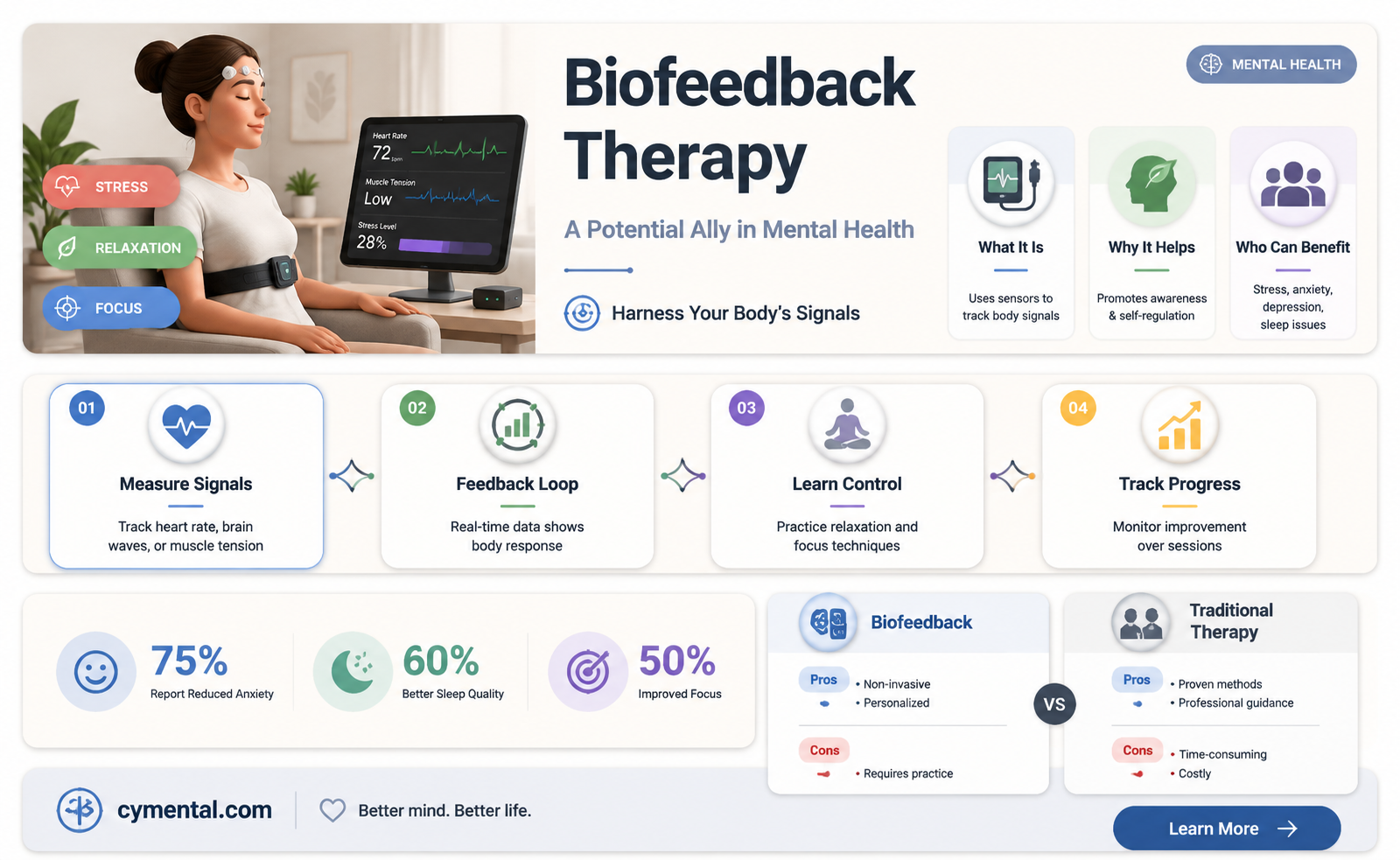
Biofeedback, a technique that enables individuals to gain greater awareness and control over physiological functions such as heart rate, muscle tension, and skin temperature, has emerged as a promising adjunctive therapy for mental illness. By using real-time data from sensors, biofeedback helps individuals recognize and modify stress responses and emotional patterns, potentially alleviating symptoms of conditions like anxiety, depression, and PTSD. Research suggests that biofeedback can enhance self-regulation, reduce hyperarousal, and improve emotional resilience, making it a valuable tool in comprehensive mental health treatment plans. While not a standalone cure, its non-invasive nature and potential to complement traditional therapies highlight its significance in addressing mental health challenges.
| Characteristics | Values |
|---|---|
| Effectiveness | Biofeedback has shown promise in reducing symptoms of anxiety, depression, PTSD, and ADHD. Studies indicate it can complement traditional therapies but is not a standalone cure. |
| Mechanism | Works by teaching individuals to control physiological responses (e.g., heart rate, muscle tension) linked to mental health symptoms, promoting self-regulation. |
| Types | Includes EEG (neurofeedback), HRV (heart rate variability), EMG (muscle activity), and thermal biofeedback, each targeting specific physiological markers. |
| Evidence Level | Moderate evidence supports its use for anxiety and PTSD; limited but growing evidence for depression and ADHD. Research is ongoing for broader applications. |
| Accessibility | Available in clinical settings or via wearable devices for at-home use, though professional guidance is recommended for optimal results. |
| Side Effects | Generally considered safe with minimal risks; occasional reports of mild discomfort or frustration during training. |
| Cost | Varies widely; clinical sessions can be expensive, while at-home devices range from affordable to high-end. Insurance coverage is inconsistent. |
| Popularity | Increasingly popular as a complementary therapy, especially in integrative mental health approaches. |
| Limitations | Requires active participation and practice; effectiveness varies by individual. Not a replacement for medication or psychotherapy. |
| Research Trends | Growing interest in combining biofeedback with mindfulness, CBT, and virtual reality for enhanced outcomes. |
Explore related products


What You'll Learn

Biofeedback for anxiety reduction
Biofeedback offers a tangible way to manage anxiety by teaching individuals to control physiological responses that fuel anxious states. Through sensors, users receive real-time data on metrics like heart rate, muscle tension, and skin conductivity, which are often elevated during anxiety. This awareness allows for targeted interventions, such as deep breathing or progressive muscle relaxation, to restore balance. For instance, a study published in *Applied Psychophysiology and Biofeedback* found that biofeedback reduced anxiety symptoms by 30% in participants over 8 sessions, with effects lasting up to 6 months. This evidence underscores its potential as a non-invasive, drug-free tool for anxiety reduction.
Implementing biofeedback for anxiety requires consistency and patience. Sessions typically last 30–60 minutes, with 1–2 sessions per week recommended for optimal results. Devices like heart rate variability (HRV) monitors or electrodermal activity (EDA) sensors are commonly used. For example, HRV biofeedback trains users to increase their heart rate variability through controlled breathing, often at a pace of 5–7 breaths per minute. This technique activates the parasympathetic nervous system, counteracting the fight-or-flight response. Practical tips include practicing in a quiet space, tracking progress in a journal, and combining biofeedback with mindfulness exercises for enhanced efficacy.
While biofeedback is generally safe, it’s not a one-size-fits-all solution. Individuals with severe anxiety or comorbid conditions like PTSD may require professional guidance to avoid overwhelm. For instance, seeing heightened physiological data can paradoxically increase anxiety in some users. Additionally, biofeedback works best as part of a comprehensive treatment plan, not as a standalone cure. Cost and accessibility are also considerations, as high-quality devices range from $100 to $500, and insurance coverage varies. Despite these limitations, its empirical support and low risk profile make it a valuable option for those seeking alternative anxiety management strategies.
Comparing biofeedback to traditional anxiety treatments highlights its unique advantages. Unlike medication, it addresses the root cause of anxiety by retraining the body’s stress response. Unlike talk therapy, it provides immediate, measurable feedback, which can be motivating for users. For example, a 2020 meta-analysis in *Journal of Anxiety Disorders* found biofeedback to be as effective as cognitive-behavioral therapy (CBT) for mild to moderate anxiety, with fewer dropouts. Its adaptability—usable by children as young as 8 and adults alike—further broadens its appeal. By bridging the gap between mind and body, biofeedback emerges as a versatile tool in the mental health toolkit.
Gender and Mental Health: Who Seeks More Support, Men or Women?
You may want to see also
Explore related products


EEG biofeedback in treating depression
Depression, a pervasive mental health condition, affects millions globally, often resistant to conventional treatments. EEG biofeedback, also known as neurofeedback, emerges as a promising adjunctive therapy. By training individuals to regulate their brainwave patterns, this technique aims to alleviate depressive symptoms at their neurological source. Research indicates that patients with depression often exhibit abnormal EEG activity, particularly in the alpha and theta bands. EEG biofeedback targets these irregularities, offering a non-invasive, drug-free approach to mental health management.
Consider the process: during a session, electrodes placed on the scalp monitor brainwave activity in real time. Patients receive visual or auditory feedback, guiding them to modify their brain patterns toward healthier states. For instance, increasing alpha waves, associated with relaxation, or reducing beta waves, linked to anxiety, can help mitigate depressive symptoms. Studies suggest that 20–30 sessions, each lasting 30–60 minutes, are typically required for noticeable improvements. This method is particularly appealing for those seeking alternatives to medication or psychotherapy, though it often complements rather than replaces these treatments.
A key advantage of EEG biofeedback is its personalization. Unlike one-size-fits-all approaches, this therapy tailors training protocols to individual brainwave profiles. For example, a patient with excessive slow-wave activity might focus on enhancing faster frequencies, while another with overactive beta waves could work on inducing calm states. Practical tips for maximizing benefits include maintaining consistency in session attendance, practicing relaxation techniques between sessions, and tracking mood changes to monitor progress. While results vary, many report reduced symptoms after 10–15 sessions, with long-term benefits solidifying over time.
Critics argue that the efficacy of EEG biofeedback remains under-researched, with some studies yielding mixed results. However, meta-analyses suggest significant symptom reduction in depressed patients, particularly when combined with traditional therapies. Cost and accessibility pose barriers, as sessions can range from $100 to $200 each, and insurance coverage is inconsistent. Despite these challenges, EEG biofeedback represents a frontier in mental health treatment, offering hope to those for whom conventional methods fall short. Its potential lies in addressing depression not as a chemical imbalance alone but as a condition rooted in brain function, paving the way for more holistic interventions.
The Right to Refuse: Mental Health Treatment and Autonomy
You may want to see also
Explore related products





Heart rate variability training for stress
Biofeedback techniques have emerged as a promising tool in the management of mental health conditions, offering a non-invasive approach to regulate physiological responses tied to stress and anxiety. Among these, heart rate variability (HRV) training stands out for its accessibility and evidence-based benefits. HRV refers to the variation in time between each heartbeat, a marker of autonomic nervous system balance. Higher HRV indicates greater resilience to stress, while lower HRV is linked to chronic stress, anxiety, and depression. By training to increase HRV, individuals can improve emotional regulation and reduce symptoms of mental illness.
To begin HRV training, invest in a reliable device such as a chest strap monitor or a smartwatch with HRV tracking capabilities. Popular options include the Polar H10 or Garmin devices, which sync with apps like Elite HRV or Kubios. Start with daily 5–10 minute sessions, ideally in the morning after waking, to establish a baseline. During training, focus on slow, diaphragmatic breathing at a pace of 5–6 breaths per minute, as this rhythm maximizes HRV. Over time, aim to increase session duration to 15–20 minutes, 3–5 times per week, for sustained benefits. Consistency is key, as improvements in HRV often become noticeable after 4–6 weeks of regular practice.
While HRV training is generally safe for all age groups, caution is advised for individuals with cardiovascular conditions or those on beta-blockers, as these can alter HRV readings. Pregnant women and older adults should consult a healthcare provider before starting. It’s also important to avoid overtraining, as excessive focus on HRV metrics can induce anxiety. Pair HRV training with other stress-reduction techniques like mindfulness or progressive muscle relaxation for synergistic effects. For example, combining HRV breathing exercises with a 10-minute guided meditation can enhance overall mental well-being.
Comparatively, HRV training offers a unique advantage over traditional biofeedback methods by focusing on a single, measurable metric that directly reflects stress resilience. Unlike EEG or EMG biofeedback, which require specialized equipment and training, HRV tools are user-friendly and affordable. Studies show that individuals with anxiety disorders who engage in HRV training experience a 20–30% reduction in symptom severity over 8 weeks. This makes it a practical intervention for both clinical and self-care settings, bridging the gap between technology and mental health management.
In conclusion, HRV training is a powerful, evidence-based tool for managing stress and improving mental health. By dedicating just 10–20 minutes daily to focused breathing exercises, individuals can enhance their autonomic balance and emotional resilience. While it’s not a standalone cure for mental illness, when integrated into a holistic wellness plan, HRV training can significantly reduce symptoms and improve quality of life. Start small, stay consistent, and let the data guide your progress toward greater mental clarity and calm.
Podcasts and Mental Health: A Powerful Tool for Healing and Growth
You may want to see also
Explore related products


Biofeedback in PTSD symptom management
Biofeedback has emerged as a promising tool in the management of PTSD symptoms, offering a non-invasive approach to help individuals regain control over their physiological responses to stress and trauma. By monitoring and adjusting bodily functions such as heart rate, muscle tension, and skin conductance, biofeedback empowers individuals to reduce hyperarousal, a hallmark of PTSD. For instance, studies have shown that heart rate variability (HRV) biofeedback can significantly decrease symptoms of anxiety and hypervigilance in PTSD patients, often within 8–12 sessions. This technique involves training individuals to increase their HRV, which reflects improved emotional regulation and resilience to stress.
One practical application of biofeedback in PTSD treatment is the use of electromyography (EMG) to target muscle tension, a common physical manifestation of trauma-related stress. Patients are taught to recognize and reduce muscle activity in areas like the neck, shoulders, or jaw, which often hold tension unconsciously. For example, a 30-minute EMG biofeedback session might focus on progressive muscle relaxation, where individuals tense and release specific muscle groups while receiving real-time feedback on their tension levels. Over time, this practice can help break the cycle of chronic tension and reduce associated symptoms like headaches or insomnia.
While biofeedback shows potential, its effectiveness in PTSD management depends on several factors, including the individual’s engagement and the integration of biofeedback with other therapeutic modalities. For instance, combining biofeedback with cognitive-behavioral therapy (CBT) has been shown to enhance outcomes, as biofeedback addresses the physiological aspects of PTSD while CBT targets maladaptive thought patterns. It’s also crucial to tailor biofeedback protocols to the individual’s specific symptoms—for example, thermal biofeedback might be more effective for someone with cold extremities due to vasoconstriction, while respiratory biofeedback could benefit those with panic-related hyperventilation.
A key advantage of biofeedback is its accessibility and low risk profile, making it suitable for diverse populations, including veterans, survivors of trauma, and adolescents. For younger patients, biofeedback can be particularly engaging when paired with interactive technologies, such as video games that respond to physiological changes. For example, a child with PTSD might use a biofeedback device that rewards them for lowering their skin conductance during stressful tasks, turning therapy into a game-like experience. However, practitioners should be mindful of potential challenges, such as initial frustration or slow progress, and emphasize patience and consistent practice.
In conclusion, biofeedback offers a unique and effective avenue for managing PTSD symptoms by addressing the mind-body connection. Its success lies in its ability to provide tangible, real-time feedback, enabling individuals to observe and modify their physiological responses to trauma triggers. While not a standalone cure, when integrated into a comprehensive treatment plan, biofeedback can significantly improve quality of life for those living with PTSD. Practical tips include starting with short, focused sessions, using biofeedback as a complement to other therapies, and encouraging daily mindfulness practices to reinforce skills learned during treatment.
Athletes and Mental Health: Why Seeking Help Remains a Challenge
You may want to see also
Explore related products


Neurofeedback for ADHD and focus improvement
Neurofeedback, a subset of biofeedback, has emerged as a promising intervention for individuals with ADHD, offering a non-invasive approach to enhance focus and cognitive function. Unlike traditional treatments that rely on medication, neurofeedback targets the brain’s electrical activity directly, training it to operate in more efficient patterns. This method is particularly appealing for those seeking alternatives to stimulant medications, which can have side effects such as insomnia, decreased appetite, or mood changes. By using real-time displays of brain activity, individuals learn to self-regulate their neural functions, potentially reducing ADHD symptoms like inattention and hyperactivity.
The process typically involves placing sensors on the scalp to monitor brainwave patterns while the individual engages in tasks or games designed to reward desirable brain activity. For example, a child with ADHD might play a video game that progresses only when their brain exhibits focused, calm activity. Over multiple sessions—usually 20 to 40, each lasting 30 to 60 minutes—the brain learns to sustain these patterns, translating into improved focus and impulse control in daily life. Studies, such as those published in *Applied Psychophysiology and Biofeedback*, suggest that neurofeedback can lead to measurable improvements in attention and executive functioning, with effects lasting up to six months post-treatment.
While neurofeedback shows potential, it’s not a one-size-fits-all solution. Success often depends on consistent attendance, the quality of the training protocol, and the individual’s ability to engage with the process. For children, sessions should be tailored to their attention span, incorporating interactive elements to maintain interest. Adults may benefit from combining neurofeedback with mindfulness practices to enhance self-regulation skills. It’s also crucial to manage expectations: neurofeedback is a gradual process, and significant improvements may take several weeks to become apparent.
One practical tip for maximizing the benefits of neurofeedback is to integrate it into a broader treatment plan. For instance, pairing it with behavioral therapy or organizational strategies can amplify focus improvements. Parents and individuals should also track progress using standardized ADHD rating scales to objectively measure changes. While the cost and accessibility of neurofeedback can be barriers—sessions range from $100 to $200 each—some insurance plans now cover it as a complementary therapy, making it more feasible for those committed to exploring this innovative approach.
Finding Support: Where to Go for Mental Health Help and Guidance
You may want to see also
Frequently asked questions
Biofeedback is a technique that uses real-time monitoring of physiological functions (like heart rate, muscle tension, and skin temperature) to help individuals gain control over these processes. It is used to manage stress, anxiety, and other mental health conditions by promoting relaxation and self-regulation.
Yes, biofeedback can be effective in reducing symptoms of anxiety and depression by teaching individuals to control physiological responses associated with these conditions, such as heightened stress levels or muscle tension.
Biofeedback is typically used as a complementary therapy alongside traditional treatments like medication and psychotherapy. While it can be beneficial, it is not usually recommended as a standalone treatment for severe mental illnesses.
The time to see results varies, but many individuals notice improvements in symptoms like stress or anxiety within a few sessions. Consistent practice and adherence to the therapy plan are key to achieving lasting benefits.
Biofeedback is generally safe and non-invasive, with minimal risks. Some individuals may experience mild discomfort or frustration during the learning process, but serious side effects are rare. It’s important to work with a trained professional to ensure proper use.