Ava Ramirez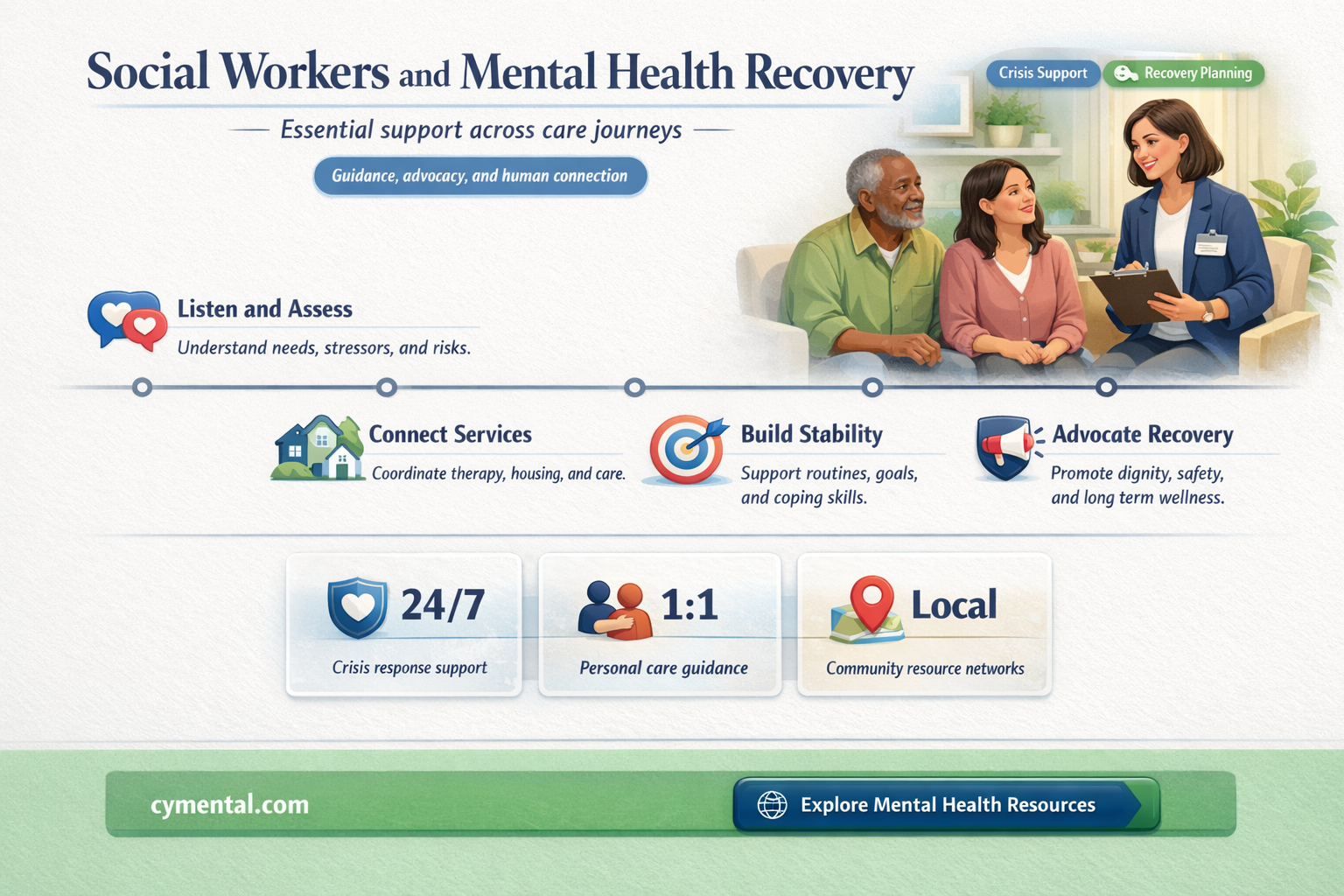
Social workers play a crucial role in supporting individuals with mental illness, offering a range of services that address both their psychological and social needs. Through assessment, counseling, and advocacy, social workers help clients navigate complex healthcare systems, access resources, and develop coping strategies. They often collaborate with other professionals, such as psychiatrists and therapists, to create holistic care plans tailored to each individual’s unique challenges. Beyond clinical settings, social workers also address systemic barriers, such as stigma and lack of access to care, by promoting mental health awareness and policy change. Their focus on empowerment and social justice makes them essential allies in improving the lives of those affected by mental illness.
Explore related products


What You'll Learn
- Assessment and Referral: Identifying mental health issues, connecting individuals to appropriate psychiatric or therapeutic services
- Crisis Intervention: Providing immediate support during mental health emergencies to stabilize and ensure safety
- Advocacy and Rights: Protecting the rights of mentally ill individuals, reducing stigma, and promoting inclusion
- Case Management: Coordinating care, resources, and treatment plans for long-term mental health support
- Community Integration: Helping mentally ill individuals access housing, employment, and social networks for recovery

Assessment and Referral: Identifying mental health issues, connecting individuals to appropriate psychiatric or therapeutic services
Social workers often serve as the first point of contact for individuals experiencing mental health challenges, making their role in assessment and referral critical. Through structured interviews, behavioral observations, and validated screening tools like the GAD-7 for anxiety or PHQ-9 for depression, they systematically evaluate symptoms, severity, and functional impairment. For instance, a social worker might notice a client’s persistent insomnia, social withdrawal, and expressions of hopelessness—key indicators of potential depression—and use these observations to guide further inquiry. This process requires not only clinical acumen but also cultural sensitivity, as mental health expressions vary across communities.
Once a mental health issue is identified, the social worker’s next step is to connect the individual to appropriate services, a task that demands knowledge of local resources and collaboration with multidisciplinary teams. For a 25-year-old with moderate anxiety and no prior psychiatric history, referral to a cognitive-behavioral therapist might be ideal, while a 40-year-old with severe bipolar disorder may require immediate psychiatric evaluation for medication management. Practical considerations, such as insurance coverage, transportation, and wait times, also shape these decisions. For example, in rural areas, teletherapy platforms like BetterHelp or Talkspace can bridge gaps in access, while urban clients might benefit from community mental health clinics offering sliding-scale fees.
A common pitfall in this process is underestimating the complexity of mental health needs or over-relying on a single referral. Suppose a social worker refers a client solely to a psychiatrist for medication without addressing their housing instability or unemployment. In that case, the client’s overall well-being remains compromised. Effective referral strategies thus involve a dual focus: addressing the immediate psychiatric need while linking individuals to wraparound services like case management, vocational training, or peer support groups. This holistic approach ensures that mental health treatment is embedded within a broader context of social support.
Finally, the role of follow-up cannot be overstated. After making a referral, social workers should schedule check-ins to assess whether the client has engaged with services and whether those services are meeting their needs. For example, if a client reports difficulty connecting with their therapist, the social worker might facilitate a change in provider or explore alternative modalities like group therapy. This iterative process—assess, refer, follow up, adjust—ensures that mental health care remains responsive to the evolving needs of the individual, embodying the social work principle of person-centered practice.
Dogs as Healers: Boosting Mental Health Through Canine Companionship
You may want to see also
Explore related products


Crisis Intervention: Providing immediate support during mental health emergencies to stabilize and ensure safety
In moments of acute mental health crisis, every second counts. Crisis intervention is a specialized form of support designed to stabilize individuals experiencing severe emotional distress, suicidal ideation, or psychotic episodes. Social workers trained in this area act as first responders, employing evidence-based techniques to de-escalate situations, assess risk, and connect individuals to immediate resources. Their role is not just to manage the crisis but to create a safety net that prevents long-term harm.
Consider a scenario where a 28-year-old with untreated schizophrenia experiences a psychotic break, becoming agitated and disoriented in a public space. A crisis intervention social worker would first prioritize safety, using calm, non-threatening language to establish rapport. Techniques like active listening and reflective responses help ground the individual in reality. The social worker might say, "I hear you’re feeling overwhelmed. Let’s sit down and talk about what’s happening." Simultaneously, they assess for self-harm risk, substance use, or medical issues that could exacerbate the crisis. Within 30–60 minutes, the goal is to stabilize the individual enough to determine next steps: hospitalization, outpatient care, or referral to community resources.
The effectiveness of crisis intervention lies in its structured yet adaptable approach. Social workers follow a three-step model: assessment, intervention, and follow-up. During assessment, they evaluate the individual’s mental status, support system, and immediate needs. Intervention involves direct strategies like cognitive reframing or safety planning, often paired with practical assistance (e.g., arranging transportation to a crisis center). Follow-up ensures continuity of care, reducing the likelihood of relapse. For instance, a social worker might schedule a check-in call 24 hours after a crisis to reinforce coping strategies and confirm the individual has accessed ongoing support.
Critics argue that crisis intervention is a Band-Aid solution, addressing symptoms without tackling systemic issues like lack of affordable mental health care. While valid, this perspective overlooks the immediate life-saving impact of such interventions. In 2020, the National Alliance on Mental Illness reported that crisis services reduced emergency room visits by 38% among individuals with severe mental illness. Social workers in this field also advocate for policy changes, bridging the gap between crisis management and long-term reform.
To maximize the effectiveness of crisis intervention, social workers must stay updated on best practices and local resources. For example, knowing the location of 24-hour crisis centers, mobile response teams, and telehealth options can expedite care. Additionally, cultural competency is critical; a 2019 study found that individuals from marginalized communities were 40% less likely to engage with crisis services due to mistrust or miscommunication. By tailoring their approach to the individual’s background and needs, social workers can build trust and improve outcomes. In the high-stakes world of mental health emergencies, their role is both challenging and indispensable.
Exploring Cannabis Oil's Potential in Mental Health Treatment: What We Know
You may want to see also
Explore related products





Advocacy and Rights: Protecting the rights of mentally ill individuals, reducing stigma, and promoting inclusion
Social workers play a pivotal role in safeguarding the rights of mentally ill individuals, often acting as their first line of defense against systemic neglect and discrimination. By leveraging legal frameworks such as the Americans with Disabilities Act (ADA) and the Mental Health Parity and Addiction Equity Act, they ensure that clients receive equitable access to healthcare, housing, and employment. For instance, a social worker might assist a client in filing a complaint with the Office for Civil Rights if a healthcare provider denies them treatment based on their mental health status. This proactive approach not only protects individual rights but also sets precedents that challenge broader institutional biases.
Reducing stigma requires more than goodwill—it demands strategic, evidence-based interventions. Social workers employ psychoeducation to dismantle misconceptions, often using platforms like community workshops or social media campaigns. For example, a study published in the *Journal of Social Work* found that stigma-reduction programs incorporating personal narratives of recovery decreased public prejudice by 30%. Practitioners also model inclusive language, replacing terms like "schizophrenic" with "individual with schizophrenia," emphasizing personhood over diagnosis. These efforts, while incremental, cumulatively reshape societal attitudes and foster empathy.
Inclusion is not merely about physical presence but meaningful participation. Social workers facilitate this by advocating for reasonable accommodations in workplaces and schools, such as flexible scheduling for therapy appointments or quiet spaces for sensory regulation. A case in point is the use of Individualized Education Programs (IEPs) for students with mental health conditions, which social workers help design to ensure academic success without marginalization. By bridging gaps between clients and institutions, they transform environments into spaces where mental illness is not a barrier but a considered aspect of human diversity.
The intersection of advocacy and rights protection is particularly critical during crises. Social workers often intervene in situations where mentally ill individuals face involuntary commitment or criminalization, ensuring due process and humane treatment. For instance, they may serve as liaisons between clients and psychiatric advance directive programs, allowing individuals to predetermine their treatment preferences. This empowers clients to retain autonomy even in moments of incapacitation, aligning care with their values and rights. Such interventions highlight the dual role of social workers as both protectors and promoters of self-determination.
Ultimately, the work of social workers in this domain is a testament to the power of systemic advocacy. By addressing rights violations, combating stigma, and fostering inclusion, they not only improve individual lives but also contribute to a more just society. Practical steps for allies include supporting policy reforms like increased funding for community mental health services and volunteering with organizations that provide peer support. As one social worker aptly noted, "Advocacy is not a one-time act but a continuous commitment to equity." In this light, their efforts are not just professional duties but moral imperatives that redefine what it means to care.
Faith and Healing: Exploring Religion's Role in Mental Health Support
You may want to see also
Explore related products


Case Management: Coordinating care, resources, and treatment plans for long-term mental health support
Social workers play a pivotal role in case management for individuals with long-term mental health needs, acting as the linchpin that connects fragmented services into a cohesive support system. Unlike short-term interventions, long-term mental health care requires sustained coordination across medical, social, and community resources. For instance, a social worker might collaborate with psychiatrists to adjust medication dosages (e.g., titrating an antidepressant from 20mg to 40mg over 4 weeks) while simultaneously linking a client to affordable housing programs or vocational training. This dual focus on clinical and social determinants of health ensures that treatment plans address not just symptoms but also the environmental barriers to recovery.
Effective case management begins with a comprehensive assessment, often using tools like the *Level of Care Utilization System (LOCUS)* to determine the intensity of support needed. Social workers then craft individualized care plans, balancing evidence-based practices (e.g., cognitive-behavioral therapy) with practical solutions like transportation assistance or benefits enrollment. For example, a client with schizophrenia might receive weekly therapy sessions paired with a referral to a peer support group and help applying for Supplemental Security Income (SSI). The social worker acts as both advocate and navigator, ensuring the client doesn’t fall through the cracks of siloed systems.
One of the most challenging aspects of case management is maintaining continuity of care during transitions—such as moving from inpatient to outpatient treatment or aging out of youth services. Social workers mitigate these risks by creating "warm handoffs," where they accompany clients to initial appointments with new providers or facilitate family meetings to ensure caregivers understand the treatment plan. For adolescents transitioning to adult services, this might involve gradually shifting responsibility for medication management (e.g., starting with weekly pill organizers and progressing to self-refills by age 18). Such strategies reduce relapse rates and foster independence.
Despite its benefits, case management is not without pitfalls. Burnout among social workers is high, with caseloads often exceeding recommended limits (e.g., 15–20 clients per worker). To sustain effectiveness, agencies must prioritize supervision, training in trauma-informed care, and access to self-care resources. Additionally, clients may resist engagement due to stigma or past negative experiences with systems. Building trust through consistent, nonjudgmental communication is essential—for example, using motivational interviewing techniques to explore ambivalence about treatment rather than imposing solutions.
Ultimately, case management by social workers transforms mental health care from a series of isolated interventions into a dynamic, client-centered process. By addressing medical, social, and economic needs simultaneously, they enable individuals to manage chronic conditions and pursue meaningful lives. For policymakers and practitioners, investing in robust case management infrastructure—including adequate staffing, interoperable health records, and cross-sector partnerships—is not just a best practice but a moral imperative. Without it, even the most innovative treatments risk failing those they aim to serve.
Kick Stress Away: Soccer's Surprising Mental Health Benefits
You may want to see also
Explore related products


Community Integration: Helping mentally ill individuals access housing, employment, and social networks for recovery
Social workers play a pivotal role in community integration for mentally ill individuals by addressing systemic barriers to housing, employment, and social networks. Stable housing is foundational for recovery, yet many face discrimination or lack resources to secure it. Social workers advocate for affordable housing programs, such as Housing First initiatives, which prioritize providing shelter without preconditions like sobriety or treatment compliance. For instance, a study in *Psychiatric Services* found that Housing First models reduced homelessness by 80% among participants with severe mental illness. Social workers also assist clients in navigating applications, subsidies, and landlord negotiations, ensuring housing stability becomes a reality rather than an aspiration.
Employment is another critical component of community integration, offering financial independence and a sense of purpose. However, stigma and skill gaps often exclude mentally ill individuals from the workforce. Social workers employ strategies like Individual Placement and Support (IPS), an evidence-based model that integrates employment services with mental health treatment. IPS focuses on competitive jobs tailored to client preferences, rather than sheltered workshops. A meta-analysis in *The Lancet* showed IPS participants were twice as likely to gain employment compared to traditional vocational programs. Social workers also collaborate with employers to provide accommodations, such as flexible schedules or quiet workspaces, fostering inclusive environments.
Building social networks is equally vital, as isolation exacerbates mental health challenges. Social workers facilitate connections through community-based programs like peer support groups, recreational activities, or volunteer opportunities. For example, the Clubhouse model, implemented in over 30 countries, offers a structured environment where members work alongside staff to manage daily operations, fostering skills and camaraderie. Social workers also leverage technology, such as online forums or apps, to connect clients with shared interests. A study in *Journal of Technology in Behavioral Science* highlighted that digital platforms reduced loneliness by 40% among participants with schizophrenia.
Despite these efforts, challenges persist. Housing shortages, employer reluctance, and fragmented services hinder progress. Social workers must balance advocacy with individualized support, ensuring clients are not overwhelmed by systemic complexities. For instance, a 30-year-old with bipolar disorder might need help drafting a resume, practicing interviews, and identifying local housing vouchers—all within a six-month timeline. Practical tips include creating a "recovery map" with clients, outlining short-term goals like attending a job fair or joining a book club, and celebrating milestones to sustain motivation.
In conclusion, community integration is not a one-size-fits-all solution but a tailored process requiring persistence and creativity. Social workers act as bridges, connecting mentally ill individuals to resources while dismantling barriers. By focusing on housing, employment, and social networks, they empower clients to reclaim agency and rebuild lives. The takeaway? Recovery thrives in communities that embrace inclusion, and social workers are indispensable architects of this transformation.
Seeking Support: A Guide to Accessing Mental Health Assistance
You may want to see also
Frequently asked questions
Yes, social workers play a crucial role in supporting individuals with mental illness by providing counseling, connecting them to resources, and advocating for their needs.
Social workers offer case management, therapy, crisis intervention, assistance with housing and benefits, and coordination of care with other healthcare providers.
While social workers cannot diagnose mental health conditions, they can assess needs, provide therapy, and refer individuals to psychiatrists or psychologists for diagnosis.
Social workers provide education, counseling, and resources to families, helping them understand mental illness and navigate the challenges of caregiving.
Social workers work in various settings, including hospitals, clinics, schools, and community organizations, to provide comprehensive support to individuals with mental illness.