Madison Cole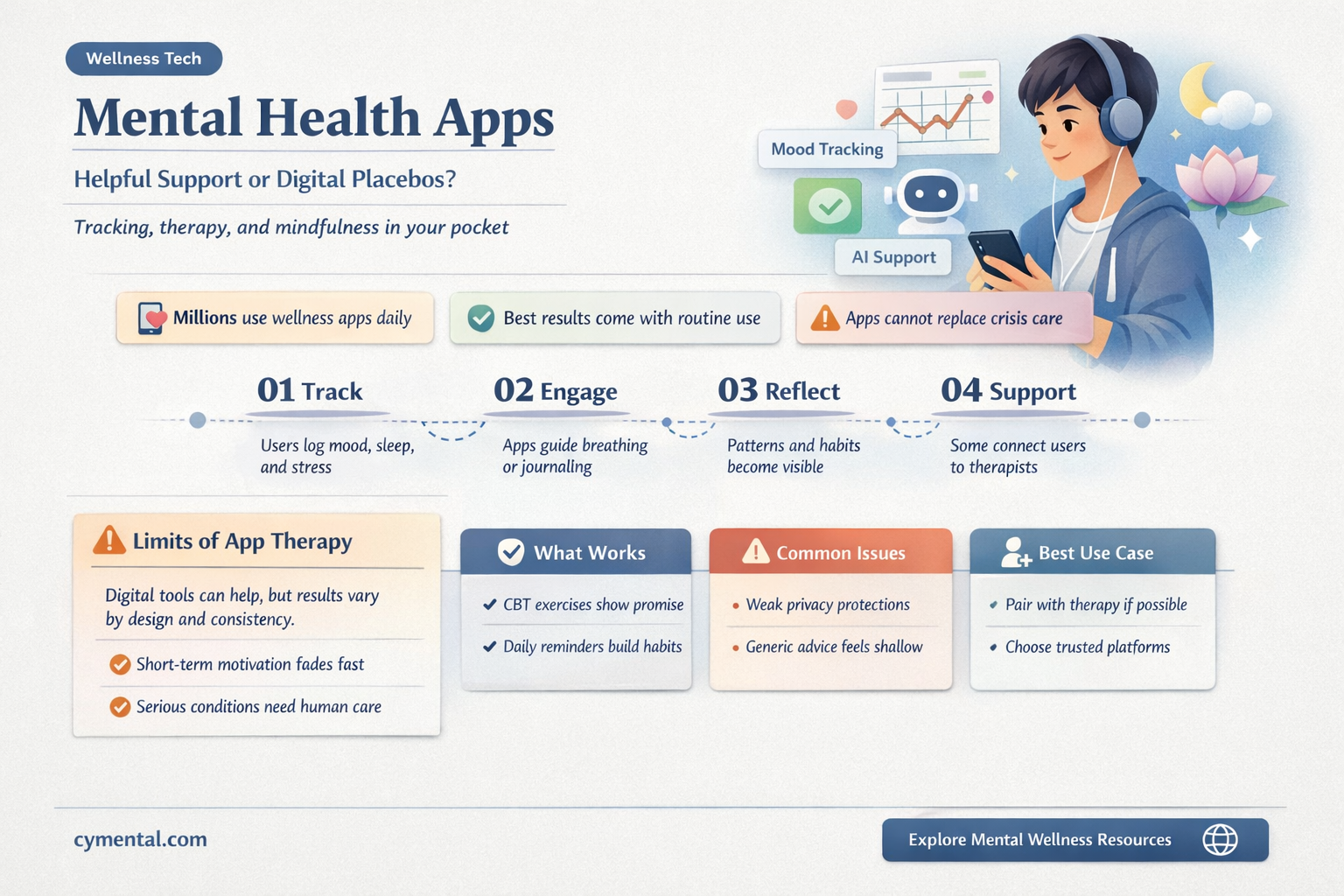
Mental health apps have gained significant traction in recent years as digital tools designed to support individuals in managing stress, anxiety, depression, and other mental health challenges. These apps offer a range of features, from guided meditation and mood tracking to cognitive-behavioral therapy exercises and crisis intervention resources. While proponents argue that they provide accessible, affordable, and stigma-free support, critics question their effectiveness, citing concerns about lack of regulation, limited personalization, and potential over-reliance on technology. As the demand for mental health solutions continues to rise, the debate over whether these apps genuinely help or merely offer a superficial band-aid remains a critical and evolving discussion.
Explore related products


What You'll Learn
- Effectiveness of therapy-based apps in reducing anxiety and depression symptoms
- User engagement and long-term adherence to mental health app usage
- Privacy concerns and data security in mental health applications
- Comparison of AI-driven apps versus human-led mental health support
- Impact of mindfulness and meditation apps on stress management

Effectiveness of therapy-based apps in reducing anxiety and depression symptoms
Therapy-based apps have emerged as a promising tool in the fight against anxiety and depression, offering accessible, scalable solutions for individuals seeking support. Research indicates that these apps, particularly those grounded in cognitive-behavioral therapy (CBT), can significantly reduce symptoms when used consistently. A meta-analysis published in *JAMA Psychiatry* found that CBT-based apps led to moderate improvements in anxiety and depression, comparable to traditional face-to-face therapy for mild to moderate cases. However, effectiveness varies widely depending on user engagement, app quality, and the severity of the condition. For instance, apps like *Headspace* and *Sanvello* have shown positive outcomes in reducing anxiety symptoms, but only when users dedicate at least 10–15 minutes daily over several weeks.
To maximize the benefits of therapy-based apps, users should approach them as structured programs rather than casual tools. Start by setting a consistent schedule—aim for daily use, especially during the initial weeks. Many apps, such as *Woebot*, incorporate conversational AI to simulate therapeutic interactions, which can enhance engagement. For depression, apps that include mood tracking and behavioral activation exercises, like *Moodpath*, have been particularly effective. However, it’s crucial to manage expectations: these apps are not a replacement for severe cases requiring professional intervention. Instead, they serve as a supplement or entry point for those hesitant to seek traditional therapy.
One of the strengths of therapy-based apps lies in their ability to reach underserved populations, including younger adults and individuals in remote areas. Studies show that users aged 18–35 are more likely to engage with mental health apps due to their familiarity with digital platforms. For example, *Calm* has gained popularity among college students for its mindfulness-based interventions, which have been shown to reduce anxiety by 20% in users who practice guided meditations three times a week. However, older adults may face barriers such as technological unfamiliarity or skepticism about digital therapy, highlighting the need for user-friendly designs and targeted outreach.
Despite their potential, therapy-based apps are not without limitations. A common pitfall is low adherence, with many users abandoning apps after just a few sessions. To combat this, some apps incorporate gamification elements or personalized reminders, as seen in *SuperBetter*, which encourages users to complete daily "quests" to improve mental resilience. Additionally, the lack of human interaction can be a drawback for those craving empathy or complex problem-solving. For such cases, hybrid models combining app use with occasional therapist check-ins, as offered by platforms like *Talkspace*, may provide a more balanced approach.
In conclusion, therapy-based apps can be effective in reducing anxiety and depression symptoms, particularly when tailored to individual needs and used consistently. While they are not a one-size-fits-all solution, their accessibility and evidence-based strategies make them a valuable resource in mental health care. Users should select apps backed by clinical research, set realistic goals, and view them as part of a broader self-care strategy. For those with persistent or severe symptoms, consulting a mental health professional remains essential, but apps can serve as a supportive first step toward healing.
Obama's Mental Health Legacy: Progress and Impact on Americans' Well-being
You may want to see also
Explore related products


$9.39 $17.99



User engagement and long-term adherence to mental health app usage
User engagement with mental health apps often hinges on personalization and immediate value. Studies show that apps offering tailored content—such as mood tracking, guided meditations, or cognitive-behavioral therapy exercises—retain users longer than generic platforms. For instance, apps like Headspace and Calm thrive by providing daily, bite-sized sessions (5–10 minutes) that fit into users’ routines. However, personalization goes beyond content; it includes adaptive algorithms that adjust difficulty or focus based on user progress. Without this, users may feel the app doesn’t “understand” them, leading to disengagement.
Long-term adherence is a different challenge, as novelty wears off and motivation wanes. Gamification—rewards, streaks, or progress visuals—can help, but its effectiveness varies. Research indicates that intrinsic motivators, such as tangible improvements in mood or stress levels, are more sustainable than extrinsic rewards. Apps that integrate goal-setting features, like Woebot’s conversational check-ins, encourage users to reflect on their progress, fostering a sense of accountability. Yet, over-reliance on gamification can trivialize mental health, so balance is key.
A critical factor in adherence is the app’s ability to address user needs without overwhelming them. For example, apps targeting anxiety should avoid inundating users with notifications, as this can heighten stress. Instead, they should offer opt-in reminders or allow users to set their own engagement frequency. Age-specific design is also vital: younger users (18–25) may prefer interactive, visually engaging interfaces, while older adults (50+) often favor simplicity and clarity. Ignoring these nuances risks alienating users who feel the app isn’t designed for them.
Practical tips for developers include incorporating flexibility in usage patterns. For instance, allowing offline access ensures users can engage during moments of need, even without internet. Additionally, integrating apps with wearable devices (e.g., tracking sleep via Fitbit) can provide richer insights, enhancing user investment. However, developers must prioritize data privacy, as mistrust can erode engagement faster than any design flaw.
Ultimately, user engagement and long-term adherence depend on an app’s ability to blend utility with empathy. It’s not enough to offer tools; the app must feel like a supportive companion. By focusing on personalization, intrinsic motivation, and user-centric design, mental health apps can move beyond fleeting engagement to become lasting allies in users’ mental wellness journeys.
Empowering Change: Simple Ways You Can Make a Difference Today
You may want to see also
Explore related products


Privacy concerns and data security in mental health applications
Mental health apps collect sensitive data, from mood tracking to therapy session notes, often without clear user consent or robust security measures. A 2020 study found that 70% of mental health apps share user data with third parties, including advertisers and analytics firms, raising concerns about confidentiality and potential misuse. This vulnerability is exacerbated by the lack of standardized regulations, leaving users exposed to data breaches and unauthorized access.
Consider the implications of a data leak: an individual’s struggle with anxiety or depression, shared in a journaling app, could be exploited by employers, insurers, or malicious actors. Unlike medical records protected by laws like HIPAA in the U.S., mental health app data often falls into a regulatory gray area. For instance, apps labeled as "wellness tools" may bypass stringent health data protections, despite handling deeply personal information. Users must scrutinize privacy policies, though these documents are frequently vague or overly complex, making informed consent nearly impossible.
To mitigate risks, users should prioritize apps with end-to-end encryption, transparent data practices, and minimal data collection. For example, apps like Signal (though not mental health-specific) set a gold standard for encryption, ensuring only the user and intended recipient can access data. Mental health apps should adopt similar protocols, especially for features like messaging therapists or storing personal reflections. Additionally, users can reduce exposure by disabling unnecessary permissions, such as location tracking, and using pseudonyms instead of real names.
A comparative analysis reveals that apps developed by healthcare institutions or nonprofits tend to have stronger privacy safeguards than those created by for-profit tech companies. For instance, Sanvello and Woebot have publicly committed to not selling user data, whereas lesser-known apps may monetize user information without explicit disclosure. Regulatory bodies must step in to enforce stricter standards, such as mandatory data breach notifications and penalties for non-compliance, ensuring accountability across the industry.
Ultimately, while mental health apps offer accessibility and convenience, their benefits are undermined by privacy risks. Users must balance the desire for support with the need to protect their data, advocating for transparency and security in app development. Until comprehensive regulations are in place, caution and vigilance remain the best defense against potential harm.
Athletes and Mental Health: Why Seeking Help Remains a Challenge
You may want to see also
Explore related products

$10.88 $15.99



Comparison of AI-driven apps versus human-led mental health support
AI-driven mental health apps offer 24/7 accessibility, a critical advantage for individuals in crisis or those with unpredictable schedules. Unlike human therapists, who operate within limited hours, apps like Woebot and Wysa provide instant support through conversational interfaces. These tools use cognitive-behavioral therapy (CBT) techniques, delivering structured exercises and coping strategies tailored to user inputs. For instance, Woebot engages users in daily check-ins, while Wysa employs mindfulness exercises and meditation guides. However, their effectiveness hinges on user engagement; a 2021 study in *JMIR Mental Health* found that consistent app usage correlated with reduced anxiety symptoms, but drop-off rates remain high.
Human-led support, in contrast, thrives on empathy, nuance, and the ability to read nonverbal cues—elements AI cannot replicate. Therapists adapt sessions in real-time, addressing complex emotions and situational contexts that apps often oversimplify. For example, a therapist might detect subtle changes in tone or body language during a session, adjusting their approach accordingly. This dynamic interaction is particularly vital for severe conditions like PTSD or bipolar disorder, where personalized care is non-negotiable. However, human support is constrained by availability, cost, and geographic barriers, leaving many without access to timely care.
A practical comparison reveals trade-offs. AI apps excel in scalability and affordability, making them ideal for mild to moderate symptoms or preventive care. For instance, a teenager experiencing exam stress might benefit from Headspace’s guided breathing exercises, while a young professional could use Calm’s sleep stories to manage insomnia. Conversely, human therapists are indispensable for deep-rooted issues requiring long-term, relationship-based work. A hybrid approach—using apps for daily maintenance and therapists for intensive sessions—emerges as a balanced solution, though it requires careful coordination.
Ethical considerations further differentiate the two. AI apps raise concerns about data privacy and algorithmic bias, as highlighted in a 2022 *Nature* review. Users must trust that their sensitive information is secure, yet many apps lack transparency in data handling. Human therapists, bound by confidentiality laws, offer a safer space for vulnerable disclosures. Additionally, AI’s reliance on historical data may perpetuate cultural or gender biases, whereas a skilled therapist can provide culturally sensitive care.
In practice, the choice between AI and human support depends on individual needs and circumstances. For a college student with mild depression, an app like Sanvello might suffice, offering CBT tools and peer support communities. For a veteran with chronic PTSD, however, a trained therapist using evidence-based modalities like prolonged exposure therapy would be more effective. Ultimately, neither replaces the other; instead, they complement each other in a mental health ecosystem that prioritizes accessibility, personalization, and ethical care.
Therapy's Impact: My Journey with Mental Illness and Healing
You may want to see also
Explore related products


Impact of mindfulness and meditation apps on stress management
Mindfulness and meditation apps have surged in popularity as digital tools for stress management, with millions of users turning to platforms like Headspace, Calm, and Insight Timer. These apps promise to reduce stress through guided meditations, breathing exercises, and mindfulness practices, often backed by research showing their potential benefits. For instance, a 2019 study published in *JMIR Mental Health* found that regular use of mindfulness apps significantly lowered stress levels in participants over an 8-week period. However, the effectiveness of these apps often depends on consistent usage, with many users reporting greater benefits when practicing daily for at least 10 minutes.
To maximize the impact of mindfulness apps on stress management, it’s essential to approach them as a habit rather than a quick fix. Start by setting a specific time each day for practice, such as first thing in the morning or during a lunch break. Apps like Headspace offer beginner-friendly programs tailored to stress relief, often starting with short, 3- to 5-minute sessions to build consistency. For those with higher stress levels, combining meditation with physical activity, such as yoga or walking, can enhance results. Caution should be taken, however, as over-reliance on apps without addressing underlying stressors may limit long-term effectiveness.
Comparatively, mindfulness apps differ from traditional stress management methods like therapy or medication, offering a low-cost, accessible alternative. While therapy provides personalized strategies, apps like Calm use AI-driven features to adapt content to user preferences, such as sleep stories or nature sounds. For younger users, apps like Stop, Breathe & Think cater to teens and young adults, incorporating gamified elements to keep engagement high. However, these apps are not a substitute for professional help in severe cases of anxiety or depression, and users should monitor their mental health closely.
A persuasive argument for mindfulness apps lies in their ability to democratize mental health tools. In regions with limited access to mental health services, these apps bridge the gap, offering evidence-based practices to diverse populations. For example, Insight Timer provides free access to thousands of meditations, making it a valuable resource for low-income users. Employers are also recognizing their value, with companies like Google and Apple integrating mindfulness apps into employee wellness programs to combat workplace stress. This widespread adoption underscores their potential as a scalable solution for stress management.
In conclusion, mindfulness and meditation apps can be powerful tools for stress management when used thoughtfully and consistently. By incorporating them into daily routines, users can experience measurable benefits, from reduced cortisol levels to improved emotional resilience. However, success hinges on realistic expectations and complementary strategies, such as addressing lifestyle factors like sleep and exercise. As the digital mental health landscape evolves, these apps remain a promising, accessible option for those seeking to manage stress in an increasingly fast-paced world.
Moderate Alcohol Consumption: Boosting Mental Function or Myth?
You may want to see also
Frequently asked questions
Yes, many mental health apps can help improve mental well-being by providing tools for stress management, mindfulness, mood tracking, and access to therapeutic techniques like CBT (Cognitive Behavioral Therapy). However, effectiveness varies depending on the app and the user's needs.
No, mental health apps are not a replacement for professional therapy. They can complement traditional treatment by offering additional support, but they lack the personalized guidance and expertise of a trained therapist.
Reputable mental health apps adhere to privacy regulations like GDPR or HIPAA and use encryption to protect user data. However, it’s important to read an app’s privacy policy and terms of service to understand how your data is handled.
In some cases, yes. Poorly designed apps or those without evidence-based practices may offer ineffective or misleading advice. Additionally, over-reliance on apps without professional support can delay necessary treatment for severe mental health conditions. Always choose apps with proven efficacy and consult a healthcare provider when needed.