Harper Lewis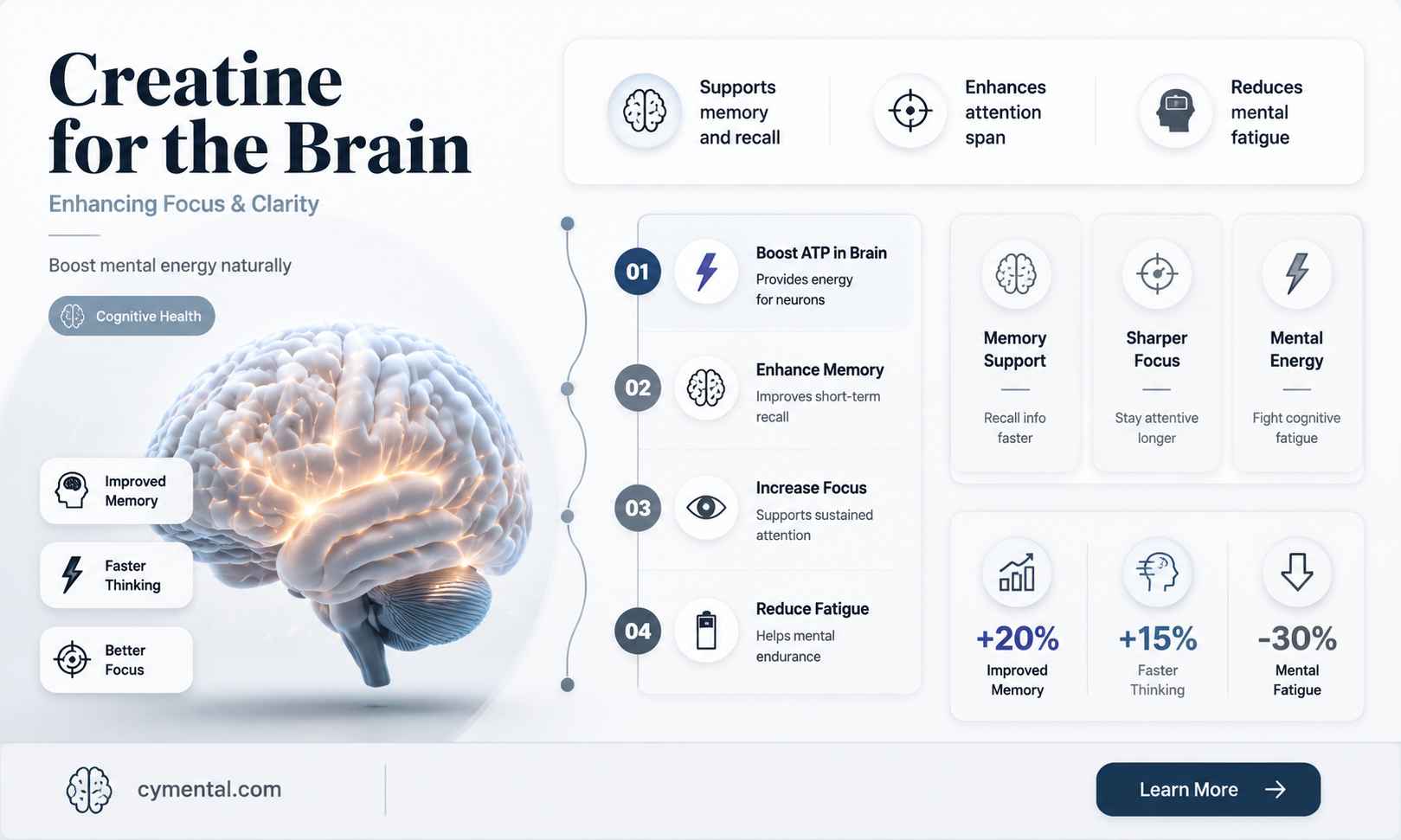
Creatine, widely recognized for its role in enhancing physical performance and muscle strength, has also garnered attention for its potential cognitive benefits. Emerging research suggests that creatine may contribute to mental clarity by supporting brain function, particularly in tasks requiring short-term memory, reasoning, and problem-solving. Studies indicate that creatine supplementation can increase phosphocreatine levels in the brain, which helps maintain energy levels in neurons, potentially improving focus and mental fatigue resistance. While evidence is still growing, these findings hint at creatine’s dual role as both a physical and cognitive enhancer, making it a topic of interest for those seeking to optimize mental performance alongside physical fitness.
| Characteristics | Values |
|---|---|
| Cognitive Enhancement | Some studies suggest creatine may improve memory, attention, and problem-solving, particularly in vegetarians, the elderly, or those with low baseline creatine levels. |
| Mechanism | Creatine may enhance brain energy metabolism by increasing phosphocreatine stores, potentially improving cognitive function under stress or fatigue. |
| Evidence Strength | Mixed; some studies show benefits, while others find no significant effects. More research is needed for conclusive evidence. |
| Population-Specific Effects | May be more beneficial for individuals with low dietary creatine intake (e.g., vegetarians) or those under cognitive stress (e.g., sleep deprivation). |
| Dosage | Typically 5 grams per day, similar to dosages used for physical performance enhancement. |
| Safety | Generally considered safe for most people, with minimal side effects (e.g., weight gain, gastrointestinal discomfort). |
| Long-Term Effects | Limited research on long-term cognitive effects; most studies focus on short-term benefits. |
| Interaction with Other Supplements | May complement other nootropics or cognitive enhancers, but interactions are not well-studied. |
| Individual Variability | Effects may vary based on age, diet, baseline creatine levels, and overall health. |
| Research Gaps | Need for larger, long-term studies to confirm cognitive benefits and optimal dosing strategies. |
Explore related products




What You'll Learn

Creatine's Impact on Cognitive Function
Creatine, a compound renowned for its role in enhancing physical performance, has emerged as a subject of interest in cognitive research. Studies suggest that creatine supplementation may improve mental clarity by bolstering brain energy metabolism. The brain, despite its small size, consumes approximately 20% of the body’s energy, primarily in the form of adenosine triphosphate (ATP). Creatine acts as a rapid energy reserve, replenishing ATP levels during high-demand cognitive tasks. This mechanism is particularly relevant for activities requiring sustained focus, such as problem-solving or memory recall. For instance, a 2003 study published in *Experimental Gerontology* found that older adults who took 5 grams of creatine daily for 6 weeks demonstrated improved memory and intelligence test scores compared to a placebo group.
To harness creatine’s cognitive benefits, dosage and timing are critical. The standard loading phase involves taking 20 grams per day, divided into 4 servings of 5 grams each, for 5–7 days. This is followed by a maintenance dose of 3–5 grams daily. However, for cognitive enhancement, some researchers suggest starting directly with the maintenance dose, as the brain’s creatine stores are smaller than those in muscles. It’s important to note that creatine’s effects on mental clarity may be more pronounced in individuals with lower baseline creatine levels, such as vegetarians or older adults. Pairing creatine with a source of carbohydrates can enhance absorption, as insulin spikes facilitate its uptake into cells.
While creatine’s cognitive benefits are promising, they are not universal. Its efficacy may vary based on age, baseline cognitive function, and overall health. For example, younger adults with already optimal creatine levels may experience minimal improvements. Conversely, individuals under cognitive stress, such as students during exam periods or professionals in high-pressure roles, may notice more significant benefits. Combining creatine with other nootropic strategies, like adequate sleep and omega-3 fatty acid intake, can amplify its effects. However, it’s essential to consult a healthcare provider before starting supplementation, especially for those with pre-existing conditions like kidney issues.
A comparative analysis of creatine versus other cognitive enhancers reveals its unique advantages. Unlike stimulants such as caffeine, creatine does not induce jitteriness or disrupt sleep patterns. Its mechanism of action—supporting cellular energy—complements rather than competes with other cognitive strategies. For instance, pairing creatine with mindfulness practices or cognitive training programs may yield synergistic effects. Practical tips include staying hydrated, as creatine can increase water retention, and monitoring individual responses, as some people may experience mild gastrointestinal discomfort initially.
In conclusion, creatine’s impact on cognitive function is rooted in its ability to enhance brain energy availability. By optimizing ATP production, it supports mental clarity, focus, and memory, particularly in demanding situations. While not a panacea, creatine offers a safe and accessible option for those seeking to improve cognitive performance. Tailoring dosage, considering individual factors, and integrating it into a holistic cognitive health regimen can maximize its benefits. As research continues to evolve, creatine stands out as a versatile tool in the pursuit of sharper mental acuity.
Biofeedback Therapy: A Potential Ally in Mental Health Treatment?
You may want to see also
Explore related products


Brain Energy and ATP Production
The brain is an energy-intensive organ, consuming approximately 20% of the body's total energy despite accounting for only 2% of its weight. This energy demand is met primarily through adenosine triphosphate (ATP), the molecular currency of intracellular energy transfer. Creatine, a compound naturally produced in the body and found in foods like red meat and fish, plays a pivotal role in maintaining ATP levels, particularly during high-energy activities. In the context of mental clarity, understanding how creatine supports brain energy and ATP production is essential.
ATP production in the brain relies heavily on glucose metabolism, but during periods of high cognitive demand or stress, this process can become insufficient. Here’s where creatine steps in. Creatine phosphate acts as a rapid energy reservoir, donating phosphate groups to regenerate ATP from adenosine diphosphate (ADP). This mechanism is especially critical in neurons, which have limited energy storage capacity. Studies suggest that supplementing with 3–5 grams of creatine daily can enhance brain creatine levels, potentially improving cognitive performance under conditions of mental fatigue or intense focus. For instance, a 2012 study published in *Experimental Gerontology* found that older adults who took creatine supplements showed improved memory and intelligence test scores compared to a placebo group.
However, the relationship between creatine, ATP production, and mental clarity isn’t one-size-fits-all. Factors like age, baseline creatine levels, and cognitive load influence its effectiveness. Younger individuals with already sufficient creatine stores may experience minimal cognitive benefits, whereas older adults or those with vegetarians diets (who typically have lower creatine levels) may see more pronounced effects. Practical tips for optimizing creatine’s impact include pairing it with carbohydrates or protein to enhance absorption, staying hydrated to support its distribution, and maintaining a consistent dosing schedule.
A comparative analysis reveals that while caffeine provides a short-term energy spike by blocking adenosine receptors, creatine works at the cellular level to sustain ATP production, offering a more stable foundation for mental clarity. Unlike stimulants, creatine doesn’t induce jitters or crashes, making it a viable option for prolonged cognitive tasks. For those seeking to integrate creatine into their routine, starting with a loading phase of 20 grams per day (divided into 4 doses) for 5–7 days, followed by a maintenance dose of 3–5 grams daily, is a widely recommended protocol.
In conclusion, creatine’s role in brain energy and ATP production positions it as a valuable tool for enhancing mental clarity, particularly in scenarios of high cognitive demand or energy depletion. By understanding its mechanisms and tailoring supplementation to individual needs, users can harness its potential to support sustained focus and cognitive function.
Music's Impact: Enhancing Mental Agility and Emotional Well-being
You may want to see also
Explore related products


Memory and Learning Enhancement
Creatatine, a compound renowned for its role in muscle energy production, has emerged as a potential cognitive enhancer, particularly in the realm of memory and learning. Research suggests that creatine supplementation may improve memory performance, especially in individuals with lower baseline creatine levels, such as vegetarians or older adults. A study published in the *Journal of Environmental and Public Health* found that creatine supplementation significantly enhanced memory and intelligence in young adults, with dosages ranging from 5 to 20 grams per day for loading phases, followed by 2 to 5 grams daily for maintenance. This evidence positions creatine as a promising tool for those seeking to bolster cognitive function.
To harness creatine’s memory-enhancing benefits, consider a structured approach. Start with a loading phase of 20 grams per day, divided into 4 doses of 5 grams each, for 5–7 days. This rapidly saturates muscle and brain creatine stores. Transition to a maintenance dose of 3–5 grams daily thereafter. Pairing creatine with a carbohydrate or protein source can enhance absorption, as insulin spikes facilitate its uptake. For older adults or those with memory concerns, combining creatine with cognitive exercises, such as mnemonic techniques or brain-training apps, may amplify its effects. Consistency is key; results often become noticeable after 4–6 weeks of regular use.
While creatine’s benefits are compelling, it’s essential to approach supplementation with caution. Not all individuals respond equally; factors like age, diet, and baseline creatine levels influence efficacy. For instance, younger adults with meat-rich diets may experience milder effects compared to older adults or vegetarians. Additionally, long-term studies on creatine’s cognitive effects are still evolving, so moderation is advised. Avoid exceeding recommended dosages, as excessive intake can lead to gastrointestinal discomfort or dehydration. Consulting a healthcare provider before starting supplementation, especially for those with kidney issues or pre-existing conditions, is crucial.
Comparatively, creatine stands out among nootropics for its dual physical and cognitive benefits, unlike specialized cognitive enhancers like racetams or herbal supplements. Its mechanism—enhancing ATP production in the brain—supports sustained mental energy during learning tasks, making it particularly useful for students or professionals facing cognitive demands. For example, a study in *Experimental Gerontology* demonstrated that creatine improved working memory and intelligence in seniors, outperforming placebo groups. This dual-action profile makes creatine a versatile supplement for those aiming to optimize both physical and mental performance.
In practice, integrating creatine into a holistic cognitive enhancement strategy yields the best results. Combine supplementation with a balanced diet rich in omega-3 fatty acids, antioxidants, and whole foods to support brain health. Regular physical exercise, particularly aerobic activities, complements creatine’s effects by boosting cerebral blood flow. Adequate sleep and stress management are equally vital, as creatine’s benefits are maximized in a well-rested brain. By adopting these synergistic habits, individuals can unlock creatine’s full potential for memory and learning enhancement, transforming it from a mere supplement into a cornerstone of cognitive optimization.
Exploring Medical Cannabis as a Potential Mental Health Treatment Option
You may want to see also
Explore related products



Mood and Stress Reduction Effects
Creatine, a compound renowned for its role in enhancing physical performance, has emerged as a potential ally in the realm of mental health, particularly in mood regulation and stress reduction. Research suggests that creatine supplementation may influence brain function by supporting energy metabolism in the brain, which is crucial for maintaining cognitive and emotional stability. Studies have shown that individuals with higher creatine levels often report improved mood and reduced symptoms of stress and anxiety. This effect is particularly notable in populations under chronic stress, such as athletes or those with demanding lifestyles.
To harness these benefits, a daily dosage of 3–5 grams of creatine monohydrate is commonly recommended. This amount is sufficient to saturate muscle and brain creatine stores without causing adverse effects. For optimal results, consistency is key; taking creatine daily for at least 4 weeks allows for noticeable improvements in mood and stress resilience. It’s also advisable to pair supplementation with a balanced diet rich in omega-3 fatty acids and antioxidants, which synergistically support brain health. For older adults or individuals with cognitive concerns, consulting a healthcare provider before starting supplementation is prudent, as needs may vary based on age and health status.
A comparative analysis of creatine’s effects on mood versus traditional stress-relief methods reveals its unique advantages. Unlike pharmaceuticals, creatine is a natural compound with minimal side effects, making it a safer long-term option for stress management. Additionally, while mindfulness practices and exercise are effective, creatine offers a complementary approach by addressing the biochemical underpinnings of stress. For instance, creatine’s role in ATP production helps the brain cope with stress-induced energy demands, providing a physiological buffer against emotional strain.
Practical tips for integrating creatine into a stress-reduction routine include timing supplementation with meals to enhance absorption and combining it with activities that promote mental well-being, such as meditation or light exercise. Monitoring mood changes through journaling can also help track progress. For those experiencing persistent stress or mood disorders, creatine should not replace professional treatment but can serve as a valuable adjunctive tool. By understanding its mechanisms and application, individuals can leverage creatine’s potential to foster a calmer, more resilient mindset.
Amy Bouzaglo's Mental Health Journey: Did She Seek Professional Help?
You may want to see also
Explore related products


![Sugar-Free Creatine Monohydrate Gummies 5gram per Serving, Potent Creatine Gummies for Men & Women, Supplement for Muscle Support, Cellular Energy & Cognitive Function [Lemon Drops Candy Flavor]](https://m.media-amazon.com/images/I/714Cnw7GvKL._AC_UL320_.jpg)


Neuroprotective Properties of Creatine
Creatine, a compound renowned for its role in enhancing physical performance, has emerged as a subject of interest in the realm of cognitive health. Beyond its well-documented benefits for muscle strength and endurance, recent studies suggest that creatine may possess neuroprotective properties, offering potential advantages for mental clarity and brain function. This exploration delves into how creatine could safeguard neural health and contribute to improved cognitive performance.
One of the key mechanisms through which creatine exerts its neuroprotective effects is by supporting cellular energy metabolism in the brain. The brain is an energy-demanding organ, and creatine helps replenish adenosine triphosphate (ATP), the primary energy currency of cells. During periods of stress or injury, creatine supplementation can enhance the brain’s resilience by ensuring a steady energy supply. For instance, research indicates that creatine may mitigate damage from ischemic strokes or traumatic brain injuries by maintaining ATP levels and reducing oxidative stress. A typical dosage of 5 grams per day has been shown to be effective in clinical studies, though individual needs may vary based on age, health status, and specific cognitive goals.
Another critical aspect of creatine’s neuroprotective role is its ability to modulate neurotransmitter function and reduce neuroinflammation. Creatine has been observed to increase dopamine levels in the brain, a neurotransmitter essential for motivation, attention, and memory. This effect may explain why some studies report improvements in mental clarity and focus among individuals taking creatine supplements. Additionally, creatine’s anti-inflammatory properties can protect neurons from damage caused by chronic inflammation, a common factor in neurodegenerative diseases like Alzheimer’s and Parkinson’s. For older adults or those at risk of cognitive decline, incorporating creatine into a daily regimen could serve as a preventive measure, though consultation with a healthcare provider is advised.
Practical implementation of creatine for neuroprotection requires consideration of timing, form, and lifestyle factors. Creatine monohydrate, the most researched form, is widely recommended for its efficacy and safety. It can be taken at any time of day, though pairing it with a carbohydrate or protein source may enhance absorption. Combining creatine supplementation with a balanced diet rich in antioxidants, regular physical activity, and adequate sleep can maximize its cognitive benefits. For those new to creatine, starting with a loading phase of 20 grams per day for 5–7 days, followed by a maintenance dose of 3–5 grams daily, is a common strategy.
In conclusion, creatine’s neuroprotective properties position it as a valuable tool for enhancing mental clarity and safeguarding brain health. By supporting energy metabolism, modulating neurotransmitter function, and reducing inflammation, creatine offers a multifaceted approach to cognitive well-being. Whether for preventive care or targeted cognitive enhancement, incorporating creatine into one’s routine, with attention to dosage and lifestyle, can yield significant benefits for neural resilience and mental acuity.
Hamsters as Emotional Support: Boosting Mental Health and Well-Being
You may want to see also
Frequently asked questions
Yes, creatine has been shown to enhance mental clarity and focus, particularly during cognitively demanding tasks, by supporting energy production in the brain.
Creatine improves cognitive function by increasing ATP availability in the brain, which helps neurons function more efficiently, leading to better mental clarity and performance.
Yes, creatine can reduce mental fatigue by supporting brain energy metabolism, allowing for sustained focus and clarity during prolonged mental tasks.
Studies suggest creatine may improve memory and learning abilities, particularly in tasks requiring short-term memory and quick recall, contributing to overall mental clarity.
Creatine is generally safe for most people when used as directed. However, some individuals may experience mild side effects like bloating or gastrointestinal discomfort. Always consult a healthcare professional before starting supplementation.