Caleb Wright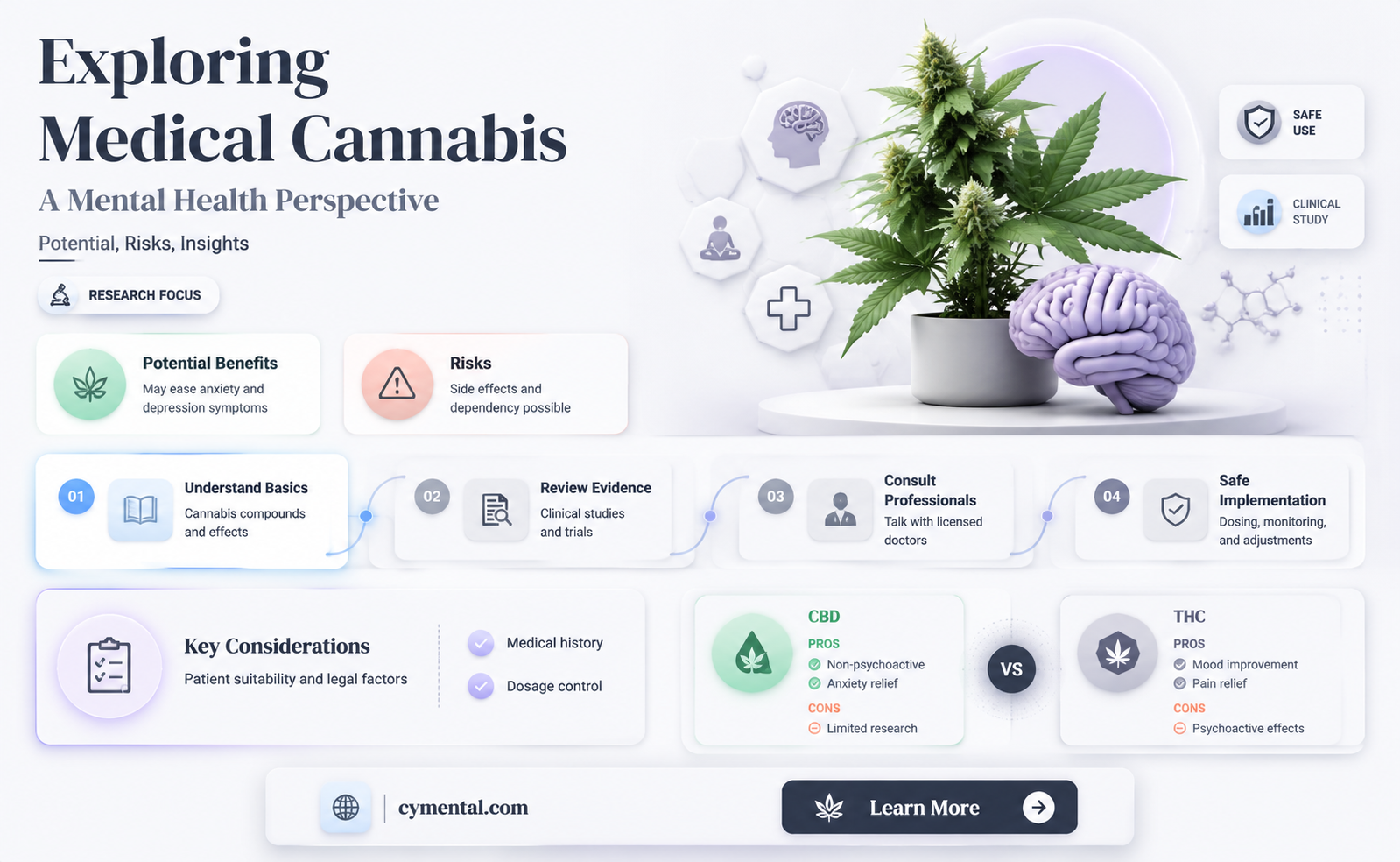
Medical cannabis has emerged as a topic of growing interest in the realm of mental health treatment, with proponents suggesting it may offer therapeutic benefits for conditions such as anxiety, depression, PTSD, and even schizophrenia. While research is still in its early stages, preliminary studies indicate that certain cannabinoids, like CBD, may have anxiolytic and antipsychotic properties, potentially alleviating symptoms without the severe side effects often associated with traditional medications. However, the use of cannabis for mental illness remains controversial, as some evidence suggests that THC, another prominent cannabinoid, could exacerbate symptoms in certain individuals or lead to dependency. As a result, the medical community is cautiously exploring its efficacy, safety, and appropriate applications, emphasizing the need for further research and personalized treatment approaches.
Explore related products


What You'll Learn
- Anxiety and Stress Relief: Potential of cannabis in reducing anxiety symptoms and promoting relaxation
- Depression Management: Exploring cannabis as a complementary treatment for depressive disorders
- PTSD Symptom Alleviation: Role of cannabis in managing PTSD-related flashbacks and insomnia
- Bipolar Disorder Effects: Investigating cannabis impact on mood stabilization in bipolar patients
- Schizophrenia Risks vs. Benefits: Balancing potential therapeutic uses against psychosis risks in schizophrenia

Anxiety and Stress Relief: Potential of cannabis in reducing anxiety symptoms and promoting relaxation
Cannabis has been increasingly recognized for its potential to alleviate symptoms of anxiety and stress, offering a natural alternative to traditional pharmaceuticals. Research suggests that certain cannabinoids, such as CBD (cannabidiol), interact with the body’s endocannabinoid system to promote relaxation and reduce anxiety. Unlike THC (tetrahydrocannabinol), which can sometimes exacerbate anxiety in high doses, CBD is non-psychoactive and has shown promise in clinical studies for its anxiolytic effects. For instance, a 2019 study published in *The Permanente Journal* found that 79% of participants experienced reduced anxiety levels after using CBD.
When considering cannabis for anxiety relief, dosage and strain selection are critical. Beginners should start with low doses—as little as 5–10 mg of CBD per day—and gradually increase until the desired effect is achieved. For those using THC-containing products, microdosing (1–2.5 mg) can provide relaxation without the risk of heightened anxiety. It’s also essential to choose strains with a balanced THC-to-CBD ratio, such as ACDC or Harlequin, which are known for their calming effects. Always consult a healthcare provider to tailor usage to individual needs, especially for those with pre-existing conditions or taking other medications.
Practical tips for incorporating cannabis into a stress-relief routine include timing and method of consumption. For immediate relief, inhalation (smoking or vaping) delivers cannabinoids to the bloodstream quickly, but edibles or tinctures offer longer-lasting effects, though onset takes 30–90 minutes. Combining cannabis with mindfulness practices, such as meditation or deep breathing, can enhance its relaxing properties. However, users should avoid overconsumption, as excessive THC can lead to paranoia or increased anxiety, particularly in inexperienced users or those with a predisposition to anxiety disorders.
While cannabis shows potential for anxiety and stress relief, it’s not a one-size-fits-all solution. Individual responses vary based on factors like metabolism, tolerance, and the underlying cause of anxiety. Long-term studies are still needed to fully understand its efficacy and safety. For now, it serves as a complementary tool, best used alongside therapy, lifestyle changes, and other evidence-based treatments. By approaching cannabis use thoughtfully and responsibly, individuals may find it a valuable ally in managing anxiety and promoting relaxation.
Do Mental Hospitals Help: Exploring Effectiveness and Patient Outcomes
You may want to see also
Explore related products

$17.69 $22.99


Depression Management: Exploring cannabis as a complementary treatment for depressive disorders
Depression, a pervasive and debilitating condition, affects millions globally, often resistant to conventional treatments. Amidst growing interest in alternative therapies, medical cannabis emerges as a potential adjunctive option. Its complex interplay with the endocannabinoid system, which regulates mood, stress, and emotional responses, suggests a biological rationale for its use. However, the relationship between cannabis and depression is nuanced, with both promising and cautionary findings. This exploration delves into how cannabis might complement traditional depression management, while highlighting critical considerations for safe and informed use.
Mechanisms and Evidence: A Dual-Edged Sword
Cannabis contains over 100 cannabinoids, with THC and CBD being the most studied. THC’s psychoactive effects can temporarily elevate mood by stimulating dopamine release, while CBD’s anxiolytic properties may reduce anxiety, a common comorbidity in depression. A 2020 study in *Molecular Psychiatry* found that low-dose THC improved mood in controlled settings, but higher doses exacerbated depressive symptoms. CBD, on the other hand, has shown promise in animal models for its neuroprotective and anti-inflammatory effects, which may alleviate depression linked to chronic inflammation. However, clinical evidence remains limited, with most studies focusing on short-term outcomes. Longitudinal research is essential to determine sustained efficacy and potential risks, such as dependency or cognitive impairment.
Practical Application: Dosage, Strains, and Delivery
For those considering cannabis as a complementary treatment, precision is key. Start with low doses—2.5–5 mg of THC—and gradually titrate based on response. CBD-dominant strains (e.g., ACDC or Charlotte’s Web) are often preferred for their minimal psychoactive effects, with doses ranging from 10–50 mg daily. Sublingual tinctures or vaporization offer faster onset compared to edibles, which have delayed but prolonged effects. Age and medical history matter: older adults or individuals with cardiovascular conditions should avoid smoking. Always consult a healthcare provider to avoid interactions with antidepressants like SSRIs, which may increase THC’s sedative effects.
Cautions and Contraindications: Navigating Risks
While cannabis shows potential, it is not a panacea. Regular THC use, especially in high doses, has been linked to worsened depression and psychotic symptoms in predisposed individuals. Adolescents and young adults, whose brains are still developing, face heightened risks of cognitive decline and dependency. Additionally, the lack of standardized products in many regions complicates dosing and safety. Patients with bipolar disorder should exercise extreme caution, as cannabis can trigger manic episodes. Monitoring for adverse effects, such as increased anxiety or lethargy, is crucial, and treatment should be discontinued if symptoms worsen.
Integrating Cannabis into a Holistic Approach
Cannabis should not replace evidence-based treatments like psychotherapy or medication but rather augment them. For instance, combining CBD with cognitive-behavioral therapy (CBT) may enhance stress resilience. Lifestyle modifications—regular exercise, a balanced diet, and adequate sleep—remain foundational. Patients should maintain open communication with their care team, tracking mood changes and cannabis use in a journal to identify patterns. While the therapeutic landscape for depression is evolving, cannabis offers a promising yet experimental avenue, demanding careful consideration and personalized guidance.
Exercise and Mental Health: Unlocking the Mind-Body Connection for Wellness
You may want to see also
Explore related products


PTSD Symptom Alleviation: Role of cannabis in managing PTSD-related flashbacks and insomnia
Post-traumatic stress disorder (PTSD) often manifests as relentless flashbacks and insomnia, symptoms that conventional treatments sometimes fail to fully address. Cannabis, particularly strains high in CBD and balanced THC:CBD ratios, has emerged as a potential adjunct therapy. For instance, a 2021 study published in the *Journal of Affective Disorders* found that PTSD patients using medical cannabis reported a 2.5-point reduction in the Clinician-Administered PTSD Scale (CAPS) score, a significant improvement in symptom severity. This suggests that cannabis may modulate the endocannabinoid system, which plays a role in memory consolidation and fear extinction, thereby reducing the frequency and intensity of flashbacks.
To manage PTSD-related insomnia, cannabis can be particularly effective when used strategically. Indica-dominant strains, known for their sedative properties, are often recommended for nighttime use. A starting dose of 5–10 mg of THC, combined with 10–20 mg of CBD, can promote relaxation and improve sleep onset. However, caution is advised: high THC doses (above 30 mg) may exacerbate anxiety or induce paranoia in some individuals. Microdosing—using the smallest effective dose—is a practical approach to minimize risks while maximizing benefits. For older adults or those with comorbid conditions, consulting a healthcare provider is essential to avoid drug interactions or adverse effects.
The mechanism behind cannabis’s efficacy in PTSD symptom alleviation lies in its interaction with the body’s endocannabinoid system (ECS). THC binds to CB1 receptors in the brain, potentially dampening the amygdala’s hyperactivity, a hallmark of PTSD. CBD, on the other hand, modulates these effects by reducing THC-induced anxiety and enhancing serotonin signaling. A comparative analysis of PTSD patients using cannabis versus traditional SSRIs revealed that while SSRIs take weeks to show effects, cannabis often provides immediate relief, particularly for acute symptoms like flashbacks. However, long-term studies are needed to assess sustained benefits and potential dependency risks.
Practical tips for incorporating cannabis into PTSD management include maintaining a symptom journal to track efficacy and side effects. Vaporizing or sublingual tinctures offer faster onset (5–15 minutes) compared to edibles (1–2 hours), making them suitable for managing sudden flashbacks. For insomnia, combining cannabis with cognitive-behavioral therapy (CBT) or mindfulness practices can enhance overall sleep quality. It’s also crucial to source products from reputable dispensaries and opt for lab-tested strains to ensure consistency in cannabinoid content. While cannabis shows promise, it is not a one-size-fits-all solution and should complement, not replace, evidence-based therapies.
Can Psychiatrists Effectively Address and Resolve My Mental Health Issues?
You may want to see also
Explore related products


Bipolar Disorder Effects: Investigating cannabis impact on mood stabilization in bipolar patients
Bipolar disorder, characterized by extreme mood swings from manic highs to depressive lows, poses significant challenges for both patients and clinicians. Traditional treatments often include mood stabilizers, antipsychotics, and psychotherapy, but their efficacy varies widely. Amidst this landscape, cannabis has emerged as a potential adjunctive therapy, sparking both hope and controversy. Its complex pharmacology, involving cannabinoids like THC and CBD, suggests it could modulate mood, but the evidence remains fragmented. For bipolar patients, the question isn’t just whether cannabis helps—it’s how, for whom, and at what cost.
Consider the dual nature of cannabis: THC, the psychoactive component, may exacerbate anxiety or psychosis in some individuals, while CBD, its non-intoxicating counterpart, has shown promise in reducing inflammation and anxiety. A 2020 study published in *Neuropsychopharmacology* found that low-dose THC (2.5–5 mg) combined with CBD (up to 100 mg) improved mood stability in a subset of bipolar patients without triggering mania. However, higher THC doses (>10 mg) were associated with increased irritability and sleep disturbances. This highlights the importance of precision dosing, particularly for bipolar patients whose sensitivity to psychoactive substances can be heightened during manic phases.
Practical implementation requires caution. For instance, a 30-year-old bipolar II patient might start with a 1:1 THC:CBD ratio (e.g., 2.5 mg THC + 2.5 mg CBD) administered via sublingual tincture, monitored weekly for mood fluctuations. If tolerated, the dose could be titrated up by 1 mg increments every two weeks, avoiding sudden increases that could destabilize mood. Patients should maintain a mood journal to track symptoms, and clinicians should cross-reference this data with cannabis use patterns. Notably, cannabis should not replace first-line treatments but rather complement them under strict supervision.
Critics argue that cannabis’s long-term effects on bipolar disorder remain unclear, with some studies suggesting it may lower the threshold for manic episodes in predisposed individuals. A 2019 longitudinal study in *The Lancet Psychiatry* found that daily cannabis use in bipolar patients was correlated with a 2.5-fold increased risk of hospitalization for mania. This underscores the need for individualized risk-benefit assessments, particularly for younger patients (ages 18–25) whose brains are still developing and may be more vulnerable to cannabinoid-induced neurochemical changes.
In conclusion, while cannabis holds potential as a mood stabilizer for bipolar patients, its use demands meticulous planning and monitoring. Patients and clinicians must weigh the anecdotal successes against the risks of psychosis, dependency, and treatment interference. Until larger, controlled trials provide definitive guidance, cannabis should be approached as an experimental therapy, tailored to the patient’s unique profile and integrated into a comprehensive treatment plan. The goal isn’t to replace conventional medicine but to explore every avenue that might offer relief—with caution as the guiding principle.
Gaming for Mental Health: A New Era Under the Presidency
You may want to see also
Explore related products


Schizophrenia Risks vs. Benefits: Balancing potential therapeutic uses against psychosis risks in schizophrenia
Schizophrenia, a complex and often debilitating mental disorder, presents a unique challenge when considering the potential therapeutic uses of medical cannabis. While some studies suggest that certain cannabinoids may alleviate symptoms like anxiety and insomnia, the risk of exacerbating psychosis looms large. This delicate balance demands careful consideration, especially given that schizophrenia typically emerges in late adolescence to early adulthood, a period when the brain is particularly vulnerable to the effects of cannabis.
Analyzing the Risks:
Cannabis use, particularly high-THC strains, has been linked to an increased risk of psychotic episodes in individuals predisposed to schizophrenia. Research indicates that early and frequent cannabis consumption can precipitate the onset of schizophrenia by up to three years in susceptible individuals. For instance, a 2019 study published in *The Lancet Psychiatry* found that daily users of high-potency cannabis (THC >10%) were nearly five times more likely to develop psychosis compared to non-users. This risk is compounded in those with a family history of schizophrenia, where genetic predisposition intersects with environmental triggers like cannabis use.
Exploring Potential Benefits:
Conversely, CBD (cannabidiol), a non-psychoactive cannabinoid, has shown promise in managing symptoms associated with schizophrenia. A 2020 study in *The American Journal of Psychiatry* demonstrated that CBD, at a dosage of 1000 mg/day, reduced positive psychotic symptoms in patients with schizophrenia, though it did not outperform traditional antipsychotics. CBD’s anxiolytic and anti-inflammatory properties may also address comorbid conditions like anxiety and sleep disturbances, which are prevalent in schizophrenia. However, these findings are preliminary, and more research is needed to establish CBD’s efficacy and safety in this population.
Practical Considerations for Clinicians and Patients:
When evaluating medical cannabis for schizophrenia, clinicians must prioritize harm reduction. For patients already using cannabis, tapering to lower-THC, higher-CBD products may mitigate risks. For example, a 1:1 THC-to-CBD ratio product could be considered, starting with a low dose (e.g., 5 mg THC and 5 mg CBD) and monitoring for adverse effects. Patients should be educated about the potential risks, particularly the psychotomimetic effects of THC, and encouraged to avoid high-potency products. Additionally, integrating cannabis use into a comprehensive treatment plan, including psychotherapy and antipsychotic medication, is essential.
The debate over medical cannabis in schizophrenia underscores the need for individualized treatment strategies. While CBD may offer therapeutic benefits, THC poses significant risks that cannot be overlooked. Clinicians and patients must weigh these factors carefully, considering the patient’s genetic predisposition, symptom severity, and treatment history. Until more definitive evidence emerges, a cautious, evidence-based approach is paramount to ensure that potential benefits do not come at the cost of worsening psychosis.
Move Your Body, Boost Your Mind: Physical Activity's Mental Health Benefits
You may want to see also
Frequently asked questions
Medical cannabis may help some individuals manage anxiety symptoms, but its effectiveness varies. CBD (cannabidiol) is often associated with anxiolytic effects, while THC (tetrahydrocannabinol) can sometimes worsen anxiety in high doses. Consultation with a healthcare provider is essential to determine suitability.
The safety and efficacy of medical cannabis for depression are still under research. Some studies suggest it may improve mood in certain cases, but it is not a first-line treatment. Potential risks, such as dependency or worsened symptoms, should be considered.
Some evidence suggests medical cannabis, particularly products high in CBD, may help reduce PTSD symptoms like nightmares and hyperarousal. However, THC-dominant products could exacerbate anxiety or paranoia in some individuals. Further research is needed for definitive conclusions.
The use of medical cannabis in bipolar disorder is controversial. While some report symptom relief, there is a risk of triggering manic episodes or worsening mood instability, especially with THC. It is not recommended without close medical supervision.