Madison Cole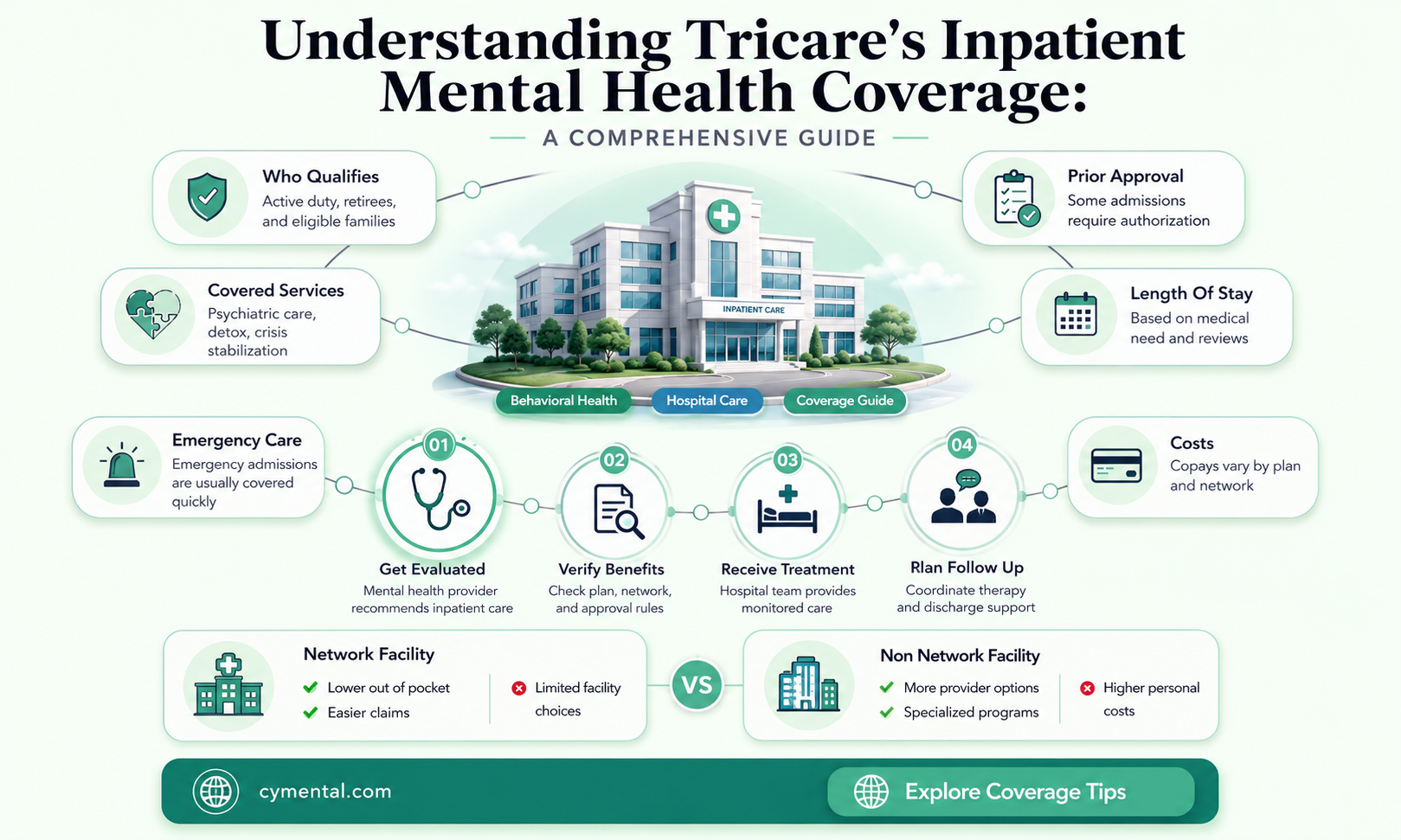
TRICARE, the health insurance program for U.S. military service members, retirees, and their families, provides comprehensive coverage for a wide range of health services. One critical area of coverage is inpatient mental health care. TRICARE recognizes the importance of addressing mental health concerns and offers various programs and services to support the well-being of its beneficiaries. Inpatient mental health services are typically covered under TRICARE when deemed medically necessary, and this coverage can include hospital stays, residential treatment, and other intensive care options. Understanding the specifics of TRICARE's mental health coverage can help beneficiaries navigate their options and access the care they need.
Explore related products


What You'll Learn
- Tricare Inpatient Mental Health Coverage: Overview of Tricare's policy on inpatient mental health services
- Eligibility Criteria: Requirements that beneficiaries must meet to qualify for inpatient mental health coverage under Tricare
- Covered Services: Types of inpatient mental health services that are included in Tricare's coverage
- Cost Sharing: Explanation of any out-of-pocket costs or copays associated with inpatient mental health care under Tricare
- Finding a Provider: Guidance on how to locate a mental health provider that accepts Tricare for inpatient services

Tricare Inpatient Mental Health Coverage: Overview of Tricare's policy on inpatient mental health services
Tricare, the health insurance program for U.S. military personnel, veterans, and their families, provides comprehensive coverage for inpatient mental health services. This coverage is designed to ensure that beneficiaries have access to the care they need for mental health conditions that require hospitalization.
The policy on inpatient mental health services under Tricare includes coverage for a range of treatments and facilities. Beneficiaries can receive care at military hospitals and clinics, as well as at civilian hospitals and psychiatric facilities that are authorized by Tricare. The types of inpatient mental health services covered typically include psychiatric evaluations, medication management, individual and group therapy sessions, and crisis intervention.
To be eligible for inpatient mental health coverage under Tricare, beneficiaries must meet certain criteria. These criteria may include having a diagnosis of a mental health condition that requires inpatient care, such as depression, anxiety, post-traumatic stress disorder (PTSD), or bipolar disorder. Additionally, the inpatient care must be deemed medically necessary by a qualified healthcare provider.
Tricare's coverage for inpatient mental health services also includes provisions for emergency care. In the event of a mental health crisis, beneficiaries can receive immediate inpatient care without prior authorization. This ensures that individuals in urgent need of mental health treatment can access the care they require without delay.
It is important for beneficiaries to understand that while Tricare covers inpatient mental health services, there may be some limitations and exclusions. For example, Tricare may not cover inpatient care for certain pre-existing conditions, or it may require prior authorization for certain types of treatments. Beneficiaries should consult with their healthcare provider and review Tricare's policy documents to fully understand their coverage options and any potential limitations.
In summary, Tricare provides robust coverage for inpatient mental health services, ensuring that military personnel, veterans, and their families have access to the care they need for mental health conditions that require hospitalization. This coverage includes a range of treatments and facilities, and is designed to address both routine and emergency mental health needs.
Exploring Mental Health Through a Spiritual Lens: What Does God Say?
You may want to see also
Explore related products





Eligibility Criteria: Requirements that beneficiaries must meet to qualify for inpatient mental health coverage under Tricare
To qualify for inpatient mental health coverage under Tricare, beneficiaries must meet specific eligibility criteria. These requirements are designed to ensure that the services provided are necessary and appropriate for the individual's mental health needs. The criteria typically include a diagnosis of a mental health condition that requires inpatient care, as determined by a qualified mental health professional. Additionally, the beneficiary must be enrolled in Tricare and meet any applicable age, residency, and dependency status requirements.
One key aspect of the eligibility criteria is the determination of medical necessity. This involves an assessment by a mental health professional to evaluate the severity of the beneficiary's condition and the potential benefits of inpatient treatment. The professional must document the diagnosis and the reasons for recommending inpatient care, which must be reviewed and approved by Tricare. This process helps to ensure that inpatient services are only provided when they are truly necessary and that beneficiaries receive the most appropriate level of care for their needs.
Another important requirement is that the inpatient mental health facility must be authorized by Tricare to provide services. This means that the facility must meet certain standards and criteria set by Tricare, including having qualified staff, appropriate licensing, and accreditation. Beneficiaries should verify that the facility they are considering is authorized by Tricare to avoid any potential issues with coverage.
In some cases, Tricare may require pre-authorization for inpatient mental health services. This means that the beneficiary or their provider must obtain approval from Tricare before the services are rendered. Pre-authorization is typically required for longer stays or for services provided at certain facilities. It is important for beneficiaries to be aware of this requirement and to follow the necessary steps to obtain pre-authorization if needed.
Finally, beneficiaries should be aware that there may be limitations on the length of stay and the types of services covered under Tricare's inpatient mental health benefits. These limitations are in place to ensure that beneficiaries receive the most appropriate and cost-effective care. It is important for beneficiaries to review their Tricare plan and to discuss any concerns or questions with their mental health provider.
In summary, to qualify for inpatient mental health coverage under Tricare, beneficiaries must meet specific eligibility criteria, including a diagnosis of a mental health condition requiring inpatient care, enrollment in Tricare, and meeting age, residency, and dependency status requirements. The determination of medical necessity, facility authorization, pre-authorization, and limitations on services are all important aspects of the eligibility process that beneficiaries should be aware of.
Exploring Medishare's Mental Health Coverage: What You Need to Know
You may want to see also
Explore related products



Covered Services: Types of inpatient mental health services that are included in Tricare's coverage
Tricare, the health insurance program for U.S. military personnel, veterans, and their families, provides comprehensive coverage for inpatient mental health services. These services are crucial for individuals dealing with severe mental health conditions that require intensive, round-the-clock care. Covered inpatient mental health services under Tricare typically include psychiatric evaluations, medication management, individual and group therapy sessions, and crisis intervention.
One of the key aspects of Tricare's inpatient mental health coverage is the inclusion of both voluntary and involuntary admissions. Voluntary admissions occur when a beneficiary chooses to seek inpatient care for their mental health condition. In contrast, involuntary admissions may be necessary when an individual poses a risk to themselves or others due to their mental health state. Tricare covers both types of admissions, ensuring that beneficiaries receive the appropriate level of care regardless of the circumstances.
Tricare also covers a variety of specialized inpatient mental health programs, such as those tailored for substance abuse treatment, eating disorders, and post-traumatic stress disorder (PTSD). These programs often provide targeted therapies and interventions designed to address the specific needs of individuals with these conditions. For example, a PTSD-specific program might include exposure therapy, cognitive-behavioral therapy, and other evidence-based treatments to help individuals manage their symptoms and improve their quality of life.
In addition to traditional inpatient mental health services, Tricare may also cover alternative treatments such as transcranial magnetic stimulation (TMS) and electroconvulsive therapy (ECT). These therapies can be effective for individuals who have not responded well to medication or other forms of treatment. TMS uses magnetic fields to stimulate areas of the brain associated with mood regulation, while ECT involves the use of electrical currents to induce seizures, which can help alleviate symptoms of severe depression and other mental health conditions.
It is important to note that while Tricare provides extensive coverage for inpatient mental health services, there may be some limitations and exclusions. For instance, Tricare may not cover inpatient services provided by certain types of facilities, such as those that are not accredited by the Joint Commission or that do not meet specific quality standards. Additionally, Tricare may require prior authorization for certain types of inpatient mental health treatments, particularly those that are considered experimental or investigational.
In conclusion, Tricare's coverage of inpatient mental health services is designed to ensure that beneficiaries have access to a wide range of effective treatments for severe mental health conditions. By including both voluntary and involuntary admissions, specialized programs, and alternative therapies, Tricare aims to provide comprehensive care that addresses the unique needs of each individual. However, it is essential for beneficiaries to be aware of any potential limitations or exclusions in coverage and to work closely with their healthcare providers to navigate the Tricare system effectively.
Mindful Moments: Embracing World Mental Health Day with Compassion and Care
You may want to see also
Explore related products



Cost Sharing: Explanation of any out-of-pocket costs or copays associated with inpatient mental health care under Tricare
Tricare, the health insurance program for U.S. military personnel and their families, does cover inpatient mental health care, but it's essential to understand the cost-sharing aspect to avoid unexpected expenses. Inpatient mental health care under Tricare typically involves a copay, which is a fixed amount you pay for each day of hospitalization. This copay can vary depending on the type of facility (e.g., military hospital, civilian hospital) and your specific Tricare plan.
For instance, under Tricare Prime, you might pay a copay of $25 per day for inpatient mental health care at a military hospital, while the copay at a civilian hospital could be significantly higher, potentially up to $50 per day. Tricare Select and Tricare Reserve plans may have different copay structures, so it's crucial to review your specific plan details.
In addition to daily copays, there may be other out-of-pocket costs associated with inpatient mental health care. These could include charges for medications, lab tests, or other ancillary services provided during your hospital stay. It's important to note that Tricare's coverage for inpatient mental health care is subject to certain limitations and exclusions, such as a maximum number of covered days per year or requirements for pre-authorization.
To minimize your out-of-pocket expenses, it's advisable to choose a facility within the Tricare network, as these providers have agreed to accept Tricare's payment rates. If you opt for a non-network provider, you may be responsible for a larger portion of the costs. Additionally, consider reviewing your Tricare plan's details to understand any deductibles or annual limits that may apply to your mental health care coverage.
In summary, while Tricare does cover inpatient mental health care, it's essential to be aware of the cost-sharing requirements and other potential out-of-pocket expenses. By understanding your plan's specifics and choosing network providers, you can better manage your financial responsibilities while receiving the care you need.
Unlocking Wellness: The Essential Guide to Mental Health Coaching
You may want to see also
Explore related products



Finding a Provider: Guidance on how to locate a mental health provider that accepts Tricare for inpatient services
To find a mental health provider that accepts Tricare for inpatient services, you should start by visiting the Tricare website. The website has a provider directory that allows you to search for mental health providers in your area who accept Tricare. You can filter your search by location, specialty, and treatment type to find a provider that meets your specific needs.
Another option is to contact your local Tricare office for assistance. They can provide you with a list of mental health providers in your area who accept Tricare for inpatient services. Additionally, you can reach out to your primary care physician for a referral. They may have a list of mental health providers that they recommend and can help you navigate the process of finding a provider that accepts Tricare.
It's important to note that not all mental health providers accept Tricare for inpatient services. Some providers may only accept Tricare for outpatient services or may not accept Tricare at all. Therefore, it's crucial to verify with the provider's office before scheduling an appointment to ensure that they accept Tricare for inpatient services.
When researching mental health providers, it's also important to consider their qualifications and experience. Look for providers who are licensed and have experience treating your specific mental health condition. You can also read reviews from other patients to get an idea of their experience with the provider.
In conclusion, finding a mental health provider that accepts Tricare for inpatient services requires some research and legwork. However, by utilizing the resources available through Tricare and your local healthcare network, you can find a provider that meets your needs and accepts your insurance.
Championing Mental Wellness: A Guide to Effective Advocacy
You may want to see also
Frequently asked questions
Yes, Tricare does cover inpatient mental health services. This includes both voluntary and involuntary admissions for mental health treatment.
Tricare covers a wide range of mental health conditions, including but not limited to depression, anxiety disorders, bipolar disorder, schizophrenia, and substance abuse disorders.
Tricare does have some limitations on the duration of inpatient mental health stays. Generally, the maximum length of stay is 30 days per fiscal year for voluntary admissions and 90 days per fiscal year for involuntary admissions.
Tricare pays 100% of the allowable charges for inpatient mental health services, with no out-of-pocket costs for the beneficiary.
To get approved for inpatient mental health services under Tricare, a beneficiary must first receive a referral from their primary care physician or a mental health professional. The referral must be sent to Tricare for authorization before the beneficiary can be admitted to an inpatient facility.