Madison Cole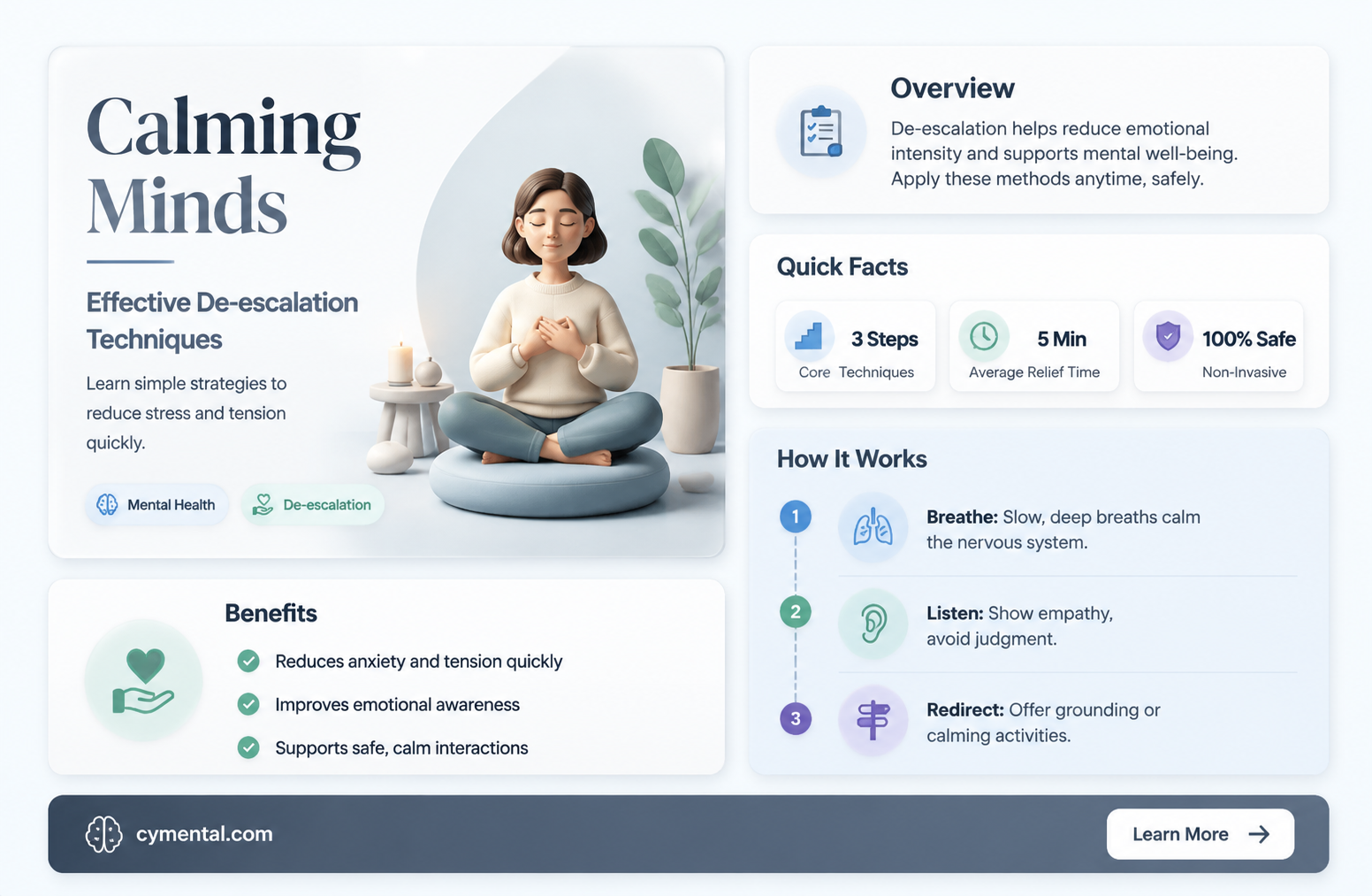
De-escalation techniques are essential tools in mental health care, designed to reduce tension and prevent conflict in challenging situations. These methods are particularly important for professionals working with individuals experiencing acute mental health crises, such as psychiatrists, psychologists, nurses, and support workers. By employing de-escalation strategies, caregivers can create a safer, more calming environment, which is crucial for both the individual in crisis and the staff involved. This approach not only helps in managing immediate crises but also contributes to the long-term well-being and recovery of individuals with mental health issues. Understanding and effectively applying de-escalation techniques is therefore a critical skill in the field of mental health care.
Explore related products


$20.49 $36.99

What You'll Learn
- Active Listening: Engage fully with the individual, maintain eye contact, and reflect back what they're saying to show understanding
- Empathy and Validation: Acknowledge the person's feelings and experiences without judgment, helping them feel heard and understood
- Non-Verbal Communication: Use calm body language, such as open hands and a relaxed posture, to convey a sense of safety and reassurance
- Crisis Assessment: Quickly evaluate the situation to identify potential risks and develop a plan to address the immediate needs of the individual
- Problem-Solving and Planning: Collaborate with the person to develop practical solutions and a step-by-step plan to manage their mental health crisis effectively

Active Listening: Engage fully with the individual, maintain eye contact, and reflect back what they're saying to show understanding
In the realm of de-escalation techniques for mental health, active listening stands out as a fundamental yet powerful tool. It involves engaging fully with the individual, maintaining eye contact, and reflecting back what they're saying to demonstrate understanding. This approach is not merely about hearing the words but also about grasping the emotions and intentions behind them. By doing so, it helps in building trust and rapport, which are essential for effective de-escalation.
Active listening requires a conscious effort to focus on the speaker without distractions. It means putting aside personal biases and judgments to truly comprehend the other person's perspective. This can be particularly challenging in high-stress situations, but it is precisely when emotions run high that active listening becomes most crucial. By acknowledging and validating the individual's feelings, you create a safe space for them to express themselves, which can help to diffuse tension and prevent escalation.
One practical technique within active listening is paraphrasing, where you restate what the person has said in your own words. This not only shows that you are paying attention but also helps to clarify any misunderstandings. For example, if someone says, "I feel like you're not taking me seriously," you could paraphrase by saying, "I understand that you feel unheard and dismissed." This simple act can significantly reduce feelings of frustration and anger.
Another important aspect of active listening is non-verbal communication. Maintaining eye contact, nodding, and using open body language can convey empathy and attentiveness. These non-verbal cues are often more impactful than words alone, as they speak directly to the emotional centers of the brain. By aligning your body language with your verbal responses, you reinforce the message that you are fully present and engaged in the conversation.
In conclusion, active listening is a vital de-escalation technique in mental health that involves engaging with the individual on a deep level, both verbally and non-verbally. By demonstrating understanding and empathy, you can help to calm emotions, build trust, and create a foundation for further intervention and support. Remember, the goal is not to fix the problem immediately but to provide a supportive environment where the individual feels heard and understood.
Exploring Therapy: Understanding Outpatient Mental Health Services
You may want to see also
Explore related products


Empathy and Validation: Acknowledge the person's feelings and experiences without judgment, helping them feel heard and understood
In the realm of mental health de-escalation, empathy and validation serve as cornerstones for effectively calming and connecting with individuals in distress. These techniques involve acknowledging a person's feelings and experiences without judgment, thereby fostering a sense of being heard and understood. This approach is particularly crucial when dealing with individuals experiencing acute emotional turmoil or psychiatric crises.
To employ empathy and validation, one must first cultivate a genuine willingness to understand the other person's perspective. This involves setting aside personal biases and assumptions, and instead, focusing on the individual's subjective experience. Active listening is a key component, where the listener repeats back what they have heard to ensure understanding and to demonstrate that they are fully present and engaged.
Validation does not necessarily mean agreeing with the person's perspective or actions, but rather, recognizing the validity of their emotional experience. For example, if someone expresses feelings of sadness or anger, validation involves acknowledging that these emotions are real and understandable, even if the underlying reasons may not be immediately clear or justifiable.
Empathy and validation can be particularly effective in de-escalating situations where individuals feel threatened, misunderstood, or dismissed. By creating a safe and non-judgmental space, individuals are more likely to feel comfortable expressing their emotions and working through their distress. This, in turn, can help to reduce the intensity of their emotional state and facilitate a more constructive dialogue.
In practice, empathy and validation can be applied through a variety of verbal and non-verbal cues. Verbal cues might include phrases such as "I understand how you feel," "That must be really difficult for you," or "I'm here to listen." Non-verbal cues can include maintaining eye contact, nodding, and using open and relaxed body language.
Ultimately, the goal of empathy and validation in mental health de-escalation is to create a supportive and understanding environment that allows individuals to feel safe, heard, and valued. By doing so, it can help to mitigate the risk of further escalation and promote a more positive and constructive interaction.
Understanding Aetna's Inpatient Mental Health Coverage: A Comprehensive Guide
You may want to see also
Explore related products


Non-Verbal Communication: Use calm body language, such as open hands and a relaxed posture, to convey a sense of safety and reassurance
In the realm of de-escalation techniques for mental health, non-verbal communication plays a pivotal role in conveying safety and reassurance. One effective strategy is to maintain calm body language, which can significantly impact the atmosphere of a tense situation. Open hands, for instance, are a universal sign of peace and non-aggression, signaling to the individual in distress that you are not a threat. This simple gesture can help to lower their guard and create a more receptive environment for communication.
Adopting a relaxed posture is equally important. When you stand or sit with a composed and non-rigid demeanor, it communicates a sense of control and stability. This can be particularly reassuring to someone who is experiencing heightened emotions or anxiety. By mirroring this calmness, you can help to regulate their emotional state and guide them towards a more tranquil mindset.
The effectiveness of these non-verbal cues is rooted in their ability to bypass the rational thought processes that may be impaired during a mental health crisis. Instead, they speak directly to the limbic system, the part of the brain responsible for emotions and instincts. This allows for a more immediate and profound impact on the individual's emotional state, potentially diffusing a volatile situation more swiftly than verbal interventions alone.
In practical terms, this might involve taking a few deep breaths before engaging with the person, ensuring your own body language is open and non-defensive, and maintaining a steady, gentle tone of voice. It's also crucial to be aware of your facial expressions, as these can convey a wealth of emotions without words. A soft, empathetic gaze can do wonders in establishing trust and rapport.
While these techniques are not a panacea, they can be powerful tools in the de-escalation process. By combining calm body language with active listening and empathy, mental health professionals and caregivers can create a supportive environment that fosters healing and recovery.
Exploring Medishare's Mental Health Coverage: What You Need to Know
You may want to see also
Explore related products


Crisis Assessment: Quickly evaluate the situation to identify potential risks and develop a plan to address the immediate needs of the individual
In the realm of mental health de-escalation, crisis assessment stands as a critical first step. It involves a rapid yet thorough evaluation of the situation to pinpoint potential risks and devise a strategy to meet the individual's immediate needs. This process is akin to a medical triage, where the primary goal is to stabilize the person and prevent any further deterioration of their condition.
The assessment begins with observing the individual's behavior, speech, and physical condition. Look for signs of agitation, such as pacing, loud talking, or aggressive posturing. Note any expressions of suicidal ideation or self-harm, as these are immediate red flags. It's also essential to assess the person's level of consciousness and any potential medical issues that could be contributing to their mental state.
Once the initial observations are made, the next step is to gather information. This can be done by speaking with the individual, their family members, or any other relevant parties. The goal is to understand the context of the crisis, including any precipitating events, the person's mental health history, and their current living situation. This information will help in identifying potential triggers and developing a targeted intervention plan.
Based on the assessment, a plan of action is formulated. This may involve providing immediate verbal de-escalation techniques, such as active listening, validation, and reassurance. In some cases, it may be necessary to involve additional resources, such as law enforcement or emergency medical services, to ensure the individual's safety. The plan should also include follow-up steps, such as connecting the person with mental health services or scheduling a check-in appointment.
Throughout the crisis assessment process, it's crucial to maintain a calm and non-judgmental demeanor. This helps to build trust with the individual and creates a safe space for them to express their feelings and concerns. By approaching the situation with empathy and understanding, mental health professionals can effectively de-escalate crises and provide the necessary support to help individuals regain stability and control.
Navigating Mental Health: The Essential Role of Case Management
You may want to see also
Explore related products


Problem-Solving and Planning: Collaborate with the person to develop practical solutions and a step-by-step plan to manage their mental health crisis effectively
In the midst of a mental health crisis, it's crucial to collaborate with the individual to develop a tailored plan for managing their symptoms and restoring stability. This process involves active listening, empathy, and a structured approach to problem-solving. Begin by helping the person identify the specific issues they're facing and the goals they wish to achieve. This could involve reducing anxiety, improving sleep, or enhancing overall mood.
Once the goals are established, work together to brainstorm practical solutions. Encourage the individual to think creatively and consider a range of strategies, from lifestyle changes to seeking professional help. For example, if the person is struggling with sleep, suggest techniques such as maintaining a consistent sleep schedule, creating a relaxing bedtime routine, or limiting caffeine intake. If anxiety is the primary concern, explore options like deep breathing exercises, progressive muscle relaxation, or cognitive-behavioral therapy.
After generating a list of potential solutions, help the person prioritize them based on feasibility, effectiveness, and personal preference. Then, develop a step-by-step plan that outlines specific actions to be taken, along with timelines and responsibilities. This plan should be realistic and achievable, with clear milestones to track progress.
Throughout this process, it's essential to maintain a supportive and non-judgmental attitude. Validate the person's feelings and experiences, and offer encouragement and motivation. Additionally, be prepared to adapt the plan as needed, based on the individual's feedback and changing circumstances.
Remember that effective problem-solving and planning require patience, flexibility, and a willingness to collaborate. By working together, you can help the person navigate their mental health crisis and develop the skills and strategies needed to maintain long-term well-being.
Understanding High Acuity Mental Health: A Comprehensive Guide
You may want to see also
Frequently asked questions
De-escalation techniques in mental health are strategies used to calm individuals who are experiencing heightened emotions, agitation, or distress. These techniques aim to reduce the intensity of the situation and help the individual regain control over their emotions and behaviors.
De-escalation techniques are crucial in mental health settings because they help prevent the escalation of conflicts, reduce the risk of harm to both the individual and others, and promote a safe and supportive environment for everyone involved. By effectively managing crises, de-escalation techniques can also improve outcomes for individuals receiving mental health care.
One example of a de-escalation technique used in mental health is active listening. This involves giving the individual your full attention, acknowledging their feelings, and reflecting back what they have said to show that you understand their perspective. Active listening can help the individual feel heard and validated, which can contribute to calming them down and reducing tension in the situation.