Caleb Wright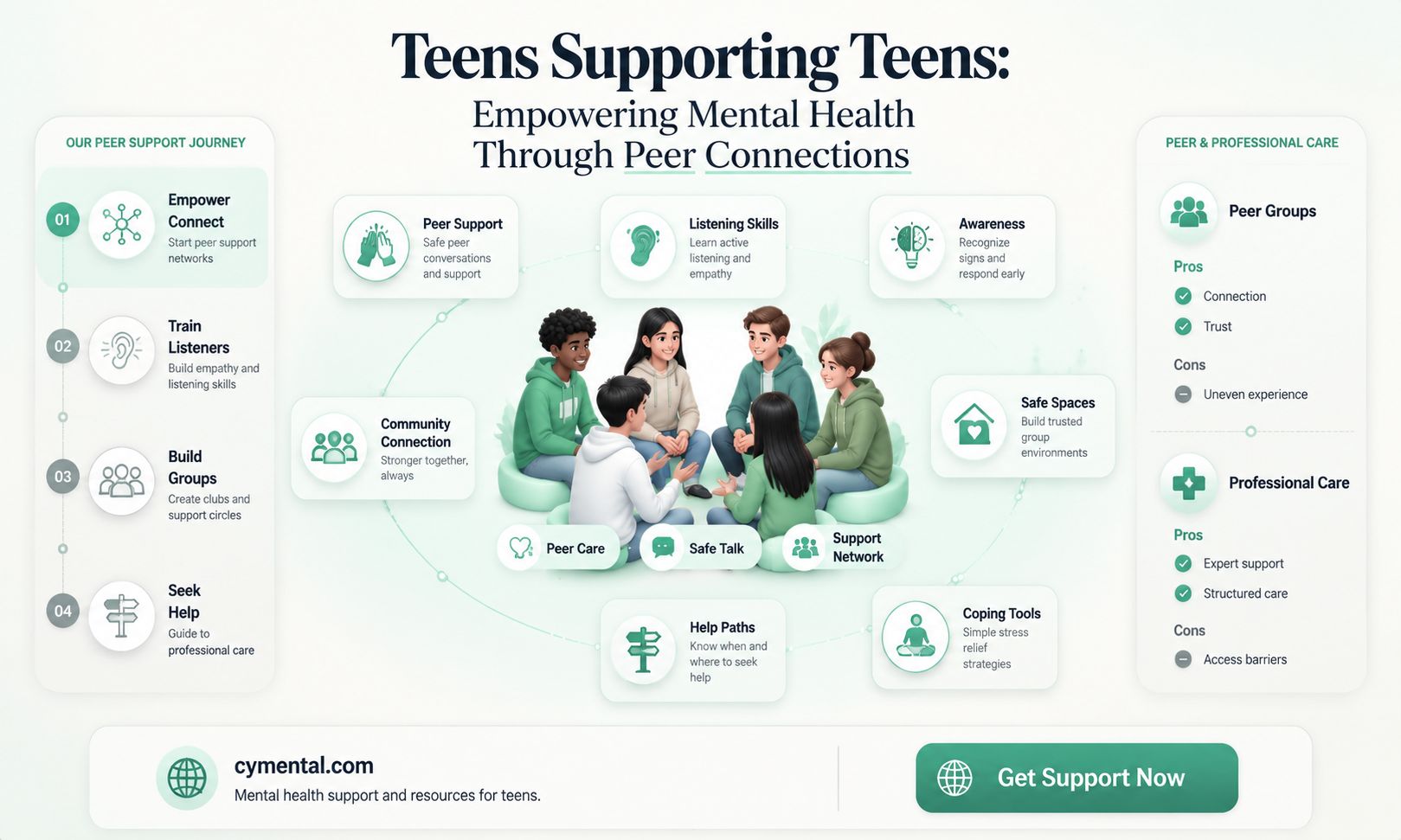
Teens play a crucial role in supporting each other's mental health, as they often understand the unique challenges and pressures their peers face. By fostering open communication, active listening, and empathy, teens can create safe spaces where they feel comfortable sharing their struggles without fear of judgment. Encouraging peer-to-peer support, such as joining or starting mental health clubs, organizing awareness campaigns, or simply checking in on friends, can make a significant difference. Additionally, teens can promote healthy coping strategies, like mindfulness, exercise, or creative outlets, and help each other access professional resources when needed. By standing together and breaking the stigma surrounding mental health, teens can empower one another to navigate life’s ups and downs with resilience and compassion.
Explore related products

$7.97 $18.99


What You'll Learn
- Peer Support Groups: Teens can organize safe spaces for open conversations about mental health struggles
- Active Listening: Teach teens to listen without judgment, offering empathy and understanding to peers
- Awareness Campaigns: Use social media to share resources and reduce stigma around mental health
- Encourage Healthy Habits: Promote exercise, sleep, and mindfulness to support mental well-being
- Connect to Professionals: Help peers find therapists, hotlines, or counselors when needed

Peer Support Groups: Teens can organize safe spaces for open conversations about mental health struggles
Teens often feel more comfortable sharing their struggles with peers than with adults, making peer support groups a powerful tool for addressing mental health. These groups create a safe, non-judgmental space where teens can openly discuss their experiences, reducing feelings of isolation and fostering a sense of belonging. For example, a high school in California implemented a student-led mental health club where members meet weekly to share coping strategies, personal stories, and resources. This model has been replicated in schools nationwide, demonstrating its effectiveness in building resilience and emotional support networks.
Organizing a peer support group requires careful planning to ensure it remains a safe and productive environment. Start by identifying a trusted adult, such as a school counselor or teacher, to serve as an advisor without actively participating in discussions. Set clear ground rules, such as confidentiality, active listening, and respect for differing experiences. Keep group sizes small—ideally 6 to 10 members—to encourage meaningful participation. Use structured activities, like guided journaling or mindfulness exercises, to ease into deeper conversations. For instance, one group in Texas begins each session with a "check-in" where members rate their mental health on a scale of 1 to 10, normalizing vulnerability from the start.
While peer support groups are invaluable, they are not a substitute for professional mental health care. Teens should be trained to recognize red flags, such as suicidal ideation or severe self-harm, and know how to escalate concerns to adults. Provide resources like crisis hotline numbers (e.g., the National Suicide Prevention Lifeline at 988) and local mental health services. Additionally, ensure group leaders receive basic training in active listening and emotional first aid. A study by the American Psychological Association found that teens who participated in such groups reported a 30% increase in their ability to support peers in crisis, highlighting the importance of preparation.
The impact of peer support groups extends beyond individual conversations, fostering a culture of empathy and awareness within schools and communities. For example, a group in Chicago organized a mental health awareness week, featuring workshops, art exhibits, and panel discussions led by teens. This not only destigmatized mental health but also empowered participants to become advocates. By combining personal support with broader initiatives, teens can create lasting change while helping one another navigate the challenges of adolescence.
Mental Health Support: A Key to Stable Housing Solutions
You may want to see also
Explore related products



Active Listening: Teach teens to listen without judgment, offering empathy and understanding to peers
Teens often turn to peers for support, but without guidance, these conversations can do more harm than good. Active listening transforms casual chats into meaningful exchanges that foster trust and alleviate emotional burdens. Unlike passive hearing, it involves fully concentrating, understanding, and responding thoughtfully—a skill rarely intuitive but entirely teachable.
Steps to Teach Active Listening:
- Create a Safe Space: Begin by establishing ground rules for conversations, such as confidentiality and no interruptions. For example, a "listening circle" in a quiet, neutral area can signal this is a judgment-free zone.
- Model Open-Ended Questions: Train teens to ask questions like, *"How did that make you feel?"* instead of *"Why did you do that?"* The former invites reflection, while the latter can sound accusatory.
- Practice Reflective Responses: Teach them to paraphrase peers’ emotions, such as, *"It sounds like you’re feeling overwhelmed with school right now."* This validates feelings and shows they’re truly listening.
- Use Nonverbal Cues: Encourage eye contact, nodding, and neutral facial expressions. Even a simple, *"I’m here for you,"* paired with a calm tone, can communicate empathy without words.
Cautions to Consider:
Avoid turning active listening into an interrogation. Teens should resist the urge to offer advice unless asked. Phrases like, *"You should just..."* can undermine the speaker’s autonomy and shut down the conversation. Additionally, be mindful of emotional boundaries—listeners should not absorb others’ distress to the point of burnout. Suggest a 15-minute limit for intense talks and encourage self-care afterward.
Real-World Application:
Consider a scenario where a teen confides about anxiety before an exam. Instead of saying, *"Just study harder,"* an active listener might respond, *"It seems like the pressure is really getting to you. Want to talk about what’s making it feel worse?"* This approach not only addresses the immediate concern but also builds a foundation for future trust. Schools or youth groups can formalize this by pairing teens as "listening buddies," ensuring each participant takes turns as both speaker and listener.
Active listening is a powerful tool for teens to support one another’s mental health. By focusing on presence, empathy, and validation, they can create a culture of understanding that transcends fleeting advice or superficial reassurance. With practice, this skill becomes second nature, turning everyday interactions into opportunities for genuine connection.
Mental Health History: Boosting Temporary Insanity Claims in Court?
You may want to see also
Explore related products




Awareness Campaigns: Use social media to share resources and reduce stigma around mental health
Social media isn’t just for memes and selfies—it’s a powerful tool for teens to reshape conversations around mental health. Platforms like Instagram, TikTok, and Twitter allow teens to amplify their voices, share personal stories, and distribute credible resources to peers who might be struggling in silence. By leveraging hashtags, reels, and posts, teens can create a ripple effect of awareness that challenges stigma and fosters a culture of empathy.
Consider this: a single Instagram post with a relatable caption and a link to a mental health hotline can reach hundreds, even thousands, of teens. Campaigns like #MentalHealthMatters or #YouAreNotAlone have already demonstrated how viral content can normalize discussions about anxiety, depression, and stress. Teens can take this further by sharing infographics, personal testimonials, or even short videos debunking myths about mental health. For instance, a TikTok explaining the difference between feeling sad and clinical depression could educate peers in a digestible, engaging format.
However, not all content is created equal. Teens must prioritize accuracy and sensitivity when sharing resources. Stick to reputable sources like the National Alliance on Mental Illness (NAMI), TeenMentalHealth.org, or Crisis Text Line. Avoid oversimplifying complex issues or offering advice beyond your expertise—instead, direct peers to professionals. For example, instead of saying, “Just meditate to fix your anxiety,” share a link to a guided meditation app or a therapist directory.
One practical tip: collaborate with peers to create a mental health toolkit for your school or community. This could include a Google Doc with local counseling services, helpline numbers, and coping strategies. Share the link via Instagram Stories or Twitter threads, and encourage others to add their own resources. By crowdsourcing information, you ensure the toolkit remains relevant and inclusive.
Finally, remember that reducing stigma requires consistency. Posting about mental health once a year isn’t enough—make it a regular part of your online presence. Engage with comments, answer questions, and normalize vulnerability. Teens are more likely to seek help if they see their peers doing the same. Social media isn’t just a platform for connection—it’s a lifeline for teens who need to know they’re not alone.
Boost Mental Health, Shed Pounds: The Mind-Body Weight Loss Connection
You may want to see also
Explore related products

$14.99


$11.56 $18.99


Encourage Healthy Habits: Promote exercise, sleep, and mindfulness to support mental well-being
Teens often underestimate the power of daily habits in shaping their mental health. Exercise, sleep, and mindfulness aren’t just buzzwords—they’re scientifically backed tools that can reduce stress, improve mood, and build resilience. For instance, just 30 minutes of moderate exercise, like jogging or dancing, releases endorphins that combat anxiety and depression. Similarly, 8–10 hours of sleep per night helps regulate emotions and consolidate memories, while mindfulness practices, even for 5 minutes daily, can lower cortisol levels. These habits aren’t optional luxuries; they’re essential for a teen’s mental well-being.
To encourage these habits, teens can lead by example and create accountability systems. Start by organizing group activities like weekly hikes, yoga sessions, or even study breaks with guided meditation apps like Calm or Headspace. Pairing these activities with friends makes them more enjoyable and less daunting. For sleep, establish a “device-free hour” before bed and share tips like dimming lights or journaling to wind down. Remember, consistency is key—small, daily efforts yield bigger results than sporadic, intense attempts.
However, promoting these habits isn’t without challenges. Teens often prioritize academics or social media over self-care, viewing exercise or mindfulness as time-consuming. To counter this, reframe these practices as investments in productivity and focus. For example, a 10-minute walk during study breaks can improve concentration, and better sleep enhances memory retention. Additionally, avoid shaming peers who struggle to adopt these habits; instead, offer gentle encouragement and celebrate small wins, like going to bed 30 minutes earlier.
The impact of these habits extends beyond the individual. When teens collectively prioritize mental well-being, it fosters a culture of support and reduces stigma. Schools can amplify this by integrating mindfulness into morning announcements or offering physical education classes that cater to diverse interests, like dance or martial arts. Ultimately, encouraging healthy habits isn’t just about personal improvement—it’s about building a community where mental health is valued and nurtured. Start small, stay consistent, and watch the ripple effects unfold.
Mental Health Case Managers: Legal Support and Advocacy Explained
You may want to see also
Explore related products


Connect to Professionals: Help peers find therapists, hotlines, or counselors when needed
Teens often hesitate to seek professional help for mental health issues, either due to stigma, lack of awareness, or fear of judgment. As a peer, you can bridge this gap by normalizing the conversation around therapy, hotlines, and counseling. Start by sharing your own experiences or those of others (with permission) to show that reaching out is a sign of strength, not weakness. For instance, mentioning how a friend benefited from just three sessions with a counselor can make professional help feel more accessible and less intimidating.
To effectively connect peers to professionals, begin by familiarizing yourself with local and national resources. Compile a list of free or low-cost hotlines like the Crisis Text Line (text HOME to 741741) or the National Alliance on Mental Illness (NAMI) Helpline. For therapy, research sliding-scale clinics or telehealth platforms like TeenCounseling.com, which cater specifically to adolescents. Keep this information handy—whether in a note on your phone or a printed list—so you can share it quickly when someone expresses a need.
When approaching a peer who might benefit from professional help, use empathetic and non-judgmental language. Instead of saying, “You need therapy,” try, “I’ve noticed you’ve been struggling, and I think talking to someone could really help. I have some resources if you’re interested.” Offer to accompany them to their first appointment or help them draft an email to a counselor. Small gestures like these can reduce the anxiety associated with taking the first step.
While connecting peers to professionals is crucial, it’s equally important to recognize your limits. You are not a therapist, and attempting to “fix” someone’s mental health can lead to burnout or harm. Encourage professional help while continuing to be a supportive friend. If a peer is in immediate danger or expresses suicidal thoughts, do not hesitate to involve a trusted adult or call emergency services. Your role is to guide, not to carry the weight of their struggles alone.
Finally, advocate for systemic change within your school or community. Push for mental health education in health classes, the inclusion of resource lists in student handbooks, and the presence of school counselors trained in adolescent mental health. By creating an environment where professional help is readily available and widely accepted, you empower not just your peers but future generations to prioritize their mental well-being.
ChatGPT and Mental Health: A Supportive Tool or Limited Aid?
You may want to see also
Frequently asked questions
Teens can support their peers by actively listening without judgment, encouraging them to seek professional help, and being a reliable and empathetic friend. Small gestures like checking in regularly or inviting them to activities can also make a positive difference.
Teens can raise awareness by organizing school events, sharing resources on social media, or starting conversations about mental health with friends and family. Joining or creating mental health clubs or campaigns can also help normalize discussions around the topic.
Teens can reduce stigma by speaking openly about mental health, using respectful language, and correcting misconceptions when they hear them. Sharing personal experiences (if comfortable) or highlighting stories of resilience can also humanize the issue and foster understanding.
Teens can advocate for mental health resources at school, such as counseling services or wellness programs. They can also promote kindness and inclusivity, report bullying, and encourage teachers and administrators to prioritize mental health education and support.