Ava Ramirez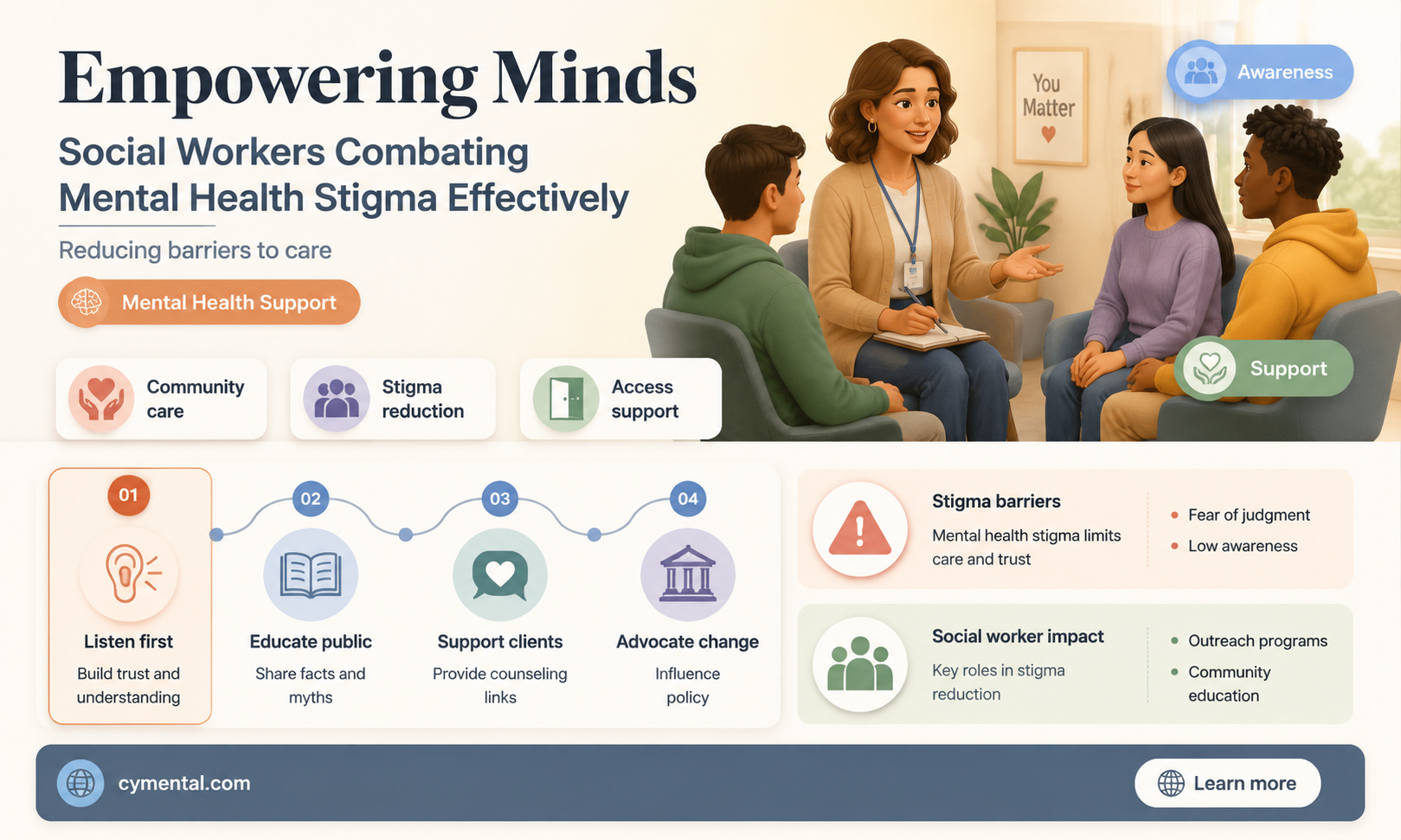
Social workers play a pivotal role in combating the stigma surrounding mental illness by fostering empathy, education, and advocacy within communities. Through their unique position as intermediaries between individuals and systems, they can challenge misconceptions by promoting awareness and understanding of mental health challenges. By providing evidence-based interventions and personalized support, social workers empower those affected to seek help without fear of judgment. Additionally, they collaborate with organizations, schools, and policymakers to implement stigma-reduction programs and policies, ensuring that mental health is treated with the same urgency and compassion as physical health. Their holistic approach not only addresses individual needs but also works to create a more inclusive and supportive societal environment, ultimately dismantling barriers to care and fostering acceptance.
| Characteristics | Values |
|---|---|
| Education and Awareness | Social workers can educate communities about mental health, debunk myths, and promote understanding through workshops, campaigns, and resources. |
| Advocacy | They advocate for policy changes, increased funding, and equitable access to mental health services to reduce systemic stigma. |
| Empowerment | Social workers empower individuals with mental illness by fostering self-advocacy, resilience, and community engagement. |
| Person-Centered Approach | They focus on the individual’s strengths and experiences, avoiding labels and promoting dignity. |
| Collaboration | Social workers collaborate with healthcare providers, schools, and organizations to create stigma-free environments. |
| Role Modeling | By demonstrating empathy, respect, and non-judgmental attitudes, social workers set an example for others. |
| Crisis Intervention | They provide immediate support during mental health crises, reducing fear and misunderstanding. |
| Community Integration | Social workers facilitate the inclusion of individuals with mental illness in community activities and employment. |
| Cultural Competence | They address cultural biases and tailor interventions to meet diverse community needs. |
| Research and Evidence-Based Practice | Social workers use data to inform strategies that combat stigma and improve mental health outcomes. |
| Support Groups | They organize peer support groups to reduce isolation and foster a sense of belonging. |
| Media Engagement | Social workers work with media to portray mental illness accurately and reduce sensationalism. |
| Early Intervention | By identifying and addressing mental health issues early, they prevent stigma from worsening. |
| Family Involvement | They involve families in treatment and education to reduce stigma within households. |
| Policy Implementation | Social workers ensure mental health policies are implemented effectively at local and national levels. |
Explore related products


What You'll Learn
- Educating communities on mental health facts to dispel myths and misconceptions
- Promoting open dialogue to normalize conversations about mental illness
- Advocating for policy changes to support mental health resources and care
- Empowering individuals with mental illness to share their stories and experiences
- Collaborating with media to portray mental illness accurately and compassionately

Educating communities on mental health facts to dispel myths and misconceptions
Stigma against mental illness thrives on misinformation, and social workers are uniquely positioned to dismantle it through community education. By equipping individuals with accurate, evidence-based knowledge, they can challenge harmful stereotypes and foster empathy. This approach doesn't merely correct misconceptions; it empowers communities to become active participants in creating a more supportive environment for those struggling with mental health issues.
One effective strategy involves hosting interactive workshops tailored to specific demographics. For instance, a session for teenagers could utilize peer-led discussions and social media campaigns to debunk myths like "mental illness is a sign of weakness" or "only 'crazy' people need therapy." Incorporating personal narratives from young adults who've navigated mental health challenges can make the information relatable and impactful. Similarly, workshops for older adults might focus on dispelling ageist assumptions, such as the notion that depression is a natural part of aging, and emphasize the importance of early intervention.
A comparative analysis reveals the power of storytelling in education. Research shows that sharing personal experiences significantly increases audience engagement and retention of information. Social workers can facilitate this by organizing panel discussions featuring individuals from diverse backgrounds who openly discuss their mental health journeys. This humanizes the issue, making it harder for stereotypes to take root. For example, a panel could include a veteran with PTSD, a college student managing anxiety, and a parent supporting a child with autism, each offering unique perspectives that challenge monolithic views of mental illness.
However, education alone isn't enough. Social workers must also address systemic barriers that perpetuate stigma. This includes advocating for policy changes that integrate mental health education into school curricula and workplace training programs. By normalizing conversations about mental health from a young age, we can prevent the formation of stigmatizing attitudes. Additionally, social workers can collaborate with local media outlets to ensure responsible reporting on mental health issues, avoiding sensationalism and promoting accurate representations.
Ultimately, educating communities on mental health facts is a proactive, long-term investment in reducing stigma. It requires a multi-faceted approach that combines interactive learning, personal narratives, and systemic advocacy. By empowering individuals with knowledge and challenging societal norms, social workers can create a cultural shift where mental illness is understood, accepted, and treated with the same urgency and compassion as physical ailments. This isn't just about correcting misinformation—it's about building a society where everyone feels safe to seek help and support when they need it most.
Mental Math Mastery: Boosting Case Interview Performance and Confidence
You may want to see also
Explore related products

$22.24 $34.99


$17.79 $29.99


Promoting open dialogue to normalize conversations about mental illness
Stigma thrives in silence, and mental illness is no exception. Social workers, positioned at the intersection of individual lives and societal systems, are uniquely equipped to dismantle this silence through the power of open dialogue.
By creating safe, non-judgmental spaces for individuals to share their experiences, social workers can challenge misconceptions and humanize the face of mental illness.
Consider the power of storytelling. Sharing personal narratives, whether through support groups, online platforms, or community events, allows individuals to connect on a deeply human level. A social worker facilitating a peer-support group for individuals with anxiety might encourage members to share not only their struggles but also their coping mechanisms and moments of resilience. This shifts the focus from deficit to strength, fostering empathy and understanding among participants and the wider community.
Think of it as a ripple effect: one story shared can inspire countless others to speak up, breaking down barriers and normalizing the conversation.
However, promoting open dialogue isn't without its challenges. Social workers must be mindful of potential pitfalls. Forcing conversations or pressuring individuals to share before they're ready can be counterproductive. It's crucial to respect boundaries and create an environment where participation is voluntary and confidential. Additionally, social workers should be prepared to address potential backlash or negative reactions. Equipping themselves with knowledge about mental health stigma and effective communication strategies is essential for navigating difficult conversations and countering misinformation.
Think of it as laying the groundwork for a garden: preparing the soil, providing nourishment, and protecting the seedlings from harsh weather.
Ultimately, promoting open dialogue is a powerful tool for social workers to combat the stigma surrounding mental illness. By creating safe spaces, encouraging storytelling, and addressing challenges head-on, they can cultivate a culture of acceptance and understanding. This, in turn, paves the way for individuals to seek help without fear of judgment, access necessary resources, and ultimately, thrive.
Sculpting for Serenity: Unveiling Art's Healing Power on Mental Health
You may want to see also
Explore related products




Advocating for policy changes to support mental health resources and care
Social workers are uniquely positioned to advocate for policy changes that address the systemic barriers to mental health care, thereby reducing the stigma associated with mental illness. By leveraging their expertise in community needs and their role as intermediaries between clients and systems, social workers can push for legislation that increases funding for mental health services, expands access to care, and integrates mental health into primary care settings. For instance, advocating for the reauthorization of the Mental Health Parity and Addiction Equity Act ensures that mental health services are covered equally to physical health services, dismantling financial barriers that often prevent individuals from seeking help.
One practical strategy for social workers is to engage in grassroots advocacy by mobilizing communities to support mental health initiatives. This can involve organizing town hall meetings, collaborating with local lawmakers, and using data to highlight the prevalence of mental health issues in specific regions. For example, a social worker might present statistics showing that 1 in 5 adults experiences mental illness annually but only 43% receive treatment, emphasizing the urgent need for policy interventions. By framing mental health as a public health issue rather than an individual failing, social workers can shift public perception and build momentum for policy changes.
Policy advocacy also requires social workers to address the intersectionality of mental health stigma, particularly how it affects marginalized populations. For instance, advocating for culturally competent care ensures that mental health services are accessible and effective for diverse communities. This might include pushing for policies that fund training programs for mental health professionals on topics like racial trauma, LGBTQ+ issues, or immigrant mental health. By centering equity in policy discussions, social workers can challenge the systemic biases that exacerbate stigma and exclusion.
Finally, social workers must collaborate with interdisciplinary teams to amplify their advocacy efforts. Partnering with psychologists, educators, and healthcare providers strengthens the case for policy changes by demonstrating broad support across sectors. For example, a coalition might advocate for the inclusion of mental health education in school curricula, starting as early as age 10, to normalize conversations about mental health and reduce stigma from a young age. Such collaborative approaches not only enhance the credibility of advocacy efforts but also ensure that policies are informed by diverse perspectives and expertise.
Do Mentally Ill Individuals Seek Support? Breaking Barriers and Stigma
You may want to see also
Explore related products




Empowering individuals with mental illness to share their stories and experiences
Sharing personal narratives is a powerful tool in dismantling the stigma surrounding mental illness, and social workers play a pivotal role in facilitating this process. By encouraging and supporting individuals to articulate their experiences, social workers can foster a sense of agency and self-worth in those who often feel marginalized by society. This approach not only helps in reducing self-stigma but also educates the public, humanizing mental health struggles and promoting empathy.
Step-by-Step Empowerment:
- Create Safe Spaces: Social workers should establish environments where individuals feel secure to express themselves without fear of judgment. This can be achieved through one-on-one sessions or group settings, ensuring confidentiality and respect. For instance, a weekly support group led by a social worker can provide a consistent platform for sharing.
- Storytelling Techniques: Guide individuals in structuring their narratives. This includes helping them identify key moments, emotions, and lessons learned. Encouraging the use of creative mediums like writing, art, or video can make the process more engaging and accessible, especially for younger individuals or those who find verbal expression challenging.
- Practice and Preparation: Sharing personal stories can be daunting. Social workers can role-play with clients to build confidence and refine their narratives. This preparation ensures that individuals feel ready and in control when sharing their experiences publicly.
The Impact of Storytelling:
When individuals with mental illness share their journeys, it challenges stereotypes and misconceptions. For example, a person living with schizophrenia who shares their story of managing symptoms and pursuing a successful career can shatter the common misconception of incapacity associated with the condition. This act of vulnerability becomes a powerful educational tool, offering insights that statistical data alone cannot provide.
Cautions and Considerations:
While empowering individuals to share their stories, social workers must be mindful of potential risks. Not everyone is ready or willing to disclose their experiences publicly, and this should be respected. Additionally, some individuals might face backlash or discrimination, so social workers should provide ongoing support and resources to mitigate these risks. It's crucial to emphasize that sharing is a choice and should never be coerced.
In conclusion, social workers have the unique ability to facilitate a transformative process where personal narratives become instruments of change. By empowering individuals to share their mental health journeys, social workers contribute to a broader cultural shift, fostering understanding and acceptance. This approach not only benefits those sharing their stories but also educates and inspires others, creating a more compassionate and informed society.
Physical Activity Benefits for Mental Disabilities: Enhancing Well-Being and Quality of Life
You may want to see also
Explore related products


Collaborating with media to portray mental illness accurately and compassionately
Media portrayals of mental illness often perpetuate stereotypes, fueling stigma and misunderstanding. Social workers, with their expertise in human behavior and advocacy, are uniquely positioned to challenge these narratives. By collaborating with media professionals, they can ensure that mental health stories are told with accuracy, empathy, and nuance. This partnership can transform harmful representations into powerful tools for education and destigmatization.
Consider the impact of a television drama that depicts a character with schizophrenia not as a violent threat, but as a complex individual navigating their condition with support from loved ones and professionals. Such a portrayal, guided by social work input, could challenge public misconceptions and foster compassion. Social workers can provide media creators with insights into the lived experiences of those with mental illness, helping to avoid sensationalism and promote realistic, hopeful narratives. For instance, consulting on scripts, offering sensitivity training, or facilitating interviews with individuals who have personal stories to share can all contribute to more authentic representations.
However, collaboration requires careful navigation. Social workers must balance clinical accuracy with storytelling needs, ensuring that mental health conditions are not oversimplified or romanticized. For example, while it’s important to show recovery, not every story needs a neatly resolved ending. Some individuals live with chronic mental health challenges, and their stories are equally valid and deserving of representation. Social workers can advocate for diversity in these portrayals, reflecting the wide range of experiences across age groups, cultures, and socioeconomic backgrounds.
Practical steps for social workers include reaching out to local media outlets, offering to serve as consultants, and creating resource kits that provide factual information and guidelines for responsible reporting. They can also engage with social media platforms, where misinformation spreads rapidly, by sharing evidence-based content and countering stigmatizing posts. For instance, a social worker might partner with a YouTuber to create a series on anxiety disorders, combining personal anecdotes with clinical explanations to reach a younger audience.
Ultimately, the goal of this collaboration is to shift public perception from fear and judgment to understanding and support. By influencing media narratives, social workers can contribute to a cultural environment where seeking help for mental health is normalized, and those living with these conditions are treated with dignity. This work is not just about correcting misinformation—it’s about building a society that values empathy and inclusivity.
Vacations and Mental Health: Unwinding for a Healthier Mind
You may want to see also
Frequently asked questions
Social workers can organize educational campaigns, workshops, and community events to provide accurate information about mental health, challenge misconceptions, and promote understanding.
Social workers advocate for policy changes, equal access to resources, and the rights of individuals with mental illness, helping to combat systemic stigma and discrimination.
Social workers provide counseling, empowerment strategies, and a non-judgmental space to help clients rebuild self-esteem and challenge negative self-perceptions tied to stigma.
Social workers can engage community leaders, schools, and local organizations to foster open dialogue, promote mental health literacy, and create supportive environments that challenge stigma.