Ava Ramirez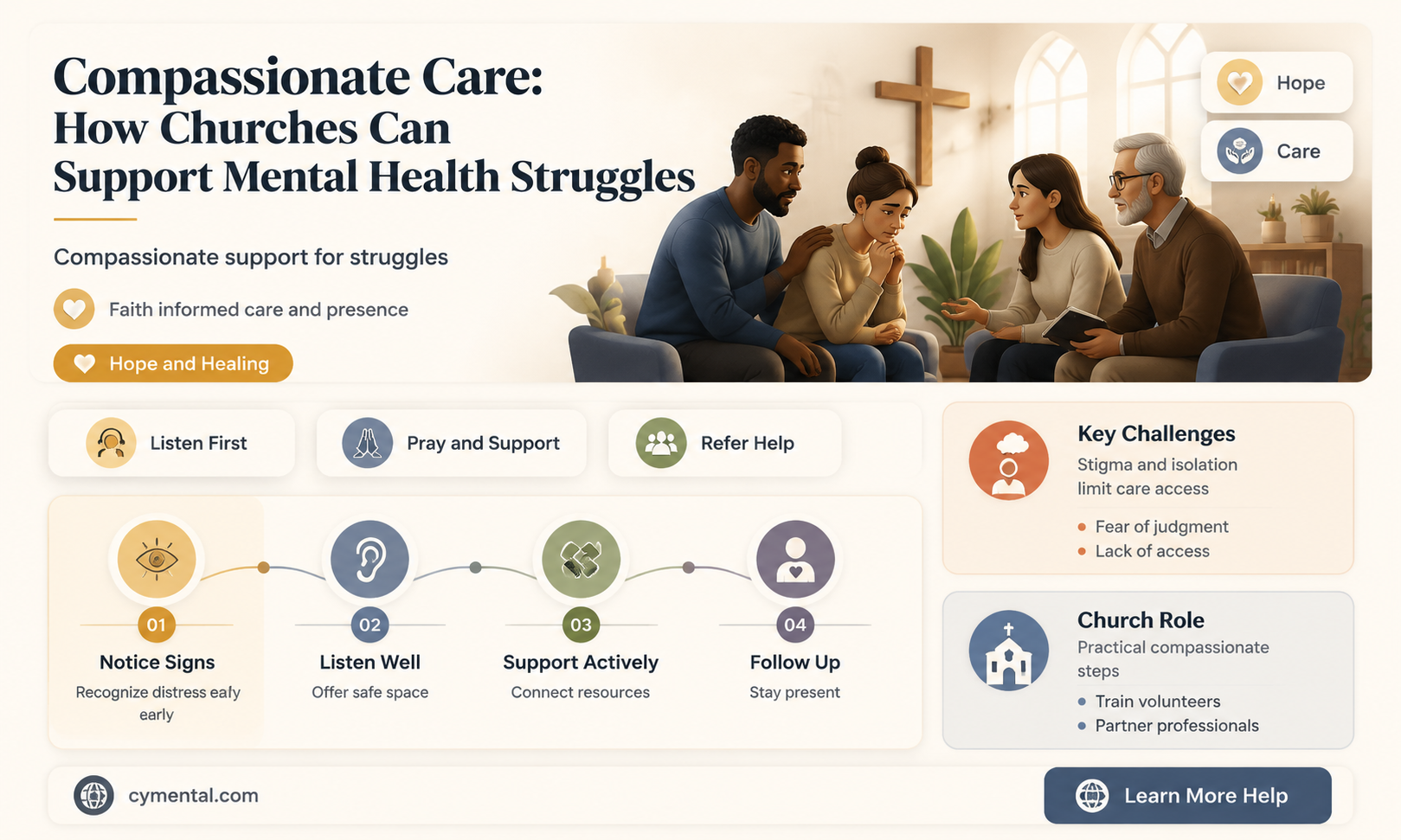
The church has a unique opportunity to provide support and care for individuals struggling with mental illness, offering a compassionate and faith-based approach to healing. By fostering a community of understanding, acceptance, and empathy, churches can create safe spaces for those affected to share their experiences without fear of judgment. Through education, churches can dispel stigma surrounding mental health, encouraging early intervention and treatment. Pastoral counseling, prayer, and spiritual guidance can complement professional therapy, providing holistic support that addresses emotional, psychological, and spiritual needs. Additionally, churches can connect individuals with resources, support groups, and trained professionals, ensuring they receive comprehensive care. By embracing its role as a source of hope and comfort, the church can play a vital part in helping those with mental illness find healing, purpose, and a sense of belonging.
| Characteristics | Values |
|---|---|
| Provide Safe Spaces | Create welcoming environments free from stigma and judgment where individuals feel accepted and understood. |
| Offer Emotional Support | Train clergy and volunteers in active listening, empathy, and basic mental health first aid to provide compassionate care. |
| Promote Awareness & Education | Host workshops, seminars, and sermons to reduce stigma, educate on mental health conditions, and encourage help-seeking behavior. |
| Connect to Professional Help | Maintain a list of qualified mental health professionals and resources within the community for referrals. |
| Foster Community & Belonging | Encourage participation in small groups, support groups, and social activities to combat isolation and build connections. |
| Encourage Spiritual Practices | Offer prayer, meditation, and other spiritual practices that can provide comfort, hope, and a sense of meaning. |
| Provide Practical Assistance | Offer help with tasks like meals, transportation, or childcare to alleviate stress and burden for individuals and families. |
| Advocate for Policy Change | Support policies that improve access to mental health care and address social determinants of mental health. |
| Collaborate with Mental Health Organizations | Partner with local mental health organizations to provide specialized services and resources. |
| Offer Hope & Meaning | Share messages of hope, resilience, and the possibility of recovery through faith and community support. |
Explore related products



What You'll Learn
- Provide Safe Spaces: Create welcoming environments for open discussions about mental health struggles without judgment
- Educate Congregations: Offer training on mental illness awareness and stigma reduction for church members
- Connect to Professionals: Partner with mental health experts to provide resources and referrals
- Pray and Support: Offer prayer, encouragement, and practical help like meals or transportation
- Promote Self-Care: Encourage healthy habits and spiritual practices to support mental well-being

Provide Safe Spaces: Create welcoming environments for open discussions about mental health struggles without judgment
One of the most powerful ways the church can support mental health is by dismantling the stigma surrounding it. Safe spaces begin with intentional language. Avoid phrases like “just pray harder” or “it’s all in your head,” which minimize struggles. Instead, train leaders and congregants to use empathetic, non-judgmental language. For instance, saying, “I’m here to listen, no matter what” signals openness. Pair this with visible commitments, such as displaying mental health resources in bulletins or online, to reinforce the message that vulnerability is welcomed, not shunned.
Creating safe spaces requires more than good intentions—it demands structure. Designate specific times and places for mental health discussions, such as monthly support groups or post-service coffee chats. Ensure these spaces are physically and emotionally secure: dim lighting, comfortable seating, and strict confidentiality policies. For virtual options, use encrypted platforms and clearly state participation guidelines. For example, a church in Texas implemented a “No Fix-It Policy” in their mental health group, where attendees agree not to offer advice unless asked, fostering a judgment-free zone.
Not everyone feels comfortable sharing in large groups. Train clergy and lay leaders in active listening techniques, such as reflective responses (“It sounds like you’re feeling overwhelmed”) and open-ended questions (“How can I support you?”). Offer one-on-one sessions with trained volunteers or partner with local therapists for discounted rates. For youth, consider peer-led circles where teens can discuss anxiety or depression with peers, moderated by a trusted adult. A church in Oregon saw a 40% increase in youth participation after introducing these circles, proving tailored approaches work.
Safe spaces must extend beyond the church walls. Equip congregants with tools to continue conversations at home or in small groups. Provide discussion guides on topics like recognizing signs of depression or supporting a friend in crisis. Encourage families to set aside weekly “check-in” times, using prompts like, “What’s one thing that felt heavy this week?” For digital communities, create private Facebook groups or Discord servers where members can share struggles anonymously. A church in Atlanta reported that their online forum became a lifeline during the pandemic, proving virtual spaces can be just as transformative.
Finally, measure the impact of these safe spaces to ensure they’re effective. Distribute anonymous surveys asking attendees how supported they feel and what improvements they suggest. Track attendance and retention rates for mental health programs. Celebrate successes publicly—for example, a testimonial from someone who found healing through the group—to encourage others to participate. Remember, safe spaces aren’t static; they evolve with the needs of the community. Regularly reassess and adapt to keep them relevant and impactful.
Mental Health Support: A Key to Preventing School Shootings?
You may want to see also
Explore related products






Educate Congregations: Offer training on mental illness awareness and stigma reduction for church members
Stigma thrives in silence, and mental illness is often shrouded in it. Churches, with their inherent focus on community and compassion, are uniquely positioned to dismantle this silence through education.
Step 1: Choose Evidence-Based Curriculum
Don't reinvent the wheel. Reputable organizations like the National Alliance on Mental Illness (NAMI) and Mental Health America offer free or low-cost training programs specifically designed for faith communities. These programs provide scientifically accurate information about mental illness, dispel myths, and equip participants with practical skills for supportive conversations.
Opt for curricula that address common misconceptions within religious contexts, such as the idea that mental illness is a sign of weakness or a lack of faith.
Step 2: Tailor Training to Your Congregation
Consider the demographics and cultural background of your church. A youth group might benefit from a more interactive, peer-led approach, while older adults may prefer a lecture-style format with ample time for questions. Incorporate personal testimonies from individuals with lived experience of mental illness, ensuring diverse representation.
Remember, sensitivity is key. Avoid sensationalizing stories or focusing solely on the most severe cases.
Step 3: Foster Safe Spaces for Dialogue
Training shouldn't be a one-time event. Create ongoing opportunities for open and honest conversations about mental health. This could include small group discussions, book clubs focused on mental health topics, or even dedicated prayer circles for those affected by mental illness. Encourage participants to share their own experiences, concerns, and questions in a judgment-free environment.
Step 4: Empower Action, Not Just Awareness
Education without action is incomplete. Provide concrete ways for congregation members to support individuals with mental illness. This could include:
- Learning about local mental health resources: Compile a list of therapists, support groups, and crisis hotlines readily available to church members.
- Becoming a Mental Health First Aid responder: Train individuals to recognize the signs of mental health crises and provide initial support until professional help arrives.
- Offering practical assistance: This could be as simple as providing meals, transportation to appointments, or simply being a listening ear.
Caution: Avoid Amateur Diagnosis and Treatment
While education is crucial, it's essential to emphasize that church members are not mental health professionals. Training should focus on recognizing signs of distress, offering support, and encouraging professional help-seeking. Avoid any language that suggests church members can "cure" mental illness through prayer alone.
By investing in mental illness awareness and stigma reduction training, churches can transform from places of silence to sanctuaries of understanding and support. This proactive approach not only benefits individuals struggling with mental health challenges but also strengthens the entire congregation by fostering a culture of empathy, compassion, and inclusivity.
Dance Your Way to Mental Wellness: Unlocking Emotional and Cognitive Benefits
You may want to see also
Explore related products

$21.49 $32.99


$8.85 $18.99


Connect to Professionals: Partner with mental health experts to provide resources and referrals
Mental health struggles often require more than prayer and pastoral care. While spiritual support is vital, partnering with licensed professionals bridges a critical gap in the church’s ability to help. Consider this: a 2022 study found that 70% of individuals with mental illness seek help from faith communities first, yet only 29% of churches feel adequately equipped to respond. This disconnect highlights the urgent need for churches to connect with mental health experts who can provide clinical expertise, evidence-based interventions, and specialized resources.
Step 1: Identify Local Partners
Begin by researching licensed therapists, psychologists, psychiatrists, and mental health organizations in your area. Look for professionals who align with your church’s values and have experience working with faith-based communities. For instance, some therapists specialize in integrating spirituality into treatment, making them ideal collaborators. Reach out to local universities, community health centers, or organizations like the National Alliance on Mental Illness (NAMI) for referrals.
Step 2: Establish Clear Roles and Boundaries
Once partnerships are formed, define the scope of collaboration. Mental health professionals can offer training for church staff and volunteers on recognizing warning signs, de-escalation techniques, and appropriate language. They can also provide referrals for congregants needing therapy, medication management, or crisis intervention. Caution: ensure church leaders understand their limitations—they are not therapists. Avoid giving medical advice or promising cures; instead, focus on creating a safe space and connecting individuals to qualified experts.
Step 3: Create Accessible Resources
Work with professionals to compile a list of local and online resources, such as support groups, helplines, and affordable therapy options. For example, the 988 Suicide & Crisis Lifeline offers 24/7 support, while apps like Calm or Headspace provide tools for stress management. Distribute these resources through church newsletters, websites, and in-person events. For younger congregants (ages 13–25), consider partnering with youth-focused organizations like The Trevor Project or To Write Love on Her Arms, which specialize in mental health for teens and young adults.
Takeaway: Strengthen Care Through Collaboration
By partnering with mental health professionals, churches can offer holistic support that addresses both spiritual and clinical needs. This approach not only enhances the church’s capacity to help but also fosters trust within the congregation. Remember, mental illness is a complex issue that often requires professional intervention. By connecting congregants to experts, churches can be a lifeline rather than a stumbling block in their journey toward healing.
Practical Tip: Host a mental health fair or seminar featuring local professionals. This provides a low-pressure environment for congregants to ask questions, learn about resources, and meet experts face-to-face. For example, a church in Texas partnered with a psychologist to host a workshop on anxiety, attracting over 100 attendees and leading to multiple referrals for ongoing care. Such events can demystify mental health care and encourage individuals to seek help without stigma.
Do Mentally Ill Individuals Seek Support? Breaking Barriers and Stigma
You may want to see also
Explore related products


Pray and Support: Offer prayer, encouragement, and practical help like meals or transportation
Prayer is a powerful tool, but for those battling mental illness, it’s often most effective when paired with tangible action. Imagine a single mother struggling with depression, overwhelmed by the daily grind of work, childcare, and her own emotional weight. A prayer offered in passing might bring fleeting comfort, but a casserole delivered to her doorstep, a ride to therapy, or a babysitting offer so she can rest—these acts become the hands and feet of that prayer, transforming abstract hope into concrete relief. This is the essence of "Pray and Support": recognizing that spiritual care and practical assistance are not mutually exclusive but intertwined threads in the fabric of meaningful help.
Consider the logistics. Organizing a meal train for someone in crisis requires coordination, not just goodwill. Utilize platforms like MealTrain or TakeThemAMeal to streamline scheduling and dietary preferences. Transportation assistance, another critical need, demands reliability. Establish a small, committed team within the church who can rotate responsibilities, ensuring consistency for appointments or errands. For those hesitant to ask for help, proactively offer specific, actionable support: “I’m free Tuesday mornings—can I pick up your groceries?” or “I’d like to bring dinner Friday. Would lasagna work?” Such precision removes the burden of decision-making, a common hurdle for those overwhelmed by mental health struggles.
Encouragement, too, must be deliberate. Avoid platitudes like “Just pray about it” or “Stay positive.” Instead, employ active listening, affirming their feelings without judgment. For instance, “It sounds like this has been incredibly hard. I’m here to listen whenever you need” validates their experience. Pair this with small, consistent gestures: a handwritten note, a text checking in, or a shared Bible verse tailored to their situation. For younger individuals (teens or young adults), digital encouragement—such as a meme that lightens the mood or a podcast recommendation—can feel more accessible than traditional methods.
Yet, caution is necessary. Practical support, while well-intentioned, can inadvertently become intrusive if not approached with sensitivity. Always ask before acting, respecting boundaries and autonomy. For example, offering to clean someone’s home might feel more like criticism than help if not framed as a collaborative effort: “I’d love to tackle some chores with you this weekend—what would be most helpful?” Additionally, be mindful of long-term sustainability. Burnout among caregivers is real; rotate responsibilities and ensure the church community shares the load, not just one or two individuals.
In conclusion, "Pray and Support" is not a passive stance but an active, intentional practice. It demands thoughtfulness in both spiritual and material realms, recognizing that mental illness often isolates and exhausts. By combining prayer with structured, practical assistance—meals, rides, and heartfelt encouragement—the church can become a sanctuary of both solace and strength. This dual approach not only addresses immediate needs but also communicates a profound message: *You are seen, you are valued, and you are not alone.*
English Usage: Perpetuating Colonial Mentality or Fostering Global Communication?
You may want to see also
Explore related products


$25.9 $32.99


Promote Self-Care: Encourage healthy habits and spiritual practices to support mental well-being
Mental health struggles often manifest as neglect of basic self-care routines. For individuals battling depression, anxiety, or trauma, even simple acts like showering, eating nutritious meals, or getting enough sleep can feel insurmountable. The church can play a vital role in gently guiding individuals towards re-establishing these foundational habits. This isn't about imposing rigid rules, but rather offering practical support and encouragement.
Consider implementing a "wellness buddy" system within small groups. Pair individuals struggling with mental health challenges with empathetic members who can check in regularly, not just about their emotional state, but also about their daily routines. Are they eating regular meals? Are they getting enough rest? Encouraging accountability in a non-judgmental way can be incredibly empowering.
The church can also organize workshops or seminars focused on practical self-care strategies. Topics could include meal planning on a budget, stress-reducing exercises like yoga or tai chi, or establishing a healthy sleep hygiene routine. Providing concrete tools and resources empowers individuals to take control of their well-being.
Spiritual practices, when integrated mindfully, can be powerful tools for self-care. Prayer, meditation, and scripture reading can offer solace, perspective, and a sense of connection. However, it's crucial to avoid a one-size-fits-all approach. What's calming for one person might feel overwhelming for another. Encourage individuals to explore different spiritual practices and discover what resonates with them personally.
For some, journaling prayers or engaging in creative expressions of faith like painting or music might be more beneficial than traditional prayer. Others might find solace in contemplative practices like centering prayer or mindfulness meditation. The church can provide a safe space for experimentation and exploration, allowing individuals to discover the spiritual practices that nurture their mental well-being.
Deleting Social Media: A Path to Improved Mental Well-being?
You may want to see also
Frequently asked questions
The church can offer support by creating safe spaces for open conversations, providing pastoral counseling, organizing support groups, and educating the congregation about mental health to reduce stigma.
Prayer and spiritual practices can provide comfort, hope, and a sense of connection for individuals with mental illness. They can complement professional treatment by fostering inner peace and resilience.
The church can partner with mental health professionals by offering referrals, hosting workshops, and integrating clinical expertise into pastoral care programs to ensure holistic support.
The church can reduce stigma by openly addressing mental health in sermons, sharing personal stories, promoting empathy, and emphasizing that seeking help is a sign of strength, not weakness.