Lucas Bennett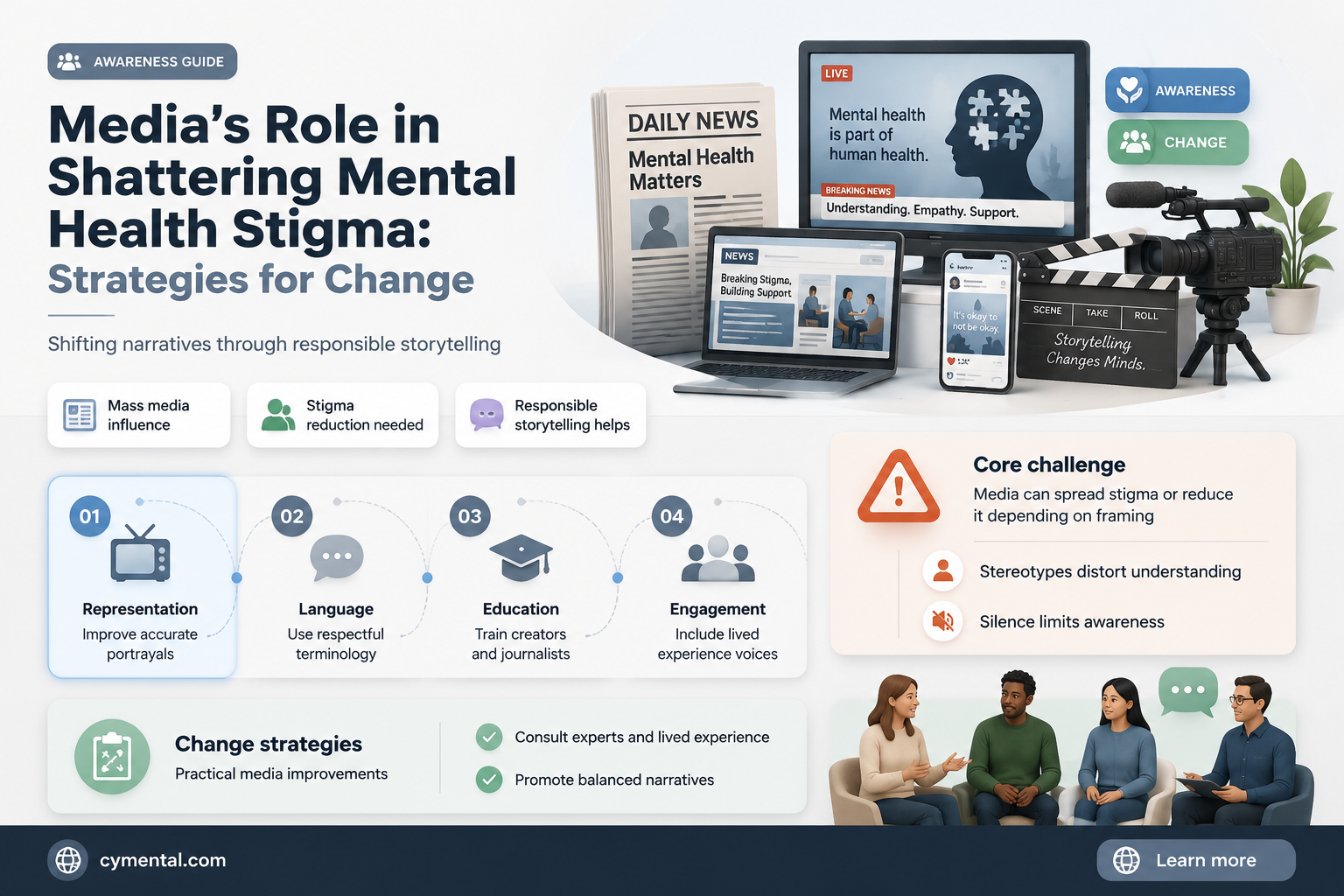
The media plays a pivotal role in shaping public perceptions and attitudes toward mental illness, making it a powerful tool in the fight to reduce stigma. By portraying mental health issues accurately, empathetically, and without sensationalism, media outlets can challenge stereotypes, humanize struggles, and foster understanding. Responsible reporting, inclusive storytelling, and the amplification of diverse voices can dismantle misconceptions, encourage open conversations, and promote compassion. Additionally, media campaigns that highlight recovery stories, provide educational resources, and normalize seeking help can empower individuals to address their mental health without fear of judgment. Ultimately, when the media prioritizes sensitivity and awareness, it can drive societal change, reduce discrimination, and create a more supportive environment for those affected by mental illness.
Explore related products


What You'll Learn

Portraying accurate, diverse mental health stories
Media has the power to shape perceptions, and when it comes to mental health, this influence can either perpetuate stigma or foster understanding. One of the most effective ways to reduce stigma is by portraying accurate, diverse mental health stories that reflect the complexity and variability of human experience. By moving beyond stereotypes and one-dimensional characters, media can humanize mental illness, making it relatable to a broader audience. For instance, instead of depicting depression solely as debilitating sadness, stories can explore how individuals manage symptoms while maintaining fulfilling lives. This nuanced approach challenges misconceptions and encourages empathy.
To achieve this, creators must prioritize authenticity. Consulting mental health professionals and individuals with lived experience ensures that portrayals are both accurate and respectful. For example, a TV show might collaborate with psychologists to depict therapy sessions realistically, avoiding dramatic exaggerations that could mislead viewers. Similarly, incorporating diverse narratives—such as those of BIPOC individuals, LGBTQ+ communities, or older adults—highlights how mental health intersects with identity, culture, and socioeconomic factors. This diversity not only broadens representation but also underscores the universality of mental health struggles.
However, accuracy alone is not enough; storytelling must also avoid sensationalism. Media often leans into dramatic portrayals of mental illness, linking it to violence or unpredictability. Such depictions reinforce harmful stereotypes and alienate those who live with these conditions. Instead, creators should focus on everyday experiences, like a character navigating workplace stress while managing anxiety or a family supporting a loved one through bipolar disorder. These grounded narratives normalize mental health challenges, making them less intimidating and more approachable for audiences.
Practical steps for media creators include conducting thorough research, avoiding tokenism, and ensuring that mental health is not the sole defining trait of a character. For instance, a film could feature a protagonist with schizophrenia who is also a talented artist, emphasizing their strengths alongside their struggles. Additionally, media platforms can amplify real-life stories through documentaries or social media campaigns, providing a platform for authentic voices. By combining factual accuracy with compelling storytelling, the media can transform public perception, replacing stigma with compassion and understanding.
Seeking Support: A Guide to Finding Help When You Need It Most
You may want to see also
Explore related products

$22.24 $34.99


$17.79 $29.99


Using empathetic, non-sensational language in reporting
The words we choose in media reporting can either perpetuate harmful stereotypes or foster understanding and compassion. Sensational headlines like "Schizophrenic Killer on the Loose" reduce complex individuals to their diagnoses, fueling fear and stigma. Instead, consider: "Man with Schizophrenia Charged in Homicide." This phrasing prioritizes the personhood of the individual while still conveying essential information.
Empathy begins with language that humanizes, not demonizes.
Imagine a news story about a suicide attempt. One outlet leads with "Desperate Woman Jumps from Bridge," while another writes, "Community Rallies Around Individual After Suicide Attempt." The first sensationalizes the act, potentially triggering vulnerable readers. The second focuses on hope and support, encouraging empathy and connection. This shift in language doesn't diminish the gravity of the situation but reframes it within a context of community and recovery.
Research shows that responsible media portrayals of mental illness can increase public understanding by up to 25%.
Here's a practical guide for journalists and content creators:
- Avoid labels as identities: Say "a person experiencing depression" instead of "a depressed person." This separates the individual from the condition.
- Choose precision over drama: Opt for "died by suicide" rather than "committed suicide," which carries a moral judgment.
- Highlight recovery stories: Feature individuals who are managing their mental health successfully. This counters the narrative of hopelessness often associated with mental illness.
- Fact-check and avoid stereotypes: Consult mental health professionals to ensure accuracy and avoid perpetuating myths.
By adopting empathetic language, media outlets can become powerful tools for dismantling stigma. They can shift the narrative from fear and judgment to understanding and support, ultimately contributing to a more compassionate society. Remember, words have the power to wound or to heal. Let's choose to use them wisely.
HGH and Mental Wellness: Unlocking Cognitive Benefits and Emotional Balance
You may want to see also
Explore related products




Highlighting recovery and resilience narratives
Media platforms wield immense power in shaping public perceptions, and one of the most effective ways they can combat mental health stigma is by amplifying stories of recovery and resilience. These narratives serve as beacons of hope, challenging the pervasive myth that mental illness is an insurmountable, lifelong sentence. By showcasing individuals who have navigated their struggles and emerged stronger, media can humanize mental health challenges, making them more relatable and less fear-inducing. For instance, documentaries like *The Me You Can’t See* feature celebrities and everyday people sharing their journeys, emphasizing progress over perfection. Such portrayals not only inspire but also educate audiences on the diverse paths to recovery, from therapy and medication to community support and self-care practices.
To effectively highlight these narratives, media creators must prioritize authenticity and diversity. Recovery stories should reflect a range of experiences, including those from marginalized communities, whose voices are often overlooked. For example, a podcast series could feature a 28-year-old Latina who manages bipolar disorder through art therapy, a 50-year-old Black man who found solace in peer support groups, and a 19-year-old non-binary student who uses mindfulness techniques to cope with anxiety. By presenting these varied accounts, media can dismantle stereotypes and demonstrate that resilience is not one-size-fits-all. Practical tips, such as incorporating expert commentary on evidence-based coping strategies, can further empower audiences to apply these lessons in their own lives.
However, caution must be exercised to avoid tokenism or oversimplification. Recovery is rarely linear, and portraying it as such can inadvertently pressure individuals who are still struggling. Media should balance success stories with honest depictions of setbacks, emphasizing that resilience often involves learning from failures. For instance, a social media campaign could share short videos of individuals discussing moments when they felt discouraged but chose to persist, alongside captions like, “Recovery isn’t about never falling—it’s about how you get back up.” This approach fosters empathy and encourages viewers to adopt a growth mindset, understanding that progress is incremental and deeply personal.
Incorporating actionable steps into these narratives can also enhance their impact. Media outlets could partner with mental health organizations to provide resources at the end of each story, such as helpline numbers, local support groups, or guided meditation apps. For example, a news article about a teacher who overcame depression could conclude with a sidebar titled “Steps to Start Your Own Journey,” listing practical advice like “Schedule a therapy session this week” or “Try journaling for 10 minutes daily.” By bridging inspiration with tangible tools, media can transform passive consumption into active engagement, fostering a culture of support and self-improvement.
Ultimately, the power of recovery and resilience narratives lies in their ability to shift the conversation from stigma to solidarity. When media platforms commit to telling these stories with care, inclusivity, and practicality, they not only challenge misconceptions but also equip audiences with the knowledge and courage to seek help. In doing so, they become catalysts for change, proving that mental health struggles do not define a person—but the strength to face them certainly can.
Can Psychologists Accurately Diagnose Mental Illness? Expert Insights Revealed
You may want to see also
Explore related products




Featuring mental health experts in discussions
Media platforms can significantly reduce stigma by featuring mental health experts in discussions, lending credibility and depth to conversations that often suffer from misinformation or oversimplification. When psychiatrists, psychologists, or therapists are included in panels, interviews, or documentaries, their insights demystify complex conditions like depression, anxiety, or schizophrenia. For instance, a 2021 study found that audiences exposed to expert-led discussions were 30% more likely to view mental illness as treatable rather than a personal failing. This shift in perception is critical, as stigma often stems from a lack of understanding of the biological and environmental factors underlying mental health issues.
To maximize impact, media producers should prioritize diversity among featured experts. Including professionals from various cultural backgrounds, specialties, and age groups ensures that discussions resonate with broader audiences. For example, a child psychologist discussing adolescent mental health can provide age-specific strategies for parents, while a cultural psychiatrist can address how stigma manifests differently across communities. Pairing these experts with personal narratives from individuals with lived experience creates a balanced narrative that combines clinical knowledge with emotional authenticity. This dual approach fosters empathy and reduces the tendency to stereotype mental illness as a monolithic experience.
However, featuring experts alone is not enough; the format and tone of discussions matter equally. Interactive formats, such as live Q&A sessions or social media AMAs (Ask Me Anythings), allow audiences to engage directly with professionals, addressing misconceptions in real time. For instance, a therapist fielding questions about self-harm on Instagram Live can correct harmful myths while offering actionable advice, such as encouraging viewers to seek help via crisis hotlines or apps like Calm or Headspace. Conversely, overly clinical or jargon-heavy discussions may alienate audiences, so experts should be coached to use accessible language and concrete examples.
A cautionary note: media outlets must vet experts rigorously to avoid amplifying unqualified voices or pseudoscientific claims. The rise of "wellness influencers" without clinical training has led to dangerous advice, such as suggesting essential oils as a substitute for antidepressants. To maintain trust, platforms should verify credentials and prioritize professionals affiliated with reputable organizations like the American Psychological Association or the World Health Organization. Additionally, experts should disclose any conflicts of interest, such as ties to pharmaceutical companies, to ensure transparency.
In conclusion, featuring mental health experts in media discussions is a powerful tool for reducing stigma, but its effectiveness hinges on thoughtful execution. By diversifying expert voices, adopting engaging formats, and ensuring credibility, media can transform public understanding of mental illness. When done right, these discussions not only educate but also empower audiences to seek help and support others, ultimately fostering a more compassionate society.
Creatine's Cognitive Boost: Enhancing Mental Performance and Brain Function
You may want to see also
Explore related products


Promoting awareness campaigns and resources
Media platforms wield unparalleled influence in shaping public perception, making them pivotal allies in the fight against mental health stigma. By strategically promoting awareness campaigns and resources, they can dismantle misconceptions, foster empathy, and empower individuals to seek help. Consider the success of initiatives like Time to Change in the UK, which utilized multimedia storytelling to humanize mental health struggles, resulting in a 9.6% reduction in stigma over five years. Such campaigns demonstrate that consistent, authentic messaging can shift societal attitudes.
To maximize impact, awareness campaigns must be inclusive and intersectional. Mental health stigma varies across cultures, ages, and socioeconomic groups, so resources should reflect this diversity. For instance, a campaign targeting adolescents might leverage TikTok or Instagram, featuring relatable influencers sharing their experiences with anxiety or depression. Meanwhile, older adults could benefit from radio segments or community workshops that address age-specific concerns, such as loneliness or grief. Tailoring content to specific demographics ensures relevance and resonance, increasing the likelihood of behavior change.
However, promoting awareness is not without challenges. Sensationalism and tokenism can undermine even well-intentioned efforts. Media outlets must avoid perpetuating stereotypes, such as linking mental illness to violence, or reducing complex conditions to simplistic narratives. Instead, they should prioritize evidence-based information, collaborating with mental health professionals and lived experience advocates. For example, a campaign highlighting the effectiveness of cognitive-behavioral therapy (CBT) for depression should include testimonials from therapists and clients, alongside data on its 50-75% success rate.
A critical component of these campaigns is actionable resource integration. Simply raising awareness is insufficient if individuals lack access to support. Media platforms can bridge this gap by embedding helpline numbers, app recommendations, or local service directories into their content. For instance, a podcast episode on managing panic attacks could conclude with a list of free mindfulness apps (e.g., Headspace, Calm) and the Crisis Text Line number (741741). Such practical tools transform passive awareness into active engagement, encouraging listeners to take the first step toward healing.
Ultimately, the media’s role in reducing stigma extends beyond broadcasting messages—it’s about fostering a culture of compassion and accountability. By consistently amplifying diverse voices, avoiding harmful tropes, and connecting audiences to tangible resources, media campaigns can normalize conversations around mental health. The goal is not just to inform, but to inspire collective action, ensuring that no one feels isolated in their struggle. In this way, the media becomes not just a tool for awareness, but a catalyst for systemic change.
Mental Health's Impact on Skin Aging: Unveiling the Mind-Face Connection
You may want to see also
Frequently asked questions
Media representation can reduce stigma by portraying mental illness accurately and empathetically, showcasing diverse experiences, and avoiding stereotypes. Positive portrayals of individuals with mental health conditions as resilient and capable can humanize the issue and foster understanding.
Storytelling in media can reduce stigma by sharing personal narratives that highlight the human experience behind mental illness. These stories can evoke empathy, challenge misconceptions, and encourage viewers or readers to see mental health struggles as relatable and manageable.
Journalists and media professionals can reduce stigma by using person-first language, avoiding sensationalism, and consulting mental health experts for accuracy. They should also focus on recovery and hope, rather than solely on negative outcomes or tragedies.
Yes, social media campaigns can effectively combat stigma by amplifying awareness, sharing educational content, and creating safe spaces for open conversations. Hashtags, influencers, and viral challenges can encourage dialogue, normalize seeking help, and reduce shame.