Ava Ramirez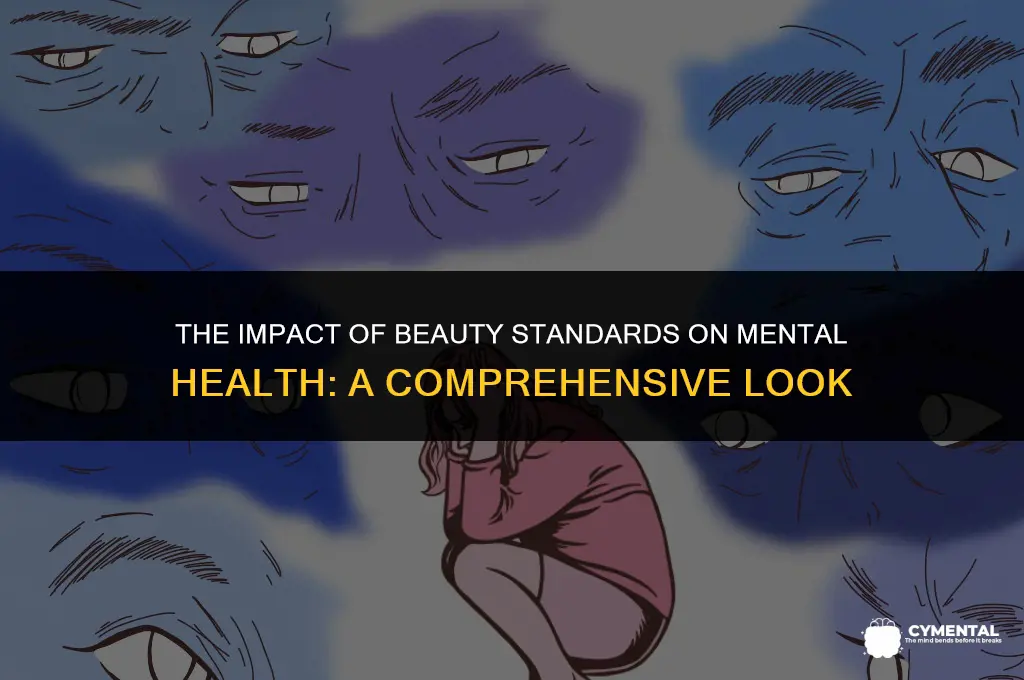
Beauty standards, which are often unattainable and narrowly defined, can have a profound impact on mental health. These standards, perpetuated through media, social media, and societal expectations, can lead to feelings of inadequacy, low self-esteem, and body dissatisfaction. Individuals may feel pressured to conform to these ideals, resulting in a negative self-image and a distorted perception of their own worth. This can contribute to the development of mental health issues such as depression, anxiety, and eating disorders. Furthermore, the constant comparison to unrealistic beauty ideals can foster a sense of competition and insecurity, hindering one's ability to develop a healthy self-identity and self-acceptance.
| Characteristics | Values |
|---|---|
| Impact on self-esteem | Beauty standards can significantly lower self-esteem, especially in young individuals, leading to feelings of inadequacy and low self-worth. |
| Body image issues | Unrealistic beauty ideals often contribute to body dissatisfaction, which can result in eating disorders, excessive exercise, and other harmful behaviors. |
| Anxiety and depression | The pressure to conform to beauty standards can cause anxiety and depression, as individuals may feel they are not meeting societal expectations. |
| Social comparison | Constant exposure to idealized images can lead to social comparison, where individuals measure their own worth based on others' appearances, fostering a competitive and critical mindset. |
| Self-objectification | Beauty standards can encourage self-objectification, where individuals view themselves primarily as objects to be evaluated based on their physical appearance. |
| Influence on identity | The emphasis on beauty can affect personal identity, as individuals may feel pressured to alter their appearance to fit societal norms, potentially leading to a loss of personal authenticity. |
| Cultural and societal pressures | Beauty standards vary across cultures and societies, but the pressure to adhere to these standards can be intense, influencing mental health outcomes globally. |
| Media representation | The media plays a significant role in perpetuating beauty standards, often presenting unrealistic and unattainable ideals that can negatively impact mental health. |
| Internalization of standards | Over time, individuals may internalize beauty standards, leading to a persistent and harmful self-critical voice that reinforces negative beliefs about one's appearance. |
| Resilience and coping mechanisms | Developing resilience and effective coping mechanisms is crucial for mitigating the negative effects of beauty standards on mental health, promoting a more positive self-image and well-being. |
Explore related products


What You'll Learn
- Unrealistic Expectations: The pressure to conform to unattainable beauty ideals can lead to feelings of inadequacy and low self-esteem
- Body Dysmorphia: Constant exposure to beauty standards can cause individuals to develop body dysmorphia, an excessive preoccupation with perceived flaws
- Eating Disorders: The pursuit of a certain body type can result in eating disorders, such as anorexia and bulimia, which have serious mental health consequences
- Social Comparison: Comparing oneself to others based on beauty standards can lead to feelings of envy, anxiety, and depression
- Cultural Impact: Beauty standards vary across cultures, and the imposition of Western beauty ideals can have detrimental effects on mental health globally

Unrealistic Expectations: The pressure to conform to unattainable beauty ideals can lead to feelings of inadequacy and low self-esteem
The relentless pursuit of unattainable beauty ideals can have a profound impact on mental health, particularly in terms of fostering feelings of inadequacy and low self-esteem. This phenomenon is exacerbated by the pervasive nature of media and social media, which constantly bombard individuals with images and messages that promote a narrow and often unrealistic definition of beauty. The pressure to conform to these standards can lead to a sense of failure and self-doubt, as individuals may feel that they do not measure up to the idealized images they are presented with.
One of the key ways in which unrealistic beauty expectations affect mental health is through the development of body dissatisfaction. When individuals are constantly exposed to images of perfect bodies, flawless skin, and idealized facial features, they may begin to view their own bodies as inadequate or imperfect. This can lead to a range of negative outcomes, including disordered eating, excessive exercise, and even cosmetic surgery. Furthermore, the internalization of these beauty standards can contribute to the development of mental health conditions such as depression, anxiety, and obsessive-compulsive disorder.
The impact of unrealistic beauty expectations is not limited to individual mental health; it also has broader societal implications. The perpetuation of these standards can contribute to a culture of comparison and competition, in which individuals are pitted against one another in a never-ending quest for beauty and perfection. This can lead to social isolation, as individuals may feel that they are not good enough to be accepted by their peers. Additionally, the focus on physical appearance can distract from other important aspects of personal development, such as intellectual and emotional growth.
In order to mitigate the negative effects of unrealistic beauty expectations, it is essential to promote a more inclusive and diverse definition of beauty. This can be achieved through a variety of means, including the representation of diverse body types and skin tones in media and advertising, as well as the promotion of positive body image messages. Furthermore, individuals can take steps to protect their own mental health by limiting their exposure to unrealistic beauty standards and focusing on their own unique qualities and strengths.
Ultimately, the pressure to conform to unattainable beauty ideals is a complex issue that requires a multifaceted approach. By promoting a more realistic and inclusive definition of beauty, and by supporting individuals in their efforts to maintain a positive body image, we can work towards creating a society that values and celebrates the diversity of human appearance.
The Unseen Game: Mental Health's Impact on Athletes' Performance
You may want to see also
Explore related products


Body Dysmorphia: Constant exposure to beauty standards can cause individuals to develop body dysmorphia, an excessive preoccupation with perceived flaws
Body dysmorphia is a mental health condition characterized by an excessive preoccupation with perceived flaws in one's appearance. This condition can be triggered or exacerbated by constant exposure to unrealistic beauty standards, which are often perpetuated by the media, social media, and societal norms. Individuals with body dysmorphia may spend hours each day examining their appearance, comparing themselves to others, and engaging in behaviors such as excessive grooming or exercise in an attempt to "fix" their perceived flaws.
The impact of beauty standards on mental health is significant, as it can lead to a range of negative outcomes, including low self-esteem, anxiety, depression, and eating disorders. Body dysmorphia is a particularly concerning condition, as it can be difficult to treat and may lead to social isolation, academic or occupational impairment, and even suicidal ideation. It is essential to address the root causes of body dysmorphia, including the unrealistic beauty standards that are often imposed on individuals, in order to promote positive mental health and well-being.
One way to combat the negative effects of beauty standards is to promote body positivity and self-acceptance. This can be achieved through education and awareness campaigns, as well as through the promotion of diverse and inclusive representations of beauty in the media and on social media platforms. Additionally, it is important to encourage individuals to focus on their strengths and accomplishments, rather than their appearance, and to seek support from mental health professionals if they are struggling with body dysmorphia or other related conditions.
In conclusion, body dysmorphia is a serious mental health condition that can be triggered or exacerbated by constant exposure to unrealistic beauty standards. It is essential to address the root causes of this condition and to promote body positivity and self-acceptance in order to mitigate its negative effects on mental health. By working together to challenge and change the way we think about beauty, we can help to create a more inclusive and supportive environment for all individuals.
Unveiling the Impact: Mental Illness and Brain Function Explored
You may want to see also
Explore related products


Eating Disorders: The pursuit of a certain body type can result in eating disorders, such as anorexia and bulimia, which have serious mental health consequences
The relentless pursuit of an idealized body type, often perpetuated by societal beauty standards, can lead to severe eating disorders such as anorexia nervosa and bulimia nervosa. These conditions are not merely about food or weight; they are complex mental health disorders that can have devastating consequences on an individual's physical and emotional well-being. Anorexia nervosa, characterized by a significant reduction in food intake and an intense fear of gaining weight, can result in severe malnutrition, osteoporosis, and even organ failure. Bulimia nervosa, marked by cycles of binge eating followed by purging, can lead to electrolyte imbalances, gastrointestinal issues, and dental problems.
The development of these disorders is often influenced by a combination of genetic, environmental, and psychological factors. Societal pressure to conform to unrealistic beauty ideals can contribute to body dissatisfaction, which is a common precursor to eating disorders. The constant bombardment of images and messages that promote thinness as the epitome of beauty can lead individuals to internalize these standards, resulting in a distorted body image and a preoccupation with weight and appearance.
Eating disorders can have serious mental health consequences, including depression, anxiety, and obsessive-compulsive behaviors. The secrecy and shame often associated with these disorders can lead to social isolation and a reluctance to seek help. Furthermore, the physical symptoms of eating disorders can exacerbate mental health issues, creating a vicious cycle that is difficult to break without professional intervention.
Treatment for eating disorders typically involves a multidisciplinary approach, combining medical care, psychotherapy, and nutritional counseling. Cognitive-behavioral therapy (CBT) and family-based therapy (FBT) are commonly used psychotherapeutic approaches. CBT helps individuals identify and challenge distorted thoughts and behaviors related to food and body image, while FBT involves the family in the treatment process to improve communication and support. Medications may also be prescribed to manage symptoms of depression or anxiety.
Prevention efforts are crucial in addressing the root causes of eating disorders. Educating the public about the dangers of unrealistic beauty standards and promoting body positivity can help reduce the incidence of these disorders. Schools and community organizations can play a vital role in providing resources and support for individuals struggling with body image issues. Early intervention is key, as the sooner an eating disorder is identified and treated, the better the chances of recovery.
In conclusion, eating disorders are serious mental health conditions that can result from the pursuit of an unattainable body type. They require comprehensive treatment and prevention strategies that address both the physical and psychological aspects of these disorders. By promoting a more realistic and inclusive view of beauty, we can help reduce the prevalence of eating disorders and improve the overall well-being of individuals affected by these conditions.
The Impact of Bullying on Mental Health: A Comprehensive Guide
You may want to see also
Explore related products


Social Comparison: Comparing oneself to others based on beauty standards can lead to feelings of envy, anxiety, and depression
The pervasive nature of social media has amplified the issue of social comparison, particularly in the context of beauty standards. Individuals are constantly bombarded with images and messages that promote an idealized form of beauty, often unattainable and unrealistic. This relentless exposure can lead to a detrimental cycle of self-evaluation, where one's own appearance is scrutinized and found lacking in comparison to the curated images online.
Research has shown that frequent social media use is associated with increased symptoms of anxiety and depression, particularly in young adults. The act of comparing oneself to others based on beauty standards can foster feelings of envy and inadequacy, contributing to a negative self-image. This phenomenon is further exacerbated by the tendency to compare one's own perceived flaws to the seemingly perfect attributes of others, a process that can be both mentally exhausting and emotionally damaging.
Moreover, the impact of social comparison on mental health is not limited to individuals who are actively engaging in it. Even passive exposure to beauty standards can have a significant effect, as the subconscious mind internalizes these messages and applies them to one's own self-perception. This can lead to a pervasive sense of dissatisfaction with one's appearance, even in the absence of overt self-comparison.
To mitigate the negative effects of social comparison, it is essential to cultivate a healthy sense of self-worth that is not contingent upon external validation. This can be achieved through practices such as mindfulness, self-compassion, and cognitive restructuring. Additionally, limiting exposure to social media and other sources of beauty standards can help to reduce the frequency and intensity of self-comparison.
In conclusion, the relationship between social comparison and mental health is complex and multifaceted. By understanding the mechanisms through which beauty standards influence self-perception, individuals can take proactive steps to protect their mental well-being and foster a more positive and accepting relationship with their own appearance.
Emotional Resilience: Mastering the Art of Unfazed Living
You may want to see also
Explore related products

$21.43 $22.99


Cultural Impact: Beauty standards vary across cultures, and the imposition of Western beauty ideals can have detrimental effects on mental health globally
The global spread of Western beauty ideals, often perpetuated through media and social platforms, has profound implications for mental health across diverse cultures. This phenomenon is particularly evident in countries where traditional beauty standards differ significantly from those promoted in Western media. For instance, in many Asian cultures, beauty is often associated with attributes like pale skin, slender figures, and specific facial features. The imposition of Western ideals, which frequently emphasize tanned skin, curvier bodies, and different facial structures, can lead to a sense of inadequacy and low self-esteem among individuals who do not conform to these standards.
Moreover, the pressure to adhere to these Western beauty norms can result in harmful behaviors such as extreme dieting, cosmetic surgeries, and the use of dangerous skin-lightening products. These practices not only pose physical health risks but also contribute to mental health issues like anxiety, depression, and body dysmorphic disorder. The constant bombardment with images and messages that promote a narrow definition of beauty can create a pervasive sense of dissatisfaction and self-criticism, particularly among young people who are more vulnerable to societal influences.
It is crucial to recognize and challenge these harmful beauty standards by promoting diversity and inclusivity in media representations. Efforts to showcase a broader range of beauty ideals, including those that celebrate different body types, skin tones, and cultural attributes, can help mitigate the negative impacts on mental health. Additionally, educational initiatives that foster self-acceptance and critical thinking about beauty norms can empower individuals to resist the pressures of conforming to unrealistic standards.
In conclusion, the cultural impact of beauty standards on mental health is a significant issue that requires attention and action. By understanding the detrimental effects of imposing Western beauty ideals on diverse cultures and promoting more inclusive representations of beauty, we can work towards creating a healthier and more accepting global environment.
Understanding Affect: The Emotional Core of Mental Health
You may want to see also
Frequently asked questions
Beauty standards can significantly impact mental health by contributing to feelings of inadequacy, low self-esteem, and body dissatisfaction. The constant exposure to unrealistic beauty ideals through media and social platforms can lead individuals to compare themselves unfavorably, resulting in negative self-perception and, in some cases, mental health disorders such as depression and anxiety.
Common mental health issues associated with beauty standards include body dysmorphic disorder, eating disorders (such as anorexia nervosa and bulimia nervosa), depression, anxiety, and obsessive-compulsive disorder. These conditions often stem from a distorted perception of one's appearance and an excessive preoccupation with meeting societal beauty norms.
Social media plays a substantial role in perpetuating beauty standards by showcasing curated and often unrealistic images of beauty. This constant exposure can lead to increased feelings of inadequacy and pressure to conform to these standards. Additionally, the comparison culture fostered by social media can exacerbate body dissatisfaction and contribute to the development of mental health issues related to appearance.
Individuals can cope with the negative effects of beauty standards by practicing self-acceptance, focusing on inner qualities rather than physical appearance, and surrounding themselves with positive influences. Engaging in activities that promote self-esteem, such as exercise, hobbies, and social connections, can also help mitigate the impact of beauty standards. Seeking professional help, such as therapy, may be beneficial for those struggling with severe mental health issues related to beauty standards.