Noah Parker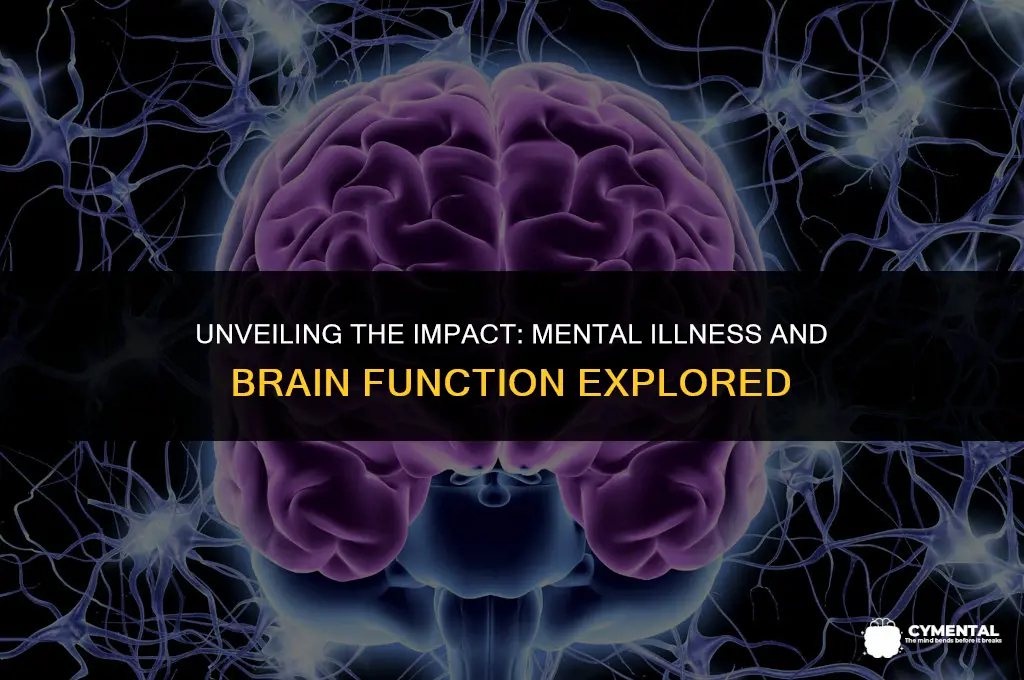
Mental illness encompasses a wide range of conditions that affect mood, thinking, and behavior. These conditions can significantly impact the brain's structure and function, often altering the way neural circuits communicate and process information. For instance, depression has been linked to changes in the brain's limbic system, which regulates emotions, while anxiety disorders may affect the amygdala, the brain's fear center. Schizophrenia, on the other hand, can lead to alterations in the prefrontal cortex, which is responsible for decision-making and social behavior. Understanding these changes is crucial for developing effective treatments and interventions for mental health disorders.
| Characteristics | Values |
|---|---|
| Brain Structure | Mental illness can lead to changes in brain structure, such as reduced volume in certain areas. |
| Neurotransmitters | Imbalances in neurotransmitters like serotonin, dopamine, and norepinephrine are often associated with mental health conditions. |
| Brain Activity | Mental illness can affect brain activity patterns, leading to increased or decreased activity in certain regions. |
| Connectivity | Changes in the connectivity between different brain regions can occur, impacting communication within the brain. |
| Plasticity | Mental health conditions can influence neuroplasticity, the brain's ability to adapt and change. |
| Inflammation | Increased inflammation in the brain has been linked to some mental illnesses. |
| Hormones | Hormonal imbalances can contribute to mental health issues, affecting brain function. |
| Genetics | Genetic factors play a role in mental illness, influencing brain development and function. |
| Environmental Factors | Environmental stressors and trauma can impact brain health and contribute to mental illness. |
| Treatment Response | Individual responses to treatments like medication and therapy can vary, affecting brain function differently. |
Explore related products


What You'll Learn
- Neurotransmitter Imbalance: Mental illnesses can disrupt the balance of neurotransmitters like serotonin and dopamine, affecting mood and behavior
- Brain Structure Alterations: Conditions such as depression and anxiety can lead to changes in brain structure, including reduced hippocampal volume
- Inflammation and Oxidative Stress: Mental health disorders may increase inflammation and oxidative stress in the brain, contributing to neuronal damage
- Disrupted Neural Circuits: Illnesses like schizophrenia can affect neural circuits, impairing communication between different brain regions and altering perception
- Epigenetic Changes: Trauma and stress can induce epigenetic modifications, influencing gene expression and potentially leading to long-term mental health issues

Neurotransmitter Imbalance: Mental illnesses can disrupt the balance of neurotransmitters like serotonin and dopamine, affecting mood and behavior
Neurotransmitter imbalance plays a critical role in the manifestation of mental illnesses. Serotonin, often referred to as the "feel-good" hormone, is integral in regulating mood, appetite, and sleep. When serotonin levels are disrupted, it can lead to conditions such as depression, anxiety, and obsessive-compulsive disorder (OCD). On the other hand, dopamine, known for its role in reward and pleasure, can contribute to disorders like schizophrenia and bipolar disorder when its levels are imbalanced.
Mental illnesses can affect the brain's neurotransmitter systems in several ways. For instance, depression is often associated with decreased levels of serotonin and norepinephrine, leading to symptoms such as persistent sadness, loss of interest, and fatigue. In contrast, conditions like bipolar disorder may involve fluctuations in dopamine levels, resulting in manic episodes characterized by heightened energy, impulsivity, and euphoria, as well as depressive episodes.
The disruption of neurotransmitter balance can also impact cognitive functions and behavior. For example, an overactive dopamine system can lead to psychosis, where individuals may experience hallucinations and delusions. Conversely, underactive dopamine levels can result in symptoms such as apathy and anhedonia, where individuals lose interest in activities they once enjoyed.
Understanding neurotransmitter imbalance is crucial for the development of effective treatments for mental illnesses. Medications such as selective serotonin reuptake inhibitors (SSRIs) and antipsychotics work by modulating neurotransmitter levels in the brain. Additionally, lifestyle changes, such as regular exercise and a balanced diet, can also influence neurotransmitter function and contribute to overall mental health.
In conclusion, neurotransmitter imbalance is a key factor in the pathophysiology of mental illnesses, affecting mood, behavior, and cognitive functions. By targeting these imbalances through pharmacological and lifestyle interventions, it is possible to alleviate symptoms and improve the quality of life for individuals suffering from mental health disorders.
The Pandemic's Impact: Mental Health Amidst COVID-19
You may want to see also
Explore related products


Brain Structure Alterations: Conditions such as depression and anxiety can lead to changes in brain structure, including reduced hippocampal volume
Conditions such as depression and anxiety have been shown to lead to significant changes in brain structure. One of the most notable alterations is the reduction in hippocampal volume. The hippocampus, a region of the brain crucial for memory formation and emotional regulation, appears to be particularly vulnerable to the effects of these mental illnesses. Studies using magnetic resonance imaging (MRI) have consistently demonstrated that individuals with depression and anxiety tend to have a smaller hippocampus compared to healthy controls.
The reduction in hippocampal volume is thought to be a result of neurogenesis impairment, where the brain's ability to generate new neurons is hindered. This can be attributed to several factors, including chronic stress, inflammation, and changes in neurotransmitter systems. Furthermore, the decreased hippocampal volume has been linked to cognitive impairments, such as difficulties in memory and concentration, which are common symptoms in both depression and anxiety disorders.
In addition to the hippocampus, other brain regions are also affected by these conditions. For instance, the amygdala, which plays a key role in processing emotions, has been found to be hyperactive in individuals with anxiety disorders. This hyperactivity can lead to an exaggerated fear response and contribute to the development of anxiety symptoms. Similarly, the prefrontal cortex, responsible for executive functions such as decision-making and impulse control, has been shown to be less active in individuals with depression, which may contribute to the cognitive and emotional difficulties experienced by those with the condition.
The structural changes observed in the brains of individuals with depression and anxiety are not only significant but also have important implications for treatment. Understanding these alterations can help researchers and clinicians develop more targeted and effective interventions. For example, medications that promote neurogenesis and reduce inflammation may be beneficial in reversing the structural changes associated with these conditions. Additionally, psychotherapies that focus on cognitive restructuring and emotional regulation may help to mitigate the effects of these brain alterations.
In conclusion, the impact of depression and anxiety on brain structure is a complex and multifaceted issue. The reduction in hippocampal volume is a key finding that has important implications for our understanding of these conditions and their treatment. By continuing to investigate the structural changes associated with mental illnesses, we can gain valuable insights into the underlying mechanisms and develop more effective strategies for prevention and intervention.
Understanding Grief's Impact: How Loss Affects Mental Health
You may want to see also
Explore related products


Inflammation and Oxidative Stress: Mental health disorders may increase inflammation and oxidative stress in the brain, contributing to neuronal damage
Mental health disorders have been linked to increased inflammation and oxidative stress in the brain, which can contribute to neuronal damage. This connection is complex and multifaceted, involving various biological pathways and cellular processes. Research suggests that chronic inflammation may play a role in the development and progression of mental health disorders such as depression, anxiety, and schizophrenia.
One way in which mental health disorders may increase inflammation is through the activation of the immune system. Stress, which is often a component of mental health disorders, can trigger the release of pro-inflammatory cytokines, which are signaling molecules that promote inflammation. These cytokines can cross the blood-brain barrier and affect brain function, leading to symptoms such as fatigue, cognitive impairment, and mood disturbances.
Oxidative stress, on the other hand, occurs when there is an imbalance between the production of reactive oxygen species (ROS) and the body's ability to neutralize them. Mental health disorders may increase oxidative stress by disrupting the normal functioning of antioxidant systems in the brain. This can lead to damage of brain cells and contribute to the development of neurodegenerative diseases such as Alzheimer's and Parkinson's.
The relationship between mental health disorders, inflammation, and oxidative stress is not fully understood, but research is ongoing to uncover the underlying mechanisms. It is believed that a combination of genetic, environmental, and lifestyle factors may contribute to this complex interplay. Understanding this relationship is crucial for the development of new treatments and interventions for mental health disorders.
In terms of practical implications, managing inflammation and oxidative stress may be an important aspect of treating mental health disorders. This can be achieved through a combination of pharmacological and non-pharmacological interventions, such as anti-inflammatory medications, antioxidants, exercise, and stress management techniques. By addressing these underlying biological processes, it may be possible to improve symptoms and outcomes for individuals with mental health disorders.
Exploring Emotional States: A Guide to Describing Affect in Mental Status Exams
You may want to see also
Explore related products


$23.71 $29.95


Disrupted Neural Circuits: Illnesses like schizophrenia can affect neural circuits, impairing communication between different brain regions and altering perception
Schizophrenia, a complex mental illness, significantly impacts the brain's neural circuits, disrupting the normal flow of information and leading to profound alterations in perception, thought, and behavior. This disruption is not merely a result of chemical imbalances but involves intricate changes in the brain's structure and function.
One of the key areas affected in schizophrenia is the prefrontal cortex, responsible for executive functions such as decision-making, planning, and problem-solving. In individuals with schizophrenia, this region often shows reduced activity and altered connectivity with other brain areas, leading to difficulties in organizing thoughts and behaviors.
Another critical region is the hippocampus, which plays a vital role in memory formation and spatial navigation. Schizophrenia can cause atrophy in the hippocampus, resulting in memory impairments and disorientation. This structural change is linked to the illness's impact on neural plasticity, the brain's ability to adapt and change in response to experience.
The illness also affects the basal ganglia, a group of nuclei deep within the brain that regulate movement and coordination. In schizophrenia, these structures can become overactive, leading to symptoms such as restlessness and involuntary movements. This hyperactivity is thought to result from disrupted signaling pathways, particularly those involving the neurotransmitter dopamine.
Furthermore, schizophrenia can alter the brain's default mode network (DMN), a system of interconnected regions that are active when the brain is at rest. The DMN is crucial for self-reflection, daydreaming, and mind-wandering. In individuals with schizophrenia, the DMN often shows abnormal activity patterns, which may contribute to symptoms such as paranoia and delusions.
Understanding these disruptions in neural circuits is crucial for developing effective treatments for schizophrenia. Current therapies, including antipsychotic medications and cognitive-behavioral therapy, aim to alleviate symptoms by modulating neurotransmitter activity and improving cognitive function. However, more research is needed to fully grasp the complex interplay between neural circuits and the symptoms of schizophrenia, which will ultimately lead to more targeted and effective interventions.
The Impact of Bullying on Mental Health: A Comprehensive Guide
You may want to see also
Explore related products



Epigenetic Changes: Trauma and stress can induce epigenetic modifications, influencing gene expression and potentially leading to long-term mental health issues
Trauma and stress can significantly impact the brain's functioning, and one of the key mechanisms through which this occurs is epigenetic changes. Epigenetics refers to modifications in gene expression that do not involve alterations to the DNA sequence itself. These changes can be induced by environmental factors, including traumatic experiences and chronic stress.
When an individual experiences trauma or prolonged stress, their body's stress response system is activated, leading to the release of hormones such as cortisol. These hormones can influence gene expression in the brain, particularly in regions involved in emotional regulation and memory, such as the hippocampus and amygdala. Over time, these epigenetic modifications can lead to long-term changes in brain function, potentially contributing to the development of mental health issues such as depression, anxiety, and post-traumatic stress disorder (PTSD).
One of the ways in which epigenetic changes can affect gene expression is through DNA methylation. This process involves the addition of methyl groups to specific DNA sequences, which can either enhance or suppress gene activity. In the context of trauma and stress, increased DNA methylation has been observed in genes involved in the stress response, leading to heightened reactivity to stressors. Conversely, decreased DNA methylation has been found in genes that play a role in mood regulation, contributing to the development of depressive symptoms.
Another epigenetic mechanism that can be influenced by trauma and stress is histone modification. Histones are proteins that DNA wraps around, and modifications to these proteins can alter the accessibility of genes to the cellular machinery responsible for gene expression. Trauma and stress can lead to changes in histone acetylation and methylation, which can impact the expression of genes involved in synaptic plasticity, learning, and memory.
The long-term consequences of these epigenetic changes can be profound, affecting not only the individual's mental health but also their cognitive functioning and overall well-being. Understanding the role of epigenetics in the impact of trauma and stress on the brain is crucial for developing effective treatments and interventions for mental health disorders. By targeting these epigenetic modifications, it may be possible to mitigate the harmful effects of trauma and stress, promoting resilience and recovery.
Hormonal Harmony: The Intricate Link Between Hormones and Mental Health
You may want to see also
Frequently asked questions
Mental illness can lead to changes in the brain's structure, including reduced volume in certain areas, such as the hippocampus and prefrontal cortex. These changes can affect memory, emotion regulation, and decision-making abilities.
Neurotransmitters like serotonin, dopamine, and norepinephrine play a crucial role in mental illness. Imbalances in these chemicals can contribute to symptoms of depression, anxiety, and other disorders.
Yes, mental illness can cause physical changes in the brain. For example, chronic stress can lead to the release of cortisol, which can damage neurons and reduce the brain's ability to regenerate new cells.
Mental illness can disrupt normal brain function, leading to difficulties with thinking, feeling, and behaving. For instance, depression can impair cognitive function, while anxiety can lead to hyperactivity in certain brain regions.