Madison Cole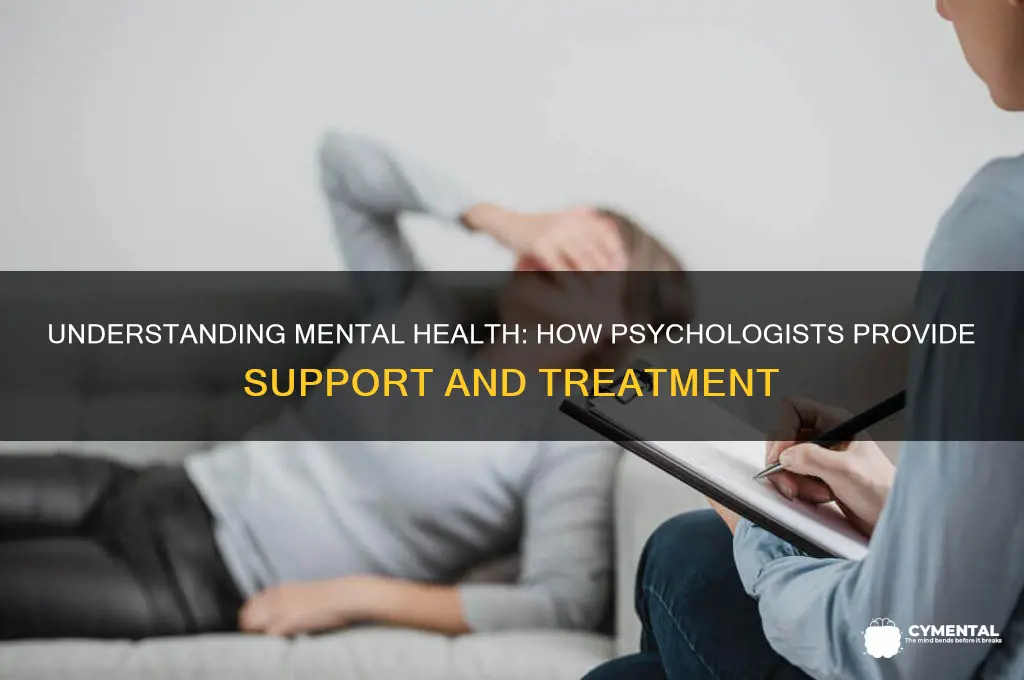
Psychologists play a crucial role in addressing mental illness by employing evidence-based therapies, assessments, and interventions tailored to individual needs. Through techniques like cognitive-behavioral therapy (CBT), psychotherapy, and mindfulness-based approaches, they help individuals understand and manage symptoms of conditions such as depression, anxiety, and PTSD. Psychologists also provide diagnostic evaluations, crisis support, and strategies for coping with stress, trauma, and emotional challenges. By fostering a safe, non-judgmental environment, they empower clients to develop resilience, improve relationships, and achieve long-term mental well-being, often collaborating with other healthcare professionals for comprehensive care.
| Characteristics | Values |
|---|---|
| Assessment and Diagnosis | Psychologists use evidence-based tools (e.g., interviews, questionnaires) to diagnose mental health conditions accurately. |
| Therapy and Counseling | Provide evidence-based therapies like Cognitive Behavioral Therapy (CBT), Dialectical Behavior Therapy (DBT), and psychodynamic therapy to address symptoms and underlying issues. |
| Behavioral Interventions | Help clients modify harmful behaviors and develop healthier coping mechanisms. |
| Emotional Support | Offer a safe, non-judgmental space for clients to express emotions and process experiences. |
| Skill Building | Teach skills for stress management, emotional regulation, and problem-solving. |
| Crisis Intervention | Assist individuals in acute distress or crisis situations to stabilize and access immediate care. |
| Medication Management Collaboration | Work with psychiatrists or medical professionals to ensure integrated care when medication is needed. |
| Prevention and Education | Conduct workshops, seminars, and public awareness campaigns to prevent mental health issues. |
| Research and Evidence-Based Practice | Contribute to research to develop and refine effective treatments for mental illnesses. |
| Holistic Approach | Address biological, psychological, and social factors influencing mental health. |
| Long-Term Support | Provide ongoing therapy and follow-up to help clients maintain mental wellness. |
| Tailored Treatment Plans | Customize interventions based on individual needs, preferences, and cultural background. |
| Advocacy and Referrals | Advocate for clients' needs and refer them to additional resources (e.g., support groups, specialists). |
| Family and Group Therapy | Involve families or groups to improve relationships and support systems. |
| Digital and Telehealth Services | Offer online therapy and remote support to increase accessibility. |
| Ethical Practice | Adhere to ethical guidelines to ensure client confidentiality and informed consent. |
Explore related products



What You'll Learn
- Therapy Techniques: Cognitive-behavioral, psychodynamic, and humanistic approaches to treat mental health disorders effectively
- Medication Management: Collaboration with psychiatrists to prescribe and monitor medications for mental illness
- Crisis Intervention: Immediate psychological support during acute mental health emergencies or suicidal crises
- Behavioral Modification: Strategies to change harmful behaviors and reinforce positive mental health habits
- Psychoeducation: Teaching individuals and families about mental illness to reduce stigma and improve coping

Therapy Techniques: Cognitive-behavioral, psychodynamic, and humanistic approaches to treat mental health disorders effectively
Psychologists employ a variety of therapy techniques to address mental health disorders, each rooted in distinct theoretical frameworks. Among the most prominent are cognitive-behavioral, psychodynamic, and humanistic approaches, each offering unique tools to foster healing and growth. Understanding these methods can empower individuals to make informed choices about their treatment journey.
Cognitive-behavioral therapy (CBT) stands as a highly structured, goal-oriented approach, often likened to a collaborative problem-solving process. It operates on the principle that our thoughts, feelings, and behaviors are interconnected, and by identifying and challenging negative thought patterns, individuals can achieve lasting change. For instance, a person struggling with anxiety might learn to recognize catastrophic thinking ("I’ll fail this presentation") and replace it with more balanced thoughts ("I’ve prepared well, and even if I stumble, it’s not the end of the world"). CBT is particularly effective for conditions like depression, anxiety disorders, and obsessive-compulsive disorder (OCD), with studies showing significant improvement in symptoms after 12–20 sessions. Its structured nature makes it ideal for those seeking tangible strategies to manage their symptoms.
In contrast, psychodynamic therapy delves into the unconscious mind, exploring how past experiences and unresolved conflicts shape current behavior. This approach often involves free association, dream analysis, and transference—the projection of feelings from past relationships onto the therapist. For example, a client might realize that their fear of intimacy stems from childhood experiences of abandonment. While psychodynamic therapy can be longer-term, its depth allows for profound self-awareness and emotional resolution. It’s particularly beneficial for individuals with complex trauma, personality disorders, or chronic relational issues. However, its less structured nature may not suit those seeking quick, symptom-focused relief.
Humanistic therapy, embodied by approaches like person-centered and Gestalt therapy, emphasizes self-exploration, personal growth, and the present moment. Rooted in the belief that individuals have an innate drive toward self-actualization, this approach fosters a nonjudgmental, empathetic environment where clients can explore their true selves. For instance, a therapist might use active listening and reflection to help a client uncover their values and aspirations, guiding them toward more authentic living. Humanistic therapy is particularly effective for issues like low self-esteem, existential crises, and interpersonal difficulties. Its focus on self-acceptance and empowerment makes it a compelling choice for those seeking a holistic, person-centered approach.
While these techniques differ in methodology, they share a common goal: to alleviate suffering and enhance well-being. The choice of therapy often depends on the individual’s specific needs, preferences, and the nature of their struggles. For example, a teenager with social anxiety might benefit from the practical tools of CBT, while an adult grappling with long-standing emotional wounds may find psychodynamic therapy more transformative. Combining elements of these approaches—a practice known as integrative therapy—is increasingly popular, offering a tailored treatment plan that maximizes effectiveness. Ultimately, the therapeutic relationship itself is a powerful catalyst for change, regardless of the technique employed.
Assessing Mental Illness Impairment: Essential Tools for Clinicians
You may want to see also
Explore related products




Medication Management: Collaboration with psychiatrists to prescribe and monitor medications for mental illness
Psychologists often collaborate with psychiatrists to ensure comprehensive care for individuals with mental illness, particularly in medication management. This partnership leverages the psychologist’s expertise in behavioral therapy and the psychiatrist’s ability to prescribe pharmacological treatments, creating a holistic approach to patient care. For instance, a psychologist might recommend a selective serotonin reuptake inhibitor (SSRI) like fluoxetine (20–60 mg/day) for a patient with moderate depression, but the psychiatrist would finalize the prescription, considering factors like age, medical history, and potential drug interactions. This collaborative model ensures that medication is tailored to the individual’s needs while integrating psychological interventions for optimal outcomes.
Effective medication management requires clear communication and shared decision-making between psychologists and psychiatrists. Psychologists play a critical role in monitoring patients’ responses to medication, observing changes in behavior, mood, and functioning during therapy sessions. For example, if a patient on sertraline (50–200 mg/day) reports increased anxiety or insomnia, the psychologist can relay this to the psychiatrist, who may adjust the dosage or switch to a different medication. This feedback loop is essential, as it allows for real-time modifications to the treatment plan, minimizing side effects and maximizing efficacy. Practical tips include maintaining detailed progress notes and using standardized assessment tools like the PHQ-9 for depression or GAD-7 for anxiety to track symptom severity.
One of the challenges in medication management is balancing pharmacological and psychological interventions, especially in younger age groups. For adolescents (ages 12–17), psychologists often advocate for a conservative approach to medication, prioritizing therapy first and introducing drugs only when necessary. For instance, a teenager with ADHD might start with cognitive-behavioral therapy (CBT) before considering stimulants like methylphenidate (10–60 mg/day). Psychologists can educate patients and families about the benefits and risks of medication, fostering informed consent and adherence. Cautions include monitoring for side effects like appetite suppression or mood changes, particularly in this vulnerable population.
A persuasive argument for this collaborative model lies in its ability to address treatment-resistant cases. When a patient does not respond to first-line medications, such as an SSRI for depression, the psychologist and psychiatrist can jointly explore alternative strategies. This might involve augmenting the SSRI with a mood stabilizer like lithium (600–1200 mg/day) or referring the patient for transcranial magnetic stimulation (TMS). By combining their expertise, the team can offer a broader range of options, improving the likelihood of recovery. Takeaway: Collaboration in medication management is not just beneficial—it’s essential for tackling complex mental health challenges.
Finally, successful medication management requires ongoing education and adaptability. Psychologists must stay informed about the latest pharmacological advancements, such as the use of atypical antipsychotics like aripiprazole (2–15 mg/day) for bipolar disorder or the emerging role of ketamine in treatment-resistant depression. Similarly, psychiatrists benefit from understanding evidence-based psychotherapies to better integrate them into treatment plans. Practical tips include attending joint training sessions, participating in case conferences, and using shared electronic health records to streamline communication. This dynamic collaboration ensures that patients receive the most effective, personalized care possible.
Acting as Therapy: Unlocking Mental Health Benefits Through Performance
You may want to see also
Explore related products


Crisis Intervention: Immediate psychological support during acute mental health emergencies or suicidal crises
In moments of acute mental health crises, every second counts. Crisis intervention is a specialized form of psychological support designed to stabilize individuals experiencing severe emotional distress, suicidal ideation, or psychotic episodes. Unlike long-term therapy, which focuses on root causes and behavioral changes, crisis intervention prioritizes immediate safety, de-escalation, and connection to ongoing care. Psychologists trained in this area act as first responders for the mind, employing structured protocols to assess risk, provide reassurance, and create a containment plan.
Consider a 28-year-old experiencing their first psychotic break, hallucinating voices commanding self-harm. A crisis intervention psychologist would first establish rapport, acknowledging the terror of the experience without dismissing the reality of the hallucinations. Using techniques like grounding (e.g., "Name three things you can touch right now") and active listening, they'd reduce immediate agitation. Simultaneously, they'd assess for access to lethal means (medications, weapons) and contact emergency services if the risk is imminent. This dual focus on empathy and risk management is critical in preventing tragedy.
The core tools of crisis intervention are surprisingly simple yet profoundly effective. The SAFER-R model (Support, Assessment, Feedback, Encouragement, Responsiveness, and Referral) provides a framework for any mental health professional. For suicidal individuals, the Columbia-Suicide Severity Rating Scale (C-SSRS) is often used to quantify risk level, guiding decisions about hospitalization versus outpatient follow-up. Even non-specialists can use the 5-step ALGEE protocol (Ask, Listen, Give reassurance, Encourage action, End with follow-up) from Mental Health First Aid training to provide initial support until professional help arrives.
Crisis intervention isn't just about averting catastrophe—it's about planting seeds of hope. A 2021 study in *Psychiatric Services* found that individuals receiving crisis intervention were 50% more likely to engage in subsequent therapy. This "moment of connection" during extreme vulnerability can be transformative. For instance, a teenager in a suicidal crisis might initially resist help, but a psychologist who validates their pain while offering concrete coping strategies (e.g., "When you feel this way, try holding ice to stay grounded") can shift their perception of manageability.
However, crisis intervention has limitations. It's not a substitute for comprehensive treatment, and over-reliance on emergency services can create dependency. Psychologists must balance immediate stabilization with clear discharge planning, ensuring seamless transitions to long-term care. For example, a patient stabilized after a panic attack should leave with a written crisis plan, including coping techniques, emergency contacts, and a scheduled therapy appointment within 72 hours. Without this bridge, the cycle of crisis can perpetuate.
In practice, crisis intervention demands adaptability. A psychologist working with a veteran experiencing flashbacks might use trauma-informed care principles, avoiding sudden movements or loud voices. With adolescents, incorporating technology (e.g., crisis text lines) can increase engagement. Ultimately, the goal is to transform a moment of unbearable pain into a turning point, where the individual sees not just survival, but the possibility of healing. This delicate alchemy of urgency and compassion is what makes crisis intervention both challenging and indispensable.
Supporting Mental Health at Work: Practical Strategies for Employers and Colleagues
You may want to see also
Explore related products


Behavioral Modification: Strategies to change harmful behaviors and reinforce positive mental health habits
Psychologists often employ behavioral modification techniques to address harmful behaviors and foster positive mental health habits. These strategies, rooted in principles of learning theory, focus on identifying, altering, and reinforcing behaviors to improve overall well-being. For instance, a person struggling with anxiety might engage in avoidance behaviors, such as skipping social events, which temporarily reduces anxiety but reinforces the cycle of fear. Behavioral modification aims to break this cycle by gradually exposing the individual to feared situations while teaching coping mechanisms.
One effective method is habit reversal training, commonly used for conditions like trichotillomania (hair-pulling disorder) or nail-biting. This approach involves four steps: awareness training to recognize triggers, competing response training to replace the harmful behavior, social support to encourage accountability, and developing alternative behaviors. For example, a teenager who bites their nails might be taught to clench their fists or squeeze a stress ball whenever they feel the urge. Studies show that habit reversal training can reduce problematic behaviors by up to 70% in as little as 8–12 sessions, making it a powerful tool for lasting change.
Another cornerstone of behavioral modification is positive reinforcement, which rewards desired behaviors to increase their likelihood. For children with ADHD, parents might use a sticker chart to reward completed homework or calm behavior, with larger rewards (e.g., a favorite activity) after a certain number of stickers are earned. Adults can apply this principle too; for instance, someone trying to establish a meditation habit might treat themselves to a favorite tea after each session. The key is consistency—rewards must be immediate and meaningful to effectively reinforce the behavior.
While behavioral modification is effective, it’s not without challenges. Extinction bursts, where the harmful behavior temporarily worsens before improving, can discourage both clients and therapists. For example, a child throwing tantrums might escalate their behavior when parents stop giving in to demands. Psychologists must educate clients about this phenomenon and emphasize patience. Additionally, not all behaviors respond equally to modification; deeply ingrained habits or those tied to complex emotional issues may require adjunct therapies like cognitive-behavioral therapy (CBT) for comprehensive treatment.
In practice, behavioral modification thrives on specificity and measurement. Therapists often use baseline data to track progress, such as recording the frequency of panic attacks or hours spent on social media. For instance, a client reducing screen time might start by logging their daily usage, then gradually decrease it by 15-minute increments weekly. This data-driven approach not only motivates clients by showing tangible progress but also allows therapists to fine-tune strategies in real time. By combining structure with flexibility, behavioral modification empowers individuals to take control of their mental health, one habit at a time.
Gatorade and Mental Health: Hydration's Role in Cognitive Well-being
You may want to see also
Explore related products


$13.99 $17.99


Psychoeducation: Teaching individuals and families about mental illness to reduce stigma and improve coping
Psychoeducation serves as a cornerstone in the psychological management of mental illness, systematically informing individuals and families about diagnoses, symptoms, and treatment options. Unlike general awareness campaigns, it tailors knowledge to specific conditions—such as schizophrenia, bipolar disorder, or depression—and integrates practical strategies for daily management. For instance, a family with a member diagnosed with schizophrenia might learn about early warning signs of psychosis (e.g., social withdrawal, sleep disturbances) and how to respond without escalating tension. This structured approach demystifies mental illness, replacing fear with actionable understanding.
Consider the process of psychoeducation as a multi-step intervention, often delivered in 8–12 sessions, depending on complexity. For children and adolescents, sessions might include visual aids or role-playing to explain conditions like ADHD or anxiety disorders. Adults, meanwhile, benefit from detailed discussions on medication adherence, lifestyle modifications, and early intervention techniques. For example, a patient with bipolar disorder could learn to track mood patterns using a journal, while their family is taught to recognize prodromal symptoms and support medication routines. The goal is not just to inform but to empower through collaborative problem-solving.
One of the most transformative aspects of psychoeducation is its role in stigma reduction. By framing mental illness as a treatable medical condition rather than a personal failing, it shifts familial and self-perceptions. Research shows that families who participate in psychoeducation programs report higher levels of empathy and lower blame toward their affected relatives. For instance, a parent who understands the neurobiological basis of depression is less likely to attribute their child’s struggles to "laziness." This reframing fosters a supportive environment, critical for long-term recovery.
However, psychoeducation is not without challenges. Misinformation or oversimplification can inadvertently reinforce stigma if not delivered sensitively. Psychologists must balance clinical accuracy with accessibility, avoiding jargon that alienates non-experts. Additionally, cultural considerations are paramount; what works in an individualistic society may fail in collectivist cultures where family honor is prioritized. Tailoring content to cultural norms—such as emphasizing community resilience in tight-knit families—ensures relevance and acceptance.
In practice, psychoeducation is most effective when integrated into broader treatment plans. For example, a therapist might combine it with cognitive-behavioral therapy (CBT) for anxiety disorders, using psychoeducation to explain the fight-or-flight response before teaching coping mechanisms like diaphragmatic breathing. Similarly, group psychoeducation sessions for conditions like eating disorders can foster peer support while correcting myths about body image and nutrition. The key is to make knowledge actionable, turning abstract concepts into tools for everyday life.
Ultimately, psychoeducation is not merely about imparting facts but about transforming relationships—with oneself, with family, and with mental illness itself. By reducing stigma and enhancing coping skills, it lays the groundwork for sustained recovery, proving that understanding is often the first step toward healing.
Voc Rehab Lexington SC: Mental Health Support and Resources Explored
You may want to see also
Frequently asked questions
Psychologists diagnose mental illness through clinical interviews, psychological assessments, and standardized tests. They gather information about symptoms, behaviors, and personal history to identify specific disorders based on criteria from diagnostic manuals like the DSM-5 or ICD-11.
Psychologists commonly use evidence-based therapies such as Cognitive Behavioral Therapy (CBT), Dialectical Behavior Therapy (DBT), psychodynamic therapy, and mindfulness-based interventions. The choice of therapy depends on the individual’s needs and the nature of their condition.
In most regions, psychologists cannot prescribe medication. Only psychiatrists or medical doctors with prescribing authority can do so. However, psychologists often collaborate with psychiatrists to provide comprehensive care, combining therapy with medication when necessary.
Psychologists help individuals develop coping strategies, improve emotional regulation, and build resilience. They also provide ongoing support through regular sessions, teach problem-solving skills, and assist in creating a strong support network to promote sustained mental health and well-being.